
Carbon Filtration Systems in Raleigh, NC
Carbon is the workhorse media behind most Triangle water filtration, and the type of carbon matters more here than almost anywhere, because Raleigh disinfects with chloramine rather than plain chlorine.
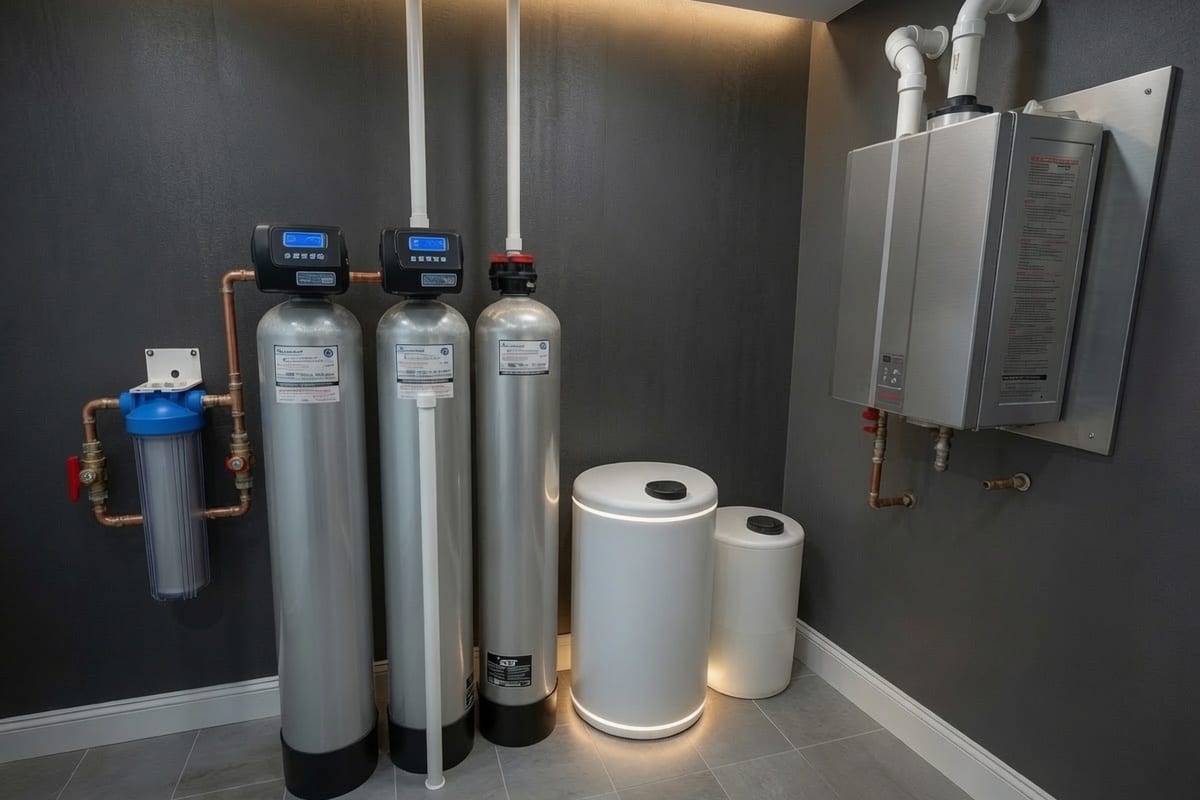
What carbon filtration does
Carbon filtration works by adsorption. Water passes through a bed of carbon media whose surface is riddled with microscopic pores, and contaminants stick to that surface instead of continuing to your tap. A single pound of quality filtration carbon has an internal surface area measured in acres, which is why a tank that fits in a garage corner can treat every drop a household uses.
What it captures well: chlorine, chloramine, disinfection byproducts, volatile organic compounds, and the taste and odor problems that come with treated surface water. What it does not touch: hardness minerals, dissolved iron, and most heavy metals. Carbon is a precision tool, not a universal one, and the value of a good installer is knowing exactly where its job stops.
Why Raleigh needs catalytic carbon specifically
This is the detail that separates a system that works here from one that disappoints. Raleigh Water, like most Triangle utilities, disinfects with chloramine, a bonded compound of chlorine and ammonia chosen because it holds its protective effect across long distribution runs. It is the right call for the utility and a harder problem for a home filter.
Standard activated carbon adsorbs free chlorine quickly and easily. Chloramine is a different chemistry, and standard carbon works through it slowly and incompletely. Catalytic carbon is manufactured so its surface actively breaks the chloramine bond apart rather than merely holding it. On Raleigh water, that difference is the whole ballgame.
We see the consequence regularly: a homeowner installs a system bought online, and six months later the swimming-pool smell is back in the shower. The equipment is not broken. It was built with the wrong media for this water. If you already have a system underperforming this way, we can often re-bed the existing tank with catalytic media instead of selling you a replacement.
Where carbon fits on PFAS
The Cape Fear and Haw River basins that supply much of the Triangle carry documented PFAS and 1,4-dioxane. Granular activated carbon is one of the technologies recognized for PFAS reduction, and a correctly sized bed reduces the load across the entire house, which matters for showering and bathing as well as drinking.
It does not, however, take PFAS to non-detect on its own. The honest architecture is layered: carbon at the point of entry for whole-house reduction, and reverse osmosis at the kitchen sink for the water you drink and cook with. If you want the fuller regional picture first, our city water treatment page covers what municipal supply here actually contains.
The system types we install
- Backwashing catalytic carbon tanks. The bed rinses and re-levels itself on a set cycle, which prevents channeling and keeps contact time consistent across the service life of the media. Needs a drain line. This is the standard recommendation for most Raleigh homes.
- Upflow carbon systems. No backwash cycle and no drain requirement, so they suit homes where the main line enters somewhere plumbing access is limited. Slightly shorter media life in exchange for a far simpler install.
- Carbon block point-of-use filters. Tighter filtration at a single tap, often paired with or built into an under-sink system. A good complement to a whole-house tank, not a substitute for one.
- Carbon as a stage in a well system. On well water, carbon is the polishing step that comes after iron, sulfur, and hardness have already been dealt with. Sequence is not optional here.
Sizing, installation, and what it costs
Sizing is where inexpensive installs go wrong. Carbon needs contact time, meaning water has to move slowly enough through the bed for adsorption to actually happen. Push too much flow through too little media and the water exits barely treated, while the homeowner sees only a pressure drop and assumes the filter is doing its job. We size to fixture count, pipe diameter, and realistic peak demand, not to whatever tank is on the truck.
Installation is at the point of entry, typically the garage, crawlspace, or utility area near the main line, with a bypass valve so the system can be serviced without shutting off the house. Carbon systems in this area generally land in the same range as other whole-house filtration, and our Raleigh water system cost guide lays out the numbers in detail.
It starts with a test, not a quote
We will not specify carbon media before knowing your chloramine level, hardness, pH, iron, and total dissolved solids. A free in-home consultation, where we test your water in front of you, takes a few minutes and settles whether you need carbon alone, carbon plus a softener, or a staged setup because you are on a well. If your water does not need much, we will say so. That is a cheaper conversation for you and a better one for us.
We install and service carbon filtration across Raleigh, Cary, Apex, Durham, Wake Forest, and the wider Triangle, on city and well supply. Get in touch and we will test your water first and recommend second.
Frequently Asked Questions
What is the difference between activated carbon and catalytic carbon?
Standard activated carbon is excellent at adsorbing chlorine, taste, and odor. Catalytic carbon is treated so its surface has a different chemistry, and that is what lets it break down chloramine, the disinfectant Raleigh actually uses. Because Raleigh and most Triangle utilities run chloramine rather than free chlorine, catalytic carbon is usually the correct media here. A system built with standard carbon will underperform on Raleigh water, and that is one of the most common problems we find in existing installs.
How long does carbon media last before it needs replacing?
In most Triangle homes, a properly sized point-of-entry carbon bed runs 3 to 5 years before the media is spent. Household size, water use, and the chloramine level at your address all move that number. Sediment pre-filters are a separate item and need changing every 3 to 6 months. When carbon is exhausted there is no alarm, the chlorine taste simply comes back, which is why we give you a real schedule for your system instead of a generic sticker.
Does carbon filtration remove PFAS and GenX?
It reduces them meaningfully but does not eliminate them. Granular activated carbon is one of the technologies recognized for PFAS reduction, and a well-sized bed makes a real difference across the whole house. For the water you drink and cook with, we pair carbon with reverse osmosis at the kitchen sink, because RO takes PFAS much closer to non-detect. Anyone promising that carbon alone removes all PFAS is overselling it.
Does a carbon filter soften my water?
No, and this is worth being clear about. Carbon handles chlorine, chloramine, taste, odor, and organics. It does nothing to calcium and magnesium, the minerals that cause hardness, scale, and spotty dishes. If your water is hard, and well supplies and some outlying areas here are, you need a softener alongside the carbon. We test first so you are buying the units your water actually calls for.
Backwashing tank or upflow cartridge, which do I need?
A backwashing system periodically rinses and re-beds its own media, which keeps the carbon working evenly and prevents channeling. It needs a drain and a little more space. An upflow system has no backwash cycle and no drain requirement, so it fits homes where plumbing options are tight. We look at your sediment load, flow rate, and where the main line enters before recommending one.
Will carbon filtration slow down my water pressure?
Not when it is sized to the house. Pressure complaints come from beds that are too small for the home flow rate, so water is forced through faster than the media can handle. We size to your fixture count, pipe diameter, and peak demand. If your pressure is already marginal before we arrive, we tell you that up front rather than letting a new filter take the blame.
Can carbon filtration be used on well water?
Yes, but rarely on its own. Carbon polishes taste and handles certain organics, and it is often the final stage in a well setup. What it cannot do is remove iron, hydrogen sulfide, hardness, or correct low pH, which are the problems Triangle wells usually present. On a well, carbon comes after the stages that handle those, and the order matters. A test tells us the correct sequence.
Ready for cleaner, better-tasting water?
Start with a free consultation and an up-front price. Serving Raleigh and the surrounding Triangle.