Reverse Osmosis Drinking Water Systems in Raleigh, NC
If you want drinking water free of PFAS, lead, and the chemical taste of tap water, a reverse osmosis system delivers it right at your kitchen sink.
What a reverse osmosis system does
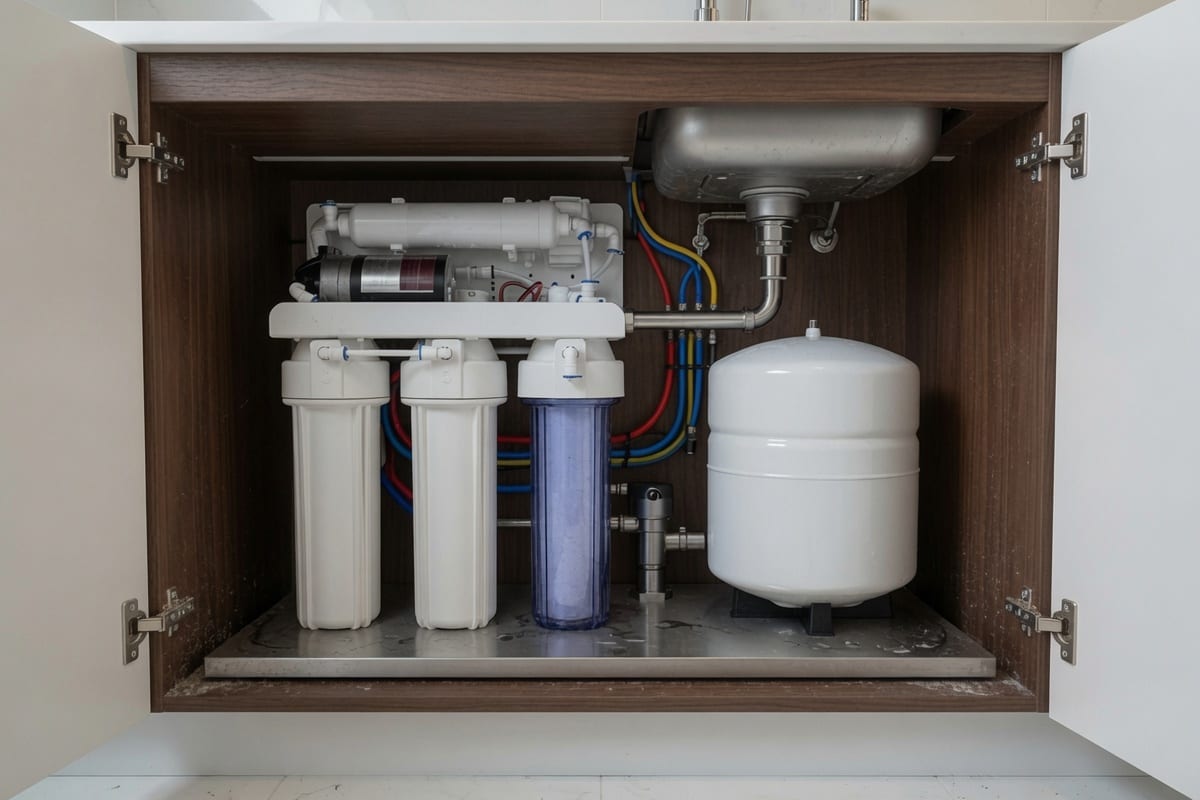
Reverse osmosis, or RO, pushes water through a membrane with pores so small that most contaminants cannot follow. What comes out the other side is water stripped of dissolved solids, heavy metals, and the compounds that carbon filters miss. It is the highest level of drinking water treatment you can practically put in a home, and it lives quietly under your kitchen sink.
Unlike a whole house filter, which treats every tap for taste and chlorine, an RO system focuses on the water you actually put in your body: drinking, cooking, ice, coffee, and baby formula. That focus is what lets it hit a level of purity a whole house system cannot reach on its own.
Why RO matters in the Triangle right now
The rivers that supply much of the Triangle carry contamination that ordinary filters do not fully handle. The Cape Fear and Haw River basins have documented PFAS, GenX, and 1,4-dioxane, man-made compounds that resist breaking down. Pittsboro, which pulls straight from the Haw River, has measured some of the highest PFAS levels in the state. Cary, Apex, and Morrisville draw from Jordan Lake in the same Cape Fear system.
Reverse osmosis is one of the few home methods proven to reduce these compounds to very low levels. If you are on a supply with known PFAS concerns, RO at the kitchen sink is the most direct protection for your drinking water. Homes in Pittsboro and the western Triangle especially benefit from it.
What reverse osmosis removes
- PFAS and GenX, the persistent compounds in the Cape Fear and Haw basins.
- Lead, which can enter water from older plumbing and fixtures.
- Fluoride, for households that want it out of their drinking water.
- Total dissolved solids (TDS), the mix of minerals and salts that affect taste.
- Nitrates and many other well-water contaminants, which matters for rural households.
How RO fits with the rest of your water
Reverse osmosis is a specialist, not a whole-home fix, and it works best as part of a plan. On city water, many Raleigh homeowners pair RO with a whole house carbon filter, so every tap loses the chlorine taste while the kitchen gets bottled-quality water.
On hard well water, RO should sit behind a softener. Hardness minerals can scale the RO membrane and cut its life short, so softened water feeding the system keeps it running at full performance longer. If your test shows hard water, we will usually recommend a water softener upstream. This is the kind of thing we sort out with a test, not a guess.
City water and well water both benefit
On city supplies, RO tackles PFAS, lead, and dissolved solids that make tap water taste flat. On wells, it adds a final barrier for nitrates and other dissolved contaminants after the bigger issues like iron, sulfur, and bacteria are handled upstream. Either way, RO is the last polish that makes your drinking water as clean as it can practically get.
How reverse osmosis actually works
The idea behind RO is worth understanding, because it is what makes the system so thorough. Normally, water moves across a membrane from a less concentrated side to a more concentrated one. Reverse osmosis does the opposite: it uses your home's water pressure to push water the wrong way, through a membrane so fine that dissolved contaminants cannot pass. The clean water collects on the other side, and the rejected contaminants rinse away to the drain.
Most systems run the water through several stages. A sediment pre-filter catches grit, a carbon stage strips chlorine that would otherwise damage the membrane, the RO membrane does the heavy lifting, and a final carbon polish smooths the taste before the water reaches your faucet. That layered design is why RO water comes out so clean and consistent.
RO versus bottled water and pitcher filters
Plenty of Triangle families buy bottled water because they do not trust the tap. Reverse osmosis gives you the same clean quality from your own kitchen, without the recurring cost, the plastic, or hauling cases home from the store. Over a few years, an RO system typically costs far less than the bottled water it replaces.
It also goes well beyond what a pitcher or faucet filter can do. Those rely mostly on carbon, which improves taste but does not remove PFAS, dissolved solids, or most metals to any meaningful degree. RO removes them at the membrane. If your reason for filtering is real contaminants and not just taste, RO is the level of treatment that actually addresses them.
Who benefits most from an RO system
Reverse osmosis is worth it for almost any household that drinks tap water, but a few situations make it close to essential. Families with young children mixing formula, anyone on a supply with known PFAS concerns, homes with older plumbing that may leach lead, and well owners who want a final barrier for nitrates all have clear reasons to install one. If you already buy bottled water out of caution, RO simply moves that quality to your own faucet at a fraction of the ongoing cost.
It is also a natural companion to the rest of your treatment. On city water it finishes what a whole house filter starts; on well water it polishes what the larger system has already cleared. Either way, the water you actually drink ends up as clean as home treatment can practically make it.
Installation and upkeep
A typical install puts the RO unit under your kitchen sink with a small dedicated faucet on the counter. We can also run a line to your refrigerator so your ice and cold water dispenser are filtered too. Our licensed installers handle the plumbing and the drain connection, and the whole job usually wraps up in a few hours with no mess left behind.
Maintenance is simple. Pre-filters and post-filters get changed on a schedule, usually once a year, and the membrane lasts several years when the incoming water is treated properly. We tell you the real replacement schedule and can service it for you, so the water stays as clean as the day it was installed. If an RO you already own has slowed or started tasting off, our guide to reverse osmosis not working covers the usual causes.
What it costs and how to start
RO system pricing depends on the model, how many stages you want, and whether it ties into a softener or whole house filter. We give you a straight up-front quote, and you can see typical ranges in our Raleigh water filtration cost guide. Compared to years of bottled water, a good RO system usually pays for itself.
Does RO remove healthy minerals?
Because RO removes nearly everything dissolved, it also takes out the small amount of calcium and magnesium in your water. Some people ask if that matters. The honest answer is that most of the minerals your body uses come from food, not water, so the difference is minor for a normal diet. If you prefer, many systems offer a remineralization stage that adds a touch of mineral back for taste. We will walk you through the option so you can decide what you like.
If you want drinking water you can trust, with PFAS, lead, and dissolved solids taken out at the tap, a reverse osmosis system is the answer, and it starts with a free consultation so we know exactly what yours needs to remove. Call us to set it up.
Frequently Asked Questions
Does reverse osmosis remove PFAS and GenX from Triangle water?
Yes. Reverse osmosis is one of the most effective home methods for reducing PFAS and GenX, the man-made compounds found in the Cape Fear and Haw River basins that supply much of the Triangle. The RO membrane blocks these tiny contaminants along with lead, fluoride, and dissolved solids, giving you clean water for drinking and cooking.
Where does a reverse osmosis system get installed?
Most RO systems tuck under the kitchen sink and connect to a dedicated faucet on the countertop. It can also feed your refrigerator and ice maker so those get filtered water too. Installation is clean and takes a few hours, and it does not interfere with your regular tap.
Does reverse osmosis waste a lot of water?
Older RO systems sent several gallons to the drain for every gallon of clean water. The efficient systems we install today drastically cut that ratio, and for the small amount of water a household drinks and cooks with, the waste is minor. We can walk you through the exact numbers for the system you choose.
Do I still need a whole house filter if I have reverse osmosis?
They do different jobs. Reverse osmosis cleans the water you drink and cook with at one tap. A whole house filter handles chlorine, chloramine, and taste at every faucet and shower in the house. Many Raleigh homes use both: whole house carbon for comfort, RO for the highest purity at the kitchen sink.
Does RO water taste different?
Most people say reverse osmosis water tastes cleaner and more neutral, without the chlorine edge or mineral flavor of tap water. It is close to bottled water, but far cheaper over time and without the plastic. If you drink a lot of coffee or tea, you will likely notice the difference right away.
Should I pair reverse osmosis with a water softener?
On hard well water, yes. Feeding an RO system with softened water protects the membrane and helps it last longer, because hardness minerals can scale and shorten membrane life. If your test shows hard water, we usually recommend a softener upstream and RO at the sink working together.
Ready for cleaner, better-tasting water?
Start with a free consultation and an up-front price. Serving Raleigh and the surrounding Triangle.