
UV Water Purification for Well Water in Raleigh, NC
If your well water tested positive for bacteria, UV water purification kills E. coli and viruses with ultraviolet light and no chemicals, protecting every tap.
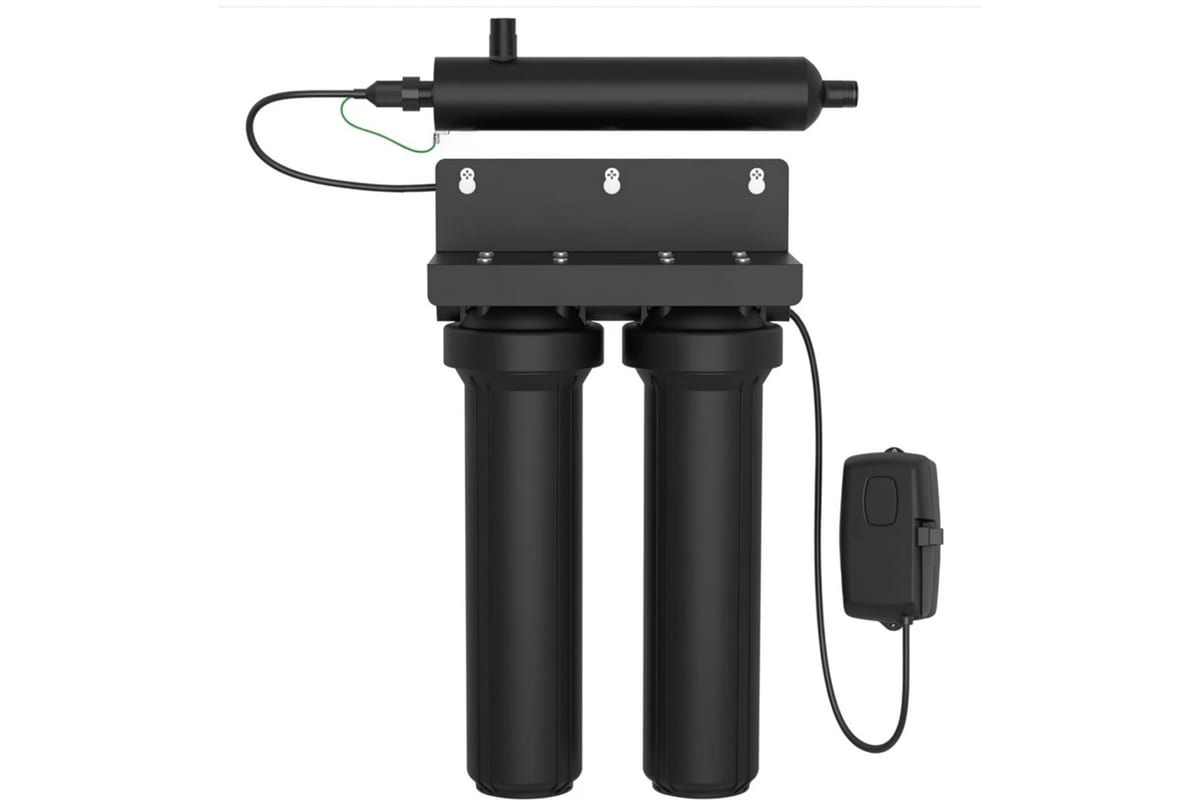
What UV water purification does
A UV purifier is a simple, powerful piece of equipment: your water flows through a sealed chamber past an ultraviolet lamp, and the light disinfects it on the way through. The UV energy damages the DNA of bacteria, E. coli, and viruses so they cannot reproduce or make anyone sick. Nothing is added to the water and nothing is filtered out; the harmful organisms are simply neutralized.
For well owners, that is exactly what you want after a bad bacteria test. UV gives you continuous, chemical-free disinfection at a steady flow, so every glass, every ice cube, and every pot of water is safe without the taste or byproducts that come with chlorinating a well.
Why well owners around the Triangle turn to UV
City water is disinfected at the treatment plant before it ever reaches you. Private wells have no such protection, and because private wells are not regulated in North Carolina, the homeowner is the only line of defense. Bacteria can enter a well through cracks in the casing, a shallow water table, or surface runoff, and it is especially common after the heavy rains this region gets.
The usual reason we install UV is a coliform-positive well test. If a lab finds coliform or E. coli in your sample, that is a clear signal your well is vulnerable and needs disinfection. Wells that are older, shallow, or prone to flooding are the best candidates. This is why we always recommend a water test first, so you know whether bacteria is actually present before you spend a dollar.
Chemical-free disinfection
Some people chlorinate a well to deal with bacteria, but that adds a chemical taste and can create byproducts. UV does the same job with light alone. There is no smell, no aftertaste, and nothing added to your water, which makes it a clean fit for households that want their well disinfected without pouring chemicals into it.
Pre-filtration is not optional
Here is the part that separates a UV system that works from one that disappoints: UV light can only disinfect water it can shine through. If your water carries iron, sediment, or cloudiness, those particles cast tiny shadows that let bacteria slip past the lamp untouched. On a Triangle well, that is a real risk, because iron and turbidity are common.
That is why we always install the right pre-filtration ahead of the UV lamp. On most wells, UV is the last stage in a larger setup, placed after iron and sulfur removal, softening, and any pH correction have already cleared and conditioned the water. By the time it reaches the UV chamber, the water is clear enough for the light to reach every organism. Installing UV without addressing the water ahead of it is the most common reason these systems underperform, and we do not cut that corner.
Sizing UV to your home's flow
A UV system has to be matched to how fast water moves through it. Water needs enough exposure time under the lamp to be fully disinfected, so the unit is sized to your household's peak flow rate. Undersize it and water can move through too quickly to be treated; oversize it and you pay for capacity you do not use. We measure your flow and fixture count and pick the lamp rated for it, so the disinfection keeps up even when several taps run at once.
UV as part of a complete well system
UV disinfects, but it does not remove iron, sulfur, hardness, or dissolved contaminants, and it is not meant to. On a typical well it is the final polish in a full well water treatment system, working alongside the stages that handle staining, scale, and acidity. We serve well owners across the rural Triangle, including the outer parts of Wake County and towns like Fuquay-Varina where private wells are common, and we build each system so every stage supports the next.
What UV protects against
UV is a broad-spectrum disinfectant, which is one of its strengths. Rather than targeting a single organism, it disrupts the DNA of a wide range of microbes so they cannot reproduce. On a private well, that covers the things you most want gone:
- Coliform bacteria, the standard warning sign that surface contamination is reaching your well.
- E. coli, which points to fecal contamination and is a clear reason to disinfect.
- Viruses and other pathogens that can enter groundwater after heavy rain.
What UV does not do is remove chemicals, metals, or minerals, and it is not designed to. It is a disinfection stage, full stop. That is why it belongs at the end of a treatment train, after the water has already been cleared of the things that both shade the lamp and call for their own filtration.
Why a well test should come first
Installing UV without testing is putting the cart before the horse. A lab test tells you whether bacteria is actually present, how clear your water is, and what pre-filtration the UV will need to work. It also establishes a baseline you can compare against at your next annual test. We would rather test your well, confirm what is really going on, and build the right stages than sell a UV lamp that cannot do its job because the water reaching it is cloudy or full of iron.
After a coliform-positive result, UV is often the fastest way to get back to safe water, but it works only when the whole picture is accounted for. That is the difference between a UV system that reliably protects your family and one that gives false confidence.
Maintenance that keeps it working
UV is low effort but not zero effort. The lamp is usually replaced once a year, because it keeps glowing after that but loses disinfecting strength, and the quartz sleeve around it needs occasional cleaning so the light stays bright. We set you up with the schedule and can handle the service, so your protection never quietly lapses without you knowing.
What it costs and how to start
UV system pricing depends on your flow rate and the pre-filtration your water needs to run clear. We give you an up-front quote after testing, and you can see typical ranges in our Raleigh water filtration cost guide. Compared with the risk of drinking untreated bacteria, a properly built UV system is inexpensive protection.
UV versus chlorination for a well
The traditional way to disinfect a well was chlorination, either a shock treatment or a continuous feed. It works, but it adds a chemical taste, requires handling and dosing, and can form byproducts you then have to filter back out. UV reaches the same goal with a lamp and no chemicals, running quietly in the background with no dosing to manage. For a household that wants safe water without turning their utility room into a chemistry station, UV is usually the easier long-term answer, and it does not change the taste of the water at all.
If your well tested positive for bacteria, UV is one of the options worth looking at, and there is an order to it. A positive result gets interpreted first, and the well itself gets inspected: repeat positives often point at a casing, cap or grout defect, which chlorine does not fix and which a certified well contractor repairs rather than us. Where the well is sound, UV works continuously without chemicals and without changing the taste, provided the equipment is the right validated class for the job, the water is clear enough for the light to reach the organisms, flow stays inside the rated range and the lamp and sleeve are maintained on schedule. Those conditions are the whole reason a reading comes before a recommendation. Call us to schedule a free consultation, bring whatever results you have, and we will tell you what your numbers support and quote it in writing.
Frequently Asked Questions
How does UV water purification kill bacteria?
A UV purifier passes your water past an ultraviolet lamp inside a sealed chamber. The UV light scrambles the DNA of bacteria, E. coli, and viruses so they cannot reproduce or make you sick. It works without adding any chemicals, and the water tastes exactly the same going out as it did coming in, just disinfected.
When do I need a UV system on my well?
The most common trigger is a coliform-positive well test. If your water tests positive for coliform or E. coli bacteria, a UV system gives you continuous disinfection so every glass is safe. Wells near the surface, older wells, and wells that flood after heavy rain are especially good candidates for UV.
Does UV need pre-filtration to work?
Yes, and this is important. UV light can only disinfect water it can shine through, so iron, sediment, or cloudiness that shades the bacteria will let some slip past. We install the right pre-filtration ahead of the UV lamp so the water is clear enough for the light to reach everything. Skipping this step is why some UV systems underperform.
Does a UV purifier change the taste or add chemicals?
No. UV is purely light, so it adds nothing to your water and removes nothing you can taste. Unlike chlorination, there is no chemical smell, no aftertaste, and no byproducts. It is a clean way to disinfect well water for households that do not want to add chemicals to their supply.
How often does the UV lamp need to be replaced?
Most UV lamps are replaced once a year. The lamp still glows past that point, but its disinfecting strength fades, so an annual swap keeps it working at full power. The sleeve around the lamp also needs occasional cleaning. We set you up with the schedule and can service it so your protection never lapses.
Can UV handle iron or hardness too?
No, UV only disinfects. It does not remove iron, sulfur, hardness, or dissolved contaminants, and in fact those need to be handled first so the water is clear enough for the light to work. On most wells, UV is the final stage after iron and sulfur removal, softening, and any pH correction are already in place.
Ready for cleaner, better-tasting water?
Start with a free consultation and an up-front price. Serving Raleigh and the surrounding Triangle.