Water Testing in Raleigh, NC
If you do not know what is in your water, water testing tells you before anyone recommends equipment, so you treat the real problem instead of guessing.
Why testing comes before any equipment
The most expensive mistake in home water treatment is buying a system before you know what your water needs. A softener will not fix a sulfur smell, an iron filter will not remove PFAS, and none of them help if your water was fine to begin with. Testing is what turns a guess into a plan, and it is the first step on every job we do.
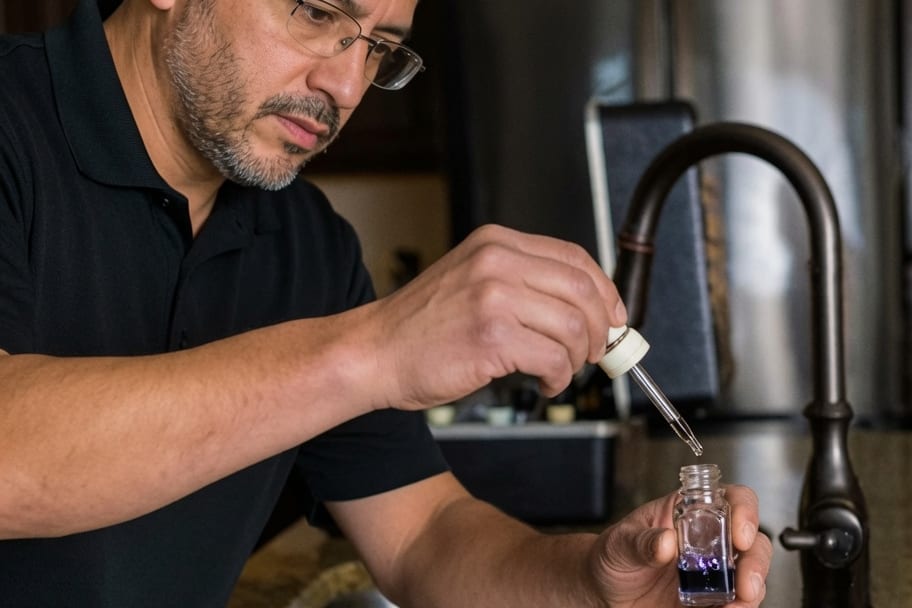
Our free in-home consultation reads the numbers that drive most decisions right at your kitchen sink. In a few minutes we can see your hardness, iron, pH, chlorine, total dissolved solids, and sulfur, and we explain each one as we go. That reading tells us whether you need treatment at all, and if so, exactly which kind.
What the in-home test tells us
- Hardness: how much calcium and magnesium is scaling your fixtures and appliances, which decides whether you need a water softener.
- Iron: the cause of orange staining on sinks, tubs, and laundry.
- pH: whether your water is acidic enough to corrode copper pipe and leave blue-green stains.
- Chlorine and chloramine: the source of the pool-water taste and smell on city supplies.
- Total dissolved solids: the overall mineral and salt load affecting taste.
- Sulfur: the rotten-egg odor common in Triangle wells.
When you need a certified lab
An in-home test is fast and covers most of what matters, but it cannot see everything. Bacteria, PFAS, and trace metals like lead require a certified lab with proper sampling. For well owners, home buyers, or anyone worried about a specific contaminant, we arrange the lab testing those items need. The in-home test and the lab work together: the quick reading guides the everyday treatment, and the lab confirms the things that must be sent out.
City water and well water tell very different stories
Raleigh city water comes from Falls Lake and the Neuse River, disinfected with chloramine, so the usual findings are a chlorine taste, disinfection byproducts, and questions about PFAS in the wider Cape Fear and Haw River basins that supply the region. Cary and Apex draw from Jordan Lake and see a similar profile. For city homes, testing usually points toward carbon whole house filtration and reverse osmosis for drinking water.
Well water is a different world. Private wells in the rural fringe around the Triangle commonly show iron, sulfur, hardness of 10 to 20 grains per gallon or more, acidic low pH, manganese, and bacteria after heavy rain. Each of those calls for a different stage of treatment, which is exactly why well water treatment always starts with a test. Testing first is how we serve places like Apex and the outlying well communities without guessing.
Private wells and North Carolina's guidance
City water is tested constantly by the utility, but private wells are not regulated, so no agency checks yours. The homeowner owns the water quality. Because of that, North Carolina recommends testing private well water at least once a year, and any time the taste, color, or smell changes. Regular testing catches a slow rise in iron or a drop in pH before it quietly damages your plumbing.
How the in-home test works
There is nothing intimidating about a water test. We come to your home, draw water from your kitchen tap, and run a set of quick checks right there on the counter. Within a few minutes you can see your hardness, iron, pH, chlorine, total dissolved solids, and sulfur, and we talk through each reading as it comes back. You are not handed a sheet of numbers and left to figure it out; we explain what each one means for your water and your plumbing.
If your results point to something that needs a lab, like bacteria or PFAS, we explain why, what the lab checks, and what it costs before anything is sent out. The whole visit is about giving you a clear, honest picture of your water, not selling you on a fear. Many homeowners are surprised by what they learn, in both directions: some water is worse than expected, and some is better.
When to test, and why timing matters
Certain moments are worth a test even if nothing seems wrong. Testing at the right time catches problems while they are cheap to fix:
- Buying or selling a home, especially one on a private well, so you know what you are getting into.
- After heavy rain or flooding, which can push bacteria into a well.
- When taste, color, or smell changes, since that often signals a shift in the water.
- Once a year for any private well, following North Carolina's guidance.
- After a new baby arrives, when many families take a closer look at their drinking water.
A test at any of these moments can catch a rising iron level, a drop in pH, or a bacteria problem before it becomes an expensive repair or a health worry.
What your results actually mean
Numbers on their own are not much use, so we translate them. A hardness reading in grains per gallon tells you whether scale is your problem and how big a softener you would need. A pH below neutral warns that your water is acidic and slowly attacking copper pipe. An iron reading explains the orange stains, and a chlorine reading explains the taste. We connect each number to something you can actually see or taste in your home, so the results make sense rather than sitting on a page.
From there, the path is straightforward. Clean water means no action. A single issue, like hardness alone, means one piece of equipment. Several issues, common on wells, mean a few stages in the right order. The test is what turns a vague worry about your water into a clear, specific plan you can act on or set aside as you choose.
No pressure, just answers
The whole point of testing is honesty. If your water tests clean, we will tell you so and you will not hear a sales pitch. If it needs treatment, you see the numbers, you understand what each one means, and you get up-front pricing on the options. You decide from there. We would rather earn your trust with a straight reading than sell you a system you do not need.
What it costs and how to start
The in-home consultation is free. Certified lab testing carries a modest fee for the items that must be sent out, and we tell you the cost before anything goes to the lab. If your results point to treatment, our Raleigh water filtration cost guide shows typical ranges so you know what to expect.
Retesting after treatment
Testing is not only a before-you-buy step. Once a system is installed, a follow-up test confirms it is doing what it should, and annual retests make sure it keeps performing as your water and your equipment age. On a well especially, water can shift over the years, and a system sized for last year's iron may need attention as levels change. Regular retesting is the simplest way to know your water is still safe and your equipment is still earning its keep.
Good water treatment starts with good information, and water testing gives you that before a dollar goes toward equipment. Call us to schedule your free in-home consultation, and you will finally know exactly what is coming out of your taps.
Frequently Asked Questions
What does the free in-home consultation check for?
Our free in-home consultation reads the things that shape most treatment decisions: hardness, iron, pH, chlorine, total dissolved solids, and sulfur. We do it right at your kitchen sink and explain each result on the spot. It takes only a few minutes and tells us whether you need treatment at all, and if so, what kind.
When do I need certified lab testing instead of the in-home test?
The in-home test cannot see bacteria, PFAS, or trace metals like lead, so those need a certified lab. If you are on a well, buying a home, or worried about a specific contaminant, we arrange lab testing for the items that require it. The two kinds of testing work together to give you the full picture.
How often should I test well water in North Carolina?
North Carolina recommends testing private well water at least once a year, and any time the taste, color, or smell changes. Private wells are not regulated, so no agency tests yours for you. Annual testing catches bacteria, rising iron, or a drop in pH before they damage your plumbing or your health.
Do I have to buy anything after the test?
No. The point of testing is to find out what is actually in your water, not to pressure you into equipment. If your water tests clean, we will tell you that plainly. If it needs treatment, we show you the results and explain your options with up-front pricing. The decision is yours.
Can you test Raleigh city water, or just wells?
Both. City water from Falls Lake or Jordan Lake has its own profile, usually chlorine or chloramine taste and questions about PFAS, while wells bring iron, sulfur, hardness, and bacteria. We test whichever you have and tailor the reading to your supply. City and well water need very different treatment, so testing first matters either way.
What do I do with the results of a well water test?
The results tell us exactly which treatment stages your water needs and in what order, whether that is softening, iron and sulfur removal, pH correction, or disinfection. Instead of guessing, you get a system matched to your numbers. We keep it simple and walk you through what each result means for your home.
Ready for cleaner, better-tasting water?
Start with a free consultation and an up-front price. Serving Raleigh and the surrounding Triangle.