Well Water Treatment in Raleigh & the Triangle, NC
If your private well leaves orange stains, smells like rotten eggs, or corrodes your pipes, well water treatment starts by testing exactly what is in it.
Why Raleigh area wells need immediate testing
Well water in the Triangle is shaped by Piedmont red-clay geology, and that geology delivers a consistent set of problems: iron staining that ruins plumbing fixtures, hydrogen sulfide that makes water smell like rotten eggs, hardness that scales water heaters, and acidic pH that slowly eats through copper pipe and creates pinhole leaks. Most of these problems are invisible until they cause damage you can see or smell. That is why North Carolina recommends testing private wells at least once a year.
Well water treatment done right always begins with a test, because no two wells are the same. Two homes on the same road can pull very different water depending on the depth of the well and the rock it sits in. Anyone who quotes you equipment before testing is guessing, and guessing on a well usually means paying for stages you do not need or missing the one that prevents pipe damage.
We start with a free in-home water test that reads your hardness, iron, pH, and other key numbers on the spot, and we can arrange certified lab testing for bacteria and other contaminants that need a lab. Only after we know what is in your water do we design a system. This is the honest way to treat a well, and it is how we work on every job.
The six well-water problems destroying Raleigh area homes RIGHT NOW
The Triangle is growing fast, and city-water neighborhoods now sit right next to a large rural fringe of homes on private wells. In Chatham, Franklin, Johnston, and the outer parts of Wake County, most wells carry one or more of these issues, shaped by the Piedmont red-clay geology. Each one causes damage if left untreated:
- Iron (orange staining): The Piedmont aquifer is saturated with iron oxide. Your fixtures turn orange, your laundry develops rust stains, and over time the iron clogs your water heater and narrows your pipe diameter. See our iron and sulfur removal page for the fix.
- Hydrogen sulfide (rotten-egg smell): This gas is produced by sulfur-reducing bacteria in the aquifer. It makes your water unusable for cooking and showers, corrodes copper and silver, and creates an embarrassing odor that visitors notice immediately.
- Hardness (scale): Wells in the Triangle region often run 10 to 20 grains per gallon or higher, causing calcium and magnesium scale that coats water heaters, shortens appliance life, and makes soap useless.
- Low pH and acidity: Water around 5.5 to 6.5 is acidic enough to slowly dissolve copper pipe from the inside out, creating pinhole leaks in the walls within five to ten years. This is one of the most expensive problems if not caught early.
- Manganese: Black staining and specks in the water that turn white fixtures brown and clog fixtures over years of accumulation.
- Bacteria: Coliform or E. coli, especially after heavy rain or if the well casing is compromised, which requires immediate disinfection to prevent illness.
Why private wells need your attention
City water is tested constantly by the utility. Private wells are not regulated, which means the homeowner owns the water quality and the treatment. No agency is checking your well, so a slow rise in iron or a drop in pH can quietly damage your plumbing and appliances for years before you notice. That is why North Carolina recommends testing well water at least once a year.
Common well water problems and what a test has to settle first
These are the problems well owners bring us most often. Each one is written as what a reading would have to show before any equipment is the right answer, because the symptom on its own does not specify the system.
- Orange or rust-colored staining on fixtures and laundry: usually iron, and the number matters. A softener handles only a small amount of dissolved iron before the resin fouls, so the reading decides whether an iron filter belongs ahead of it or whether the softener alone is enough.
- A rotten-egg smell: the first thing to establish is whether it is in the hot water only or in both hot and cold. Hot only often points at the water heater rather than the well, and that is a plumber's diagnosis, not a reason to buy source-water treatment. Where both are affected, the well is the likely source and oxidation with filtration is the usual route. Our guide to rotten egg smell in hot water only explains how to tell them apart in about twenty minutes.
- A positive bacteria test: a result needs interpreting before it needs equipment. Repeat positives often point at a casing, cap or grout defect, which chlorine does not fix and which a certified well contractor repairs. Where the well is sound, continuous disinfection is the option that fits, sized on the water it will actually see.
- Blue-green staining or pinhole leaks in copper: low pH is one contributor to copper corrosion and not the only one, so pH, alkalinity and the plumbing itself all need looking at. Treatment can address a water-chemistry contribution going forward. It cannot restore pipe that has already thinned.
- A softener that stopped working years early: iron and sediment reaching the resin are common mechanisms, and a hardness reading in and out of the unit is what shows whether the resin is still exchanging.
None of the above is a diagnosis of your water. They are the questions a reading answers, which is why the consultation starts with the numbers rather than with a recommendation.
How a custom well system is built
Well treatment is almost never a single unit. It is a set of stages arranged in the right order so each one does its job and protects the next. The order matters as much as the parts: put a softener ahead of iron removal and you can foul the resin; correct pH in the wrong spot and the rest underperforms.
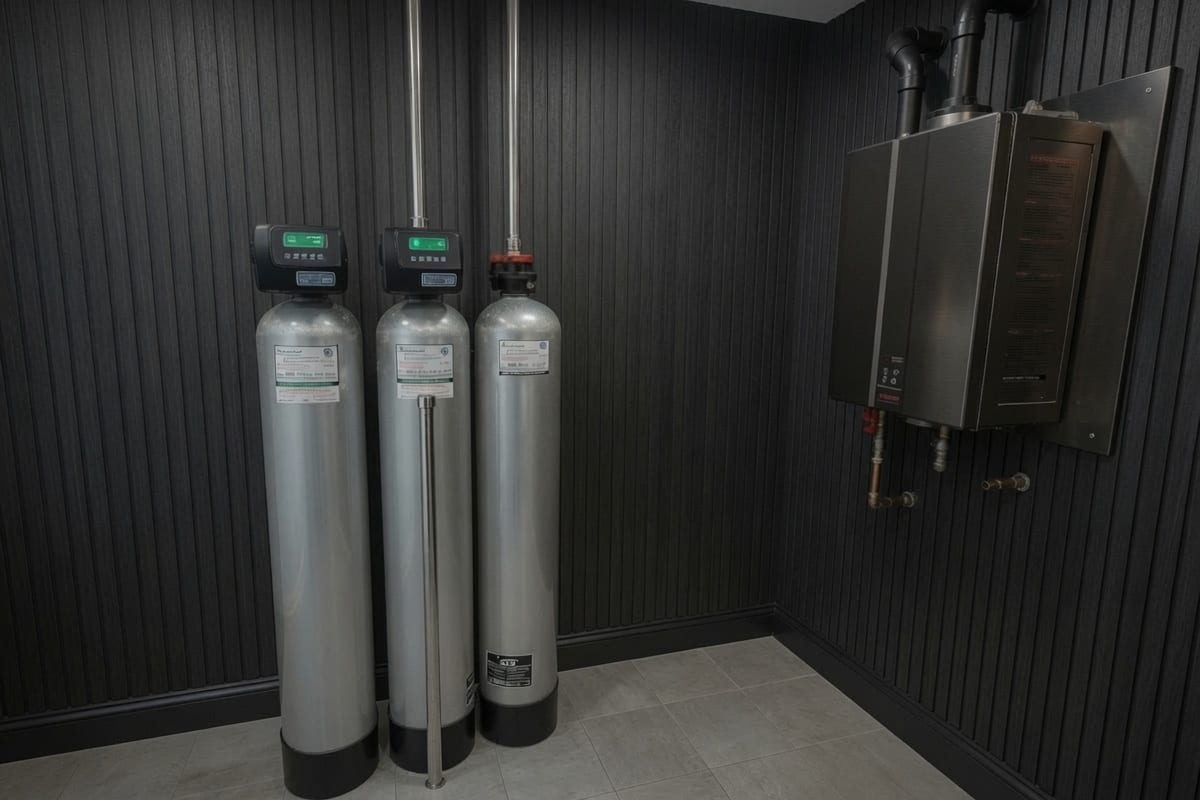
A typical multi-stage well system might correct pH first, then remove iron and sulfur with air injection or catalytic carbon, then soften the water, and finally disinfect with UV if bacteria are present. Your test decides which of these you actually need. We build only the stages your water calls for, so you are not paying for equipment that treats a problem you do not have.
Common stages we combine
Depending on your results, your system may include a water softener for hardness, an air-injection or catalytic filter for iron and sulfur, a calcite or soda-ash feeder for low pH, and a UV purifier for bacteria. For the water you drink and cook with, we often add a reverse osmosis unit at the kitchen sink as a final polish. Everything is sized to your flow rate and household so it keeps up with real use.
What happens if you leave well problems untreated
Well water problems rarely stay the same size. They grow, and they cost more the longer they sit. Understanding what each issue does over time is the best reason to treat it early rather than live with it.
- Acidic water slowly eats copper out of your pipes, and the result is blue-green staining today and pinhole leaks in the walls later.
- Iron and manganese stain fixtures and laundry, then build up inside the water heater and clog the small passages in appliances.
- Hardness scales heating elements, shortens appliance life, and raises energy bills as the water heater works harder.
- Sulfur makes the water smell like rotten eggs and can corrode metal over time.
- Bacteria is the one that matters most for health, and it can appear suddenly after heavy rain.
None of these fix themselves, and several of them quietly damage the plumbing behind your walls while you wait. Catching them with a yearly test is far cheaper than repiping a house.
New construction and older wells
Well treatment needs differ depending on the age of the well and the home. A newer well on a recently built house may only need softening and a drinking water filter, while an older or shallower well is more likely to carry bacteria, higher iron, or a slow drift in pH. If you are building or buying, testing before you finalize anything tells you what the water will cost to treat, which is worth knowing before you move in. For an established home where the water has quietly changed over the years, a test resets the picture so the system matches the well as it is today, not as it was when the house was built.
What owning a well system looks like
A well system is not a set-it-and-forget-it purchase, but it is not demanding either. Softeners need salt every month or two. Iron and sulfur filters backwash themselves and occasionally need media replaced. UV lamps get swapped once a year. pH-correcting media gets topped up periodically. We lay out the real maintenance schedule for whatever stages your water needs, and we can service the whole system for you so nothing slips.
The goal is water you stop thinking about: clear, odor-free, easy on your pipes, and safe to drink. When the stages are sized right and maintained, that is exactly what a well system delivers, and your annual test confirms it is still doing its job.
Serving the Triangle's well-water communities
Most of our well work is in the outlying towns where private wells are common, including Fuquay-Varina, Holly Springs, Pittsboro, and the rural stretches of Wake, Chatham, Franklin, and Johnston counties. We know the local geology and the water problems that come with it, so the system we build fits the ground your water comes from, not a generic template.
What it costs and how to start
Because every well is different, pricing depends on which stages your water needs. A well that only needs softening costs far less than one fighting iron, sulfur, low pH, and bacteria together. We give you a clear up-front quote after testing, and you can see typical ranges in our Raleigh water filtration cost guide.
Why local knowledge matters on a well
Well water is shaped by the ground it sits in, and the Piedmont red-clay geology under the Triangle produces a recognizable set of problems: acidic water, iron, manganese, and hardness that show up again and again in this region. Knowing what these local wells tend to carry means we test for the right things and design around patterns we have seen across the area, rather than treating every well as a blank slate. Your specific numbers still drive the build, but local experience keeps us from missing the issues these wells commonly hide.
Well water treatment protects your plumbing, your appliances, and your family, and it always starts by finding out exactly what is in your water. Call us to schedule a free consultation, and we will design a system built around your results instead of a one-size package.
Frequently Asked Questions
How often should I test my well water in North Carolina?
North Carolina recommends testing private well water at least once a year, plus any time the taste, color, or smell changes. Private wells are not regulated the way city water is, so no agency checks yours for you. Annual testing catches bacteria, rising iron, or a drop in pH before they damage your plumbing or your health.
What are the most common well water problems around Raleigh?
In the Triangle's rural fringe we most often see iron that stains fixtures orange, hydrogen sulfide that smells like rotten eggs, hardness of 10 to 20 grains per gallon or more, acidic low pH that corrodes copper pipe, manganese that leaves black stains, and bacteria after heavy rain. Most wells have a few of these at once, which is why testing matters.
Why is my well water leaving blue-green stains?
Blue-green staining usually means your water is acidic, with a pH often between 5.5 and 6.5. Acidic water slowly dissolves copper out of your pipes, which shows up as blue-green stains and, over time, pinhole leaks. This is a common Piedmont well issue and it is fixable with a pH-correcting filter, but it needs to be caught early.
Can one system fix everything in my well water?
Usually it takes a few stages working together rather than one box. Iron and sulfur removal, softening, pH correction, and disinfection each target different problems, and they have to be arranged in the right order. We design the stages around your test results so you only pay for what your water actually needs.
Is well water safe to drink without treatment?
It depends entirely on the well. Some wells test clean; many carry bacteria, high iron, or low pH that should be addressed. Because no one regulates private wells, the only way to know is to test. After a positive bacteria test, disinfection like UV is often added. We never assume a well is safe or unsafe without data.
Do you service wells outside of Raleigh?
Yes. Most of our well work is in the rural fringe around the Triangle, including Chatham, Franklin, and Johnston counties and the outer parts of Wake. Towns like Fuquay-Varina, Holly Springs, and Pittsboro have large well-water populations. We cover the whole area and build each system for the local geology.
Ready for cleaner, better-tasting water?
Start with a free consultation and an up-front price. Serving Raleigh and the surrounding Triangle.