Is Louisburg NC Tap Water Safe to Drink? (2026)
Raleigh Water Pros • September 27, 2026 • 9 min read

The Town of Louisburg runs its own water treatment plant, draws its own raw water from the Tar River, and sells treated water to Franklin County rather than buying from it. That is worth stating plainly: the Town’s numbers and the county’s numbers are not the same numbers, and only one set describes what comes out of a tap inside Louisburg town limits.
Is Louisburg tap water safe to drink? The Town’s 2024 and 2025 reports each say it received no violation. Below: where the water comes from, what the 2025 report shows, what Youngsville, Franklinton and Bunn drink instead, what the reports do and do not say about PFAS, and what is worth filtering at home.
Is Louisburg tap water safe to drink?
The Town of Louisburg’s 2024 and 2025 water quality reports both state the Town did not receive any violation in the covered period, and every measured contaminant came in under its limit.
EPA’s national compliance record for the system (PWS ID NC0235015), read 27 September 2026, shows four monitoring violations for disinfection byproduct sampling in 2023, all returned to compliance on 14 December 2023, and nothing since. Lead was not detected at the 90th percentile in the most recent sampling round. Copper, disinfection byproducts, fluoride and radiological readings were all under their limits. The turbidity rule, a proxy for how well the plant is filtering the Tar River, was met on 100 percent of monthly samples in 2025.
That matters because Louisburg and Franklin County Public Utilities are two different systems with two different reports. A resident inside Louisburg town limits is reading the Town’s own numbers here; a resident just outside those limits is on a different supply entirely, covered further down.
Where does Louisburg’s water come from?
The Tar River, treated at the Town of Louisburg’s own water treatment plant, not water bought from Franklin County or from any other system.
The Town’s plant is permitted for 2.0 million gallons a day and pulled an average of about 1.02 million gallons a day from the river in 2024, according to the water supply plan the Town files with NC DEQ each year. Raw water is drawn at the Town’s own intake on the Tar River and treated on site before it reaches any tap in town.
NC DEQ’s Source Water Assessment Program rates the Tar River intake “Higher” on its susceptibility scale, meaning the watershed has more potential contaminant sources within its assessment area than a lower-rated source would. DEQ is explicit that this rating describes exposure to potential sources, not measured water quality, and the Town’s own testing is what shows the actual result.
Louisburg sells the county roughly half a million gallons a day of treated water under a standing contract, and holds a separate connection to the county system for emergencies only. It does not draw its everyday supply from the county.
What about Youngsville, Franklinton and Bunn?
A different system. Franklin County Public Utilities serves the rest of the county on a blend of its own reservoirs and water it buys from three outside suppliers, one of them Louisburg.
If your address is in Youngsville, Franklinton, Bunn or the Lake Royale area rather than inside Louisburg town limits, the numbers in this guide do not describe your water. Franklin County Public Utilities served about 30,600 people in 2024 from a mix of sources:
| Franklin County Public Utilities source | Approximate volume (2024) |
|---|---|
| County-owned reservoirs (Old City Pond and New City Pond) | County’s own supply |
| Purchased from Henderson-Kerr Lake Regional | 1.98 million gallons a day |
| Purchased from the Town of Louisburg | 0.49 million gallons a day |
| Purchased from the City of Raleigh (near Wake Forest) | 0.26 million gallons a day |
That last line is worth a beat: a slice of Franklin County’s water started life as Raleigh city water before it ever reaches a Franklin County tap. Our guide to water filtration in Wake Forest covers the Raleigh-supplied system that neighbors this one. Franklin County’s own 2024 report also lists one violation that year, a late filing of a required disinfection byproduct report, which the county says arrived after the deadline with the water itself “well within parameters.” That violation belongs to the county’s system, not to the Town of Louisburg, whose own two most recent reports show none.
What does Louisburg’s 2025 water report show?
Chlorine disinfection, not chloramine, and every regulated figure under its limit.
| 2025 report (lead and copper sampled 2024) | Louisburg result | Limit |
|---|---|---|
| Total trihalomethanes | 62 ppb (40 to 62) | 80 ppb |
| Haloacetic acids | 39 ppb (29 to 39) | 60 ppb |
| Chlorine, running annual average | 0.85 ppm (0.29 to 1.47) | 4.0 ppm |
| Lead, 90th percentile | not detected, 0 sites over the action level | action level 15 ppb |
| Copper, 90th percentile | 0.291 ppm | action level 1.3 ppm |
| Fluoride | 0.59 ppm | 4 ppm |
| Combined radium | under 1 pCi/L | 5 pCi/L |
| Gross alpha emitters | 3.3 pCi/L | 15 pCi/L |
Want to know what these numbers mean for your own house? Request a free consultation for a written recommendation and an up-front price.
Hardness is not published. Neither the 2024 nor the 2025 Town report lists a hardness figure in milligrams per liter or grains per gallon, so no source can tell you whether Louisburg water is hard without measuring it. Our hardness guide to North Carolina cities covers the systems that do publish one, and a water softener installation only makes sense once a reading confirms it is needed.
Is there PFAS in Louisburg’s water?
The Town’s reports do not say. Neither the 2024 nor the 2025 annual water quality report mentions PFAS, and no PFAS compound appears in their tables of detected contaminants.
Each report says its tables list every contaminant detected in the last round of sampling, so no PFAS detection is reported. Neither report says whether or when PFAS was sampled, so this guide cannot tell you Louisburg’s water was tested for PFAS and found clean. The Town is the one to ask; its contact details are on the report.
EPA finalized its first national PFAS drinking water rule on 10 April 2024. It sets enforceable limits of 4.0 parts per trillion each for PFOA and PFOS, and water systems have until 2029 to meet them. On 18 May 2026 EPA proposed letting systems ask for two more years, to 2031, and proposed dropping the 2024 limits for PFHxS, PFNA and GenX; both are proposals, not final rules. Our PFAS in North Carolina drinking water guide explains the rule and the utilities that have published results.
Pro tip: Louisburg disinfects with plain chlorine, not chloramine. Standard activated carbon handles chlorine taste and odor well on its own; catalytic carbon media is what chloramine systems need, so a Louisburg filter does not have to be specified for chloramine.
What is worth filtering on Louisburg water?
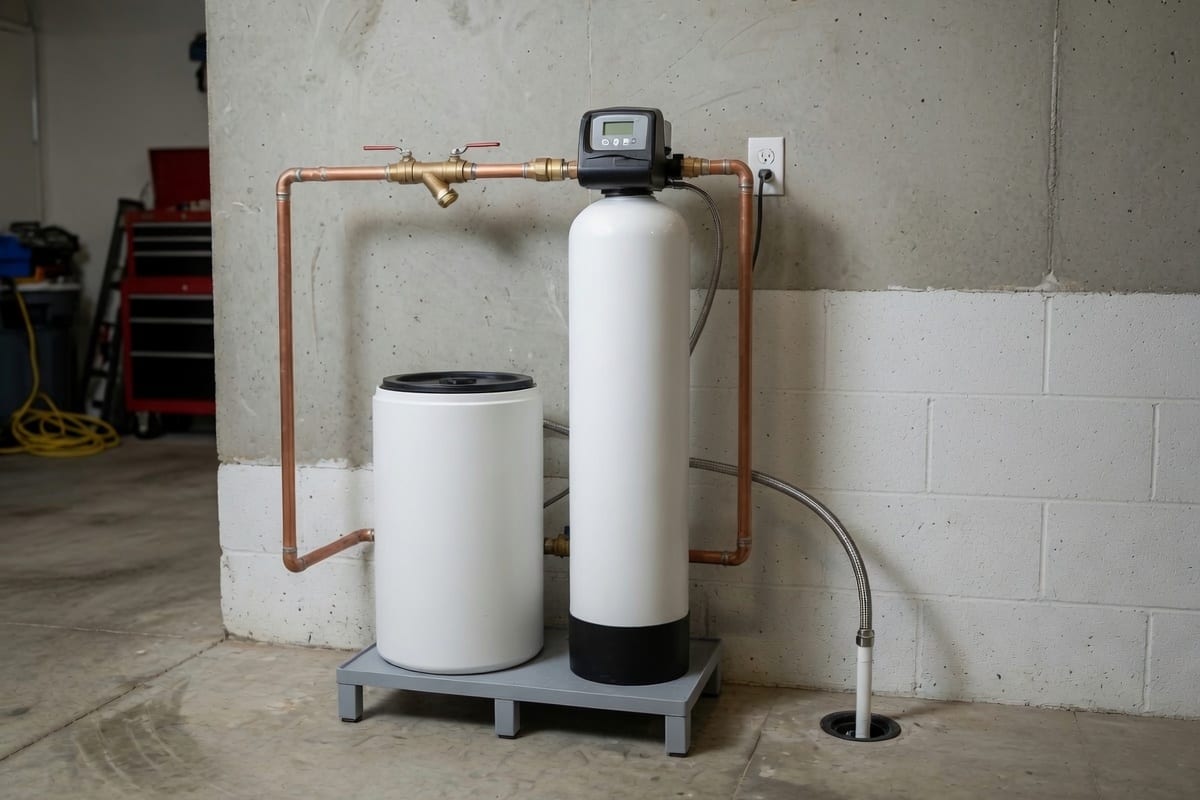
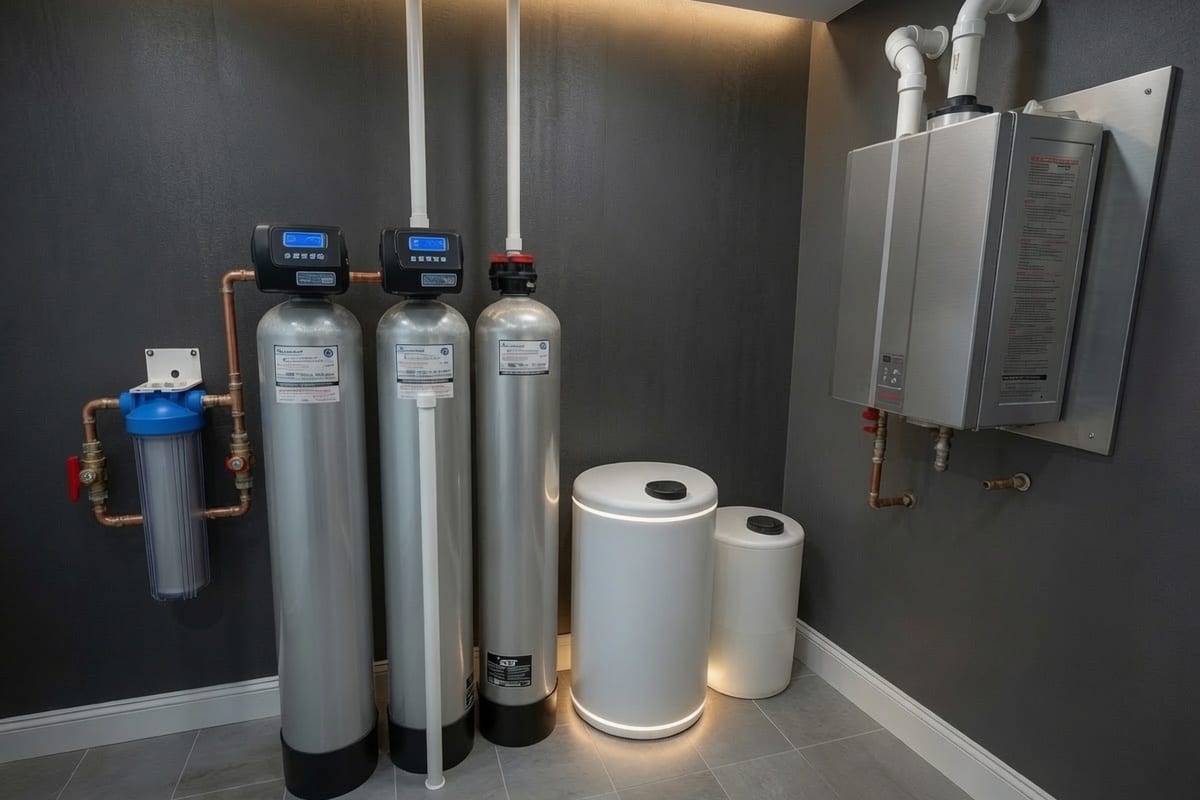
For chlorine taste and odor at every tap, a standard whole-house carbon filter is the right tool (whole house carbon filter, $1,500 to $3,500 installed). Because the disinfectant here is chlorine rather than chloramine, the media does not need to be the catalytic grade. Our carbon filtration page covers how that is sized, and the full range of planning prices sits on our water filtration cost page.
If a reading at your own tap turns up hardness worth treating, a water softener installation (water softener, whole home) runs $1,500 to $3,500 installed. Since Louisburg’s own report does not publish a hardness number, the only way to know whether that applies to your house is to have it measured. Our water testing page explains what a full read of your tap covers, and every figure here and on our cost page is a planning range, never a quote.
Frequently Asked Questions
Is Louisburg NC tap water safe to drink?
The Town of Louisburg’s 2024 and 2025 water quality reports both record no violations, and disinfection byproducts, lead, copper, fluoride and radiological readings were all under their limits. The Town treats the water at its own plant on the Tar River and publishes the results every year as part of that record. Our city water treatment page covers how that supply can be treated further at the tap.
Where does Louisburg get its water?
From the Tar River, treated at the Town’s own plant, permitted for 2.0 million gallons a day. Louisburg does not buy water from Franklin County; it sells the county about half a million gallons a day under contract.
Do Youngsville, Franklinton and Bunn drink the same water as Louisburg?
No. Those areas are served by Franklin County Public Utilities, a separate system that blends its own reservoirs with water purchased from Henderson, Louisburg and the City of Raleigh. See our Wake Forest water filtration guide for the Raleigh-supplied side of that mix.
Does Louisburg have hard water?
Nobody has published the number. Neither the Town’s 2024 nor its 2025 report lists a hardness figure, so the only way to know is to measure it at your own tap. A free consultation covers what to do once you have the number.
Is there PFAS in Louisburg’s water?
The Town’s reports do not say. Neither the 2024 nor the 2025 report mentions PFAS or lists a PFAS result, and neither says whether PFAS was sampled. The federal limit is 4 parts per trillion each for PFOA and PFOS, finalized in April 2024, which systems must meet by 2029.
Does Louisburg use chloramine?
No. Louisburg’s reports show a plain chlorine residual, averaging 0.85 ppm against a 4.0 ppm limit, and no chloramine residual. That makes standard activated carbon filtration effective for taste and odor, without the catalytic carbon a chloramine system needs.
Sources and reporting dates
- Town of Louisburg 2025 Annual Drinking Water Quality Report and 2024 report.
- Franklin County 2024 Consumer Confidence Report, PWS 02-35-030.
- NC DEQ Local Water Supply Plan reports for PWSID 02-35-015 (Town of Louisburg) and PWSID 02-35-030 (Franklin County Public Utilities), 2024.
- NC DEQ Source Water Assessment Program report for the Tar River intake, September 2020, as cited in the Town’s CCR.
- EPA Safe Drinking Water Information System violation records for PWSID NC0235015, read 27 September 2026.
- EPA’s PFAS drinking water regulation, 10 April 2024, and its proposed PFOA and PFOS compliance extension rule, 18 May 2026, not final.
A system average does not describe every address on every day. Check the current report before acting on any single number here.
Louisburg tap water, answered
By the Town’s 2024 and 2025 reports, Louisburg received no violations, and its water runs on plain chlorine rather than chloramine. Neither report mentions PFAS. The county water that reaches Youngsville, Franklinton and Bunn is a different system with its own numbers, worth checking separately if that is where you live.
The free consultation, with an up-front written price, is offered across the Triangle, including nearby Wake Forest. Coverage of Louisburg and the rest of Franklin County is not confirmed, so ask through our contact page whether your address is covered, or call (984) 384-6991.