Is Hillsborough NC Tap Water Safe to Drink? (2026)
Raleigh Water Pros • September 27, 2026 • 9 min read
Hillsborough sits between two towns this site already covers, Durham to the east and Chapel Hill to the south, and it is easy to assume its water is one of theirs. It is not. The Town of Hillsborough treats its own supply from the Eno River, at its own plant, and its report reads nothing like either neighbor’s.
Is Hillsborough NC tap water safe to drink? The Town’s own 2025 report states 100% regulatory compliance. The more interesting detail is what is missing: detectable PFAS, which Durham’s and OWASA’s 2025 testing both found.
Below: where the water comes from, what the 2025 report shows, the PFAS result, why the water changes character every March, and what is worth filtering.
Is Hillsborough tap water safe to drink?
The Town of Hillsborough’s 2025 Annual Water Quality Report states 100% regulatory compliance, and EPA’s violation record for the system, read 27 September 2026, shows nothing opened since 2020 and no item marked health-based.
The federal file lists 20 items going back to 2004: public notice, reporting and monitoring items. Twelve of the twenty were tied to 2020 sampling and were returned to compliance on 9 February 2021. None is open.
The report says raw and finished water at the plant is tested every two hours, “more than the state mandate,” and that bacteria sampling across the system found “no presence of bacteria in the water in 2025.”
Where does Hillsborough’s water come from?
The Eno River, drawn at Lake Ben Johnston, with two upstream reservoirs feeding that intake: Lake Orange on the east fork and the Town’s own West Fork Eno Reservoir in Cedar Grove.
Lake Ben Johnston is the actual intake. Above it, Seven Mile Creek and releases from both reservoirs keep water moving toward the plant. Orange County owns and operates Lake Orange and coordinates releases with the Town. The Town owns the West Fork Eno Reservoir outright and expanded it in 2021, almost doubling its capacity by raising the dam ten vertical feet; full, it holds about 1.2 billion gallons, and no public recreation is allowed there. The plant, on Dimmocks Mill Road, processes up to 3 million gallons a day and treated 720 million gallons in 2025.
A separate, privately owned utility, the Orange-Alamance Water System, also draws from the Eno above Hillsborough’s intake. Its numbers are not in this guide.
| Where you live | Water system | Source |
|---|---|---|
| Town of Hillsborough | Town of Hillsborough, NC0368015 | Eno River via Lake Ben Johnston |
| Orange-Alamance customers | Orange-Alamance Water System (private), NC0368020 | Eno River, its own intake |
| Chapel Hill and Carrboro | OWASA, NC0368010 | Cane Creek Reservoir, University Lake |
| City of Durham | City of Durham, NC0332010 | Lake Michie, Little River Reservoir |
| Rural Orange County on a private well | Your own well | Groundwater |
Hillsborough holds emergency-only interconnections with Durham, OWASA and Orange-Alamance, and its 2024 state filing shows zero water bought or sold that year. The one exception: in July 2025, Tropical Storm Chantal dropped over 10 inches of rain and shut the plant down, and Durham supplied water through the interconnection until it came back online. That is what the connection is for, not a sign Hillsborough runs on someone else’s water day to day. Durham’s own report is in our Durham tap water guide, and Chapel Hill and Carrboro’s in our Chapel Hill tap water guide.
Want to know what these numbers mean for your own house? Request a free consultation for a written recommendation and an up-front price.
What does Hillsborough’s 2025 water report show?
Disinfection byproducts under their limits, lead and copper both well under their action levels, and no lead service lines identified so far.
| Measurement, 2025 report | Hillsborough result | Federal limit |
|---|---|---|
| Total trihalomethanes (highest LRAA) | 63 ppb (36 to 92 range) | 80 ppb |
| Haloacetic acids HAA5 (highest LRAA) | 38 ppb (7 to 45 range) | 60 ppb |
| Copper, 90th percentile (2024 sampling) | 0.16 ppm | action level 1.3 ppm |
| Lead, 90th percentile (2024 sampling) | 0 ppb | action level 15 ppb |
| Highest single turbidity reading | 0.11 NTU | violation above 1 NTU |
The byproduct figures are the running annual average at the compliance point, which is what the rule judges. The trihalomethane range does include one single reading as high as 92 ppb, above the 80 ppb limit, but compliance is not decided sample by sample, and the reported average of 63 carries no violation.
Lead is the cleanest line in the report: none of the homes sampled came back over the action level, and the highest single reading was 4.4 ppb. On lead service lines, the Town’s own words are “maybe”: records dating to the 1930s call for copper or plastic lines, not lead, and none has been confirmed. About 2,800 service lines still have unidentified material, and the Town sent letters to those customers in December 2025 under the federal inventory requirement. Known galvanized lines, not lead but capable of holding leached lead in corroded spots, are replaced as found.
Is there PFAS in Hillsborough’s water?
None was detected. The report says all 29 PFAS compounds were non-detectable across four quarters of 2025 sampling under EPA’s fifth Unregulated Contaminant Monitoring Rule (UCMR 5).
“Non-detectable” means below the reporting level EPA set for that program, which for PFOA and PFOS is 4 parts per trillion. It is not proof of zero. Durham’s PFOA and PFOS sit close to the limit and OWASA’s are low but present. Hillsborough’s own explanation: it sits at the upper reaches of the Eno, with largely rural and agricultural land uses and no heavy industrial customers.
EPA finalized its first national PFAS drinking water rule on 10 April 2024. It sets enforceable limits of 4.0 parts per trillion each for PFOA and PFOS, and water systems have until 2029 to meet them. On 18 May 2026 EPA proposed letting systems ask for two more years, to 2031, and proposed dropping the 2024 limits for PFHxS, PFNA and GenX; both are proposals, not final rules. The Town’s report prints a different year for the rule; EPA’s own page gives 10 April 2024. Our North Carolina PFAS guide explains the rule in more depth.
1,4-dioxane is not mentioned in Hillsborough’s 2025 report. That differs from “not detected”: the question has not been published, so no claim belongs in this guide either way.
Why does Hillsborough water switch to chlorine every March?
Because for one month a year, the Town swaps its usual chloramine disinfectant for chlorine alone, a switch OWASA and Durham also make.
Chloramine, a mix of chlorine and ammonia, disinfects Hillsborough’s water eleven months of the year. In March the Town switches to chlorine only, in its own words “to ensure a high level of disinfection annually.” The report gives no exact start or end date, so check the Town’s water page each winter rather than assuming last year’s timing repeats.
Chloramine and chlorine are both toxic to fish and amphibians, so the Town advises aquarium owners to neutralize either, and recommends chloramine-resistant rubber for toilet flappers, hoses and connectors. For filtration, the distinction matters: standard carbon handles free chlorine well but chloramine poorly, so a filter that seems fine every March may be doing much less the rest of the year. Our explainer on catalytic carbon for chloramine covers why, and our annual chlorine switch guide explains why North Carolina utilities do this every year.
Pro tip: the Town’s report says hot, dry weather can grow algae in the Eno that the plant “sometimes cannot keep up with treating,” producing an earthy or musty taste and smell it describes as “considered only aesthetic and not harmful to health.” The Town is the one to ask about a taste change; its number is on the report.
What is worth filtering on Hillsborough water?
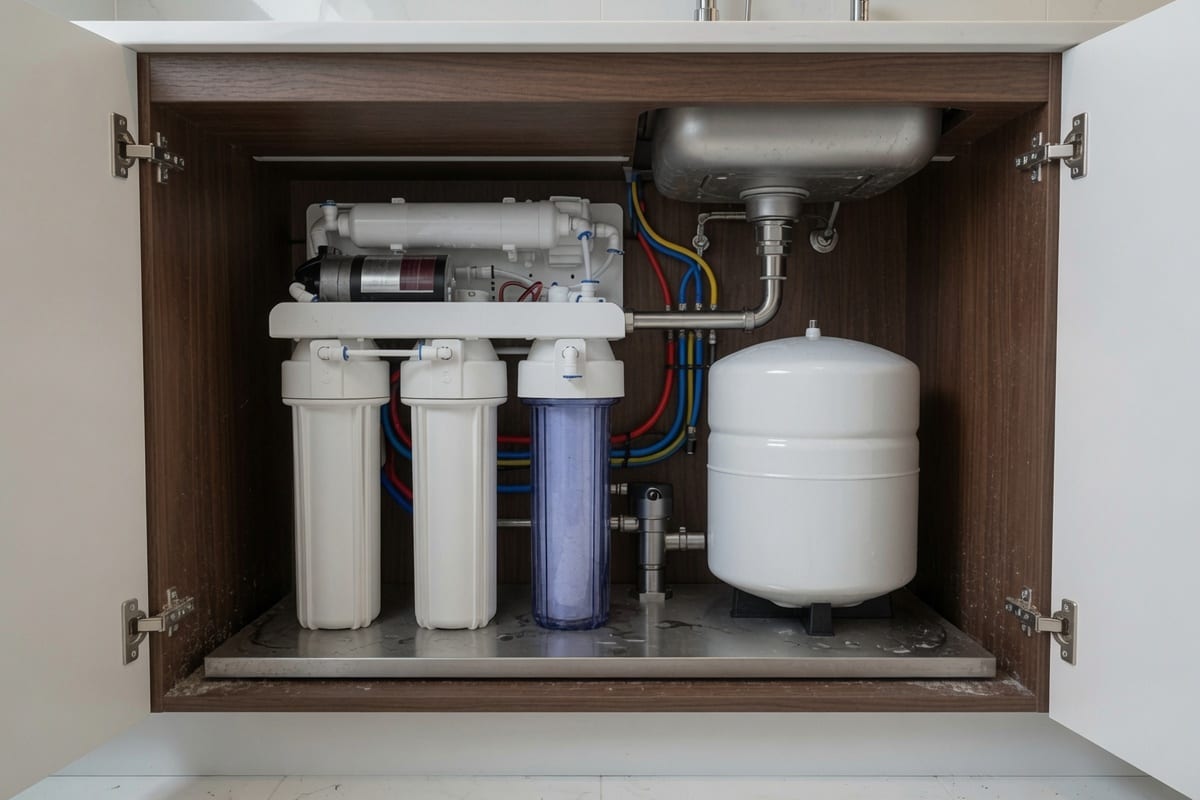
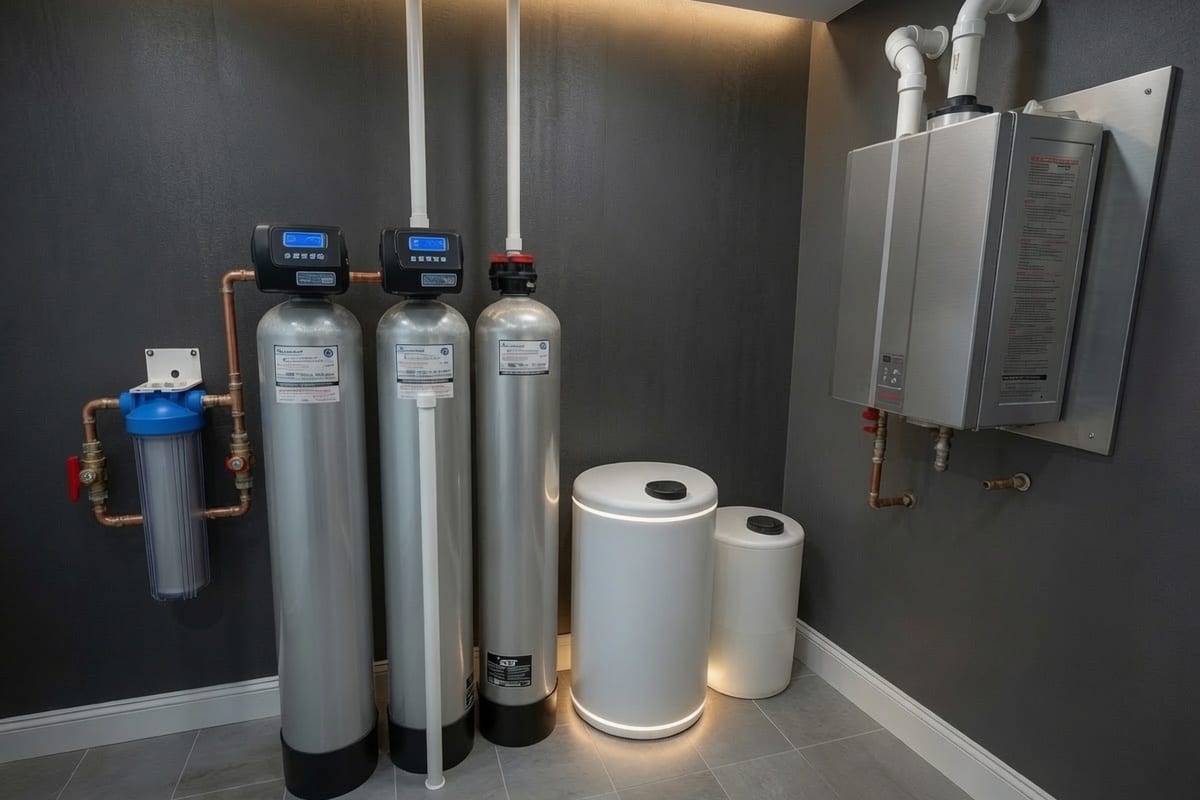
For the chloramine taste at every tap, a whole house carbon system using catalytic media is the right specification; city water treatment covers chloramine and residual taste together. With no PFAS detected in 2025, an under-sink reverse osmosis unit is a personal choice here rather than a response to a reported result.
Hardness is not published anywhere in Hillsborough’s report, so nobody can tell you from a document whether your water is hard. A water test at your own tap is the only way to know before buying a softener on a guess. Every figure above is a planning range, not a quote, and the full set of price bands sits on our Raleigh water filtration cost guide.
Frequently Asked Questions
Is Hillsborough NC tap water safe to drink?
The Town’s 2025 report states 100% regulatory compliance, and EPA’s record shows nothing opened since 2020 and no item marked health-based. Byproducts, lead and copper all tested under their federal limits.
Where does Hillsborough NC get its water from?
The Eno River, drawn at Lake Ben Johnston and treated at the Town’s own plant. Two upstream reservoirs, Orange County’s Lake Orange and the Town-owned West Fork Eno Reservoir, feed that intake. Hillsborough does not buy water from Durham or OWASA for regular use; both are emergency-only backups.
Does Hillsborough NC water have PFAS?
None was detected. All 29 compounds under UCMR 5 came back non-detectable across four quarters of 2025 sampling (below 4 parts per trillion for PFOA and PFOS), while Durham and Chapel Hill’s OWASA both reported detections.
Does Hillsborough NC have hard water?
Nobody publishes the number. The Town’s report has no hardness row in any unit, so the only way to know your own reading is to have it measured with a water test rather than buying a softener on assumption.
Why does my Hillsborough water taste different in March?
The Town switches from chloramine to chlorine only for about a month each March, then back. Both are legal disinfectants under the same 4 parts per million federal limit, and a whole house catalytic carbon filter handles either.
Does Raleigh Water Pros serve Hillsborough?
Coverage of Hillsborough addresses is not confirmed. The free consultation runs across the Triangle, and the fastest way to find out whether your address is included is to ask through our contact page before booking.
Sources and reporting dates
- Town of Hillsborough 2025 Annual Water Quality Report, Water Treatment Plant, PWS ID 03-68-015, read September 2026.
- NC DEQ Source Water Assessment Program Report for Hillsborough, 10 September 2020.
- NC DEQ Local Water Supply Plan for Hillsborough, 2024 filing.
- EPA Safe Drinking Water Information System violation records for NC0368015, and system records for NC0368015 and NC0368020 (Orange-Alamance Water System), read September 2026.
- EPA, PFAS national drinking water standard, 10 April 2024, its proposed PFOA and PFOS compliance extension rule, 18 May 2026, not final, and its UCMR 5 page for reporting levels.
A system average does not describe every address on every day. Check the current report before acting on any single number.
Hillsborough tap water, answered
Hillsborough treats its own water from the Eno River. Its 2025 report states 100% compliance, byproducts and lead sit under their limits, and no PFAS was detected at UCMR 5 reporting levels. The open questions are hardness, never published, and the exact dates of the March switch, which the Town does not print.
The free consultation, with an up-front written price, is offered across the Triangle, including nearby Durham water filtration and Chapel Hill water filtration. Coverage of Hillsborough is not confirmed, so ask through our contact page whether your address is covered, or call (984) 384-6991.