PFAS in North Carolina Water: City by City (2026)
Raleigh Water Pros • September 13, 2026 • 11 min read
PFAS results vary enormously between North Carolina water systems. Some utilities report detections above the limits that take effect later this decade. Others report no detections at all for the compounds they tested. That spread is why national coverage of “forever chemicals in North Carolina” is close to useless for deciding whether to filter your own water: the sampling dates, the compounds tested and the laboratory reporting limits all differ.
The only thing that answers that question is what your own utility measured. So we read the reports for every major system we cover and put the numbers in one place.
What are the EPA limits for PFAS?
EPA’s 2024 rule set limits for PFOA and PFOS at 4.0 parts per trillion each, for PFHxS, PFNA and GenX at 10 parts per trillion each, and a hazard index limit covering certain mixtures. A part per trillion is roughly one drop in twenty Olympic swimming pools, so these are very small numbers measured by very good laboratories.
Compliance with those limits is scheduled for 2029. In May 2026 EPA proposed two changes: letting qualifying systems request an extension to 2031 for PFOA and PFOS, and separately rescinding the limits for PFHxS, PFNA, GenX and the hazard index.
Both are proposals, not final rules. A utility measuring above a limit today is not in violation today, because the compliance date has not arrived. Treat 2029 as the date on the books and 2031 as a possibility.
What North Carolina utilities actually reported
Every figure below is the utility’s own published result, in parts per trillion.
| City | PFOS | PFOA | Position |
|---|---|---|---|
| Greensboro (Mitchell plant) | 27.34 | 3.65 | Above the limit, building carbon |
| Greensboro (Townsend plant) | 18.1 | not detected | Above the limit, building carbon |
| Fayetteville (Glenville Lake) | 14.65 | 5.55 | Above the limit, carbon due 2029 |
| Fayetteville (P.O. Hoffer) | 8.60 | 4.83 | Above the limit, carbon due 2029 |
| Concord | 7.3 to 9.1 | not detected | Was above; carbon built August 2026 |
| Greenville | 6.3 | 7.6 | Above the limit, no treatment announced |
| Raleigh | 2.60 | 2.69 | Detected, under the limit |
| Winston-Salem | 0.175 | not detected | Detected, below the limit |
| Wilmington | not detected | 0.03 | Detected, below the limit, carbon built 2022 |
| Charlotte and Huntersville | not detected | not detected | Not detected in cited sampling |
| Gastonia | not detected | not detected | No detections among compounds tested |
| Mooresville | not detected | not detected | No detections among compounds tested |
| Asheville | not detected | not detected | No detections, 2024 monitoring round |
| Hickory | not detected | not detected | No detections among 29 compounds tested |
| Jacksonville | not detected | not detected | No detections reported by the utility |
| Southern Pines | not detected | not detected | No detections among compounds tested |
| Hendersonville | not detected | not detected | No detections among compounds tested, see note |
| New Bern | not detected | not detected | No detections across 240 results |
| Monroe | not reported 2025 | not reported 2025 | One compound in 2024, none in 2025 |
| Leland | aquifer source | aquifer source | Off the river since 2023 |
The spread is the story. Greensboro’s Mitchell plant measured roughly seven times the federal limit. Nine systems in the same state recorded nothing at all.
The note against Hendersonville matters: its clean sweep was sampled between October 2024 and July 2025, and the city activated a new French Broad River intake in December 2025 that no federal monitoring result covers yet.
Not sure which side of that table your address falls on? Request a free consultation and we will go through your utility’s own results with you and set out the testing options. PFAS analysis needs a laboratory equipped for it; an in-home hardness or dissolved-solids reading does not measure PFAS.
Pro tip: “not detected” means below the laboratory’s reporting limit, usually 3 or 4 parts per trillion, rather than literally zero. It is the strongest result a utility can report, and it is not the same as a promise of absolute absence.
The two North Carolina stories worth knowing
The Cape Fear. GenX and other PFAS were discharged from the Chemours Fayetteville Works into the Cape Fear River from 1980. A 2016 study using 2013 samples found GenX in Wilmington’s drinking water averaging 631 parts per trillion. Wilmington built the largest granular activated carbon installation at a public water plant in the state, and its treated water averaged 0.10 parts per trillion in 2025. Roughly 104,000 homes are now eligible for Chemours-funded well screening. The full account is in our Chemours and Cape Fear guide.
One correction that matters, because almost everyone gets it backwards: the Chemours outfall sits more than 20 miles downstream of Fayetteville’s river intake, so the city whose name is on the plant does not drink that discharge. Its utility attributes the PFAS it does measure to consumer and industrial products across the watershed.
The Haw. A separate set of dischargers, principally in the Triad, sent PFAS and 1,4-dioxane into the Haw River. Burlington’s measured PFAS discharge was just over 30,000 parts per trillion in 2019 and fell to 519 after the first round of controls. The towns affected are downstream, which is covered in our Triangle PFAS and 1,4-dioxane guide.
Neither story tells you anything reliable about a city in the Catawba or Yadkin basin, which is most of the western half of the state.
What actually removes PFAS from drinking water?
Three technologies work, and two of them are practical at home.
| Method | Where it works | Household cost |
|---|---|---|
| Granular activated carbon | Whole house, and at plant scale | $1,500 to $3,500 installed |
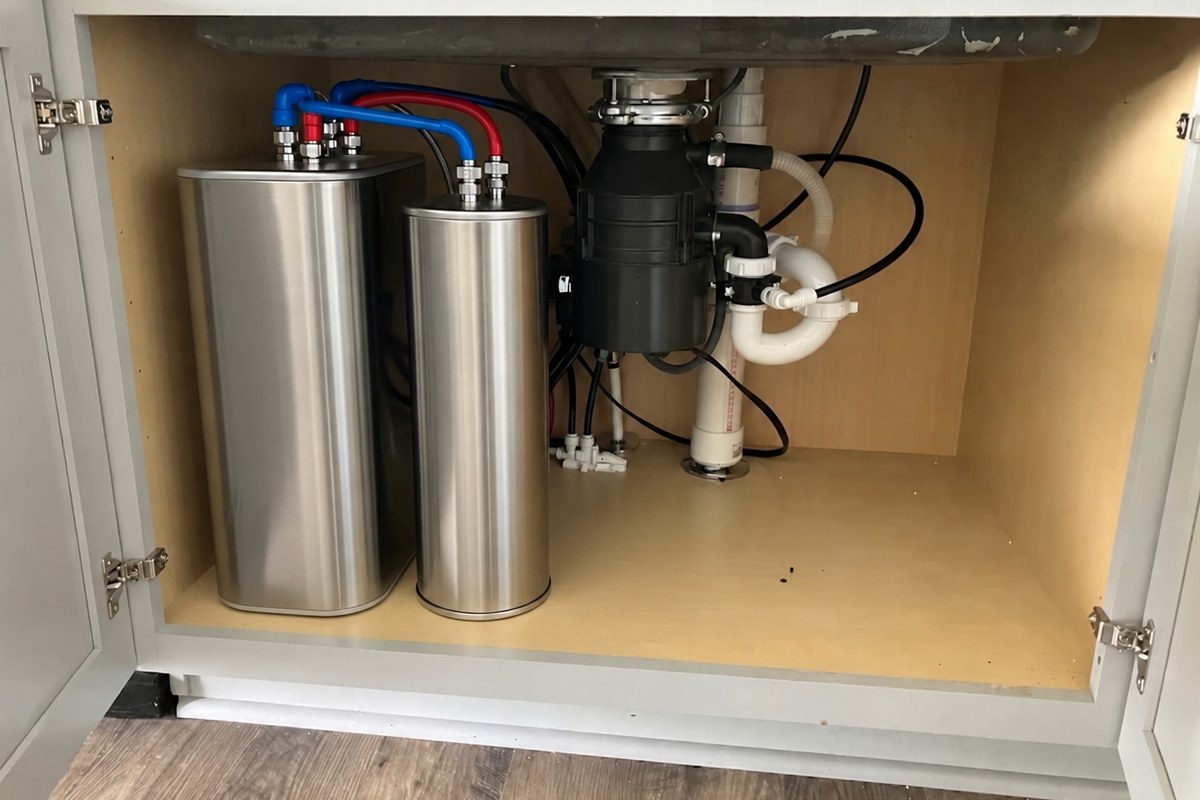
| Reverse osmosis | Point of use, kitchen sink | $350 to $900 installed |
| Ion exchange resin | Plant scale, specialist media | not typical at home |
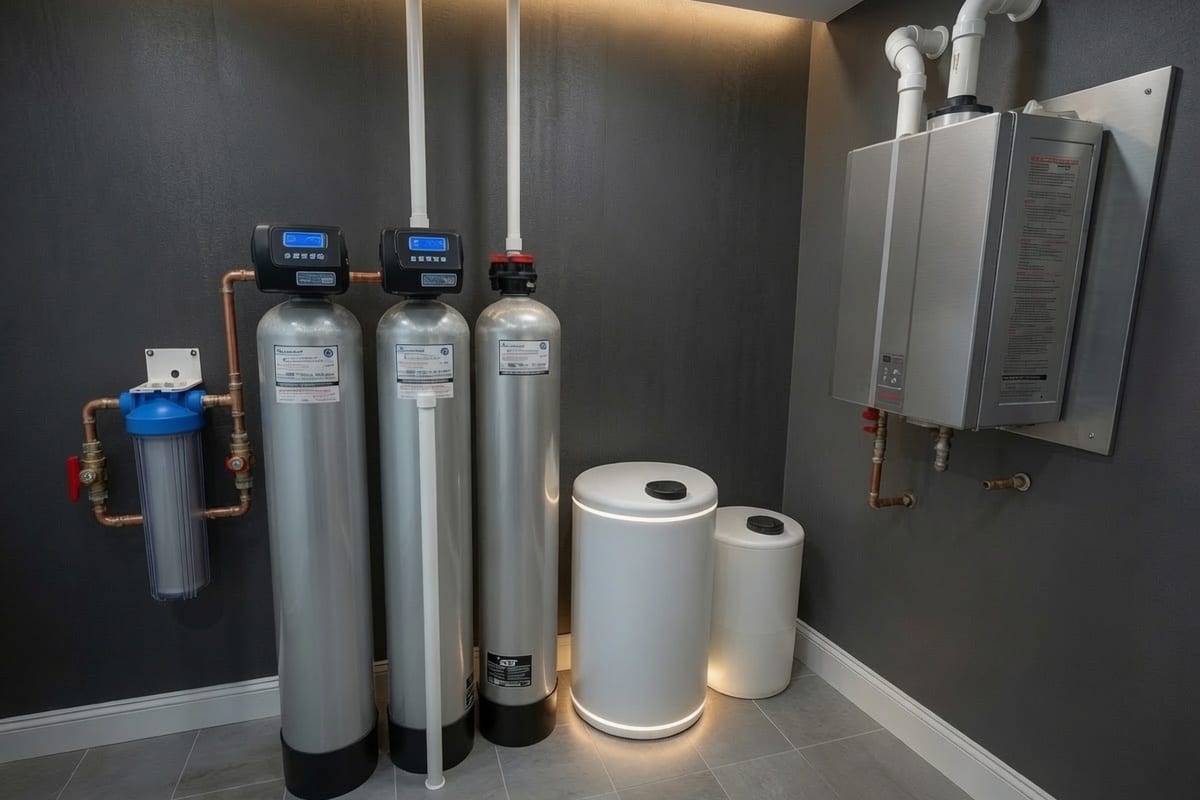
Wilmington chose carbon after pilot testing against reverse osmosis and ion exchange. Concord and Greensboro both chose carbon. For a household, reverse osmosis at the kitchen tap is the usual answer because it covers the water you drink and cook with at the lowest cost, and a whole-house carbon system is the answer if you want every tap covered. Our cost guide sets out what moves those numbers.
Whatever you buy, buy it on its certification. Check that the unit’s listing names the specific compound you want reduced, and check its rated flow, capacity and replacement schedule. A general carbon or reverse osmosis label does not establish every reduction claim, and NSF’s certified product listings are where to confirm one.
What does not remove PFAS: a water softener. It removes hardness minerals through ion exchange and is not designed for these compounds. A standard sediment filter does nothing either. Anyone selling you a softener as a PFAS solution is either confused or counting on you being so.
Want to go through your own utility’s results rather than a national headline? Request a free consultation and we will tell you plainly whether anything is worth doing, including when what you need is a laboratory test rather than anything we sell.
Frequently Asked Questions
Is North Carolina water safe to drink?
In every system covered here, yes by the standards in force today. Greensboro’s PFOS sits above a limit that has not yet taken effect, and the city is building treatment to meet it. That is a meaningful difference from a violation, and worth understanding before you act.
Should I buy a filter because of PFAS?
That depends entirely on your city, which is the whole point of the table above. In Mooresville or Gastonia there is nothing measured to remove. In Greensboro there is a real number and a reasonable case for a unit at the kitchen tap while the city builds its carbon plants.
Does boiling water remove PFAS?
No, and it makes it slightly worse. Boiling evaporates water and leaves the compounds behind at a marginally higher concentration. PFAS do not break down at cooking temperatures, which is part of why they are called forever chemicals.
What about my private well?
Wells are not covered by any of these reports, because no utility tests them. County health departments generally test for bacteria, metals and nitrates but not PFAS, so a commercial laboratory is needed. If you are near the Chemours plant or downstream of it, the company-funded testing programme may cover you at no cost. Our water testing service covers the conventional panel and we will say plainly when you need a specialist lab instead.
Why do two plants in the same city give different results?
Because they treat water from different reservoirs. Greensboro’s Mitchell plant draws Lake Brandt and measured higher on every PFAS compound than its Townsend plant on Lake Townsend. Which plant serves your address is a question worth asking your utility.
Which NC cities reported no PFAS detections?
Nine systems recorded no detections at all: Charlotte, Huntersville, Gastonia, Mooresville, Asheville, Hickory, Hendersonville, Southern Pines and New Bern, with Jacksonville reporting none either. The most extensive set of non-detections belongs to New Bern, which produced 240 results across four sample points and two aquifers without a single detection of anything. Winston-Salem came in under the limit on every 2025 sample. Those results reflect their source water as much as their treatment, since none draws from a river carrying a documented industrial discharge.
Does a whole-house filter handle PFAS, or do I need one at the sink?
Both work, and they answer different questions. Granular activated carbon at the main covers every tap including showers; reverse osmosis at the kitchen sink covers only drinking and cooking water but costs a fraction as much and is the more common choice when PFAS is the only concern.
Is bottled water safer?
Not reliably. Bottled water is regulated as a food product and is not required to publish the annual testing a public utility must produce, so you trade a supply you can audit for one you cannot. A filter certified for the specific compound is the more auditable choice.
Is a “hazard index” the same as a limit?
Not quite. The hazard index is a combined measure covering several compounds at once rather than a single number for a single chemical, which is how EPA proposed handling PFHxS, PFNA, GenX and PFBS together. It is one of the things EPA proposed rescinding in May 2026, so a utility reporting against it today may be reporting against a rule that does not survive.
Does Raleigh have PFAS in its water?
Yes, at low levels. Its E.M. Johnson plant measured PFOA at 2.69 and PFOS at 2.60 parts per trillion in 2025, both below the 4.0 limit. That is a real detection rather than a non-detect, which puts Raleigh between the clean systems and the three that sit above the limit.
One detail worth having. Under the federal monitoring round, two individual samples at the E.M. Johnson plant measured PFOS at 5.3 and 5.6 parts per trillion in summer 2023. Compliance is judged on a running annual average rather than on any single sample, so that is not a violation, and the current figures are lower. It is the same distinction that matters in Hickory, where one byproduct sample ran well above a limit the annual average sits comfortably inside.
The same figures cover every town inside that system, so Garner, Knightdale and Wake Forest read exactly the same as Raleigh. The separate Triangle question is 1,4-dioxane in the Haw, covered in our Triangle water guide.
My utility is not on your list. What do I do?
Ask for its annual water quality report, which every public system must publish, and look for a PFAS or unregulated contaminants table. If there is none, the utility may not have been in the national monitoring round, which covers larger systems first. Smaller systems are the most likely to have no data at all, and that absence is worth knowing rather than reading as a clean result.
Sources and reporting dates
Every figure above comes from the sources below. Water quality changes between reports, and a reported average does not describe conditions at every address on every day, so check the current source before acting on any number here.
- Each utility’s own published PFAS results, linked from that city’s guide.
- EPA PFAS drinking water rule, for the compounds regulated, the limits and the compliance dates.
- EPA UCMR5 occurrence data, for results described as federal monitoring, including the laboratory reporting limits that define a non-detect.
- NC DEQ GenX and PFAS investigation, for the Cape Fear record.
The short version
If your city is on the clean half of that table, PFAS is not your reason to buy anything, and we will tell you so. If it is on the other half, a reverse osmosis unit at the kitchen sink is the proportionate response while your utility builds what it has committed to build.
We serve the whole of North Carolina. Every visit starts with a free consultation: we test your water, compare it against what your utility publishes, and give you an up-front written price for only what the numbers support. Call (984) 384-6991 or request a free consultation.