Chemours Fayetteville: What It Means for Your Water
Raleigh Water Pros • September 13, 2026 • 8 min read
Chemours Fayetteville Works sits on the Cape Fear River in Bladen County, about a hundred miles upstream of Wilmington. GenX and several other PFAS compounds were discharged from that site into the river from 1980, first by DuPont and later by Chemours, and for most of that time nobody downstream knew.
This guide covers what is actually documented: the dates, the numbers, what the courts required, who pays for well treatment today, and what a homeowner in the affected area can do. It is not legal advice and we have no stake in the litigation. We treat water.
What was found, and when
The study. Detlef Knappe’s group at NC State, working with EPA collaborators, published in Environmental Science and Technology Letters in November 2016. Using samples collected between June and December 2013, they found GenX in Wilmington’s drinking water averaging 631 parts per trillion, and established that both legacy PFAS and GenX were passing untouched through the Wilmington treatment plant into finished water.
Public discovery. New Hanover County became aware in June 2017, nine months after publication and four years after the samples were taken.
The first response. On 20 June 2017 Chemours announced it would capture and dispose of GenX-bearing wastewater rather than release it. NC DEQ verified on 27 June 2017 that the discharge had stopped.
The state health goal. In July 2017 NCDHHS set a provisional health goal of 140 parts per trillion for GenX in drinking water, chosen to protect bottle-fed infants. That is a state health goal, not an enforceable federal limit.
What Chemours was required to do
A Consent Order was signed on 26 February 2019 and entered in Bladen County Superior Court, between NC DEQ, Cape Fear River Watch represented by the Southern Environmental Law Center, and Chemours. It required, among other things:
| Requirement | Detail |
|---|---|
| Air emissions | Thermal oxidiser, 99.9 percent reduction of facility-wide GenX air emissions by 31 December 2019, 99 percent maintained thereafter |
| Surface water | At least 75 percent reduction in PFAS loading from baseline; at least 99 percent removal from four identified seeps |
| Groundwater | October 2020 addendum covering more than 90 percent of PFAS entering the river through groundwater from on-site contamination |
| Barrier wall | Roughly 1.5 miles of subsurface barrier wall with groundwater extraction, required operational by 15 March 2023 |
DEQ approved a permit in September 2022 for a carbon treatment system serving the barrier wall and over 70 extraction wells, requiring greater than 99.9 percent PFAS removal. Chemours notified DEQ on 11 June 2023 that the wall and treatment system were complete and operational, months past the deadline.
Is the drinking water safe now?
This is the part that gets misreported most, because the famous 631 ppt figure describes 2013 samples and a treatment plant that no longer exists in that form.
Wilmington. Cape Fear Public Utility Authority built eight deep-bed granular activated carbon filters at its Sweeney plant, online from October 2022, holding almost three million pounds of carbon. In calendar year 2025 its treated water averaged 0.10 parts per trillion of GenX, with PFOA and PFOS consistently not detected. Full detail is in our Wilmington water guide.
Leland. H2GO left the river entirely on 1 June 2023, moving to reverse osmosis fed by wells in confined aquifers. See the Leland guide.
Brunswick County. Its Northwest plant was still conventional treatment on Cape Fear River water as of August 2026, with a low-pressure reverse osmosis train due at the end of 2026. The county publishes weekly PFAS results, and checking the current posting is more reliable than any summary including this one.
Pro tip: whenever you see a PFAS number quoted for the Cape Fear, check three things before acting on it: what was measured, where in the system, and in what year. Raw river water, finished water before treatment was built, and finished water today are three completely different numbers.
Do I qualify for free well treatment?
Chemours pays for testing and treatment at qualifying private wells. Not the state, not a grant programme: the company, compelled by the court-entered Consent Order. Getting this wrong sends people looking for government help that does not exist.
Sampling near the plant covered six counties: Bladen, Cumberland, Harnett, Hoke, Robeson and Sampson. As of July 2022, 9,420 wells had been tested within about 25 miles of the site; 1,803 qualified for carbon systems or a municipal connection, and about 4,408 qualified for reverse osmosis.
Downstream sampling in New Hanover, Brunswick, Columbus and Pender counties began in February 2022. After DEQ directed Chemours in December 2023 to widen the area, roughly 104,000 homes had become eligible for screening as of September 2025.
A well qualifies at any of these thresholds:
| Result | What is provided |
|---|---|
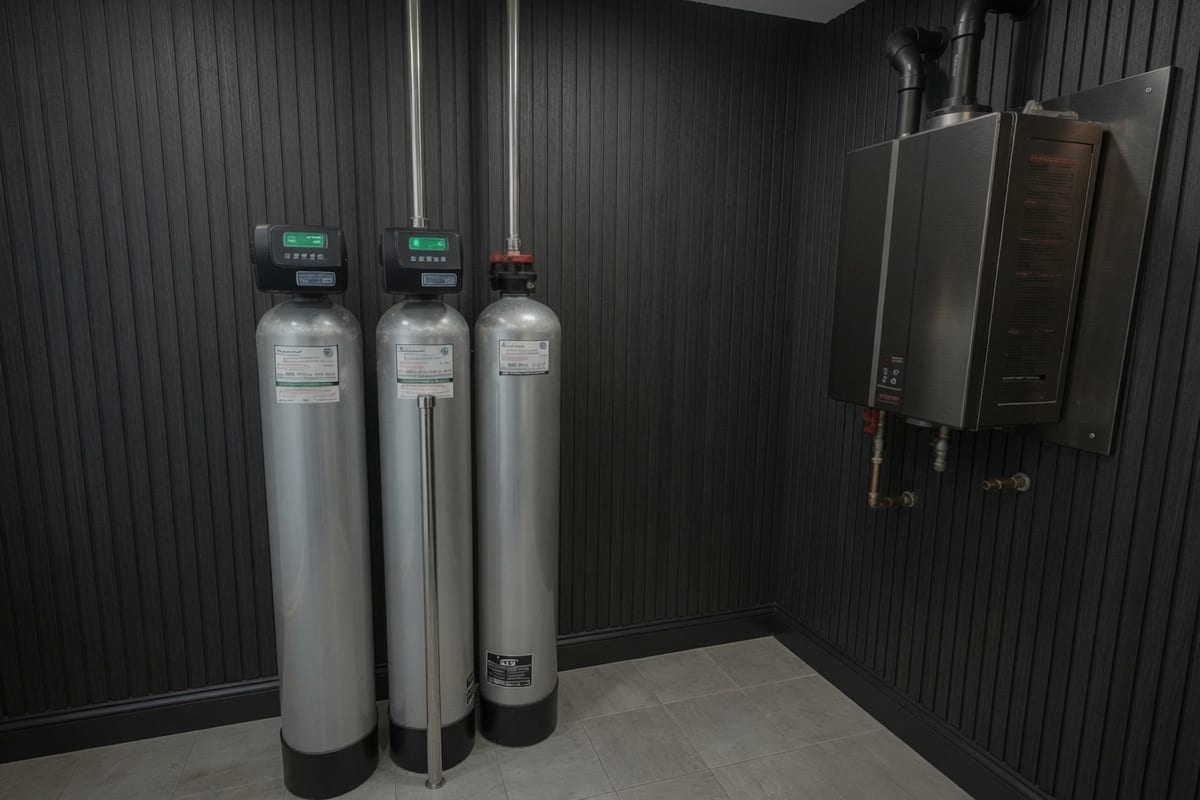
| GenX at or above 10 ppt | Whole-building granular activated carbon |
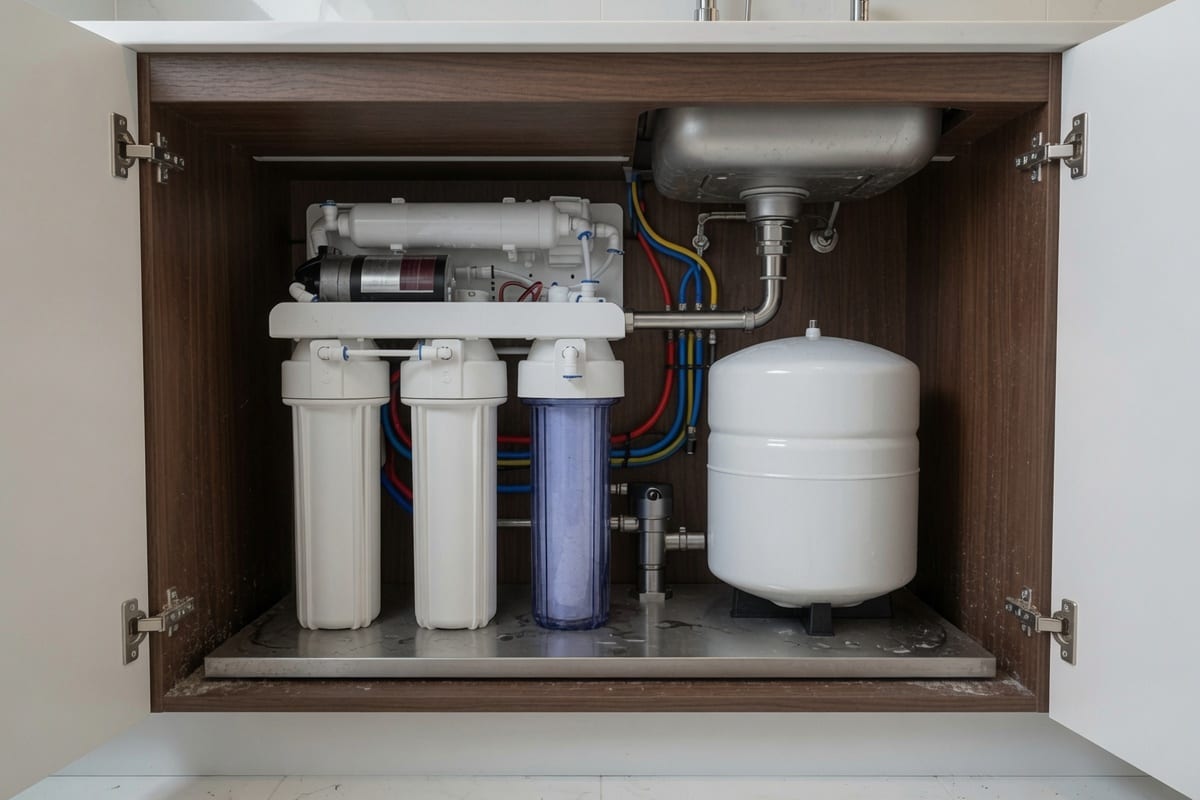
| Any individual consent-order PFAS at or above 10 ppt | Under-sink reverse osmosis at kitchen and bathroom sinks |
| Combined PFAS at or above 70 ppt | Under-sink reverse osmosis |
Bottled water is provided until installation. Requests go to Chemours on 910-678-1100, and the return call often comes from Parsons Environmental, its contractor.
If you qualify, use it. It costs you nothing and we are not going to pretend otherwise to make a sale. Get in touch if you fall below the thresholds, want treatment beyond what the programme installs, or have the ordinary well problems that have nothing to do with PFAS.
The money and the current legal position
CFPUA sued Chemours and DuPont in October 2017 in federal court to recover treatment costs, having spent $43 million on infrastructure.
On 9 September 2026 the North Carolina Attorney General announced a $590 million settlement with DuPont, Chemours and Corteva, described as the largest state environmental damages recovery in North Carolina history: $455 million in direct payments over 10 to 15 years plus a $135 million reserve for future remediation. Of the $455 million, about $75 million goes to the state and $380 million is divided among eleven local governments including Bladen, Brunswick, Columbus, Cumberland, New Hanover, Robeson and Sampson counties.
The federal rules are in flux, and that matters
EPA finalised limits for six PFAS in April 2024, including PFOA, PFOS and GenX. Two things have changed since:
- PFOA and PFOS limits stand at 4.0 parts per trillion each, but on 18 May 2026 EPA proposed extending the compliance deadline from April 2029 to April 2031.
- GenX may lose its federal limit. On the same date EPA proposed rescinding the regulatory determinations and drinking water standards for PFHxS, PFNA, GenX and the hazard index mixture.
So anyone quoting you a firm federal GenX limit should be asked which rule they mean. North Carolina’s 140 ppt figure remains a state health goal rather than an enforceable standard.
Frequently Asked Questions
Is Cape Fear water safe to drink now?
For CFPUA’s treated water the measured answer is yes: GenX averaged 0.10 parts per trillion in 2025, well under the state health goal of 140, and the two regulated compounds are consistently not detected. For private wells in the affected counties it is an open question until yours is tested, which is what the Chemours-funded programme exists to do.
How do I get my well tested?
Call Chemours on 910-678-1100 or use the online form. If your property is outside the eligible area, a commercial laboratory can run a PFAS panel; county health departments generally test for bacteria, metals and nitrates but not PFAS. Our water testing service covers the conventional panel and we will tell you plainly when you need a specialist lab instead.
What actually removes PFAS from water?
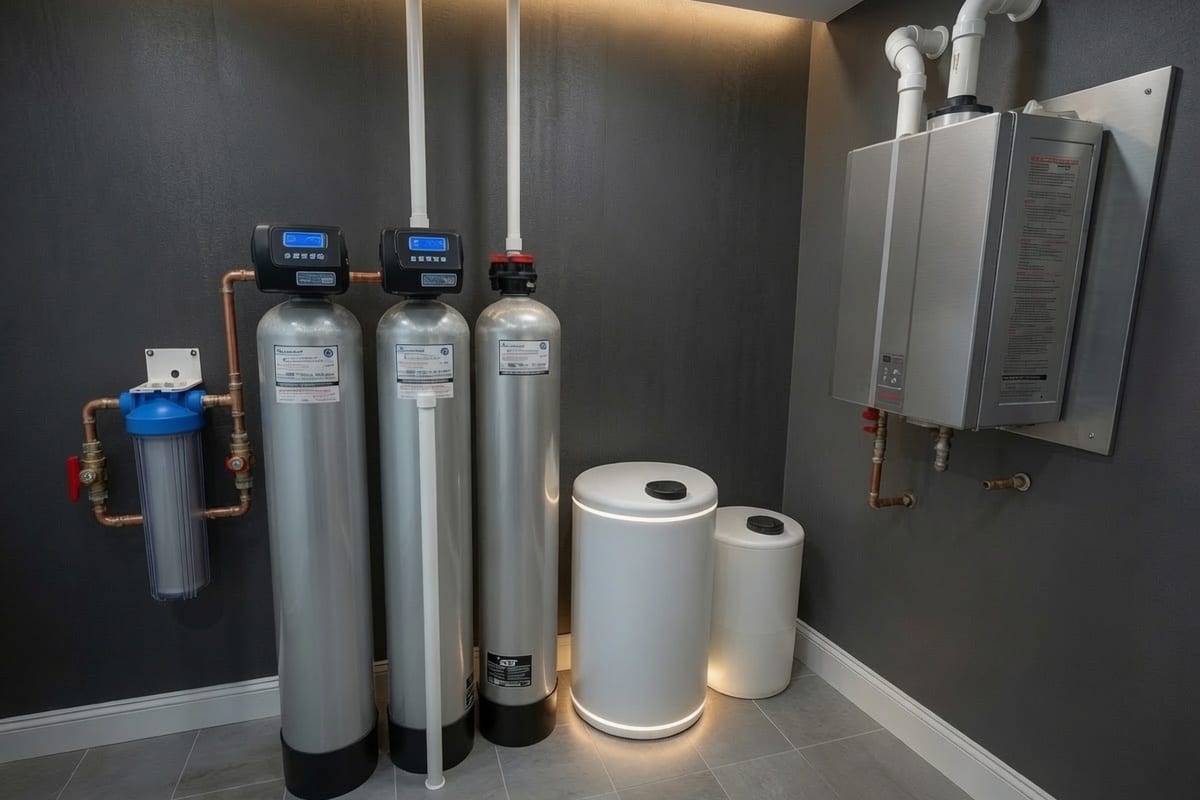
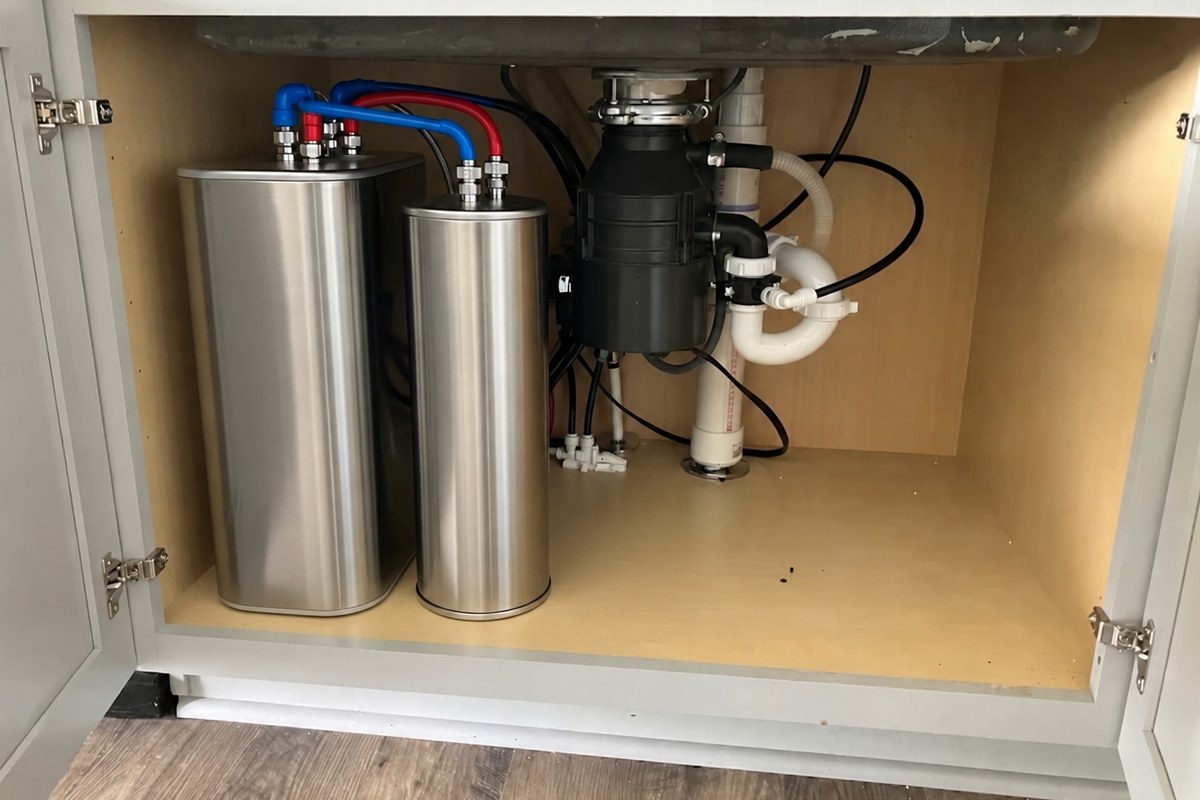
Granular activated carbon and reverse osmosis are the two technologies in use at scale, and both appear in the Chemours programme. CFPUA chose carbon after pilot testing against reverse osmosis and ion exchange. At household level, reverse osmosis at the kitchen tap is the usual answer for drinking and cooking water, and a whole-house carbon system is the usual answer for everything else.
Does a water softener remove PFAS?
No. A softener removes hardness minerals through ion exchange and is not designed for PFAS. Anyone selling you a softener as a PFAS solution is either confused or counting on you being so.
I live in the Triangle. Does this affect me?
Not from Chemours directly, which is downstream of the Triangle. The Triangle’s own PFAS conversation concerns the Haw and upper Cape Fear, driven by different dischargers, and is covered in our PFAS and 1,4-dioxane guide for Triangle water.
Is bottled water the safer choice?
Not reliably. Bottled water is regulated as a food product and is not required to publish the annual testing a public utility must produce, so you lose the ability to check. A filter certified for the specific compound is the more auditable answer.
Sources and reporting dates
Every figure above comes from the sources below. Water quality changes between reports, and a reported average does not describe conditions at every address on every day, so check the current source before acting on any number here.
- NC DEQ GenX and PFAS investigation, the state’s own record of the discharge, the consent order and the well screening programme.
- EPA PFAS drinking water rule, for the limits and compliance dates.
- EPA UCMR5 occurrence data, for utility monitoring results.
What to do with all this
If you are on a public supply in the lower Cape Fear, read your utility’s current report rather than a headline from any year, and remember that Wilmington, Leland and Brunswick County are in three genuinely different positions.
If you are on a well anywhere near the plant or downstream of it, get tested through the Chemours programme first. It is free to you and it is the fastest route to a system if you qualify.
We serve the whole of North Carolina. Every visit starts with a free consultation: we test your water, explain the results against what your utility publishes, and give you an up-front written price for only what the numbers support. Call (984) 384-6991 or request a free consultation.