Is Wilmington Tap Water Safe to Drink? (2026)
Raleigh Water Pros • September 13, 2026 • 9 min read
In 2013, researchers collected samples from Wilmington’s drinking water and found GenX averaging 631 parts per trillion. The compound was passing straight through the treatment plant, from a Chemours outfall about a hundred miles upriver, and nobody in the city knew. The study was published in 2016. New Hanover County learned about it in June 2017.
That number is the one people still remember, and it is the reason this question gets asked more in Wilmington than almost anywhere in North Carolina. It is also nine years out of date.
Is Wilmington tap water safe to drink?
Yes, and the specific thing people worry about has been dealt with. In calendar year 2025, GenX in CFPUA’s treated water averaged 0.10 parts per trillion, against the state health goal of 140. CFPUA’s 2025 report puts PFOA at an average of 0.03 parts per trillion, with results ranging from not detected to 1.45, and PFOS at not detected.
That did not happen by itself. It cost $35.9 million to build and roughly $5 million a year to run.
What Wilmington did about it
Cape Fear Public Utility Authority serves about 200,000 people across Wilmington, Wrightsville Beach and unincorporated New Hanover County. Roughly 80 percent of the supply is Cape Fear River water treated at the Sweeney plant, with the rest from the Castle Hayne and PeeDee aquifers treated at the Richardson plant.
After the discovery, CFPUA added eight deep-bed granular activated carbon filters at Sweeney. Construction started in November 2019, and by late September 2022 the plant was running all of its water through them. The filters hold almost three million pounds of carbon and are believed to be the largest such installation at a public water plant in North Carolina. CFPUA chose carbon over reverse osmosis and ion exchange after pilot testing.
| What CFPUA reported in treated water, 2025 | Average | Range |
|---|---|---|
| GenX (HFPO-DA) | 0.10 ppt | ND to 1.27 |
| PFOA | 0.03 ppt | ND to 1.45 |
| PFHxS | 0.12 ppt | ND to 3.87 |
| PFBS | 0.06 ppt | ND to 3.99 |
| 1,4-dioxane | 0.18 ppb | ND to 2.10 |
CFPUA tests for more than 70 PFAS compounds, well beyond what the EPA requires, and publishes the results. For context, the federal limits for PFOA and PFOS are 4.0 parts per trillion each, and Greensboro’s PFOS measured several times that in the same national monitoring round.
Pro tip: if you see a scary PFAS figure quoted for Wilmington, check its date before you act on it. Anything from before October 2022 predates the carbon filters and describes a plant that no longer exists in that form.
Want to know what is coming out of your own tap rather than the plant? Request a free consultation and we will test it and give you the numbers in writing.
Does Wilmington have hard water?
Moderately. CFPUA reported hardness averaging 50 parts per million in 2025, which is 2.9 grains per gallon, with a range of 39 to 62.
That sits at the top of the soft range and the bottom of moderately hard, a little harder than Charlotte’s 1.9 grains and far below what Piedmont well water delivers. Most Wilmington homes on city water do not need a softener, and anyone insisting you do should be asked to show you a reading in grains per gallon first. Where softening genuinely earns its place around here is on private wells, not on CFPUA supply.
Two other numbers are worth knowing. Trihalomethanes ran 30.6 parts per billion against an 80 limit, which is comfortably low and noticeably better than the inland systems on Piedmont reservoir water. Sodium averaged 33 ppm, higher than most NC systems, which matters only if you are on a sodium-restricted diet.
So what is still worth filtering in Wilmington?
Three honest answers, in order.
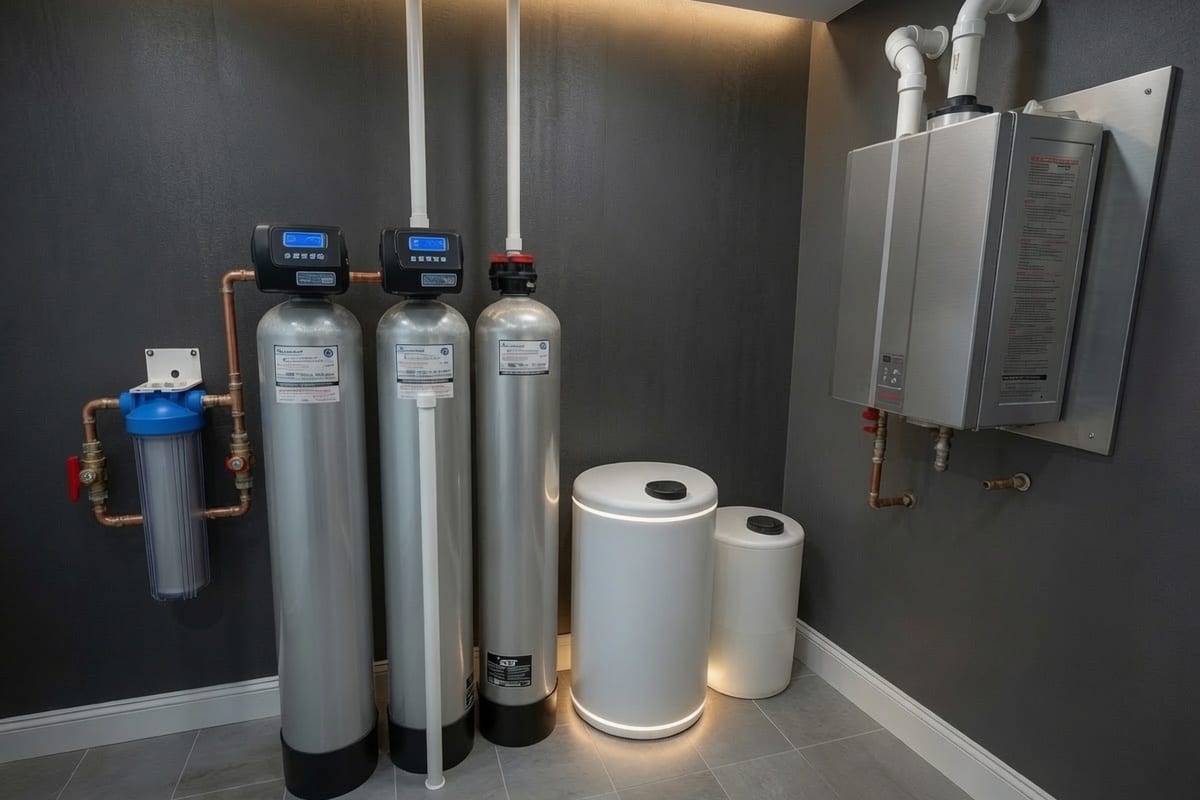
Taste and chlorine. CFPUA disinfects with ultraviolet light, ozone and free chlorine, not chloramine, running a 1.16 ppm chlorine residual. Free chlorine means standard activated carbon works; you do not need the pricier catalytic carbon that chloraminated systems require. A whole house carbon filtration system runs $1,500 to $3,500 installed, and our cost guide breaks down what changes the number.
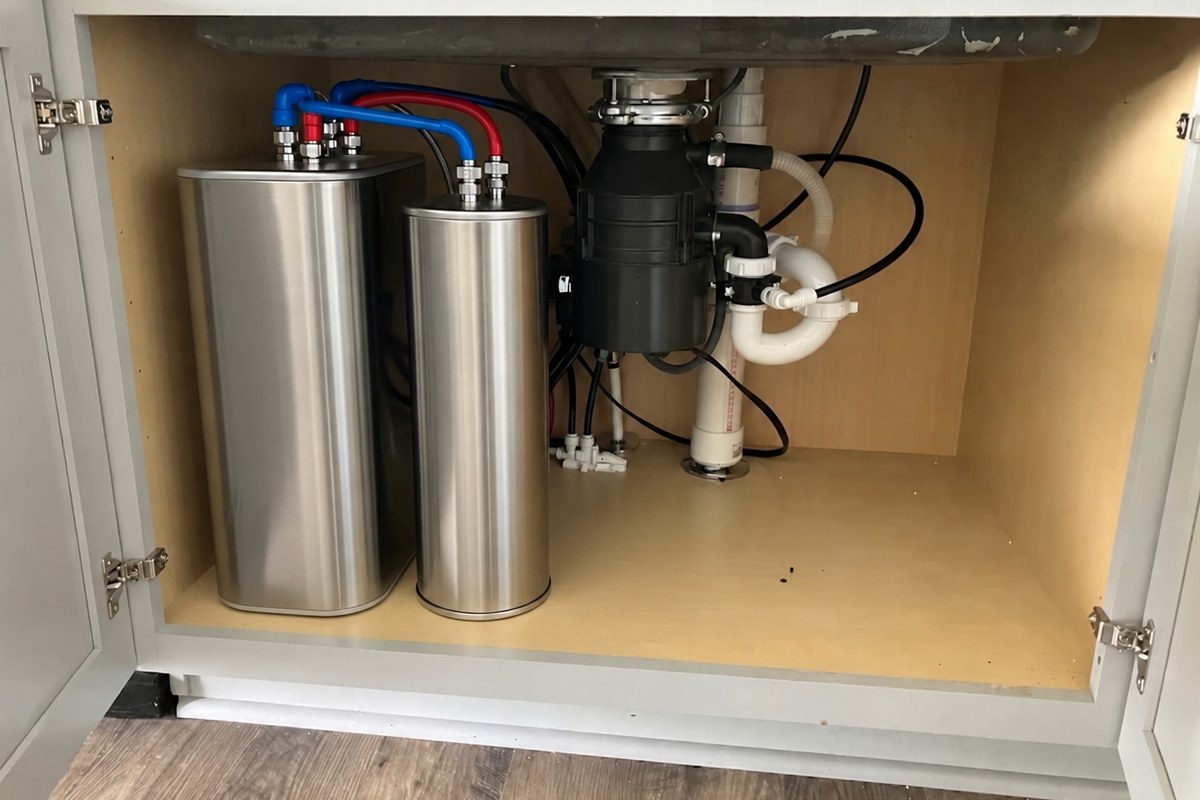
A second barrier at the kitchen tap, if you want one. The plant’s carbon is doing the heavy lifting, but some households want their own last line for drinking and cooking water. An under-sink reverse osmosis system at $350 to $900 installed is that barrier, and it also handles lead from household plumbing, which no treatment plant can reach.
Nothing at all, in plenty of houses. On current CFPUA numbers, a Wilmington home with no taste complaint and no old plumbing has a weak case for a whole-house system. We would rather tell you that than sell you one.
If you are on a private well near the Cape Fear, read this part
This is the open file, and it is where the real money sits for households.
Chemours is required by a court-entered consent order to pay for testing and treatment at qualifying private wells. Not the state, not a grant: the company, compelled by the Bladen County Superior Court order signed in February 2019.
Sampling in the four downstream counties, New Hanover, Brunswick, Columbus and Pender, began in February 2022. After the NC Department of Environmental Quality directed Chemours to widen the area in December 2023, roughly 104,000 homes had become eligible for screening as of September 2025.
A well qualifies for treatment at any of these:
| Threshold | What the household gets |
|---|---|
| GenX at or above 10 ppt | Whole-building granular activated carbon |
| Any individual consent-order PFAS at or above 10 ppt | Under-sink reverse osmosis at kitchen and bathroom sinks |
| Combined PFAS at or above 70 ppt | Under-sink reverse osmosis |
Bottled water is provided until installation. Requests go to Chemours on 910-678-1100, and the call back often comes from Parsons Environmental, its contractor.
If you are eligible, use that programme. It is free to you and we are not going to pretend otherwise. We are useful to well owners who fall below the thresholds, who want treatment beyond what the programme installs, or who have the ordinary well problems that have nothing to do with PFAS: iron, sulfur, hardness and low pH. New Hanover County permits private wells and tests for bacteria, metals and nitrates, but for PFAS specifically you have to hire a commercial lab.
Frequently Asked Questions
Is the GenX problem over?
For CFPUA’s treated water, the measured answer is that GenX averaged 0.10 parts per trillion in 2025, PFOA averaged 0.03 with a range to 1.45, and PFOS was not detected. Upriver, Chemours completed a 1.5 mile barrier wall and groundwater treatment system in June 2023, and in September 2026 the state announced a $590 million settlement with DuPont, Chemours and Corteva. Private wells in the downstream counties are still being screened, so for well owners it is not closed.
Does GenX have a legal limit?
Not a straightforward one. EPA set limits for six PFAS in April 2024 including GenX, but in May 2026 it proposed rescinding the standards for GenX, PFHxS, PFNA and the hazard index, and separately proposed pushing the PFOA and PFOS compliance deadline from 2029 to 2031. North Carolina’s 140 parts per trillion figure for GenX is a state health goal, not an enforceable limit. Anyone quoting you a firm federal GenX number should be asked which rule they mean.
Is Brunswick County water the same as Wilmington’s?
No, and this catches people out. Brunswick County’s Northwest plant is still conventional treatment on Cape Fear River water; its low-pressure reverse osmosis train was due at the end of 2026 and was not operational as of August 2026. The county publishes weekly PFAS results, so check the current posting rather than assuming either way.
Do I need a water softener in Wilmington?
Probably not on city water. CFPUA hardness averaged 50 ppm, about 2.9 grains per gallon, which is at the soft end of moderate. A softener removes hardness, and there is not much here to remove. Private wells in the region are a different conversation and worth a water test first.
Why does my water taste like chlorine some days?
CFPUA uses free chlorine as its final disinfectant, averaging 1.16 ppm with a range up to 2.46, and residual varies by how far you sit from the plant. A carbon filtration system removes it at every tap, and that is the most common reason Wilmington homeowners call us.
Should I trust a company that tells me my water is dangerous?
Ask for numbers. A test that produces cloudy water in your kitchen proves your water contains minerals, which all water does. A real test reports figures you can compare against CFPUA’s published report. Wilmington’s own utility publishes its results in detail, so you can check any claim anyone makes about your city supply, including ours.
Sources and reporting dates
Every figure above comes from the sources below. Water quality changes between reports, and a reported average does not describe conditions at every address on every day, so check the current report before acting on any number here.
- Cape Fear Public Utility Authority annual water quality report, covering calendar year 2025. Source of the hardness, disinfectant, byproduct, lead and copper figures.
- EPA Safe Drinking Water Information System, for population served, violation history and compliance dates.
- EPA UCMR5 occurrence data, the national PFAS monitoring round, for any result described as federal monitoring.
- NC DEQ Source Water Assessment Program, for source water susceptibility ratings.
- EPA PFAS drinking water rule, for the limits and their compliance dates.
Getting Wilmington water right
Wilmington is an unusual case: a city that had a serious contamination problem, spent heavily to fix it, and now publishes some of the most thorough PFAS monitoring of any utility in the state. The city water question is largely answered. The private well question in the lower Cape Fear is not, and there is a company-funded programme you should use before you buy anything.
Compare this supply with other cities in our North Carolina water quality guide, or see how we approach city water treatment.
We serve Wilmington, Leland, the wider New Hanover and Brunswick area and the rest of North Carolina. Every visit starts with a free consultation: we test your water, show you the results against what your utility publishes, and give you an up-front written price for only what the numbers support. Call (984) 384-6991 or request a free consultation, and if the answer is that you need nothing, we will say so.