North Carolina Water Quality Guide (2026)
Raleigh Water Pros • September 14, 2026 • 10 min read
We read the annual water quality report for twenty-one North Carolina city systems, start to finish. All twenty-one are compliant with every standard in force today.
The most useful thing we found had nothing to do with safety. It was that nine of those cities disinfect with chloramine and twelve use free chlorine, and almost nobody tells homeowners which they are on, even though it decides whether the filter you buy will work.
Get that one fact right and most of the rest follows.
Is North Carolina tap water safe to drink?
Yes, in every city system we examined, by every standard currently enforced.
That is a real answer, not a hedge. It also needs one piece of context. EPA set limits for PFOA and PFOS at 4 parts per trillion in April 2024, and those limits do not take effect until 2029, with a proposal in May 2026 to push them to 2031. Three systems already measure above them: Greensboro, Fayetteville and Greenville.
Above a limit that is coming is not the same as in violation, and none of those three is. Two are building treatment. Our statewide PFAS table gives the number for every city.
The disinfectant map
This is the table to bookmark. It decides what media belongs in your filter, and it has nothing to do with whether your water is good or bad.
| Free chlorine, standard carbon | Chloramine, catalytic carbon |
|---|---|
| Charlotte | Raleigh |
| Huntersville | Greensboro |
| Concord | High Point |
| Gastonia | Burlington |
| Mooresville | Monroe |
| Asheville | Fayetteville |
| Hickory | Greenville |
| Winston-Salem | New Bern |
| Wilmington | Southern Pines |
| Leland | |
| Jacksonville | |
| Hendersonville |
Two entries carry a caveat we would rather state than hide. Winston-Salem’s reports list a chlorine residual and never mention chloramine or ammonia, which points to free chlorine without saying so outright. Southern Pines publishes a chloramine residual in its compliance table but no sentence naming its primary disinfectant. In both cases a call to the utility settles it before you buy media.
Why it matters. Standard activated carbon strips free chlorine quickly and easily. Chloramine is deliberately more stable, which is why utilities use it, and standard carbon handles it poorly at household flow rates. Catalytic carbon is the media designed for it.
Pro tip: ask any company quoting you a whole-house filter which disinfectant your city uses and which carbon they are proposing. If they cannot answer the first part, they are guessing at the second.
Several national filter sites have this backwards for Charlotte specifically. Your utility’s own report is the authority, not a listicle.
If you want the reading at your own tap rather than the citywide figure, request a free consultation and we will measure it and give you the numbers in writing.
The four things that actually vary
Everything else in a water quality report is either identical across the state or not worth your attention. These four are not.
Source water. Reservoir, river, or aquifer, and it changes the whole chemistry. Asheville owns the mountain forest its water falls on, and two of Hendersonville’s four intakes are gravity fed out of Pisgah National Forest. Southern Pines drinks a blackwater creek. New Bern and Jacksonville pump from two aquifers each and treat them completely differently. Fayetteville blends a river with four lakes.
Disinfectant. Covered above. The single most actionable fact in any report.
Hardness. North Carolina city water is soft nearly everywhere, from 0.32 grains in Asheville to 4.2 in Leland, and no city system we read reaches the 7 grains where hardness becomes a real maintenance problem. Seven utilities publish no figure at all. The full table is in our hard water guide.
PFAS. The widest spread of the four. Greensboro’s Mitchell plant measured about seven times the coming limit; eight systems recorded no detections whatsoever. Nothing about your neighbour’s city tells you about yours.
Three states, geologically speaking
North Carolina runs from the Blue Ridge to the Atlantic, and its water changes with the rock underneath.
The mountains. Resistant crystalline rock, very little dissolved mineral, very soft water with low alkalinity. That softness is chemically aggressive toward old plumbing, which is why mountain utilities dose corrosion control and why the pipe in your own house matters more here than the water leaving the plant.
The Piedmont. Granite, gneiss and schist under most of the state’s population. City supplies come from reservoirs impounded on that rock and land between roughly 1.6 and 2.8 grains. The groundwater underneath is a completely different story, covered below.
The Coastal Plain. Layered sands, clays and shell beds holding real aquifers. Here groundwater genuinely can be hard, high in iron and manganese, and carry hydrogen sulfide, which is why coastal plants run greensand filtration, softening or membranes that Piedmont plants do not need.
Two river basins carry documented industrial contamination and deserve naming: the Cape Fear, where the Chemours discharge is covered in our GenX guide, and the Haw, where Triad dischargers sent PFAS and 1,4-dioxane down into Jordan Lake, which supplies Cary, Apex and Chatham County rather than Raleigh, whose water comes off the Neuse. Neither says anything about the Catawba or Yadkin basins, which supply most of the western half of the state.
The real divide is city water versus well water
If you take one thing from this guide, make it this.
On city water, your utility has already solved the hard problems. It removes the iron, it manages the hardness, it disinfects, it tests continuously, and it publishes the results. What is left for a homeowner is taste, disinfection byproducts, and in a few cities PFAS. Those are carbon and reverse osmosis questions, not softener questions.
On a private well, nobody is doing any of that for you. Well hardness varies by geology and by individual well, and no state dataset publishes it, so the only number that describes your well is one measured at your tap. What is consistent is that it is a live question on a well and a settled one on city supply. That gap is at its starkest in our own back yard, where a household on town water in Garner or Knightdale and a household on a well in Fuquay-Varina or Pittsboro are having completely different conversations. Coastal Plain wells carry iron and manganese. Mountain wells run acidic, and Henderson County is one of eight EPA radon Zone 1 counties. Our guide to city water vs well water in NC sets the two side by side.
Worse, North Carolina’s required test for a new well does not measure hardness, hydrogen sulfide, radon or PFAS. It covers bacteria, metals and nutrients, which catches what makes people acutely ill and misses almost everything that decides equipment. Our guide to what the required panel misses sets out what to add by region.
What to actually do
- Find out which utility bills you. This is not always obvious. New Bern, Craven County and First Craven Sanitary District are three different systems. Jacksonville and the county authority are different. It changes every number on this page.
- Look up your city above and read its guide. Each one gives the source, the disinfectant, the hardness if published, and the PFAS result.
- Match the media to the disinfectant, and buy on certification. Standard carbon for a chlorinated city, catalytic for a chloraminated one, and for chloramine specifically pick a filter with a verified chloramine reduction claim at the flow your household needs. A whole house system runs $1,500 to $3,500 installed, and our cost guide covers what moves that.
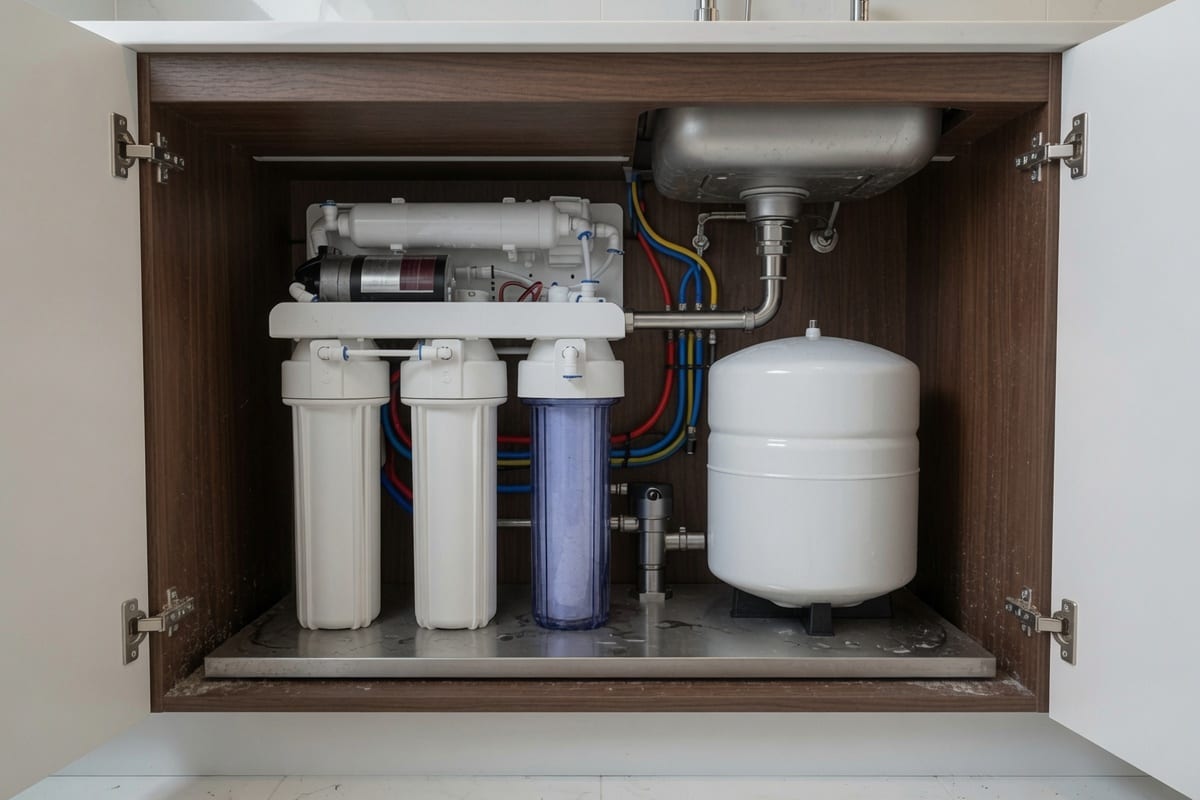
- Add reverse osmosis at the sink only if there is a reason. At $350 to $900 installed it is the right answer for PFAS in the three cities that have a number, and unnecessary in the eight that report none.
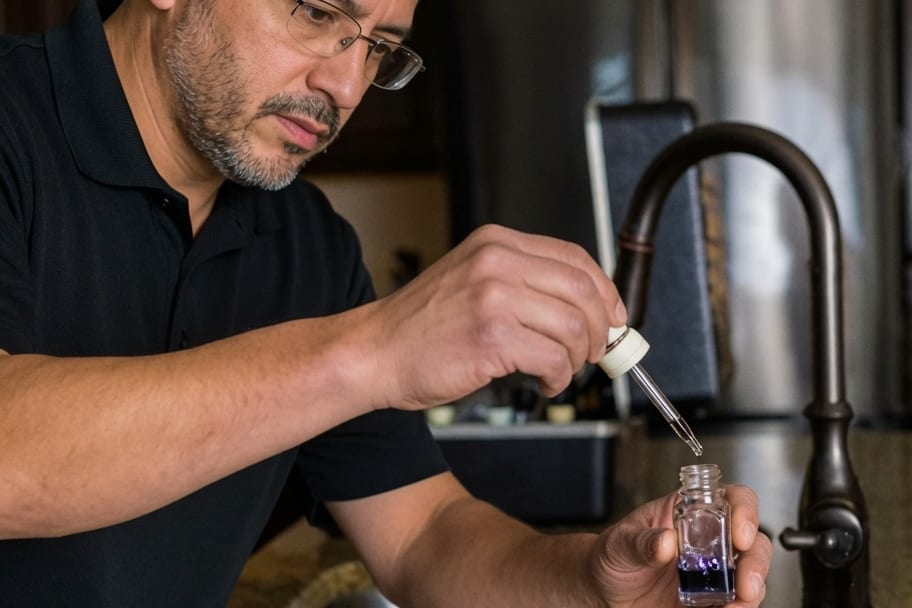
- On a well, test before you buy anything. Our water testing visit covers the readings that decide equipment, and a complete well system is built around the results rather than a catalogue.
Frequently Asked Questions
Which North Carolina city has the best water?
It depends on what you weigh. On PFAS, New Bern produced 240 results with no detection of anything. On hardness, Asheville is the softest at 0.32 grains. On disinfection byproducts, Southern Pines and Jacksonville run low. No city wins every category, which is exactly why the city-by-city reading is worth doing.
Does North Carolina have a water problem?
It has two documented river contamination stories, in the Cape Fear and the Haw, and it has utilities elsewhere with nothing detectable in their finished water. Treating the state as one story is the mistake that makes national coverage useless for deciding anything.
Why does my water taste different at certain times of year?
Most likely the annual free-chlorine conversion. Chloraminated systems are required to suspend ammonia for a period each year to prevent biological growth in the mains, and during those weeks the water tastes more strongly of chlorine. Raleigh calls its version the chlorine burnout and published dates of 26 February to 2 April for 2026. Fayetteville does it every March. Burlington runs a winter window. New Bern runs four to six weeks and follows it with main flushing.
Do I need a water softener in North Carolina?
On city water, almost certainly not. On a private well, quite possibly, and a test is the only way to know. Two utilities in this state actually add hardness back to their water after treatment, which is the strongest available argument that softer is not automatically better.
How do I know whether I am on city water or a well?
If you get a monthly water bill from a town, a city or a utility commission, you are on a public system. If you have a pump and pressure tank and no bill, you are on a well. Some households on the edge of a service area have both, or switched at some point and still have the old equipment in place.
Is bottled water safer than North Carolina tap water?
Not reliably. Bottled water is regulated as a food and is not required to publish the annual testing every public utility must produce, so you trade a supply you can audit for one you cannot. A filter certified for the specific thing you want removed is the more checkable choice.
Which cities are building new treatment right now?
Concord completed carbon treatment in August 2026. Wilmington built the state’s largest carbon installation at a public plant in 2022. Greensboro is building carbon. Fayetteville is building a $133 million granular activated carbon project targeted for 2029. Asheville has design contracts for pre-treatment at two plants after Hurricane Helene, with construction not expected before spring 2027.
Sources and reporting dates
Every figure above comes from the sources below. Water quality changes between reports, and a reported average does not describe conditions at every address on every day, so check the current source before acting on any number here.
- Each city’s own annual water quality report, linked from that city’s guide above.
- EPA Safe Drinking Water Information System, for population served, violation history and compliance dates.
- EPA UCMR5 occurrence data, the national PFAS monitoring round.
- EPA PFAS drinking water rule, for the limits and their compliance dates.
- NC DEQ Source Water Assessment Program, for susceptibility ratings.
The short version
North Carolina city water is compliant, soft, and better documented than most people assume. The differences that matter are which disinfectant your city uses, whether it publishes a hardness number, and what its PFAS result says. All three are in your city’s guide above.
If you are on a well, none of that applies to you, and a test at your own tap is the only honest starting point.
We serve the whole of North Carolina. Every visit starts with a free consultation: we test your water, compare it against what your utility publishes, and give you an up-front written price for only what the numbers support. Call (984) 384-6991 or request a free consultation.