Is High Point Tap Water Safe to Drink? (2026)
Raleigh Water Pros • September 13, 2026 • 7 min read
Almost every water story in North Carolina is a story about being downstream. Pittsboro drinks what Greensboro and Burlington discharge into the Haw. Wilmington drank what Chemours put into the Cape Fear a hundred miles upriver. Brunswick County is still building treatment for the same reason.
High Point is the exception, because of where it sits. Its two drinking water lakes, Oak Hollow and Arnold Koonce City Lake, are impoundments on the Deep River at the headwaters of the Cape Fear system. High Point is upstream of nearly all of it.
Is High Point tap water safe to drink?
Yes, and its position at the top of the basin is a genuine structural advantage rather than a marketing line. Water quality problems in a river basin accumulate downstream. High Point’s raw water has had the fewest opportunities to pick anything up, because there is very little river above it.
The city’s Public Services Department serves about 118,370 people through roughly 52,000 connections. The Frank L. Ward Water Filtration Plant on Pendleton Street treats to 24 million gallons a day using conventional coagulation, sedimentation, filtration and disinfection, plus fluoride and corrosion control.
Your water is a blend, and that changes the numbers
Here is the local detail that most High Point homeowners do not know. The city does not only treat its own lake water. It also buys water from the Piedmont Triad Regional Water Authority, about 2.86 million gallons a day under a contract running to 2057, plus a small volume from Davidson Water.
PTRWA water comes from Randleman Lake, a reservoir at the confluence of Muddy Creek and the Deep River, and it is treated differently: it passes through anthracite, sand, gravel, carbon and membrane filters before it reaches High Point. The Ward plant has no membrane or carbon stage.
| Ward plant, city lakes | PTRWA, Randleman Lake | |
|---|---|---|
| Source | Oak Hollow and City Lake | Randleman Lake |
| Treatment | Conventional | Anthracite, sand, gravel, carbon and membrane |
| Hardness, 2021 average | 35 mg/L, 2.05 grains | 48 mg/L, 2.81 grains |
So the water at your tap is a mix of two supplies with genuinely different hardness, and the ratio shifts with demand and season.
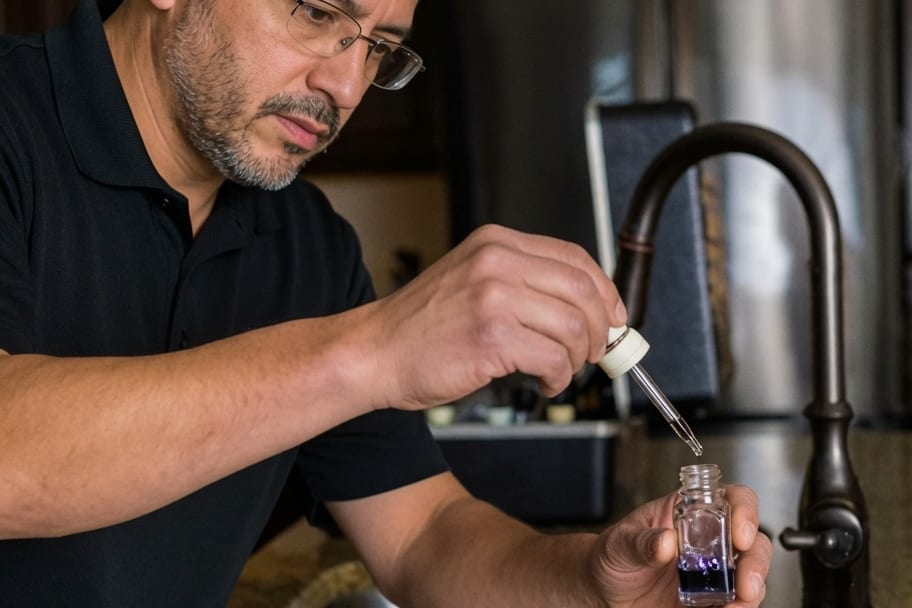
Want the reading at your own address rather than a blended plant average? Request a free consultation and we will test it and give you the numbers in writing.
Does High Point have hard water?
No. Both supplies are soft to moderately soft, between about 2.0 and 2.8 grains per gallon. A softener has little to do here.
One honest caveat. Those figures are 2021 averages, and that is deliberate on our part: High Point’s 2024 and 2025 reports do not publish hardness at all. We would rather give you a real number with its year attached than a current-sounding number we made up. If you want today’s figure, the city’s water quality staff can give it to you, or a test at your tap settles it in one visit.
Pro tip: if a salesperson quotes you a current High Point hardness figure, ask where it came from. The city has not published one since 2021, so either they tested your tap or they are guessing.
The one thing that should decide your filter
High Point chloraminates, and has since early summer 2011. That changes which media you should buy.
Standard activated carbon removes free chlorine well and chloramine poorly. Catalytic carbon is built for chloramine. The two cost roughly the same installed, so specifying correctly is free and specifying wrongly means paying for performance you never receive.
The 2025 report puts the chloramine residual at 2.55 ppm on average, with a range of 1.1 to 3.6.
There is a regional wrinkle. High Point takes part in a joint preventive maintenance programme with Archdale, Burlington, Greensboro, Jamestown, Randleman, Reidsville and PTRWA that switches the system to free chlorine each winter. The most recent window ran 7 December 2025 to 7 April 2026, and the chlorine residual during it was reported at 1.99 ppm. Burlington runs the same programme.
Catalytic carbon handles both disinfectants, which is why it is the right specification here rather than something you would want to change twice a year. A correctly specified carbon filtration system runs $1,500 to $3,500 installed, and our cost guide covers what moves that number.
What else is worth considering
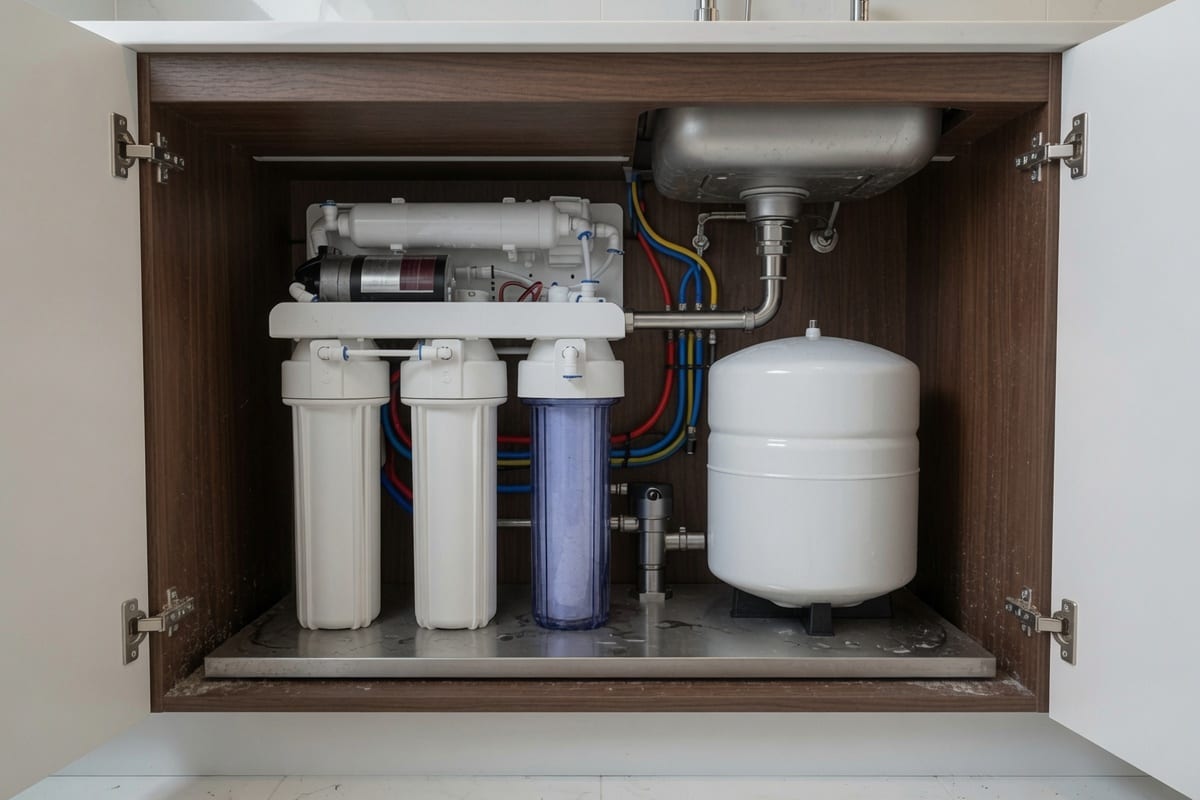
Reverse osmosis at the kitchen tap, if you want a barrier for drinking and cooking water. At $350 to $900 installed it covers lead and copper picked up from your own household plumbing, which no treatment plant can reach, and it is the household answer for PFAS if that is on your mind. See our reverse osmosis page for how the sizing works.
Possibly nothing. High Point is upstream, compliant and blended with membrane-filtered water. A household with no taste complaint and no old plumbing has a weak case for spending anything, and we will say so.
Frequently Asked Questions
Is High Point affected by the 1,4-dioxane in the Haw River?
Not in its drinking water. The dioxane dischargers of concern are downstream of High Point’s intakes, and Greensboro is the named one, discharging into South Buffalo Creek. High Point draws from the Deep River headwaters above that. Being at the top of a basin is the whole reason this answer is short.
Why does my water taste different in the winter?
Because the disinfectant changes. High Point switches from chloramine to free chlorine for roughly four months each winter as part of a regional maintenance programme. Taste changes during that window are expected, and the city announces the dates.
Will a standard carbon filter work here?
Not well. High Point runs chloramine for most of the year, and standard activated carbon is poor at removing it. Ask any installer to confirm in writing that the media is rated for chloramine before you buy.
What hardness number should I use?
The most recent published figures are 2021 averages: 35 mg/L for the Ward plant and 48 mg/L for the purchased PTRWA supply, which is 2.05 and 2.81 grains per gallon. The 2024 and 2025 reports omit hardness. A water test at your tap gives you a current number for your actual blend.
Does buying water from another authority make it less safe?
No. PTRWA water is treated through membrane filtration, which is a more advanced process than the Ward plant runs, and both supplies must meet the same federal standards. Blending is normal practice for a growing city.
How much of my water comes from Randleman Lake?
High Point does not publish a live blend ratio, and it moves with demand and season. The contract volume is 2.86 million gallons a day from the Piedmont Triad Regional Water Authority against a Ward plant capacity of 24 million, so most of the supply is the city’s own lake water most of the time. The practical consequence is that your hardness sits somewhere between the two published figures rather than at either one.
Is being upstream actually an advantage, or is that just marketing?
It is a real and measurable one, though it is not a guarantee. Contaminants enter a river from discharges, runoff and spills along its length, so a system drawing near the headwaters has fewer upstream sources than one drawing a hundred miles down. It does not protect against anything entering within High Point’s own watershed, which is why the city still monitors and reports like everyone else.
Do I need a softener in High Point?
Almost certainly not on city water at 2.0 to 2.8 grains per gallon. Private wells in Guilford County are a different matter and worth testing before you decide.
Sources and reporting dates
Every figure above comes from the sources below. Water quality changes between reports, and a reported average does not describe conditions at every address on every day, so check the current report before acting on any number here.
- City of High Point annual water quality report, covering calendar year 2024. Source of the hardness, disinfectant, byproduct, lead and copper figures.
- EPA Safe Drinking Water Information System, for population served, violation history and compliance dates.
- EPA UCMR5 occurrence data, the national PFAS monitoring round, for any result described as federal monitoring.
- NC DEQ Source Water Assessment Program, for source water susceptibility ratings.
- EPA PFAS drinking water rule, for the limits and their compliance dates.
Getting High Point water right
High Point’s advantage is geography, and its one real decision is media. Being upstream means fewer of the contamination stories that dominate this basin apply here. Running chloramine means the cheap carbon system is the wrong one.
Compare this supply with other cities in our North Carolina water quality guide, or see how we approach city water treatment.
We serve High Point, Greensboro, Winston-Salem, Burlington and the rest of North Carolina. Every visit starts with a free consultation: we test your water, compare it against what the city publishes, and give you an up-front written price for only what the numbers support. Call (984) 384-6991 or request a free consultation.