Is Burlington NC Tap Water Safe to Drink? (2026)
Raleigh Water Pros • September 13, 2026 • 8 min read
On 25 January 2024, the City of Burlington had to pick up the phone and call water utilities forty miles downstream. A sample from its South Burlington wastewater plant had come back at 545 parts per billion of 1,4-dioxane, a likely human carcinogen that conventional treatment does not remove, and that water was already heading down the Haw River toward other people’s drinking water intakes. Pittsboro was among the towns called.
That is Burlington’s water story, and almost everyone tells it wrong. It is not a story about what comes out of Burlington’s taps.
Is Burlington NC tap water safe to drink?
Yes. Burlington’s drinking water comes from two reservoirs that have nothing to do with its wastewater discharge, and its 2025 report shows soft, compliant water from both.
The city draws from Lake Mackintosh, which feeds the J.D. Mackintosh Jr. plant, and Stoney Creek Reservoir, which feeds the Ed Thomas plant in downtown Burlington. Neither is fed by the city’s own outfalls. Burlington has no Haw River drinking water intake at all.
The confusion is understandable. Both reservoirs sit inside the state’s Haw River sub-basin, and Burlington’s two wastewater plants do discharge to the Haw and to Great Alamance Creek. Basin and intake are different things, and that difference is the whole answer here.
| J.D. Mackintosh plant | Ed Thomas plant | |
|---|---|---|
| Reservoir | Lake Mackintosh | Stoney Creek Reservoir |
| Hardness | 28.5 mg/L, 1.67 grains | 27.4 mg/L, 1.60 grains |
| pH | 8.0 | 8.0 |
| Sodium | 24.8 mg/L | 25.9 mg/L |
| Capacity | 18.0 MGD | 16.0 MGD |
Burlington serves about 60,877 people and also wholesales water to Greensboro, Elon, Gibsonville, Haw River, Graham and others, delivering an average of 12.9 million gallons a day.
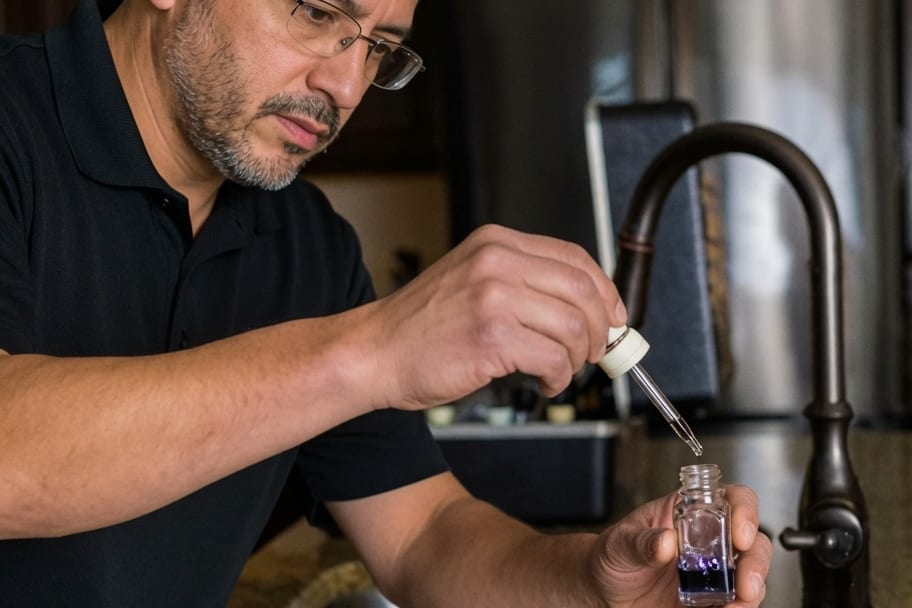
Want the numbers for your own tap rather than the plant average? Request a free consultation and we will test it and put the results in writing.
Does Burlington have hard water?
No. Both plants deliver water at about 1.6 grains per gallon, which is firmly soft. Burlington publishes the conversion in its own report: divide milligrams per litre by 17.1 to get grains.
A water softener has nothing to do here. If someone quotes you one for a Burlington home on city water, ask which plant serves your address and what hardness figure they are working from. Softeners earn their place on Alamance County well water, not on this supply.
The thing that actually changes what you should buy
Burlington runs chloramine, and has since July 2011. That single fact should decide your filter.
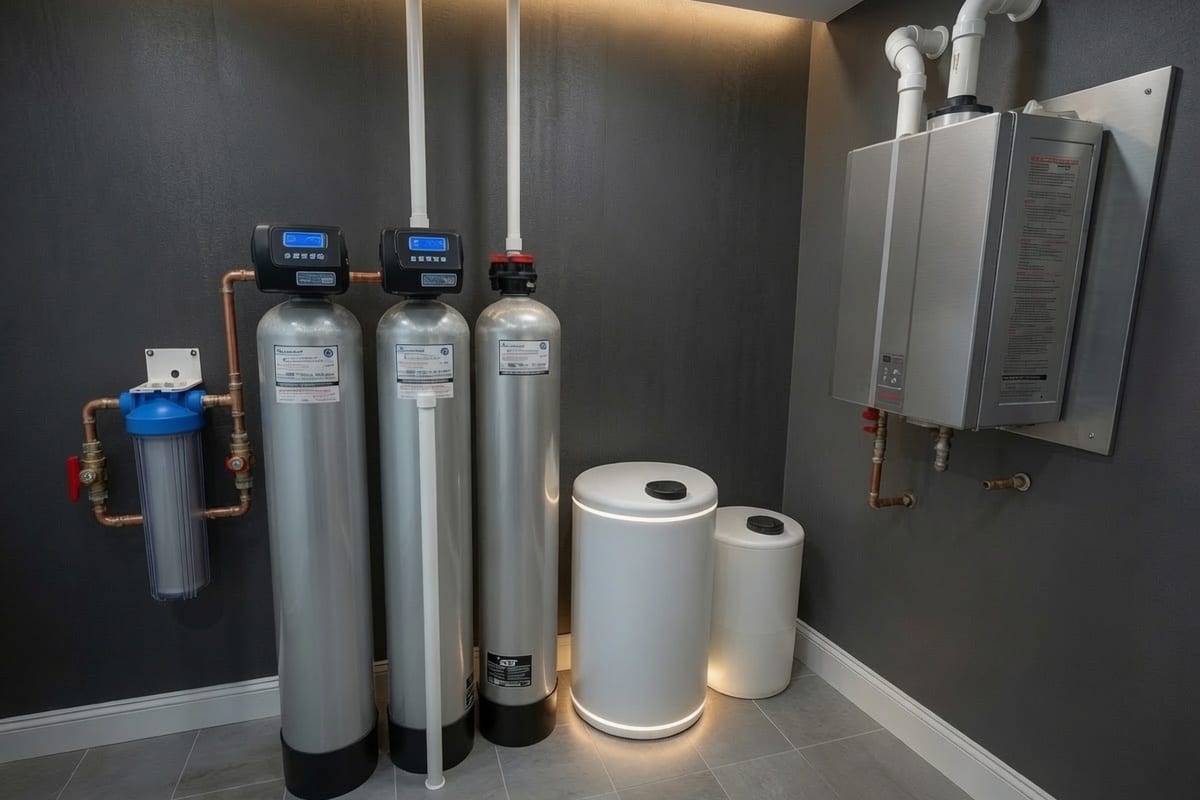
Standard activated carbon is poor at removing chloramine. Catalytic carbon is built for it. The two cost about the same to install, so specifying correctly is free, and specifying wrongly means paying for performance you never get.
There is a local wrinkle worth knowing. Burlington takes part in a regional programme that switches the system to free chlorine for a few months each winter, with the most recent window running from 5 December 2025 back to chloramine on 6 April 2026. Your water is chloraminated most of the year and free-chlorinated for part of it. Catalytic carbon handles both, which is another reason it is the right specification here rather than a seasonal compromise.
The 2025 report puts the chloramine residual at 2.31 ppm on average and the free chlorine residual at 1.51 ppm during the switch window.
Pro tip: if a salesperson demonstrates a chlorine test on your Burlington tap in February and again in July, they will get different results for reasons that have nothing to do with your plumbing. Ask what the system is dosing that month before you read anything into it.
A correctly specified catalytic carbon filtration system runs $1,500 to $3,500 installed. Our cost guide covers what moves that figure.
So what about the 1,4-dioxane?
It is real, it is Burlington’s, and it is not in Burlington’s drinking water.
The compound enters the Haw through the city’s wastewater plants, largely from industrial customers on the sewer system. What is documented:
- PFAS in Burlington’s discharge measured just over 30,000 parts per trillion in 2019, and spiked as high as 33,000 in November of that year. After the first round of measures it fell to 519.
- In November 2019 the Southern Environmental Law Center, acting for the Haw River Assembly, filed notice of intent to sue. A memorandum of agreement followed in 2020, and the full settlement was finalised in August 2023, changing city permits so major industrial dischargers run closed-loop systems.
- The named industrial sources were Elevate Textiles, Unichem and Shawmut. Shawmut moved to closed loop, Unichem no longer has NC production facilities, and Elevate agreed to closed loop for PFAS-requiring products.
- In July 2023 a dioxane spike of 160 ppb was recorded, against previously reported levels between under one and 14 ppb.
- The January 2024 event at 545 ppb was traced to a suspected source at a local manufacturer, which Burlington instructed to halt production while the analysis was expedited.
- NC DEQ has sampled the South Burlington plant weekly since October 2023 and publishes grab-sample data for both wastewater plants.
One correction worth making, because it circulates as fact: NC DEQ’s November 2019 notices of violation over 1,4-dioxane went to Greensboro and Reidsville, not to Burlington. Greensboro is the named discharger of primary concern alongside Reidsville and Asheboro. Burlington’s situation is a legal settlement with an advocacy group and ongoing state monitoring, which is a different thing from a state violation.
If you want the downstream half of this story, that is Pittsboro, which does draw its water from the Haw.
Frequently Asked Questions
Does Burlington’s 1,4-dioxane come out of my kitchen tap?
No. Burlington’s drinking water comes from Lake Mackintosh and Stoney Creek Reservoir, and the dioxane enters the Haw River from the city’s wastewater plants downstream of those reservoirs. The towns affected are the ones with Haw River intakes, starting with Pittsboro.
Do I need a filter in Burlington at all?
It depends what bothers you. There is no hardness problem to solve at 1.6 grains per gallon and no published contaminant exceedance in the drinking water. The common reasons people here install something are chloramine taste, a wish for a second barrier at the drinking tap, or old household plumbing. If none of those apply, you may well need nothing.
What kind of filter works on chloramine?
Catalytic carbon. Standard activated carbon removes free chlorine well and chloramine poorly, and Burlington runs chloramine for most of the year. Ask any installer to confirm in writing that the media they are quoting is rated for chloramine, and see our whole house filtration options for how the sizing works.
Which plant serves my house?
Burlington has not published an address lookup, so ask Water Resources. It matters less here than in some cities, since the two plants come in within a tenth of a grain of each other on hardness and both report pH 8.0.
Is Burlington water tested for PFAS?
The city samples its wastewater discharges for PFAS and 1,4-dioxane under the 2020 agreement with the Haw River Assembly, with every sample split for independent testing. For your own drinking water, the annual report is the system-wide picture and a water test at your tap covers the things that vary by address.
Why does my water taste different in winter?
Because it probably is different. Burlington switches from chloramine to free chlorine for a few months each winter as part of a regional maintenance programme, most recently from December 2025 to April 2026. Taste changes during that window are expected and not a sign of a problem.
Sources and reporting dates
Every figure above comes from the sources below. Water quality changes between reports, and a reported average does not describe conditions at every address on every day, so check the current report before acting on any number here.
- City of Burlington Water Resources annual water quality report, covering calendar year 2025. Source of the hardness, disinfectant, byproduct, lead and copper figures.
- EPA Safe Drinking Water Information System, for population served, violation history and compliance dates.
- EPA UCMR5 occurrence data, the national PFAS monitoring round, for any result described as federal monitoring.
- NC DEQ Source Water Assessment Program, for source water susceptibility ratings.
- EPA PFAS drinking water rule, for the limits and their compliance dates.
Getting Burlington water right
Burlington is a city with a genuine environmental problem and a drinking water supply that is largely unaffected by it. Conflating the two helps nobody, and it is the main thing we would want a Burlington homeowner to understand before spending money.
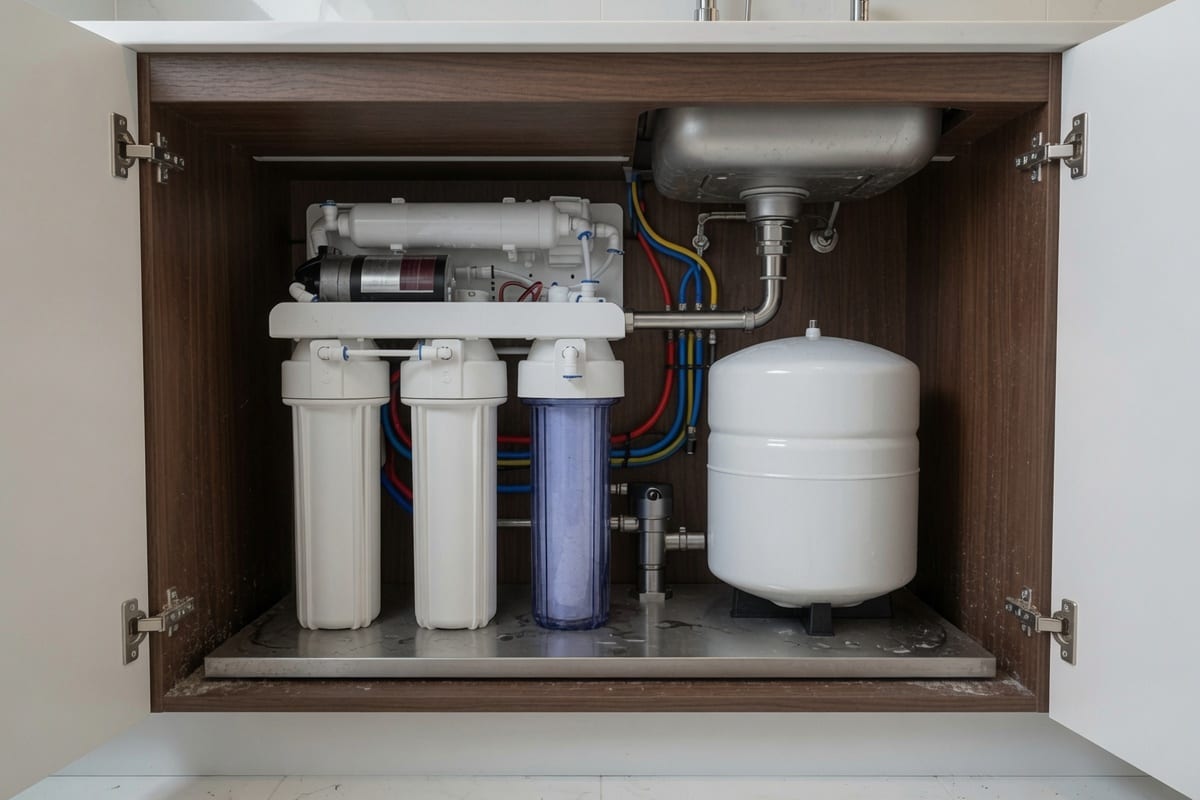
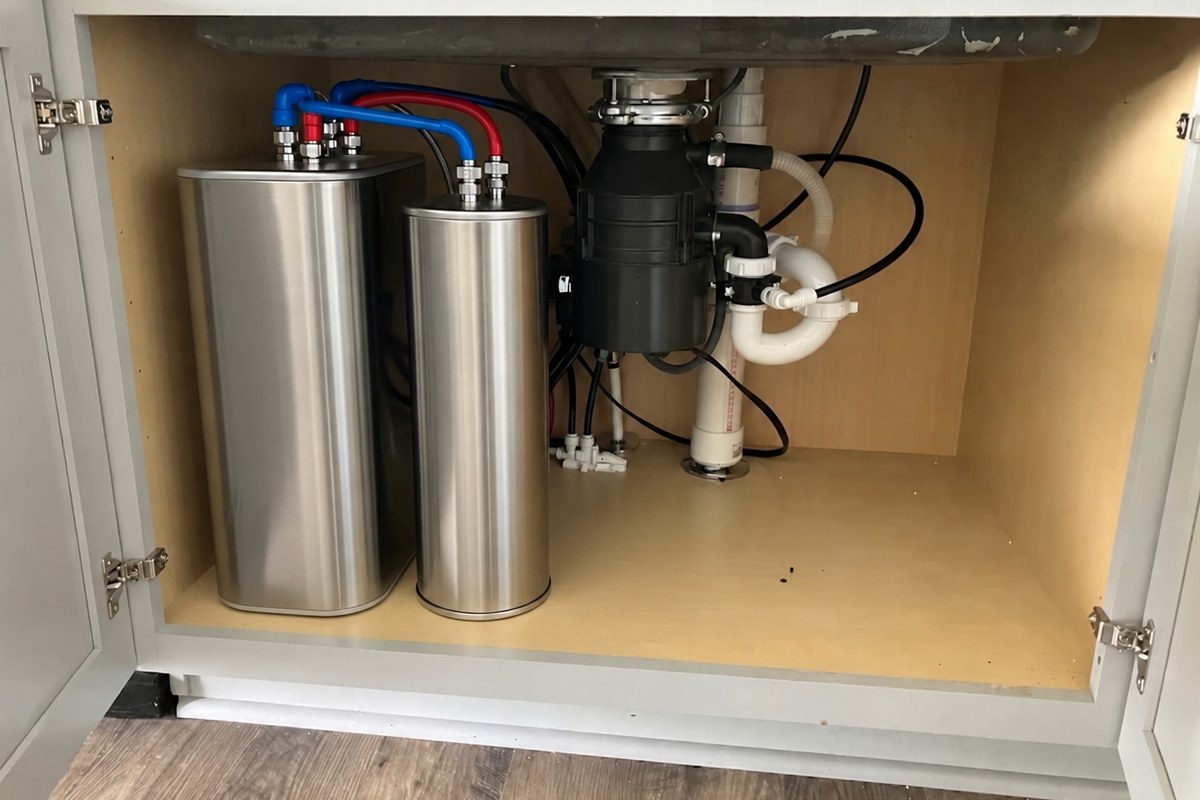
What is worth doing here is narrow: catalytic carbon if the chloramine taste bothers you, a reverse osmosis unit at the kitchen sink at $350 to $900 installed if you want a last barrier for drinking water, and a test first if you are on a well in Alamance County.
Compare this supply with other cities in our North Carolina water quality guide, or see how we approach city water treatment.
We serve Burlington, Greensboro, Winston-Salem and the rest of North Carolina. Every visit starts with a free consultation: we test your water, compare it against what the city publishes, and give you an up-front written price for only what the numbers support. Call (984) 384-6991 or request a free consultation.