1,4-Dioxane and PFAS in Pittsboro Water: What Removes It
Raleigh Water Pros • September 11, 2026 • 7 min read • Updated September 14, 2026
Most water quality conversations in the Triangle are about taste, hardness, or a rotten-egg smell from a well. Pittsboro’s is different, and it is worth being straight about it: the town draws its drinking water from the Haw River, and the Haw carries industrial contaminants discharged upstream.
This guide covers what those contaminants are, what the town has done about them, and, most usefully, which filtration actually removes each one. That last part matters because the two main contaminants here behave very differently, and equipment that handles one may do almost nothing for the other.
What Is Actually in the Haw
Two families of compounds drive the concern.
1,4-dioxane is an industrial solvent stabiliser. The EPA classifies it as a likely human carcinogen. It reaches the Haw through treated wastewater effluent from upstream municipalities, and discharge events have been documented repeatedly. NC Newsline has reported on Burlington releasing slugs of 1,4-dioxane into the Haw that subsequently reached Pittsboro’s drinking water intake, including two discharges within a two-month span.
PFAS, the “forever chemicals”, reach the river from the same general direction. The Haw River Assembly documents PFAS entering the watershed from wastewater effluent from Greensboro, Reidsville and Burlington. PFAS are associated with immune effects, thyroid disruption, low infant birth weight and certain cancers.
Both are invisible, tasteless and odourless. Neither announces itself at the tap, which is exactly why they get treated as an abstraction until someone reads a notice.
What the Town Has Done
Worth stating plainly, because it is genuinely relevant: Pittsboro has not ignored this. The town has invested on the order of $3 million in advanced treatment intended to reduce these contaminants, and has pursued legal action against upstream dischargers. Local reporting from ABC11 and NC Newsline has tracked both.
That matters for how you should think about a home system. This is not a case of a town doing nothing. It is a case of a municipal system doing what it can against a contaminant load it does not control, arriving from outside its jurisdiction, at variable concentrations that spike when an upstream discharge event occurs.
The practical consequence is variability. Your water may be well within guidelines most of the time and worse following a discharge. A home system’s value here is that it is always on.
What Removes 1,4-Dioxane, and What Does Not
This is where most homeowners get sold the wrong thing, so it is worth being precise.
| Treatment | Removes 1,4-dioxane? | Notes |
|---|---|---|
| Standard sediment filter | No | Filters particles; dioxane is dissolved |
| Standard granular carbon (GAC) | Poorly | Dioxane adsorbs weakly to carbon |
| Catalytic carbon | Partially | Better than standard GAC, still not a solution |
| Reverse osmosis | Partially, and inconsistently | Rejection varies; not a guaranteed barrier |
| Advanced oxidation (UV + peroxide) | Yes | The treatment of record; municipal scale, not residential |
| Boiling | No | Concentrates it as water evaporates |
1,4-dioxane is genuinely difficult to remove at household scale. It is highly water-soluble, it does not adsorb well onto activated carbon, and it passes through many membranes that stop other contaminants. Any company promising complete residential removal of 1,4-dioxane with a standard carbon filter is overselling, and you should treat that as a signal about the rest of their advice.
The honest position: a good carbon system plus reverse osmosis at the kitchen tap reduces your exposure and handles a long list of other things well. It is not a guaranteed dioxane barrier, and we will not tell you it is.
What Removes PFAS
PFAS are a different story, and here the news is better.
| Treatment | Removes PFAS? | Notes |
|---|---|---|
| Standard sediment filter | No | Particles only |
| Granular activated carbon | Yes, substantially | Well documented for longer-chain PFAS; needs media changes on schedule |
| Catalytic carbon | Yes | Same mechanism, generally better capacity |
| Reverse osmosis | Yes, strongly | Among the most effective residential options |
| Ion exchange (PFAS-specific resin) | Yes | Effective, less common residentially |
| Boiling | No | Does nothing |
For PFAS, a properly sized carbon system plus reverse osmosis at the drinking tap is a genuinely effective combination. The critical word is properly sized. Carbon has finite capacity, and an undersized cartridge that saturates in four months is worse than useless because it gives you confidence without protection. Media changes on schedule are not an upsell here; they are the whole mechanism.
What We Would Actually Recommend in Pittsboro
Given the above, the sensible sequence for a Pittsboro home on town water:
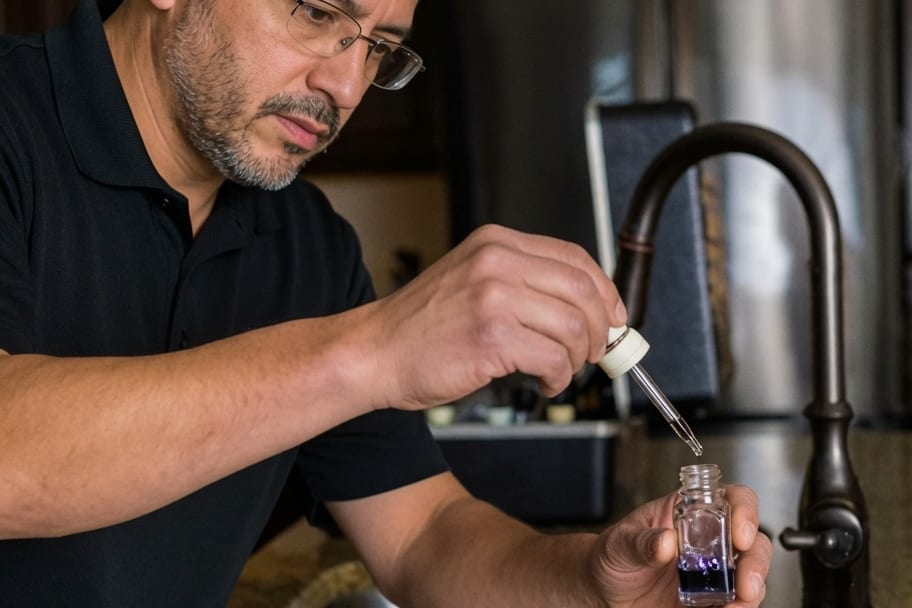
- Test first. Know what your water actually carries before spending. Our water testing cost guide covers what a proper panel includes. For dioxane and PFAS specifically you need a laboratory panel, not a field test kit.
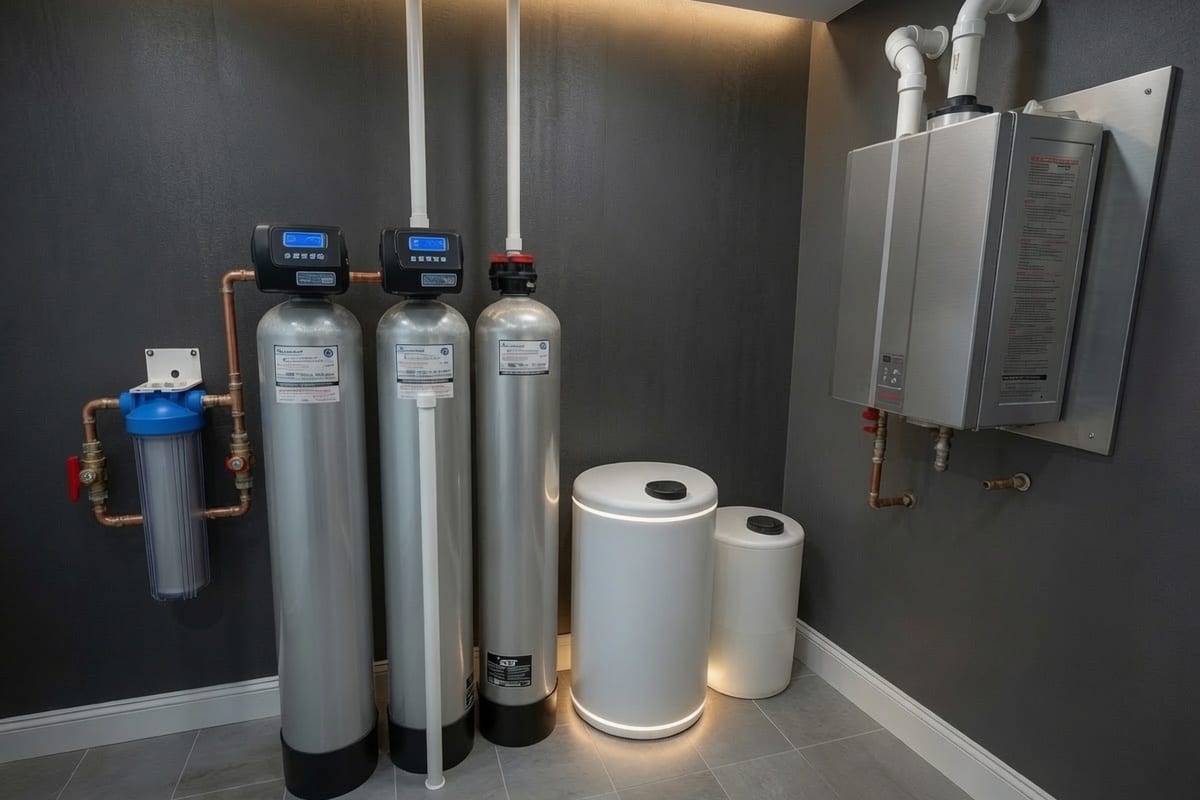
- Whole-house catalytic carbon at the point of entry. This addresses PFAS, chlorine and chloramine byproducts, taste and odour across every tap, and it is the workhorse of the system. Sizing to your household’s actual flow is what determines whether it keeps working.
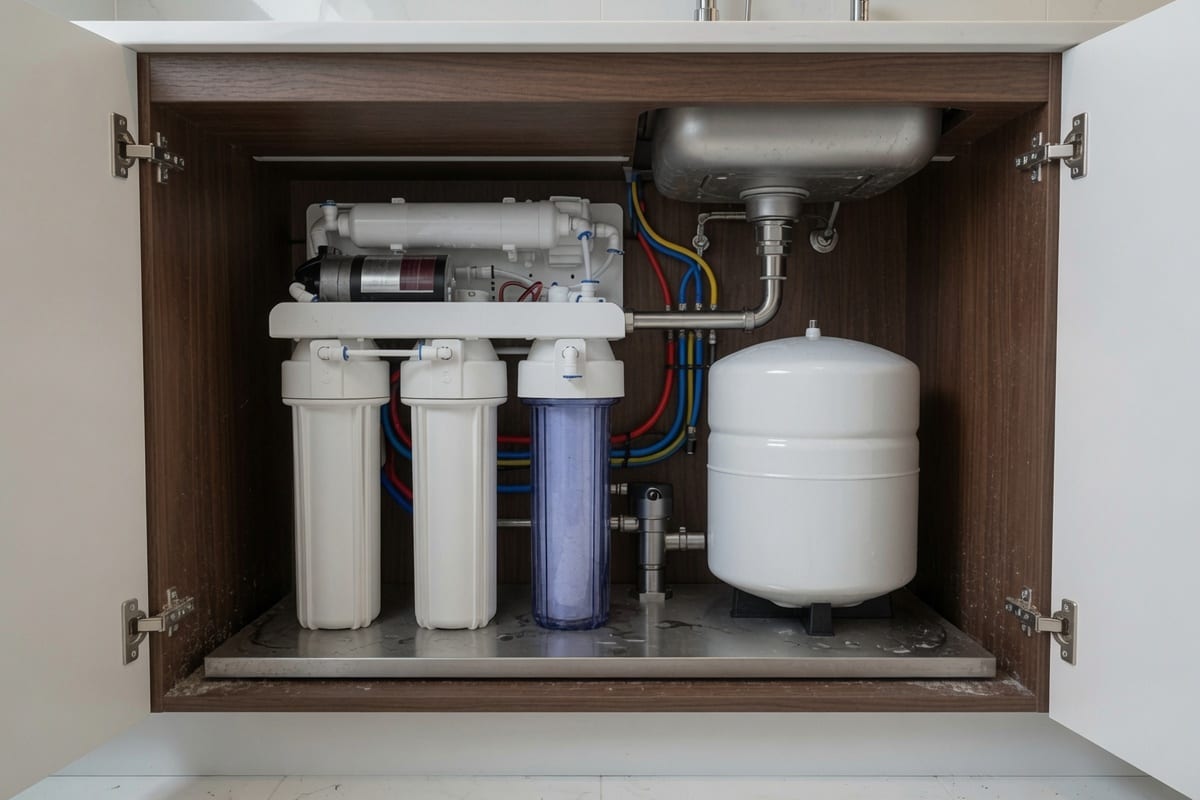
- Reverse osmosis at the kitchen tap. This is your strongest barrier for what you drink and cook with, and it is where RO earns its place: it is impractical whole-house and excellent point-of-use.
- A media replacement schedule you actually follow. Put it in a calendar. Saturated carbon is not a filter.
What we would not recommend: a whole-house system marketed specifically as a dioxane solution, or any quote that does not reference your test results.
If You Are on a Chatham County Well Instead
A large share of Chatham County properties outside town are on private wells, which changes the picture completely. Well water here is not drawing from the Haw, so the dioxane and PFAS story largely does not apply, and the usual well concerns do: hardness, iron, sulfur, pH and bacteriological safety.
Different problem, different equipment. Our guide to Chatham County well permits and testing covers the rules, and well water testing in Chatham County covers what to actually test for.
Frequently Asked Questions
Is Pittsboro tap water safe to drink?
It meets applicable regulatory standards, and the town has invested in advanced treatment. The concern is not acute safety but long-term exposure to compounds at low concentrations, and variability when upstream discharge events occur. Many residents choose point-of-use filtration as a reasonable response to that variability.
Does a Brita filter remove 1,4-dioxane?
No. Standard pitcher filters use granular carbon, which adsorbs 1,4-dioxane poorly. They improve taste and reduce chlorine. They are not a barrier for this compound.
Does boiling water remove these contaminants?
No, and it makes them worse. Boiling evaporates water while leaving the contaminant behind, concentrating what remains.
How often do carbon filters need replacing?
It depends entirely on capacity and your household’s water use, typically annually for whole-house media and every six to twelve months for cartridges. A saturated carbon filter stops working before it looks any different, which is why the schedule matters more than the brand.
Can I test for PFAS and 1,4-dioxane myself?
Not with a home kit. Both require laboratory analysis. State and local agencies publish periodic results for municipal supplies, and a certified lab can run a panel on your tap for a fee.
Is this only a Pittsboro problem?
No. The Haw feeds Jordan Lake, which supplies Cary, Apex and other Triangle towns, so related concerns apply downstream at different concentrations. Our PFAS and GenX guide for the Triangle covers the regional picture, and our Pittsboro water filtration page covers local service.
Get Your Pittsboro Water Tested
We will test your water, show you the results before discussing equipment, and tell you plainly what a home system can and cannot do about what we find. On 1,4-dioxane specifically, that conversation includes limits rather than promises.
See whole house water filtration, reverse osmosis drinking water, or our water filtration in Pittsboro page. Costs are covered in the Pittsboro water treatment pricing guide.
Call (984) 384-6991 or request a free consultation.
Sources: NC Newsline on Burlington 1,4-dioxane discharges into the Haw · ABC11 on Pittsboro water quality · Haw River Assembly on industrial contaminants