PFAS, GenX and 1,4-Dioxane in Triangle Water (2026)
Raleigh Water Pros • July 22, 2026 • 8 min read • Updated September 14, 2026
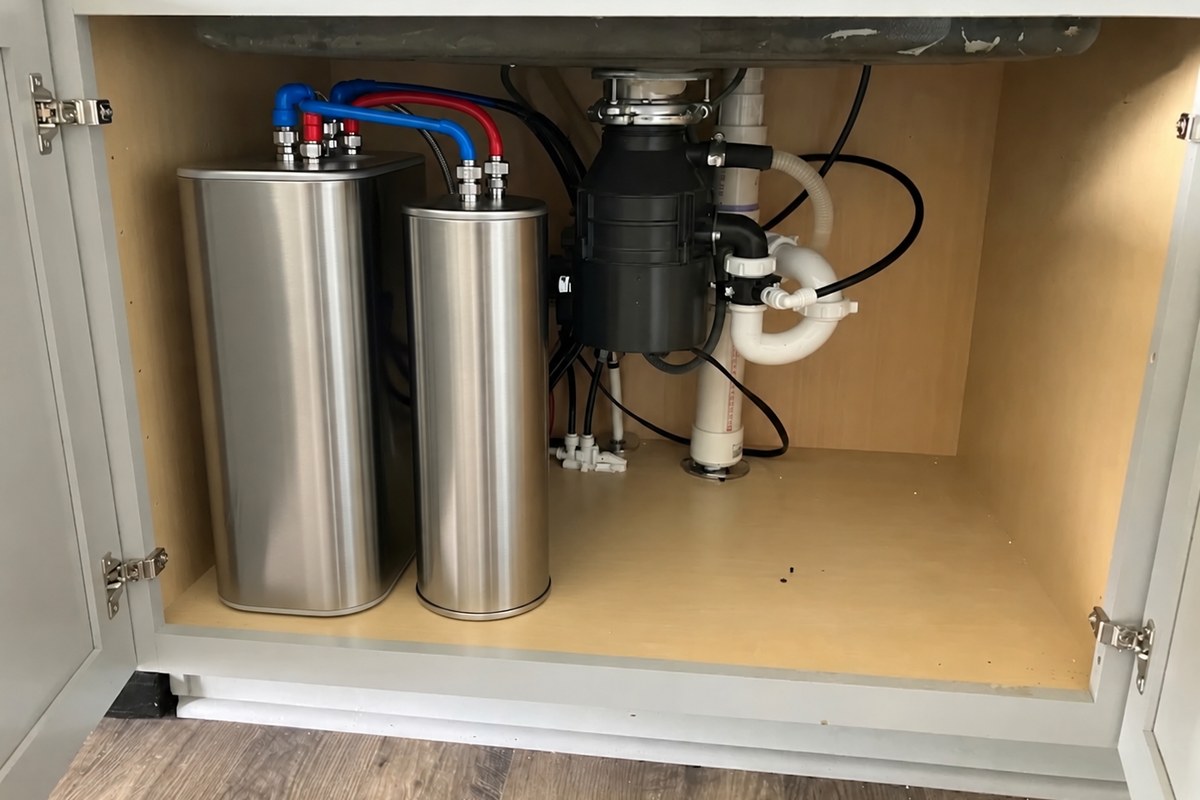
If you live in the Triangle and you have seen headlines about “forever chemicals,” GenX, or 1,4-dioxane in the water, you have good reason to pay attention. This part of North Carolina has some of the most talked-about industrial water contamination in the country, and it is not hype. It is a real, documented issue tied to the rivers our drinking water comes from.
This guide explains what these chemicals are, how they got into our water, which local supplies are affected, what the newer EPA rules mean, and what actually removes them at home. We will also be honest about the one that is genuinely hard to filter out.
What are PFAS, GenX, and 1,4-dioxane?
These are three different contaminants that often get mentioned together because they show up in the same river systems here.
- PFAS stands for per- and polyfluoroalkyl substances, a large family of man-made chemicals used in nonstick coatings, waterproof fabrics, firefighting foam, and many industrial processes. They are called “forever chemicals” because they do not break down naturally in the environment or in your body. They build up over time.
- GenX is a specific chemical (a type of PFAS) that a chemical manufacturer upstream on the Cape Fear River began using as a replacement for an older PFAS compound. It became infamous because it was discharged into the river that supplies drinking water to a huge stretch of the state.
- 1,4-dioxane is a separate industrial solvent and byproduct, not a PFAS, used in and produced by various manufacturing processes. It dissolves completely in water and is classified as a likely human carcinogen. It is notoriously difficult to remove, which we will get to.
Health agencies link long-term PFAS exposure to effects on the immune system, cholesterol, certain cancers, and developmental issues, which is why the acceptable levels have been set very low.
How did these chemicals get into Triangle water?
The short version: upstream industrial discharge into the rivers our utilities draw from.
The Triangle sits in the Cape Fear River basin and the connected Haw River watershed. For years, factories and wastewater treatment plants upstream released PFAS, GenX, and 1,4-dioxane into these waterways. Because these chemicals dissolve in water and resist breaking down, they travel downstream and end up in the reservoirs and river intakes that public water systems use.
Standard drinking-water treatment at a typical municipal plant (the kind that filters out dirt and kills bacteria) was never designed to remove dissolved industrial chemicals like these. So without special treatment, they can pass right through to the tap.
Which Triangle water supplies are affected?
Not every home in the Triangle draws from the same source, so exposure varies. Here is the local picture.
Cary, Apex, and Morrisville (Jordan Lake)
These towns get their drinking water from Jordan Lake, which sits in the Cape Fear basin downstream of the Haw River. Because the Haw carries industrial discharge from upstream, Jordan Lake has been a focus of PFAS and 1,4-dioxane monitoring. If you live in Cary, Apex, or Morrisville, your water comes from this system.
Pittsboro (Haw River)
Pittsboro is the sharpest example. The town pulls its drinking water straight from the Haw River, upstream of Jordan Lake’s dilution. Independent testing and national reporting have shown Pittsboro’s water contains among the highest measured levels of 1,4-dioxane and PFAS in North Carolina, and it has been cited in national coverage of the problem. If you are in Pittsboro, treating your drinking water is worth taking seriously.
Raleigh (Falls Lake and the Neuse River)
Raleigh’s water is a different story. The city draws from Falls Lake and the Neuse River, a separate basin from the Cape Fear and Haw. That means Raleigh is less affected by the specific upstream industrial discharge that hits Jordan Lake and the Haw. Less affected does not mean immune, though. PFAS are so widespread that they turn up at low levels in many water systems, and no surface-water supply is completely free of them.
Private wells across the rural Triangle
If you are on a private well, your risk profile is different. Wells are less exposed to river discharge but can pick up PFAS from local sources, and they carry their own set of issues (iron, hydrogen sulfide, hardness, acidic pH, bacteria). Remember that private wells in North Carolina are unregulated: no one tests them for you, and the owner is responsible for testing and treatment. If you have a well, PFAS testing is something you have to arrange yourself.
What do the EPA’s newer PFAS limits mean?
The EPA has set enforceable national limits for several PFAS compounds in public drinking water for the first time, with allowable levels in the very low parts-per-trillion range. In plain terms, that means:
- Public water utilities are now on the hook to monitor for these specific PFAS and reduce them below the new limits over the coming years.
- The limits are extremely low, which reflects how little of these chemicals is considered safe over a lifetime.
- Utilities need time and money to upgrade treatment, so the improvements at the plant level roll out gradually, not overnight.
- The rules cover certain PFAS, not 1,4-dioxane, which is regulated differently and remains a stubborn problem.
The takeaway for a homeowner: help is coming at the utility level, but it is not instant, and if you want cleaner drinking water now, home treatment is the fastest path you control.
What actually removes PFAS from drinking water at home?
The good news is that PFAS can be removed at home with the right equipment. The two proven approaches are:
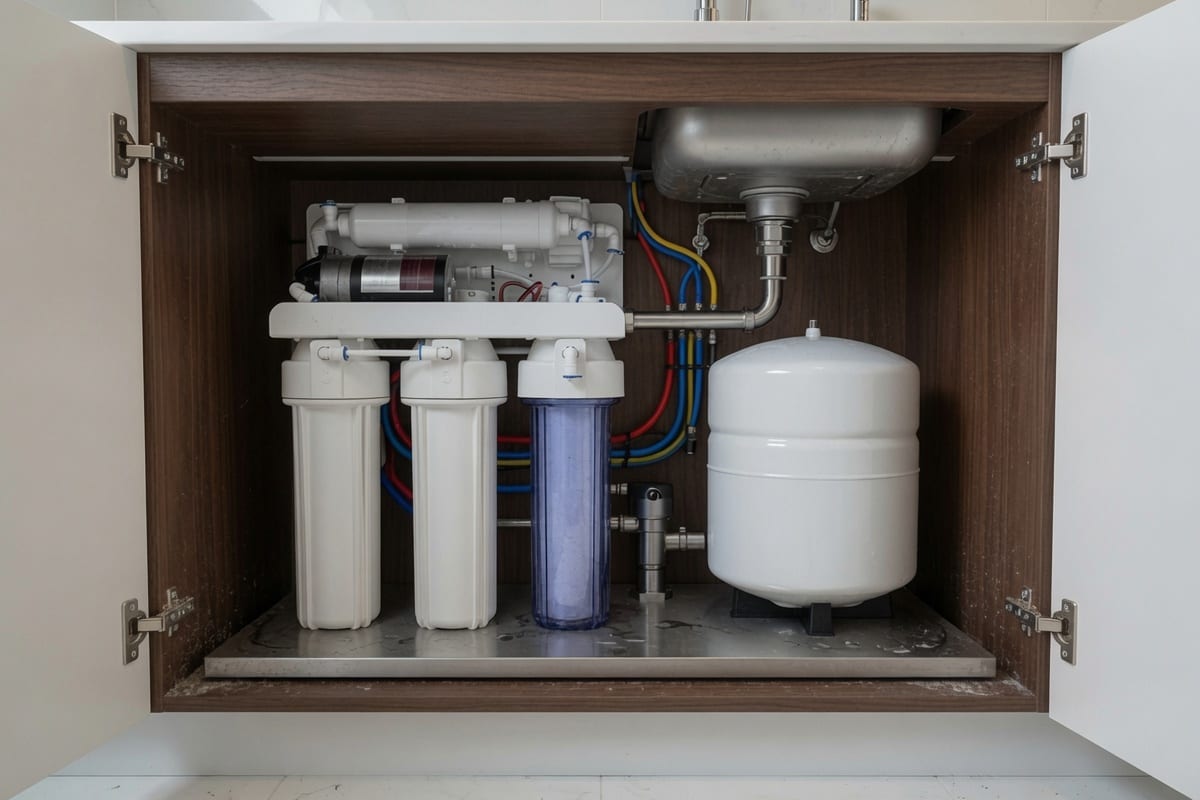
- Reverse osmosis (RO). An under-sink RO system pushes water through a fine membrane that blocks PFAS along with lead, fluoride, and dissolved solids. For most households, RO at the kitchen sink is the most reliable and thorough way to get PFAS out of the water you drink and cook with. See our reverse osmosis drinking water systems.
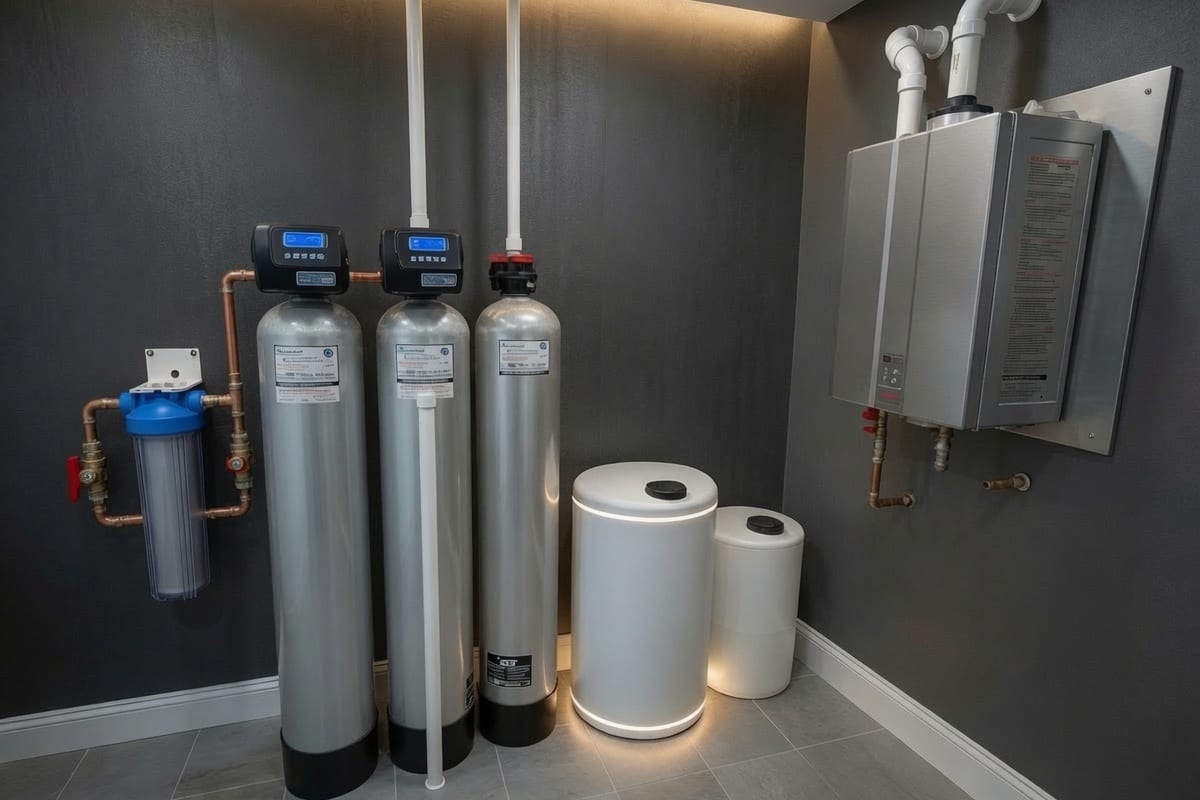
- Certain activated-carbon systems. Specific high-quality carbon filters (often granular activated carbon designed and sized for PFAS) can significantly reduce PFAS. The key words are “designed for PFAS” and “properly sized,” because a generic carbon cartridge is not enough, and the media has to be replaced on schedule to keep working. A whole-house filtration system built with the right carbon can address PFAS across the home, though for the lowest levels many homeowners still add RO at the kitchen for drinking.
Does a refrigerator filter remove PFAS?
Generally, no, not to a meaningful degree. A standard fridge or pitcher filter is built to improve taste and cut chlorine, not to strip out PFAS at the very low levels that matter. Some newer pitcher filters make PFAS claims, but performance varies and they clog quickly. If PFAS is your concern, a properly designed RO or carbon system is the dependable answer, not the filter in your fridge door.
What about 1,4-dioxane? The honest answer
Here is where we have to be straight with you. 1,4-dioxane is genuinely hard to remove. It is a small molecule that dissolves completely in water, and it slips through the treatment methods that catch most other contaminants.
- Standard carbon filters do not remove it well. It passes through most activated carbon.
- Reverse osmosis removes it only partially. RO helps with many contaminants, but 1,4-dioxane’s tiny, water-loving structure makes it one of the harder things for an RO membrane to reject fully.
- It usually takes advanced treatment. Removing 1,4-dioxane reliably tends to require specialized media or advanced oxidation processes (systems that use UV light combined with an oxidizer to break the molecule apart). These are more involved than a typical home filter.
We tell homeowners this plainly because anyone promising a cheap, simple 1,4-dioxane fix is overselling it. If 1,4-dioxane is a specific worry for you (which is most relevant for Pittsboro and Haw River water), the right move is to test first so you know your actual levels, then choose treatment based on real data rather than fear.
Practical steps for Triangle homeowners
You do not need to panic, and you do not need to buy the most expensive system on the market. Here is the sensible order of operations:
- Know your source. Figure out whether your home is on Jordan Lake (Cary, Apex, Morrisville), the Haw (Pittsboro), Falls Lake (Raleigh), or a private well. Your water bill or utility usually names the source.
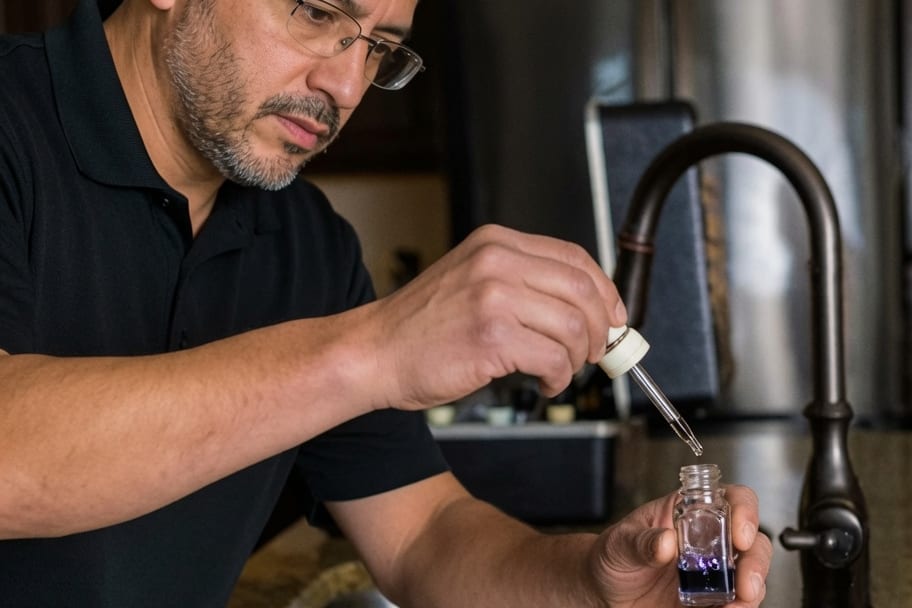
- Test your water. A test tells you what is actually in your water instead of leaving you guessing from headlines. This is especially important for well owners, who have no one else checking.
- Treat your drinking water first. For PFAS, an under-sink RO system is the highest-value step, since it targets the water you and your family actually consume. Explore our reverse osmosis drinking water options.
- Consider whole-house treatment if you want chlorine, taste, and broader protection at every tap, using carbon media appropriate for your water.
- Get a straight answer on 1,4-dioxane if you are in an affected area, and understand it may call for specialized treatment beyond a standard filter.
You can review typical equipment and pricing on our water filtration cost guide, and see local details for Durham and other Triangle communities.
Get clear answers about your water
PFAS, GenX, and 1,4-dioxane are real issues in the Triangle, but they are also solvable for the water you drink, as long as you match the treatment to what is actually in your water. Guessing wastes money; testing does not.
Raleigh Water Pros offers a free in-home consultation across Raleigh and the Triangle, with up-front pricing and licensed installers. We will tell you honestly what your water needs, including a straight answer about what can and cannot be removed. Contact us to schedule your free consultation and take control of what comes out of your tap.