Well Water Testing in Chatham County, NC (2026)
Raleigh Water Pros • September 11, 2026 • 7 min read • Updated September 14, 2026
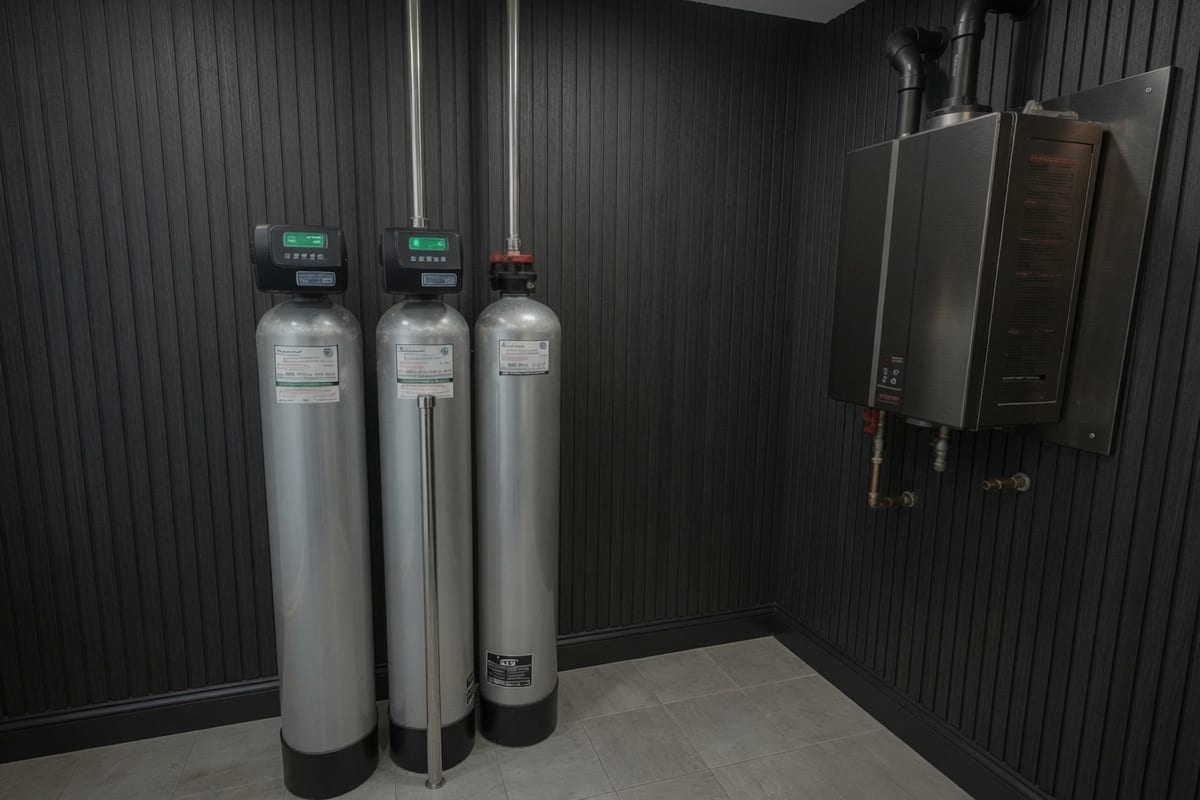
There are two reasons to test a well, and they call for different tests. One is to establish that the water is safe. The other is to work out what to do about water that is safe but unpleasant, corrosive, or wrecking your appliances. Most people pay for the first and then wonder why it did not answer the second.
This guide covers what a Chatham County well should actually be tested for, what each panel costs in 2026, and how to read the numbers that matter. These are planning ranges for the NC market rather than quotes.
The Two Kinds of Test
| Regulatory panel | Treatment panel | |
|---|---|---|
| Purpose | Is this water safe? | What equipment does this water need? |
| Required when | New well construction | Never required; always useful |
| Covers | Bacteria, nitrate, inorganics | Hardness, iron, manganese, sulfide, pH, tannins |
| Typical cost | $100 to $250 | $0 to $200 |
| Who runs it | Certified laboratory | Lab, or a treatment company in-home |
The county requires the first on a new well. Our guide to Chatham County well permits covers that process, including the detail that trips most people up: chlorine must be fully purged before sampling or the bacteriological test fails.
The second is the one that determines what you buy.
What to Test For, and Why
Bacteria (total coliform and E. coli)
The safety test. Annual testing is the widely recommended practice for existing wells, and it is genuinely important after flooding, nearby construction, well work, or any change in taste, smell or clarity. $30 to $75 as a standalone.
Nitrate
Matters most where there is agricultural activity or septic nearby, which describes a good deal of rural Chatham County. Particularly significant for households with infants. Usually bundled into the regulatory panel.
pH
The number people ignore and should not. Chatham County wells frequently run acidic, commonly 5.5 to 6.5. Acidic water corrodes copper plumbing, leaves blue-green staining, shortens water heater life, and can leach metals from your own pipes.
It also gates treatment: oxidising iron filters need pH above roughly 6.8 to function. If yours is below that, you need a neutraliser before the iron filter, adding $800 to $1,800. Discovering this after the iron filter is installed is the expensive order of operations.
Hardness
Measured in grains per gallon. Chatham County wells commonly run 10 to 25 gpg, which is genuinely hard and a world away from the 1 to 5 gpg typical of Triangle municipal supply. This is what determines softener sizing, and sizing by house rather than by measured hardness is the most common mis-specification in this market. Our water softener installation cost guide covers that.
Iron and manganese
Report in parts per million, not just present or absent, because concentration determines the system. Under 3 ppm gives you broad options; 3 to 10 ppm needs a properly sized oxidising filter; above 10 ppm generally means chemical injection. The form matters too, and you can narrow that yourself: our iron filter cost guide has the glass test that distinguishes ferrous from ferric iron and iron bacteria.
Hydrogen sulfide
The rotten-egg smell. Not on the required panel. It frequently occurs alongside iron here, and the good news is that air injection and catalytic systems generally handle both in one unit. Our guide on fixing rotten egg smell in well water covers it.
Tannins
Also not on the required panel. Shows as tea-coloured water, common on properties near wooded or wetland areas, of which Chatham has plenty. Tannins need specific treatment and will foul a softener that was not specified for them.
What It Costs
| Test or panel | Typical 2026 cost |
|---|---|
| Bacteria only | $30 to $75 |
| Nitrate only | $20 to $50 |
| County regulatory panel (new well) | $100 to $250 |
| Comprehensive lab panel | $150 to $400 |
| PFAS panel | $300 to $600 |
| In-home treatment reading, during a free consultation | No charge |
| Post-treatment verification | $50 to $150 |
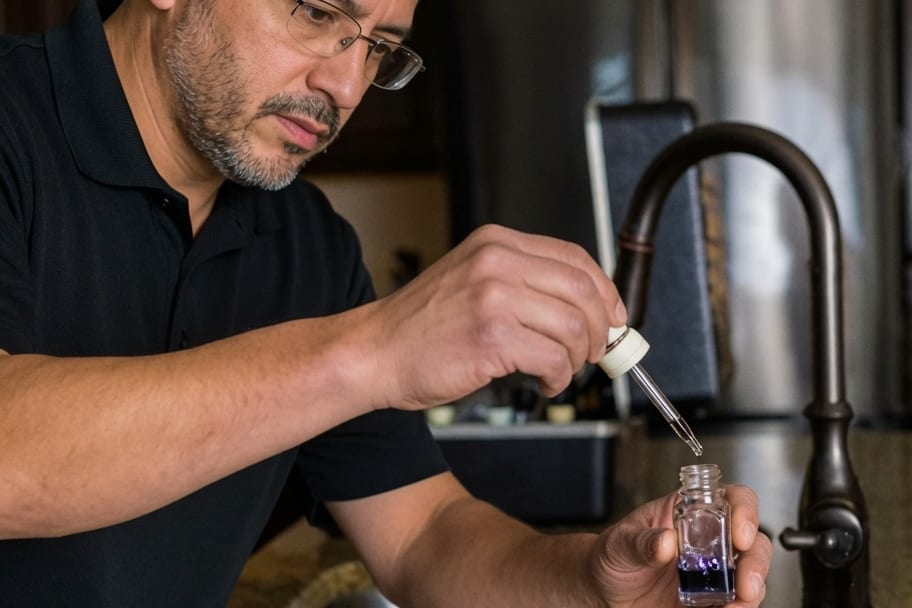
The free in-home consultation is worth understanding rather than dismissing. We test the parameters that drive equipment selection, in front of you. It is also, obviously, offered by companies that sell equipment, so the sensible way to use it is to see the numbers, then decide. Any company unwilling to show you results before discussing price is telling you something.
For anything with a legal or health dimension, a real estate transaction, a dispute, a suspected contamination event, use an independent certified laboratory rather than a vendor’s screening.
How Often
- Annually: bacteria, and nitrate if you have infants or nearby agriculture
- Every 2 to 3 years: the full mineral panel, unless something changes
- Immediately: after flooding, well repair, nearby drilling or construction, or any change in taste, odour, colour or clarity
- At purchase: always, and read the actual report rather than a pass letter
- After treatment is installed: verify it is doing what it was sold to do
That last one gets skipped almost universally. A system that was correctly specified should measurably change the numbers. If it has not, you want to know at month one rather than year three.
Reading Your Own Report
Three habits that save money:
Look at pH first. It gates everything else, and it is the cheapest number on the page to act on.
Check that iron is a number, not a checkbox. “Iron: present” is not actionable. “Iron: 4.2 ppm” specifies a system.
Ignore anything reported as below detection limit. A trace that a lab can measure is not a treatment problem, and it is a favourite of high-pressure in-home sales to point at a detected trace as though it were a crisis.
Frequently Asked Questions
How much does well water testing cost in Chatham County?
A basic bacteria test runs $30 to $75. The regulatory panel required on a new well runs $100 to $250. A comprehensive treatment-oriented panel runs $150 to $400. The free consultation covers a reading of the treatment parameters at your tap.
Is the county-required test enough?
For safety, largely yes. For deciding what equipment you need, no. Hardness, sulfide, tannins and treatment-level iron concentrations are either absent from that panel or reported in a way that does not drive a specification.
Can I use a home test kit?
Strip kits give a rough read on hardness, pH, chlorine and sometimes iron, which is useful for orientation. They are not adequate for bacteria, nitrate, metals at health-relevant levels, or anything with legal consequences.
Should I test before or after buying a property?
Before. Well condition, water quality, and whether any old well on the parcel was properly abandoned are all due-diligence items that become your problem at closing. Our well permits guide covers the abandonment issue specifically.
Do I need a PFAS test on a well?
Usually not. PFAS concern in this area centres on the Haw River and the municipal systems drawing from it, covered in our guide to 1,4-dioxane and PFAS in Pittsboro water. Private wells are a different source. Test if there is a specific reason, such as proximity to a known site, rather than as routine.
How long do results take?
Bacteriological results typically take a few business days. Comprehensive laboratory panels usually take one to two weeks. In-home screening is immediate.
Get Your Chatham County Well Tested
We will test the parameters that drive equipment selection, show you the numbers before anyone discusses price, and tell you honestly when the answer is that you do not need much. Once you have numbers, our guide to well water filtration in Chatham County matches each result to the equipment that treats it.
See water testing, well water treatment, or our Pittsboro water filtration page. Treatment costs are in the Pittsboro pricing guide.
Call (984) 384-6991 or book a free consultation.