Why Well Water Smells Like Rotten Eggs, and the Fix
Raleigh Water Pros • July 18, 2026 • 8 min read • Updated September 14, 2026
If your well water smells like rotten eggs, you are not imagining it and you are not alone. It is one of the most common complaints we hear from well owners across the rural Triangle. The good news: the smell is fixable once you know what is causing it and where it is coming from.
This guide walks you through the cause, how to figure out the source in about five minutes, why it matters, and the real fixes ranked from best to temporary.
What causes the rotten egg smell in well water?
That distinct rotten egg odor is hydrogen sulfide gas, written as H2S. It is a gas that dissolves into water and gets released into the air the moment you turn on a tap or step into the shower. Even a tiny amount, measured in parts per million, is enough for your nose to pick it up.
Hydrogen sulfide in well water comes from two main sources:
- Naturally in the aquifer. Decaying organic matter and certain minerals underground produce sulfur gas, which dissolves into the groundwater your well pulls from. This is common in North Carolina wells.
- Sulfate-reducing bacteria. These are harmless-to-drink bacteria that feed on sulfur and produce H2S as a byproduct. They love warm, low-oxygen environments, which is exactly what the inside of a water heater tank offers.
Knowing which of these two you are dealing with is the whole game, because the fix is completely different depending on the source. If the smell is closer to sewage or fish than eggs, that is a different set of causes, covered in our guide to well water that smells like sewage or fish.
Is the smell in all your taps or only the hot water?
This is the single most important test, and you can do it yourself right now. Run the cold water at a tap and smell it. Then run the hot water and smell that.
If the smell is ONLY in the hot water
If cold water smells fine but hot water reeks, the problem is almost certainly inside your water heater, not your well. Two things are usually going on:
- The magnesium anode rod inside the tank. This rod protects the tank from rust, but it can react with sulfate bacteria in the warm water and generate hydrogen sulfide.
- Sulfate-reducing bacteria growing in the tank itself, especially if the water heater sits at a lower temperature or goes unused for stretches (a vacation home, a guest bathroom, a rental).
This is the easier, cheaper problem to solve, and we cover the fix below.
If the smell is in ALL taps, hot and cold
If both cold and hot water smell like rotten eggs, the hydrogen sulfide is coming in with your well water from the aquifer, or you have bacteria growing in the well and plumbing. This is a whole-house issue and needs whole-house treatment, not a water heater tweak.
Is hydrogen sulfide in well water dangerous?
At the levels found in most household wells, hydrogen sulfide is more of a serious nuisance than a direct health threat. You would smell it long before it reached a level that could harm you, because the human nose detects it at concentrations far below any danger point.
That said, it is not something to just live with:
- It ruins your quality of life. Coffee, tea, ice, and cooking all pick up the smell and a slightly off taste.
- It corrodes metal. Hydrogen sulfide is chemically aggressive and can tarnish silverware, discolor fixtures, and eat at plumbing and water heater components over time.
- It often travels with iron and manganese. If you also see orange or brown staining in sinks, tubs, and toilets, you likely have iron in the water too, which is very common in Triangle wells. The two problems get solved together.
- It can point to bacteria. Sulfate-reducing bacteria are not the kind that make you sick, but their presence is a reason to test for the ones that do, especially after heavy rain.
Because private wells in North Carolina are unregulated, no agency is checking your water for you. The well owner is responsible for testing and treatment, which is exactly why a baseline test matters.
Symptom checklist: what to look for
Run through this quick list before you call anyone:
- Rotten egg smell in cold and hot water points to hydrogen sulfide in the aquifer or well.
- Rotten egg smell in hot water only points to the water heater (anode rod or bacteria).
- Orange or brown stains in sinks, tubs, and laundry means iron is present too.
- Black staining or slime points to manganese or sulfur bacteria.
- Smell gets stronger after the water sits unused (first draw in the morning) points to bacteria growth in the system.
- Blue-green stains and pinhole leaks point to acidic, low-pH water, which is common alongside these issues in Triangle wells and worth testing for.
Write down what applies to you. It tells an installer exactly where to look.
How do you fix rotten egg smell in well water?
Here are the real fixes, ranked. The right one depends on the source you identified above.
Best for whole-house H2S: air-injection oxidizing filter
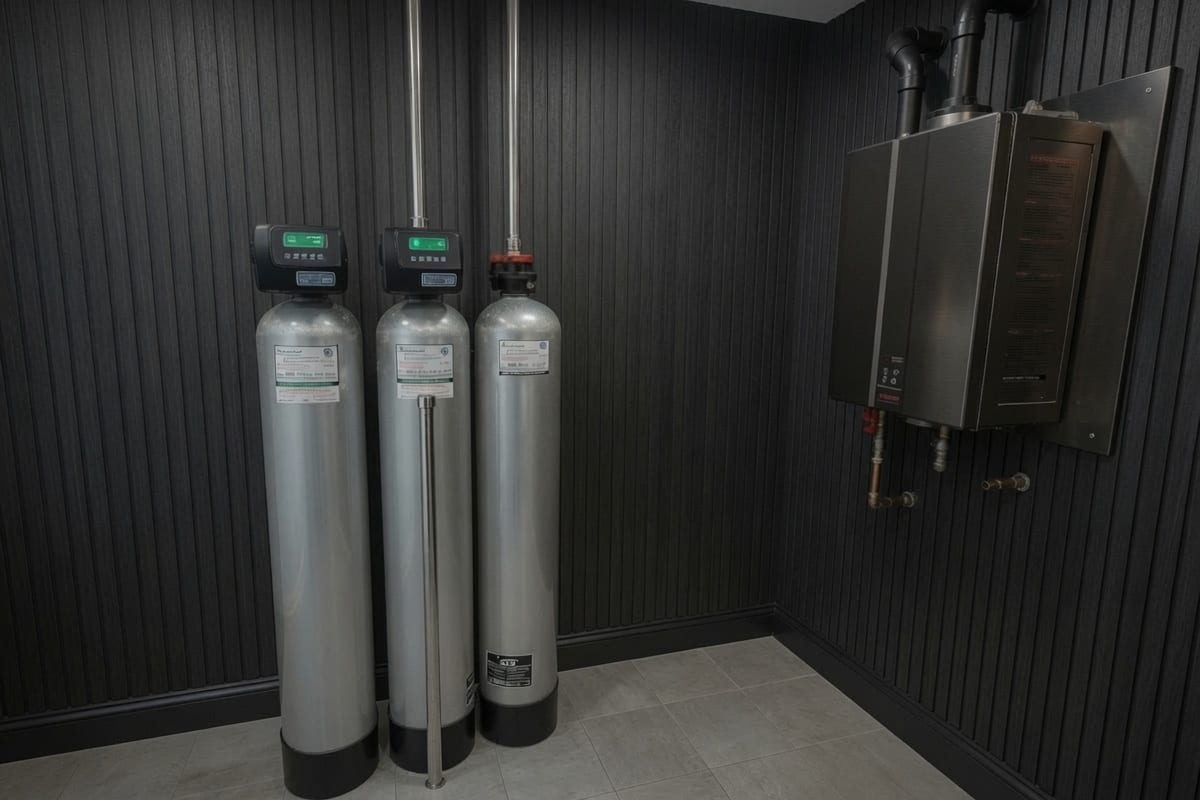
For hydrogen sulfide coming in through all your taps, an air-injection oxidizing filter is usually the best solution. Here is how it works in plain terms: the system pulls a pocket of air into the top of the tank, and when your smelly water passes through that air, the dissolved hydrogen sulfide (and any iron and manganese) oxidizes, meaning it turns into a solid particle. A bed of filter media then traps those particles, and the system flushes them down the drain automatically on a backwash cycle.
Why homeowners like it:
- No chemicals to buy and refill.
- Removes hydrogen sulfide, iron, and manganese in one unit, which is perfect for Triangle wells where all three show up together.
- Treats every tap in the house.
This is the workhorse for well sulfur and iron problems. Learn more about our iron and sulfur removal systems and how they are sized to your specific water.
Good option: catalytic carbon filtration
Catalytic carbon is a specialized filter media that grabs hydrogen sulfide as water passes through. It works well for lower levels of H2S and is often paired with other treatment. For higher sulfur levels, the air-injection approach tends to hold up better over time.
For lower levels: aeration
Aeration systems physically mix air into the water in a tank, letting the hydrogen sulfide gas escape before the water enters your home. It is effective and chemical-free but takes more space and equipment, so it is usually reserved for specific situations.
When bacteria are the cause: chlorination (shock and continuous)
If testing shows sulfate-reducing bacteria in your well, the water often needs to be disinfected. Shock chlorination is a one-time treatment that sanitizes the well, pump, and plumbing. If bacteria keep coming back, a continuous chlorination system with a contact tank and a carbon filter afterward (to remove the chlorine) keeps the water clean long term. Pairing disinfection with a complete well water treatment system is often the durable answer.
For hot-water-only cases: swap the anode rod
If your test showed the smell is only in the hot water, you may not need whole-house treatment at all. Options include:
- Replace the magnesium anode rod with an aluminum-zinc or a powered anode rod, which are far less likely to produce hydrogen sulfide.
- Flush and disinfect the water heater to clear out sulfate bacteria, and raise the tank temperature if it has been set low.
This is the cheapest fix in the whole guide, and it only applies when the cold water is odor-free. That is why the hot-versus-cold test matters so much before you spend money.
Why a whole-house approach beats masking the smell
It is tempting to reach for a quick fix: a carbon pitcher, a fridge filter, or an under-sink cartridge. Those can help the taste at one tap, but they do nothing for the shower, the laundry, the ice maker, or the smell that hits you when you walk into the bathroom. They mask a small part of the problem.
Hydrogen sulfide is a whole-house issue when it is coming from the well. Treating it at the point where water enters the home means every faucet, shower, and appliance gets clean, odor-free water. It also protects your plumbing and water heater from the corrosion that H2S causes. When iron and manganese ride along with the sulfur (which they usually do in this area), one properly sized whole-house system handles all of it at once.
Start with a test, not a guess
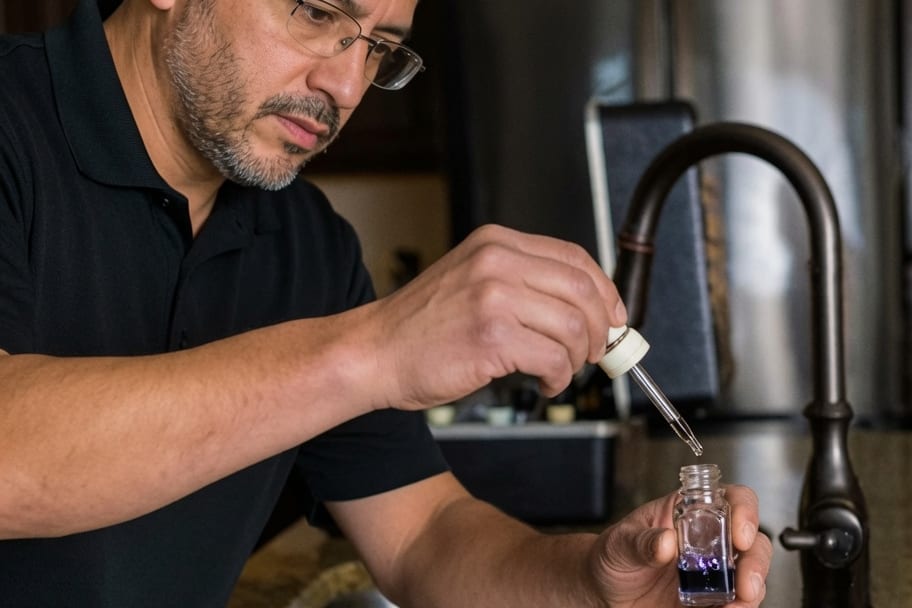
Because the fix depends entirely on the source and the levels involved, the smart first step is a water test. It tells you how much hydrogen sulfide you have, whether iron and manganese are present, what your pH is, and whether bacteria are in the picture. From there, the right system is straightforward to choose.
Raleigh Water Pros offers a free in-home consultation across Raleigh and the Triangle, including well-heavy areas like Wake Forest, Holly Springs, and Fuquay-Varina. We use up-front pricing and licensed installers, so you know the cost before any work starts. You can also review typical numbers on our water filtration cost guide.
If your well water smells like rotten eggs, you do not have to live with it. Get a clear answer on the cause and a fix that actually works. Contact us to schedule your free consultation and we will get the smell out of your water for good.