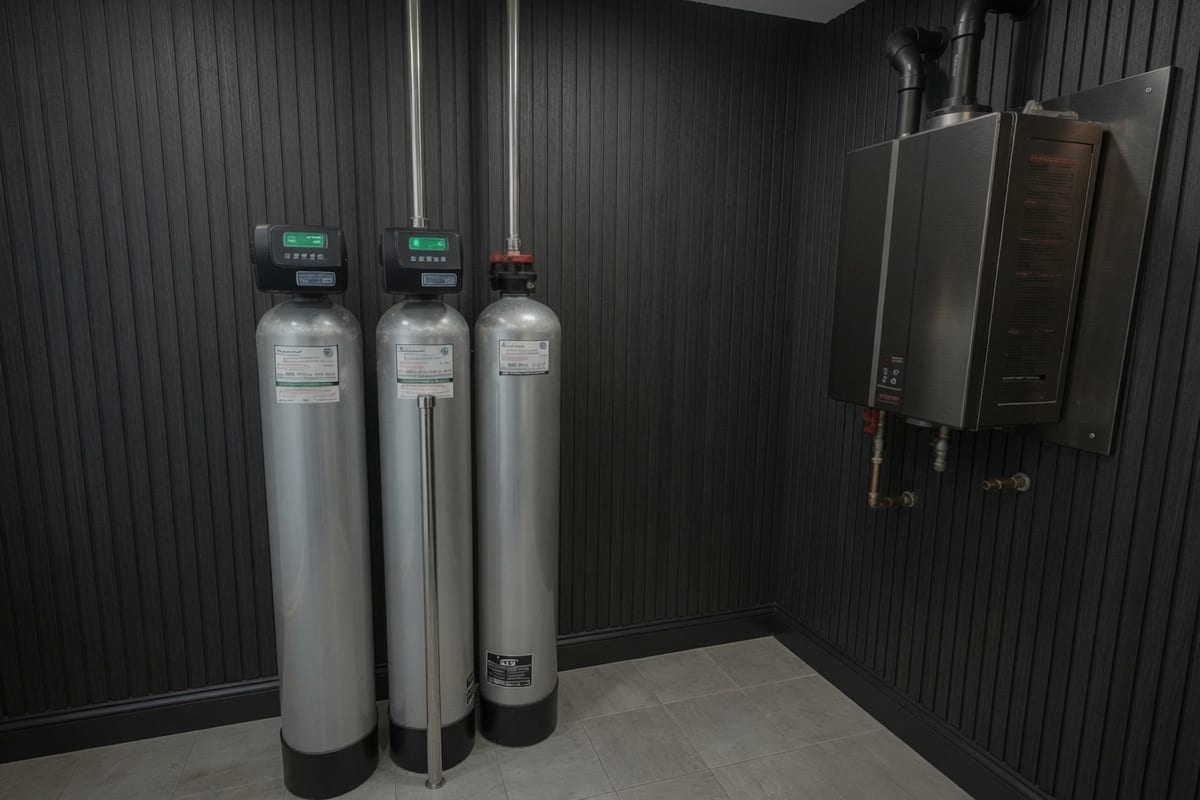
Iron Filter Not Working? Maintenance and Fixes
Raleigh Water Pros • September 26, 2026 • 9 min read
The orange ring in the toilet was gone for a year. Now it is back, the laundry has a tan cast again, and the iron filter in the garage looks exactly the way it did the day it went in.
An iron filter not working almost never means the tank is broken. Iron filters are chemistry plus plumbing: the water has to arrive in a condition the media can work with, and the tank has to flush out what it catches. When either half slips, the iron comes through. On wells around Fuquay-Varina, Clayton and Chatham County, the fix is usually one of five things, and three of them are checks you can do on a Saturday.
This guide covers maintenance and troubleshooting only: what each failure looks like, what causes it, and where it stops being a homeowner job. Prices, where they appear, are planning ranges, not quotes.
Why is my iron filter not working?
An iron filter stops removing iron for one of three reasons: it is not backwashing properly, the water chemistry no longer suits the media, or the problem was never dissolved iron in the first place. Work those in order. Backwash is the cheapest to check; the chemistry needs a water reading; the third needs a closer look at what is actually coming out of the tap.
Penn State Extension describes the maintenance plainly: oxidizing filters “require regular backwashing to remove the oxidized iron and manganese particles,” and some media types also need “frequent regeneration with a potassium permanganate solution as it is consumed.” Skip either and the bed fills up with the iron it was supposed to remove.
| Symptom | Most likely cause | First check |
|---|---|---|
| Orange stains returning slowly over months | Backwash too short, too weak or not happening | Timer, drain line, backwash schedule |
| Iron breaks through suddenly | Regenerant, chlorine or air supply ran out | Regenerant tank, solution tank, air draw |
| Filter worked for years, now fails | pH has drifted below what the media needs | A fresh pH and iron reading |
| Orange or brown slime in the toilet tank | Iron bacteria, not dissolved iron | The slime test in our iron bacteria guide |
| Black specks or black stains | Manganese, which needs higher pH | Manganese reading |
| Yellow or tea-coloured water stays | Organic iron or tannins | Lab reading for organics |
| Low pressure through the filter | Packed bed from missed backwash | Pressure before and after the tank |
Is your iron filter backwashing?
If the bed is not backwashed often enough, or with enough flow, the iron it catches has nowhere to go and starts coming through. This is the most common failure and the cheapest to find.
Start with the control valve. After a power cut, older timer valves can reset and backwash at the wrong hour, or not at all. Confirm the time of day and the backwash schedule on the display, then trigger a manual backwash and listen. You should hear the valve cycle and water running to the drain for several minutes.
Then follow the drain line. A kinked hose, a clogged end or a line that runs uphill can choke the backwash flow even when the valve does everything right.
Flow is the part homeowners cannot fix alone. UGA Extension’s filtration bulletin says to “select the maximum tank diameter appropriate for the available backwash rate,” because backwash only lifts and cleans the bed if the well can supply enough water. A tank sized larger than the well can backwash never fully cleans. If the well itself cannot deliver the flow, a well contractor handles that side.
Pro tip: Watch one full backwash from start to finish and time it. The water at the drain should start rusty and run clearer before the cycle ends. If it is still dark orange when the valve stops, the backwash is too short or too weak, and that single observation narrows the problem more than any guess.
Want the backwash, the pH and the iron read in one visit? Request a free consultation and we test first, then quote in writing.
Is the pH too low for the filter media?
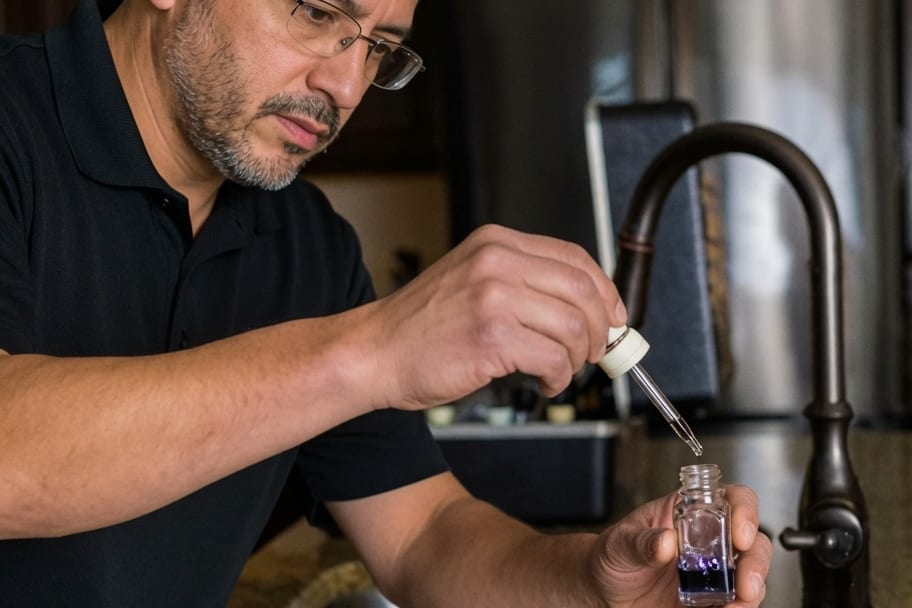
Some iron filter media only work above a set pH, and if your well’s pH drifts below it the filter quietly stops oxidizing iron. Penn State Extension says media that rely on dissolved oxygen need water where “the pH should be at least 6.8 for iron removal and 7.5 for manganese removal.”
That matters on acidic wells. If a fresh reading shows the pH below the line your media needs, the fix is upstream: an acid neutralizer ahead of the iron filter raises pH so the media can work. Installed, a neutralizer typically runs $1,200 to $2,200, covered in our acid neutralizer cost guide. If pH was never measured before the iron filter went in, a reading now is worth more than a guess.
Other systems depend on a supply you have to keep up:
- Permanganate-regenerated media. Penn State notes the potassium permanganate “is consumed during oxidation,” so an empty regenerant tank means iron coming through within days.
- Chlorine or peroxide injection. The Minnesota Department of Health warns that with chemical oxidation “proper dosing can be difficult and carries health risks if improperly dosed.” An empty solution tank or a failed feed pump stops the oxidation step completely.
- Air injection. These systems draw air into the water or hold an air pocket at the top of the tank. A stuck air valve or a lost air pocket stops oxidation just as surely.
Is it really dissolved iron?
If the filter is backwashing and the chemistry is right but stains persist, the problem may be something an ordinary iron filter was never meant to catch.
Iron bacteria. The Minnesota Department of Health describes iron bacteria as organisms that “consume iron to survive” and produce “a red or brown slime called a ‘biofilm.’” They coat media and valves and grow back after cleaning. Our iron bacteria guide has the slime test and what actually works.
Manganese. Black specks or grey-black stains mean manganese, which needs a higher pH than iron to oxidize. The manganese guide covers it.
Organic iron and tannins. MDH notes that with iron bound to organic matter, “water softeners, aeration systems, and iron filters may not work well.” Yellow or tea-coloured water that no iron filter clears is a sign.
More iron than the system was sized for. MDH says a manganese greensand filter “can be effective for levels that are up to 10 to 15 mg/L,” and that aeration or chemical oxidation are options “if iron levels are more than 10 mg/L.” A reading well above what your system was designed for explains a filter that never quite keeps up.
What maintenance does an iron filter need?
Most iron filter trouble is avoided with a short routine. The exact intervals come from your system’s manual, but the categories are the same everywhere.
- Monthly: check the regenerant, solution or air supply, and look at the time on the control valve.
- After any power cut: confirm the clock and the backwash schedule.
- Every few months: watch one backwash cycle, and check the drain line.
- Every year: have the raw and treated water re-read for iron, manganese and pH, so you catch drift before stains do. Our water testing and analysis page covers what is measured.
- When stains return: check before you change anything. Replacing media in a filter that was not backwashing buys the same failure twice.
If the filter is old and the media spent, replacement may beat another repair. An installed iron and sulfur filter in the Triangle typically runs $1,800 to $3,500, per our Raleigh water filtration cost guide, and the iron filter cost guide explains what moves the price. If you are not sure a filter was the right tool, see iron filter versus water softener for iron.
Frequently Asked Questions
Why is my iron filter not removing iron anymore?
The most common causes are a backwash that is too short or not happening, a regenerant, chlorine or air supply that has run out, or a pH that has drifted below what the media needs. Check the valve clock and the supply tank first, then get a fresh pH and iron reading.
How often should an iron filter backwash?
It depends on your iron level, your water use and the media, and the schedule is set on the control valve at installation. If orange stains are returning and the drain water is still dark at the end of each cycle, the schedule or the backwash flow needs adjusting.
Can low pH stop an iron filter from working?
Yes. Penn State Extension says media relying on dissolved oxygen need a pH of at least 6.8 for iron. On an acidic well in Fuquay-Varina or Pittsboro, an acid neutralizer ahead of the filter is the usual fix.
Why is there orange slime even with an iron filter?
That is usually iron bacteria, not dissolved iron. The bacteria form a biofilm that coats the filter and fixtures and grows back after cleaning, which is why an iron filter alone does not solve it.
Is it worth repairing an old iron filter?
Often yes if the tank and valve are sound and the fault is a clock, a drain line or a supply tank. If the media is spent and the valve worn, a replacement at $1,800 to $3,500 installed may make more sense. Our iron and sulfur removal page covers both routes.
Who fixes the well pump if backwash flow is too low?
A well contractor handles the well, the pump and the pressure tank. We handle the treatment side, including sizing the filter to the flow the well can actually deliver. Our well water treatment page explains that sizing.
Sources
Read or checked 26 September 2026.
- Penn State Extension, Iron and Manganese in Private Water Systems, Swistock, Sharpe and Robillard, updated 29 May 2025: backwashing and regeneration, and the pH 6.8 and 7.5 thresholds for oxygen-driven media.
- Minnesota Department of Health, Iron in Well Water, updated 1 August 2025: greensand and aeration ranges, chemical oxidation dosing, organic iron and iron bacteria.
- UGA Extension Bulletin 1523, Mechanical Filtration Methods and Devices, Saha, Hawkins and Lessl, reviewed 30 April 2026: backwashing and matching tank diameter to the available backwash rate.
Get Your Iron Filter Working Again in the Triangle
When an iron filter is not working, check the backwash, the supply tank and the pH before replacing anything. Most of the time the answer is on that list.
We service and install iron filtration on wells across Fuquay-Varina, Clayton, Pittsboro and Wake Forest, and we read the iron, manganese and pH first, because those numbers decide the fix. Book a free consultation and get an up-front written price.
Call (984) 384-6991 or book your free consultation.