Iron Bacteria in NC Well Water: The Orange Slime
Raleigh Water Pros • September 20, 2026 • 10 min read
You lift the lid off the toilet tank and the inside is coated in orange slime. Not a stain and not scale: something soft and stringy that smears when you touch it. You bleach it out, and six weeks later it is back. That is iron bacteria, and on a Triangle well it is a different problem from the dissolved iron that turns a sink basin rust-colored.
The difference decides the fix. Dissolved iron is chemistry, and a correctly sized filter handles it. Iron bacteria is a living colony inside the well, the casing and the plumbing, and a filter can end up housing it.
Below: what the slime is, how to tell it from ordinary iron staining at your kitchen counter, whether it is a health problem, why an iron filter does not solve it, what does, and the local detail that Wake County’s lab tests for iron bacteria by name.
Is the orange slime in your toilet tank iron bacteria?
Almost certainly, if it is slimy rather than gritty and it returns after you clean it. Penn State Extension describes the symptom in nearly those words: “orange or opaque slimy strands inside toilet tanks or orange-colored water.” Pink film around a shower drain is a different organism, covered in our guide to pink slime in the shower.
The Minnesota Department of Health defines these organisms as “small living organisms that naturally occur in soil, shallow groundwater, and surface waters”, and Penn State explains what they are doing down there: they “use dissolved iron or manganese in groundwater to grow, producing a bacterial slime along the way.”
So the iron was there first, the bacteria moved in to feed on it, and the slime is what they build. A toilet tank holds still water in the dark for hours, which is why it is usually where a homeowner sees it first. Minnesota’s symptom list is worth reading against your own water:
- Slime that is “sticky rusty, yellow, brown, or grey”, sometimes “feathery”
- A “rainbow colored, oil-like sheen” on standing water
- Smells described as “swampy, oily or petroleum, cucumber, sewage, rotten vegetation, or musty”
- “Yellow, orange, red, or brown stains and colored water”
The cucumber and swamp notes are the giveaway. Dissolved iron has no smell.
Iron bacteria or dissolved iron? The difference is whether it grows back
Dissolved iron stains, iron bacteria colonizes. That sentence sorts most wells and the table sorts the rest. Our post on iron staining from well water covers the chemistry side and the filter that fixes it, so this page stays on the biological problem.
| Clue | Dissolved iron | Iron bacteria |
|---|---|---|
| Texture | Gritty, or a hard stain | Soft, slimy, stringy, smears |
| Shows up first | Sink basins, tubs, laundry | Toilet tanks, the well cap, filter housings |
| After cleaning | Stays gone | Grows back within weeks |
| Smell | None | Swampy, cucumber, oily, musty |
| Standing water | Clear or rusty | Oil-like rainbow sheen |
| What a lab reports | Iron in mg/L, against the EPA secondary limit of 0.3 mg/L | Present or absent |
| What fixes it | Oxidation and filtration | Removal, disinfection, ongoing control |
That 0.3 mg/L figure is an EPA secondary standard, which the agency calls a non-enforceable guideline for “aesthetic considerations, such as taste, color, and odor” rather than a health limit. Plenty of Triangle wells run both at once, which is the case that confuses people: the basin stains, the tank goes slimy, and treating one leaves you still cleaning.
Not sure which you have? Request a free consultation and we will read the fixtures, the tank and your lab sheet before anyone talks about equipment.
Can you test for iron bacteria in Wake County?
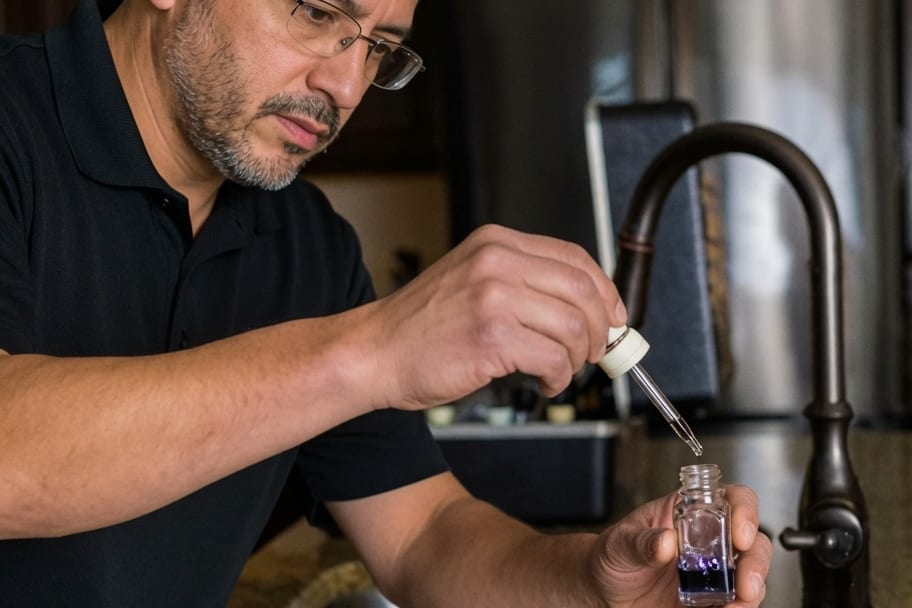
Yes, and the county lists it as its own line item rather than burying it in a general panel. From Wake County’s published well water test fees, observed 20 September 2026, with a $50 trip fee added when the county collects the sample:
| Wake County test | Price |
|---|---|
| Iron Bacteria | $50 |
| Sulfur Bacteria | $50 |
| Iron/Sediment | $20 |
| Coliform bacteria | $25 |
Run two together: iron bacteria tells you whether a colony is present, iron and sediment tells you how much iron is feeding it. Fees change and differ by county, so confirm with your own health department.
Is iron bacteria safe to drink?
The agencies that publish on it treat iron bacteria as a nuisance organism rather than a health hazard. Penn State Extension says iron and sulfur bacteria “are typically considered more of a nuisance than a health hazard.” Minnesota’s health department is more precise: “Iron bacteria are not known to cause disease. However, they can create conditions where other disease-causing organisms may grow.”
That second sentence is why an iron bacteria test belongs alongside a coliform test rather than on its own. If coliform comes back present, our post on what happens after a coliform positive well test walks the North Carolina response in order. If anyone in the house is unwell, that belongs with your doctor or your county health department, not with us.
Why a standard iron filter does not fix iron bacteria
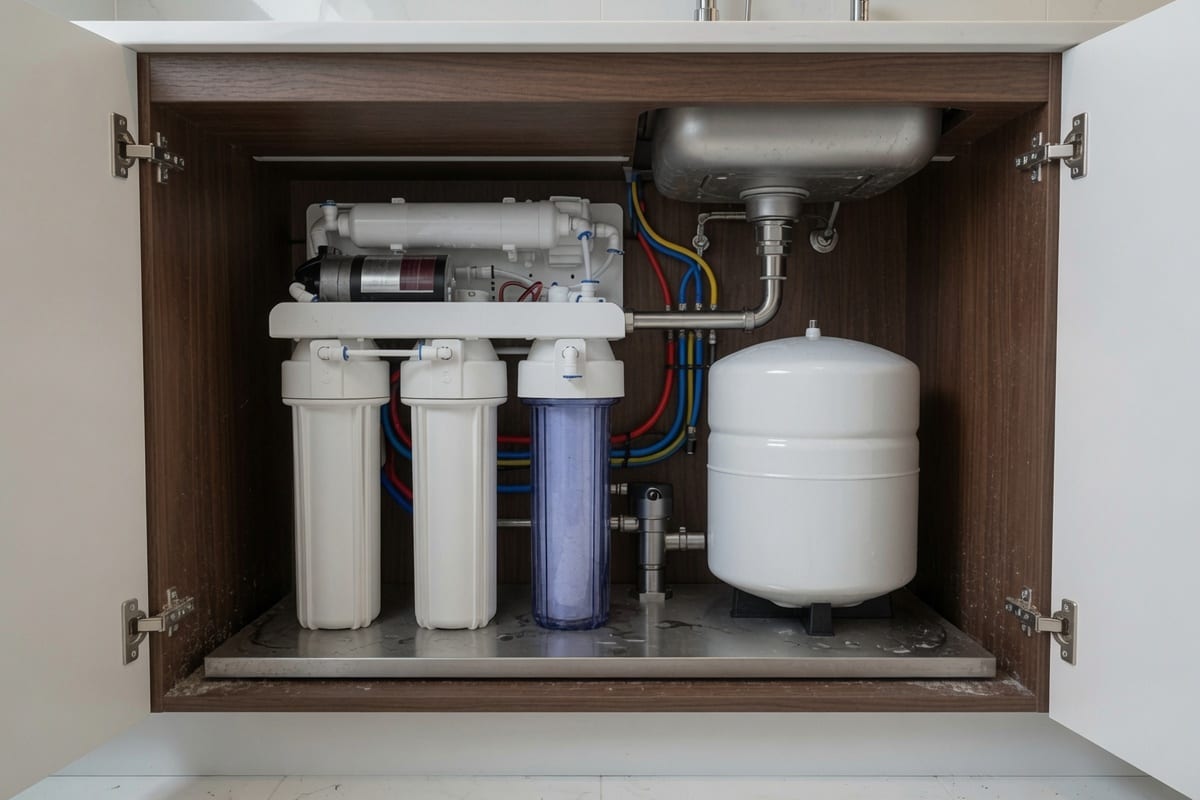
Because an iron filter oxidizes dissolved iron and traps the particles, and slime is neither dissolved nor a particle. An iron and sulfur filter runs $1,800 to $3,500 installed here, a planning range and never a quote, and it is the right equipment for iron staining. Put one downstream of an active colony and the media bed becomes one more warm, wet, iron-rich surface to grow on.
Penn State lists what established bacteria do to a system: “odors, tastes, stains, corrosion of plumbing, and clogged well systems.” Filter housings, softener resin and aerator screens foul the same way. A fouled bed loses capacity, channels water around the media and pushes slime downstream, so the filter looks like it failed when it was working normally against a problem it was never sized for.
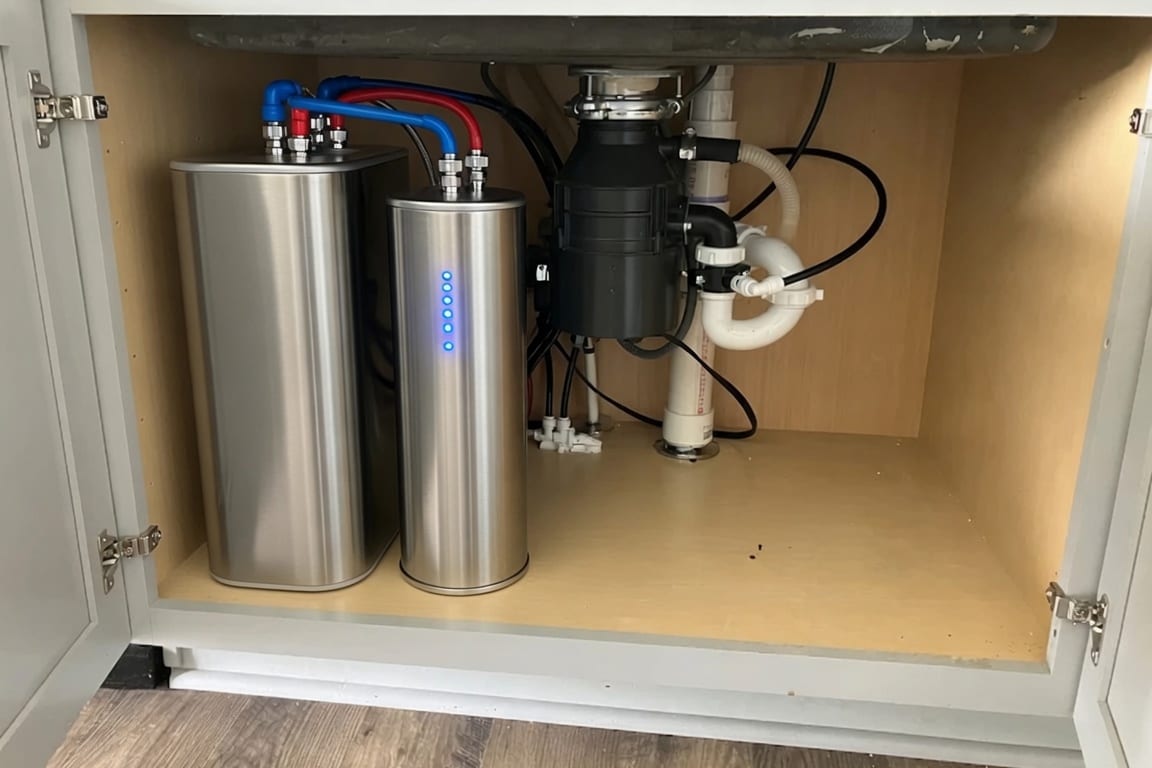
Our guide to the order well water equipment goes in covers the general run, and planning ranges sit in the water filtration cost guide and the well water treatment cost guide. Clean the well first, then put equipment on it.
What actually works on iron bacteria
Three steps in order, and the published guidance is candid that the third one never really ends.
1. Physical removal. Minnesota puts this first: a licensed contractor pulls and cleans the equipment and scrubs the well casing with brushes. The same page describes pasteurization, injecting steam or hot water and holding the well at 60 degrees Celsius (140 Fahrenheit) for 30 minutes. Both are contractor work.
2. Shock chlorination. This is a published procedure and it is not a service we sell, so use the full instructions from your county rather than a summary here. We are not reproducing the dosing, because the right dose depends on the concentration of the specific product and on the volume of water standing in your well, and a partial recipe gives you either too weak a dose to work or one strong enough to be hazardous to handle. Wake County’s Well Chlorination and Disinfection Guidelines and NC DEQ’s How to Disinfect Your Well both carry the complete method, including the contact time, the flushing and the retest interval. Chlorine at disinfection strength burns skin and ruins clothing, and the flush water needs keeping off plants, animals and surface water. Be realistic about what one round achieves: the Minnesota Department of Health describes iron bacteria as potentially very difficult to remove once established, usually needing physical cleaning, chemical treatment and repeated management rather than a single fix. We do not chlorinate wells, drill them, or touch casings and caps; a certified well contractor does that.
Penn State adds a limit worth knowing first: “if shock chlorination is required more frequently than every six months to keep slime-forming bacteria in check, other control options should be explored.”
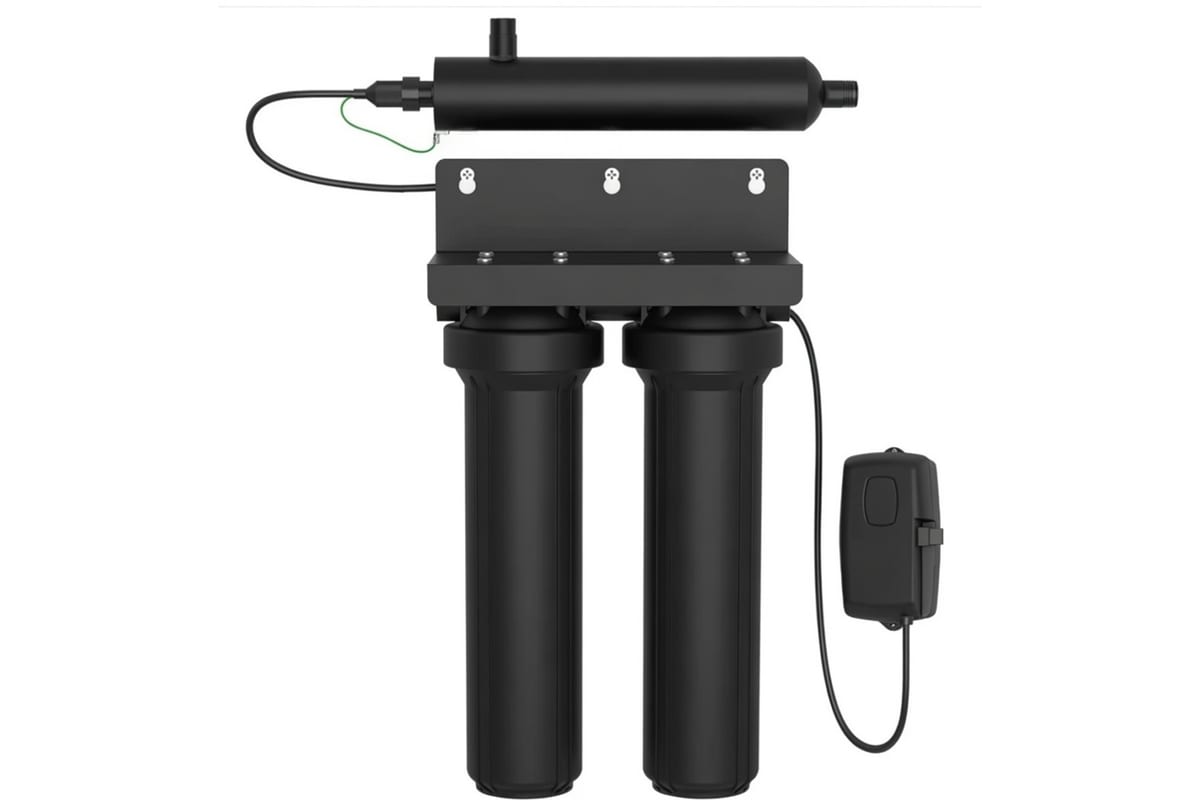
3. Continuous control. When a shock every six months stops holding, you need something that treats every day. Penn State describes down-well chlorination systems that “regularly introduce lower levels of chlorine directly to the well, killing the bacteria.” UV water purification at $700 to $1,500 installed is the other continuous option, with one caveat: UV disinfects water passing a lamp, so it does nothing to slime upstream of it and needs iron and sediment removed ahead of the lamp. UV goes in once the well is clean, not instead.
Now the part the brochures skip. Penn State states that “it can be impossible to entirely remove iron or sulfur bacteria because the slime layers they form act as protection against chlorine”, and Minnesota agrees: “Eliminating iron bacteria can be difficult and expensive. Sometimes treatment techniques may only be partly effective.” Anyone promising permanent eradication is selling past the evidence. The target is control.
Pro tip: photograph the inside of the toilet tank and the underside of the well cap before you clean anything, and let the phone stamp the date. Iron bacteria is diagnosed largely on appearance and on how fast it returns, so a dated before-and-after pair tells a well contractor more in ten seconds than a paragraph of description, and it tells you whether the last shock bought six months or six weeks.
Frequently Asked Questions
How do I tell iron bacteria from rust in my well water?
Touch it. Dissolved iron leaves a gritty stain that scrubs off and stays off; iron bacteria leaves a soft, slimy film that returns within weeks and often smells swampy or like cucumber. A water test settles it: iron comes back as a number in mg/L, iron bacteria comes back present or absent.
Will a water softener remove iron bacteria?
No, and it can make things worse: a softener resin bed is one more surface a slime colony will occupy. Fouled resin is a common reason a softener seems to quit on wells around Wake Forest and Knightdale, and new resin without a clean well just restarts the clock.
How much does an iron bacteria test cost in Wake County?
Wake County lists an Iron Bacteria test at $50, plus a $50 trip fee when the county collects the sample, observed on its fee page 20 September 2026. Sulfur Bacteria is the same $50. Fees change and vary between counties. Our guide to water testing cost in NC covers private laboratory pricing.
Does iron bacteria come back after shock chlorination?
Often, and the guidance expects it. Penn State notes the slime layers shield the colony from chlorine, and says needing to shock more than every six months means it is time for a different approach. If your well needs shocking every few weeks the problem has stopped being chemical: have a certified well contractor inspect the casing, cap and seal.
Can iron bacteria damage my well pump or plumbing?
It clogs them. Penn State lists “corrosion of plumbing, and clogged well systems” among what these bacteria cause, and the first sign is usually falling flow at an aerator or a housing needing cleaning every few weeks. Pumps, casings and pressure tanks belong to a certified well contractor; we handle the treatment equipment downstream of them.
Sources
- Penn State Extension, Iron and Sulfur Bacteria: a Slimy Problem, observed 20 September 2026: symptoms, nuisance status, chlorination limits, difficulty of full removal.
- Minnesota Department of Health, Iron Bacteria in Well Water, observed 20 September 2026: definition, symptoms, removal, pasteurization, partial effectiveness.
- Wake County, well water tests available, observed 20 September 2026: the test fees in the table above.
- Wake County, Well Chlorination and Disinfection Guidelines, observed 20 September 2026: dosing, hold and flush.
- EPA, Secondary Drinking Water Standards, observed 20 September 2026: iron at 0.3 mg/L, a non-enforceable aesthetic guideline.
Getting iron bacteria out of your well water
Iron bacteria is a well problem before it is an equipment problem, and the order saves money: confirm it with a named test, have the well and casing cleaned by a certified well contractor, then treat water that is already clean. Skipping to the filter is how owners buy media twice in one year.
We size, install and service treatment equipment for well owners in Wake Forest, Knightdale, Garner and Clayton. We do not drill or disinfect wells, so if the slime points at your casing we will say so and send you to a contractor who does that work. Where the water needs well water treatment once the well is clean, we size it off the lab report and price it in writing.
Call (984) 384-6991 or book a free consultation, and we will start with the toilet tank and the test result.