Coliform Positive Well Test in NC: What Happens Next
Raleigh Water Pros • September 20, 2026 • 10 min read
The report comes back with two words on it, “Total Coliform: Present”, and no instructions. That is how most Triangle well owners meet this problem: a lender’s test before closing, a county sample after a repair, or a routine annual check that suddenly is not routine. A coliform positive well test is common, usually fixable, and the first move is not a purchase.
Below: what the result means, what to do tonight, the disinfection procedure North Carolina agencies publish, and the part most pages skip. If the well keeps coming back positive, chlorine is not the answer.
If anyone in the house feels ill, that is a conversation for a doctor, not for a water company. NC DHHS says it plainly in its own fact sheet: contact your doctor and show them your water test results.
What does a coliform positive well test mean?
It means the laboratory found bacteria that should not survive the trip through soil into groundwater, so surface water is reaching your well from somewhere. NC DHHS describes the path directly: “poorly constructed, cracked or unsealed wells can provide a path for coliform bacteria to enter groundwater and to contaminate your drinking water.”
Coliform itself is mostly harmless. It is measured because the test is cheap and its presence means the door is open for things that are not. That is why the result is called an indicator. If a smell of sewage or fish is what sent you to test, our guide to well water that smells like sewage or fish covers the other places that smell can come from.
Total coliform or E. coli? The difference decides how urgent this is
Total coliform is a warning; E. coli means fecal contamination and is the urgent one. North Carolina’s well sampling rules build the distinction into the test: the sample is analyzed for total coliform, and only if coliform is present is it analyzed for fecal coliform or E. coli.
| Result | What NC DHHS says it indicates | How to treat it |
|---|---|---|
| Total coliform present, E. coli absent | Bacteria “commonly found in the environment (For example, soil or plants) and are generally harmless” | Stop drinking it, find the entry point, disinfect, resample |
| Fecal coliform present | Water “is contaminated with feces or sewage, and it has the potential to cause disease” | Same steps, treated as urgent |
| E. coli present | ”Fecal contamination of your well and a high risk for illness from disease-causing organisms” | Alternative water immediately, then the steps above |
The three results share one response and differ only in how fast you move. NC DHHS also notes that children and older adults are at higher risk from disease-causing organisms.
Not sure which line of that table your report puts you on? Request a free consultation and we will read the lab sheet with you before anyone talks about equipment.
What to do in the first 24 hours
NC DHHS publishes a four-step response for any positive coliform, fecal coliform or E. coli result, and it is short enough to follow tonight.
- Stop drinking the water. Use bottled water, or boil it for one minute before drinking or cooking with it.
- Disinfect the well. The state suggests a well professional or your local health department’s do-it-yourself instructions.
- Resample and retest after chlorinating.
- Find out why it happened. This step decides whether you do this once or every year.
Boiling works here because heat kills bacteria. Note the limit: it handles bacteria and makes several other problems worse, which is why the same advice never appears on a nitrate page.
How does North Carolina say to disinfect a well?
Shock chlorination is the standard response, and Wake County publishes a full homeowner procedure for it, which most county pages do not. We are deliberately not reproducing the dosing here. A partial recipe is worse than none: the dose depends on the product’s actual concentration, which varies between bleach bottles and between calcium hypochlorite grades, and on the volume of water standing in your well, which depends on its depth and casing diameter. Getting either wrong gives you a dose too weak to disinfect or strong enough to be dangerous to handle.
So use the complete instructions from the authority for your county rather than a summary from a filtration company:
- Wake County, Well Chlorination and Disinfection Guidelines, which carries the dosing, the contact time, the flushing and the below-grade-cap case
- NC DEQ’s How to Disinfect Your Well
- Your own county health department, which can tell you whether it wants the work done differently
What the procedure involves, so you know what you are agreeing to: a measured dose of chlorine introduced into the well, drawn through every fixture in the house including showerheads and the water heater, held in the plumbing for a stated period, then flushed out until the chlorine is gone, followed by a retest after the interval the agency specifies. If the well is capped below grade it has to be excavated to be chlorinated at all.
Three things worth knowing before you start. Chlorine at disinfection strength burns skin and destroys clothing, and the flush water needs keeping off plants, animals and surface water. Iron bacteria and similar organisms are notoriously hard to clear with one treatment and often need repeated management rather than a single shock. And this is not a service we sell: we do not chlorinate wells, drill them, or touch casings or grout. A certified well contractor does that, and your county health department publishes the instructions.
Pro tip: photograph the wellhead before anyone pours anything into it. Wake County’s guidance says a below-grade cap has to be dug up before the well can be chlorinated, so a dated photo of where your cap sits is the first thing a well contractor will want, and it costs nothing.
The agencies disagree on when to resample, so here are both
The published guidance does not line up.
| Source | What it says about resampling |
|---|---|
| Wake County, Well Chlorination and Disinfection Guidelines | ”You should resample your water at least 24 hours after all chlorine has left the system” |
| NC DEQ Aquifer Protection Section, How to Disinfect Your Well | ”You can retest the well for bacteria about seven-to-ten days after disinfection” |
| NC DHHS, Private Well Water Fact Sheet 3 | ”Re-sample and re-test your well water after chlorinating it”, with no interval given |
Neither agency explains the gap, and we are not going to pick one for you. The longer wait is the more useful test: the earliest sample answers “is the well clean right now”, while one a week later starts to answer “does it come back”. If your county health department gives you an interval, use theirs.
Why does the same well keep testing positive?
Because chlorine kills what is in the well today and does nothing to the opening that let the bacteria in. NC DEQ puts it in one sentence: “you must identify and remedy the source of the bacteria to keep the problem from recurring.” It adds that “usually a properly constructed well can be effectively disinfected”, and if bacteria remain, “you may need to have the well inspected.”
The usual causes are structural, not chemical:
- A well cap that is cracked, loose, missing its gasket, or sitting at or below grade
- Casing that is corroded, split at a joint, or terminates too low
- Grout or an annular seal that has failed, so surface water tracks down the outside of the casing
- A wellhead that floods, or sits downhill of a drainfield, a pasture or a graded driveway
NC DHHS asks well owners to check the wellhead once a year “to make sure it is working properly and ensure that there are no cracks or openings where contaminants can get into your groundwater.” That annual look is the cheapest thing on this page.
If you have shocked the well twice and it has come back twice, the third shock treats a symptom. Get the well inspected. That is a well contractor’s job, and no equipment will close a failed grout seal.
When is continuous disinfection the right answer?
When the well construction has been checked and fixed and the positives still come back. At that point the answer is continuous treatment, which for a private well means ultraviolet. Our UV versus shock chlorination post compares the two directly.
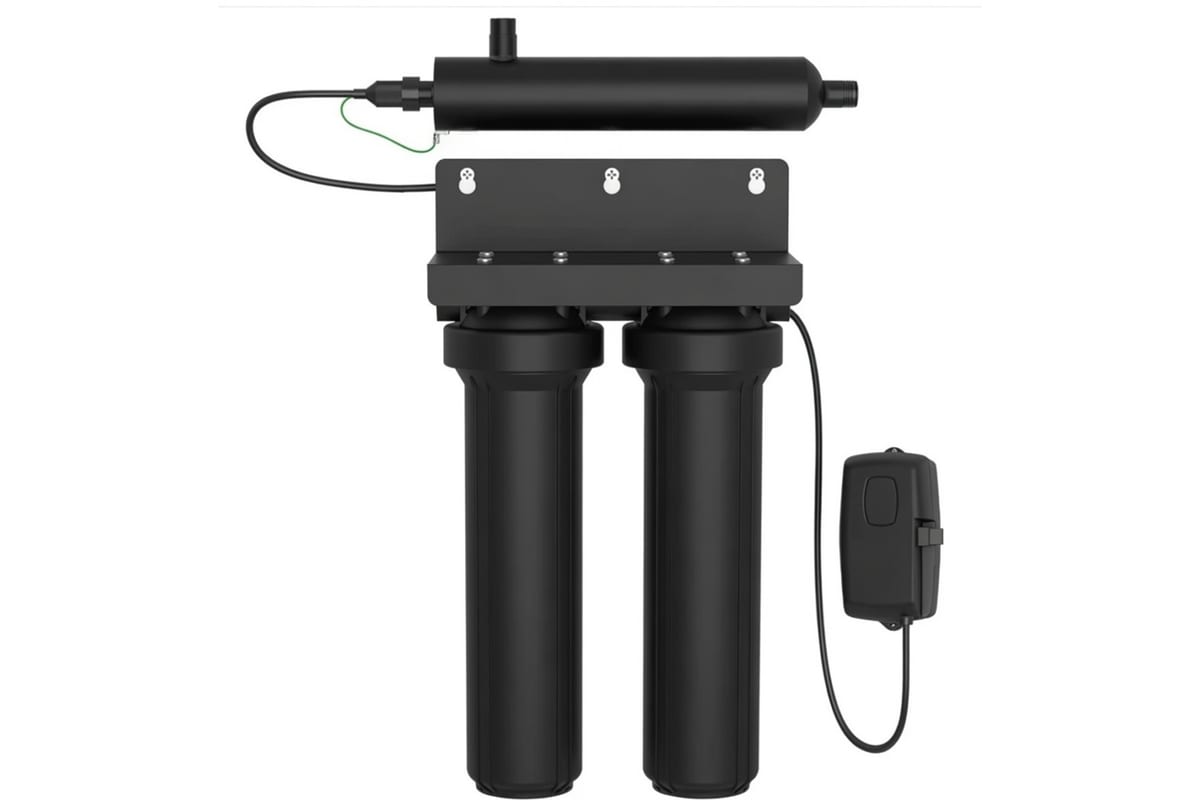
UV water purification runs every drop past a lamp on the way into the house, so it treats water continuously instead of once. Installed cost runs $700 to $1,500 in this market, a planning range and never a quote. UV needs clear water, so iron, sediment or tannins mean prefiltration ahead of the lamp, sized off the same lab report. Our water filtration cost guide and well water treatment cost guide carry the rest.
UV does not fix construction. A lamp downstream of a cracked casing is treating a problem that should have been sealed. Order matters: inspect, repair, disinfect, then treat continuously.
Frequently Asked Questions
Is one coliform positive dangerous?
A single total coliform positive with no E. coli is common and usually fixable, but stop drinking the water until a clean resample says otherwise. Wells across Wake, Johnston and Chatham counties flip positive after a wet week and back again, which is why the retest matters more than the first result. If anyone is unwell, NC DHHS says to contact your doctor and show them the results.
Can I shock chlorinate my own well in North Carolina?
Yes, and NC DHHS’s fact sheet offers it alongside hiring a well professional, with your local health department providing the instructions. Wake County publishes the dosing in full. We do not perform shock chlorination, so if you would rather not handle concentrated chlorine, call a certified well contractor.
How long after chlorinating should I retest my well?
It depends which agency you ask, and both intervals are published. Wake County says at least 24 hours after all chlorine has left the system; NC DEQ says about seven to ten days after disinfection. Ask your county health department which they want, because they read the sample.
What does a coliform retest cost in Wake County?
Wake County lists a coliform bacteria test at $25, plus a $50 trip fee when the county collects the sample, observed on its fee page 20 September 2026. County fees vary and change, so confirm with yours rather than with a blog post, this one included. Our guide to water testing cost in NC covers laboratory pricing.
Will a water filter fix a coliform positive?
No. A sediment or carbon filter removes particles and taste, not bacteria, and neither is rated to make unsafe water safe. The only home equipment that treats bacteria continuously is disinfection, and for a well water treatment build in the Triangle that means UV at $700 to $1,500 installed, after the well has been checked.
Do I have to disclose a coliform positive when selling?
Ask the closing attorney or agent handling the sale, because disclosure obligations vary with the transaction and the form used. What is predictable is that lenders usually require a passing bacteria result, so a positive found early is cheaper than one found a week before closing. Well owners around Fuquay-Varina and Clayton test ahead of listing, and our post on NC well water testing covers what the state panel misses.
Sources
Agency guidance changes. Check the current version before acting on it.
- Wake County, Well Chlorination and Disinfection Guidelines, observed 20 September 2026: dosing, hold, flush, resample timing.
- Wake County, well water tests and fees, observed 20 September 2026: the $25 coliform test and $50 trip fee.
- NC DHHS, Protect Yourself from Coliform Bacteria in Well Water, Private Well Water Fact Sheet 3, July 2009: definitions and the four-step response.
- NC DEQ Aquifer Protection Section, How to Disinfect Your Well, December 2009: the seven-to-ten-day retest.
- NC DHHS, private well water testing FAQs, last modified 29 July 2025: annual bacteria testing and the yearly wellhead check.
Getting a coliform positive well test resolved
The sequence that works runs in this order: stop drinking it, find out whether it is total coliform or E. coli, disinfect, resample on the interval your county wants, and if it comes back, inspect the well instead of chlorinating it again.
We install and service treatment equipment across Wake Forest, Garner, Fuquay-Varina and Clayton. We do not drill or repair wells, so if your result points at the casing or cap we will say so and send you to a well contractor. Where the results call for continuous disinfection, we size it, install it and price it up front.
Call (984) 384-6991 or request a free consultation, and we will start by reading your lab report, not by selling you a tank.