NC Well Water Testing: What the Required Panel Misses
Raleigh Water Pros • September 13, 2026 • 8 min read
North Carolina does require your new well to be tested. The rule is specific: within 30 days of issuing a certificate of completion, the local health department must collect water samples and send them to a certified laboratory. The sample has to be taken at a threadless tap, ahead of any treatment equipment, so it measures the well rather than the filter.
What surprises most well owners is what that mandatory panel leaves out.
What the state actually requires
Under the private drinking water well sampling rules, the required analysis covers two things.
Bacteria. A sample is tested for total coliform, and if coliform is present, analysed further for fecal coliform or E. coli.
A metals and nutrients panel: arsenic, barium, cadmium, chromium, copper, fluoride, lead, iron, magnesium, manganese, mercury, nitrate, nitrite, selenium, silver, sodium, zinc, and pH.
That is a serious panel and it catches the things most likely to make someone acutely ill. It is worth having, and in most counties the fee is bundled into the well permit. Arsenic heads that list, and our guide to arsenic in NC well water covers where it turns up and what to do about a high result.
What does the state well test miss?
No hardness. The single most common well water complaint in this state, and the required panel does not measure it. Hardness varies by geology and by individual well, no state dataset publishes it, and nothing in the required test tells you yours. That matters because hardness is the number that decides whether a softener is worth buying.
No hydrogen sulfide. The rotten-egg smell that drives more calls to us than anything else is not on the list.
No radon or uranium. This matters most in the mountains. Henderson County is one of eight EPA Zone 1 radon counties in North Carolina, and a study of 103 private wells across Buncombe, Henderson and Transylvania found a median radon of 6,060 picocuries per litre with a maximum of 45,600. Total uranium exceeded the federal limit in just over two percent of those wells. None of that appears in the required panel.
No PFAS. No county health department in North Carolina routinely tests private wells for PFAS. If you want it, you hire a commercial laboratory, unless you qualify for the Chemours-funded programme in the Cape Fear region.
No volatile organic compounds. Relevant if you are near an old industrial site, a landfill or a fuel release.
Pro tip: the required test is designed to establish that a new well is safe to drink. It is not designed to tell you what equipment your house needs. Those are different questions and they need different panels.
What to add, by where you live
North Carolina has three quite different groundwater provinces, and the sensible additions change with each.
| Region | Counties, examples | What to add beyond the state panel |
|---|---|---|
| Blue Ridge, mountains | Buncombe, Henderson, Watauga | Radon, uranium, gross alpha. Hardness usually low, pH often below 6.5 |
| Piedmont | Wake, Chatham, Johnston, Guilford, Union | Hardness in grains per gallon, hydrogen sulfide, total iron. Low pH is common |
| Coastal Plain | Pitt, Onslow, Craven, New Hanover | Iron and manganese, saltwater intrusion indicators, nitrate if near farmland. PFAS in the lower Cape Fear |
A fourth case cuts across all three: if your well sits near cropland or a livestock operation, nitrate is worth retesting even though it is on the state panel, because it moves with rainfall and season rather than staying put.
Not sure which of these applies to you? Request a free consultation and we will test at your tap and tell you which additional panel, if any, is worth paying a laboratory for.
How often should you retest a well?
NC State Extension’s guidance for private well owners is annual testing. In practice, the trigger matters more than the calendar. Retest when:
- Anything changes in taste, smell or colour
- After heavy rain or flooding, particularly for bacteria
- You buy the property, or you are selling it
- Someone in the house becomes pregnant, or an infant is drinking the water
- A new well goes in nearby, or drilling or construction starts close by
- You have not tested in a year and cannot remember what the last one said
The bacteria test is the one that genuinely needs repeating, because a well can go from clean to positive after a single wet week and back again.
What the results mean for equipment
This is where a test stops being paperwork and starts being useful.
| Result | What it usually means |
|---|---|
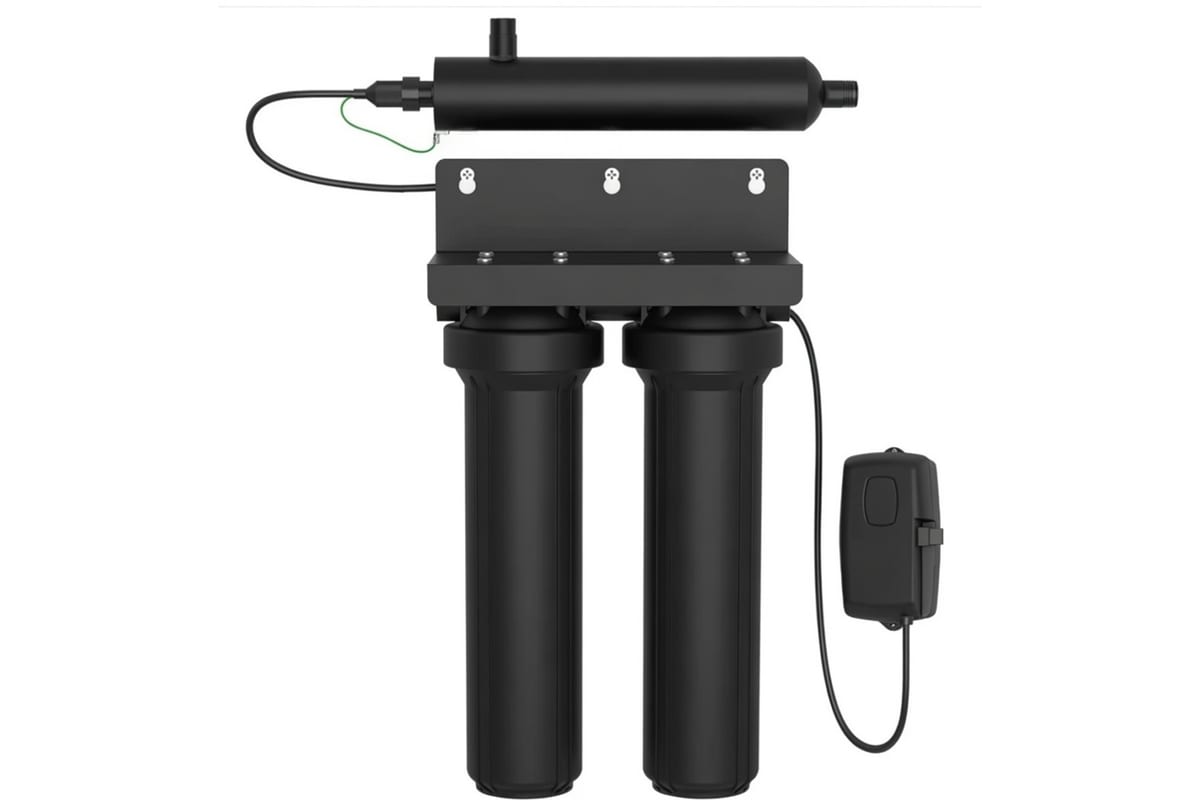
| Coliform or E. coli present | Disinfection, commonly UV purification, after finding the entry point |
| Iron above 0.3 mg/L | Orange staining; iron and sulfur removal |
| Manganese above 0.05 mg/L | Black staining and slime; same filter family |
| Hardness above about 7 grains | Scale on heaters and fixtures; a softener earns its place |
| pH below 6.5 | Corrosive to copper; blue-green stains, pinhole leaks over time |
| Nitrate above 10 mg/L | Unsafe for infants; the level at which the state panel flags it |
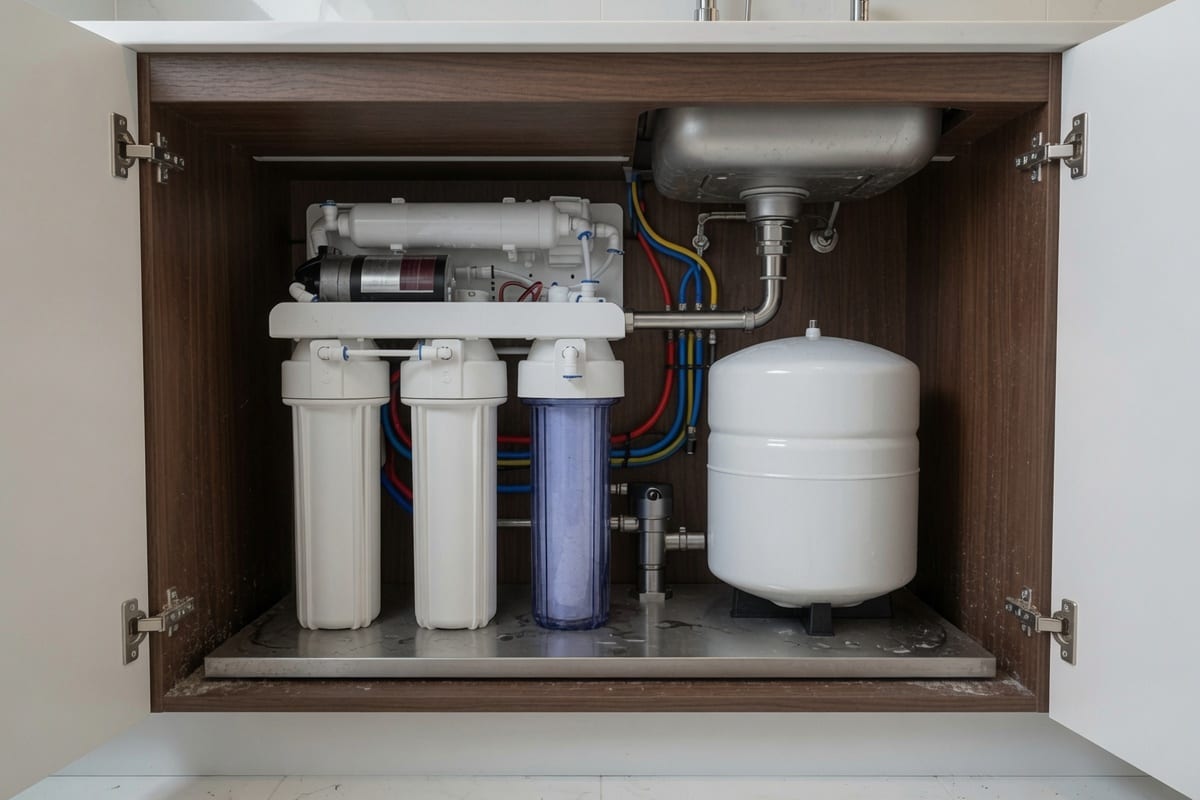
A single result rarely dictates one product. Iron ahead of a softener will foul the resin, so the order of treatment matters as much as the list, which is what a complete well water system is designed around.
Frequently Asked Questions
Does the county test my well for free?
For a newly constructed well the sampling is the health department’s job and the cost is generally folded into the permit fee. Henderson County, as one example, charges $350 for the well permit plus $130 for the new well water analysis, a total of $480, at fees effective September 2023. County fees vary and change, so confirm with yours rather than relying on a figure from a blog post, including this one. For laboratory pricing beyond the permit, see our guide to water testing cost in NC and the water filtration cost guide for what treatment runs afterwards.
Can I just use a home test kit?
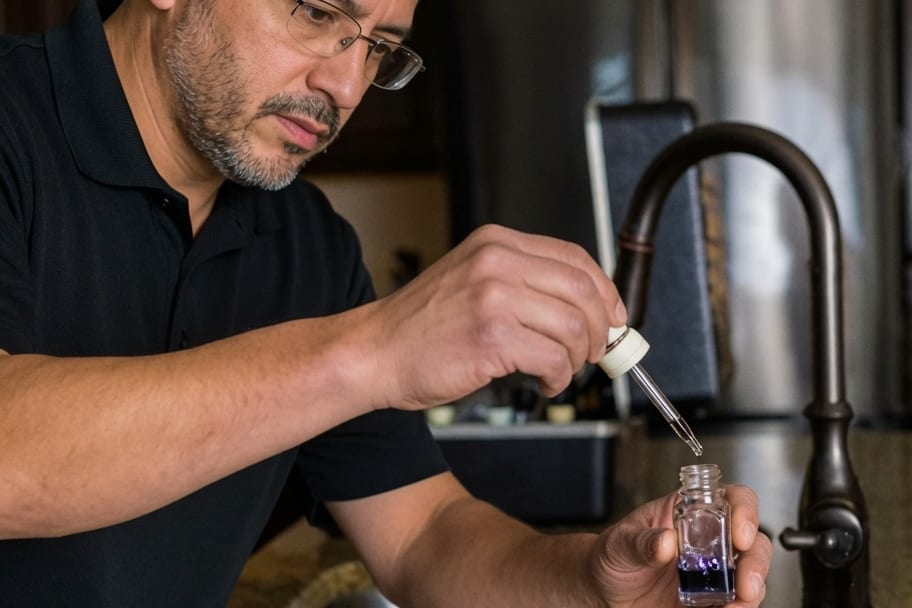
For a rough hardness or pH reading, yes. For anything that decides whether water is safe to drink, no. Bacteria, nitrate, arsenic and lead need a certified laboratory, and a mortgage lender or a buyer’s agent will not accept a strip test. Our water testing visit covers the readings that decide equipment, and we say plainly when a certified lab is the right call instead.
My well is old and has never been tested. Where do I start?
With bacteria and the standard metals panel, which is the same ground the state requires for new wells. Add hardness, iron and hydrogen sulfide if you have any staining or smell, because those three decide almost every equipment question that follows.
Do I test before or after my existing filter?
Before, at a threadless tap, which is exactly what the state rule specifies for new wells. Testing after treatment tells you how the equipment is performing, which is a useful second question but never the first one.
Does my county have its own well rules?
Often, yes. Counties administer the state rules and add their own fees, forms and in some cases stricter requirements, which is why a neighbouring county can charge a different amount for the same permit. Chatham County’s well permit rules are a worked example of how much local detail sits on top of the state baseline.
Will a water test tell me if I have PFAS?
Not a standard one. PFAS requires a specific method at a laboratory equipped for it, and no county panel in North Carolina includes it. In the lower Cape Fear, the Chemours programme covers testing at no cost for qualifying properties.
What if my well fails?
A single coliform positive is common and often fixable, and the first step is a repeat sample rather than a purchase. If it holds, the work is finding how surface water is reaching the well, which is usually the casing, the cap, or how close the well sits to a wastewater drainfield, and then disinfecting. Equipment comes after that, not instead of it.
Sources and reporting dates
Every figure above comes from the sources below. Water quality changes between reports, and a reported average does not describe conditions at every address on every day, so check the current source before acting on any number here.
- NC Division of Public Health, private drinking water wells, for the required sampling rules and the analyte list.
- EPA PFAS drinking water rule, for why PFAS is not on any county panel.
- County health departments set their own fees and forms, so confirm figures with yours rather than with any blog post, this one included.
Getting this right
The required test answers the question the state cares about, which is whether a new well is safe. It does not answer the question you care about, which is what your water is doing to your plumbing, your appliances and your coffee.
Adding hardness, iron and hydrogen sulfide covers most of the gap in the Piedmont. Adding radon and uranium covers it in the mountains. Adding nitrate and PFAS covers it on the coastal plain and in the lower Cape Fear.
We serve the whole of North Carolina. Every visit starts with a free consultation: we test at your tap, explain what the numbers mean, and give you an up-front written price for only what the results support. Call (984) 384-6991 or request a free consultation.