UV vs Shock Chlorination for NC Well Disinfection
Raleigh Water Pros • September 20, 2026 • 10 min read
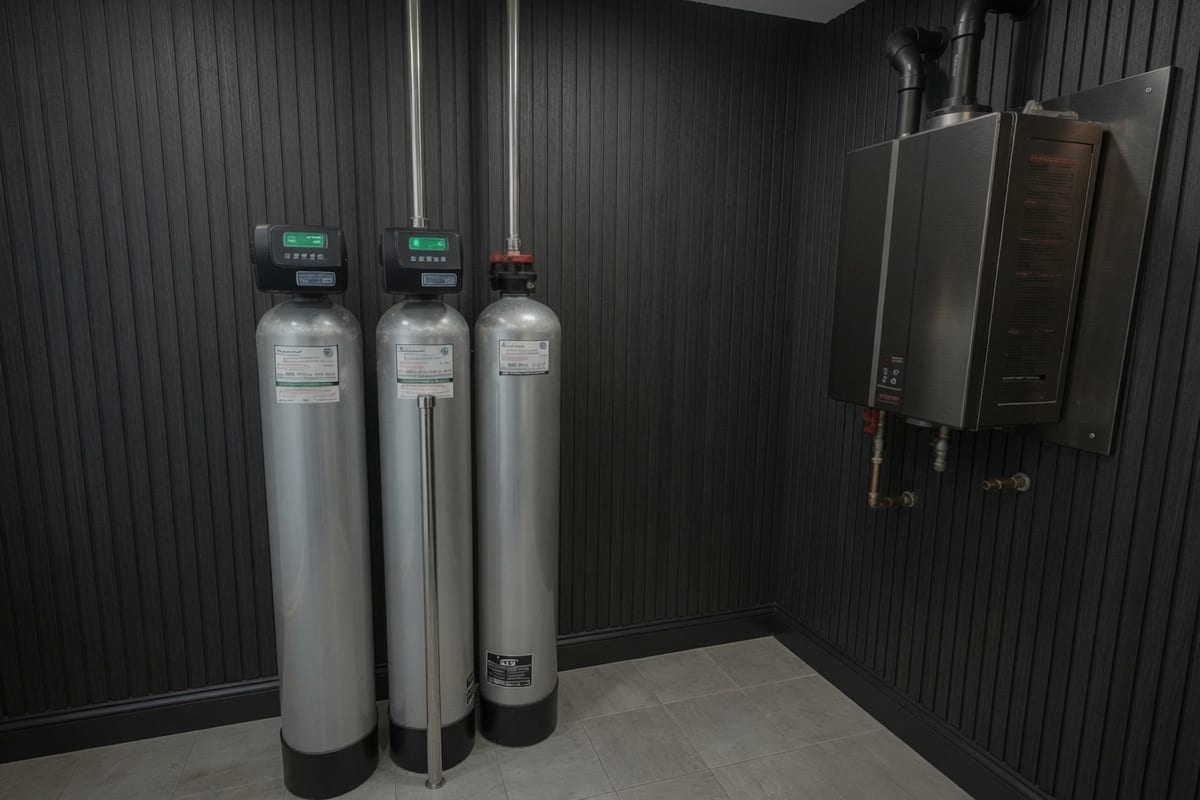
The lab result comes back positive for coliform and two answers arrive within the hour. Shock the well. Put in UV. Both arrive with total confidence, and neither explains the other.
UV vs shock chlorination is not really a choice between two products. Shock chlorination is a one-time event that disinfects the well, the pump and the plumbing you already own. UV is continuous treatment that disinfects every gallon on its way to the tap. One resets the system; the other protects it from that day forward. For most wells around Raleigh, Durham County and Johnston County, the right move is a sequence rather than a decision.
Below: what chlorination fixes and what it cannot, the dose Wake County publishes, the two retest intervals North Carolina agencies give, and what UV needs in front of it to work at all.
What is the difference between shock chlorination and UV?
Shock chlorination is a one-time disinfection of the well and the plumbing; UV is continuous disinfection of the water passing through it. That difference drives every other one.
Chlorine goes into the well, sits in the casing and house pipes for a day, and gets flushed out. When it leaves, so does the protection. Anything finding its way back in afterwards is untreated again.
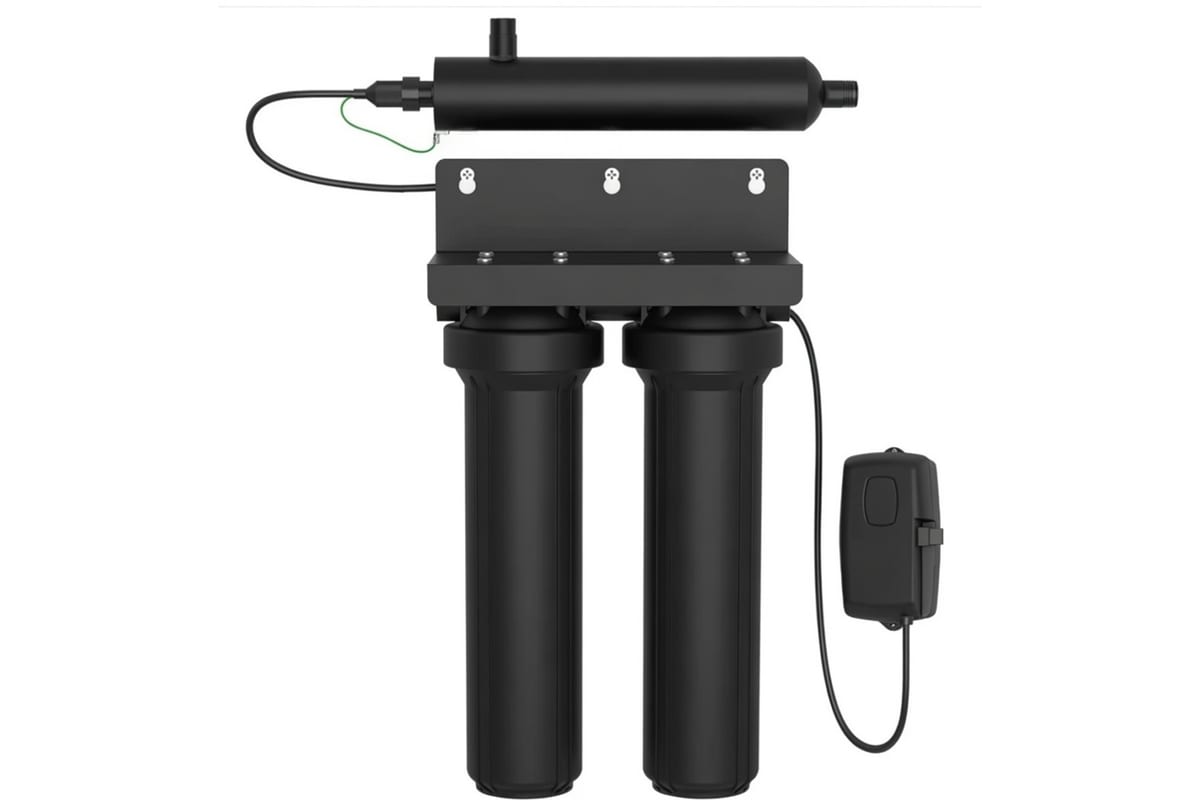
A UV system sits on the incoming line and passes water through a stainless chamber with a germicidal lamp inside a quartz sleeve. It does nothing to the well itself. University of Georgia Extension puts the limit plainly: with UV, “disinfection only occurs within the unit.”
| Shock chlorination | UV disinfection | |
|---|---|---|
| What it is | A measured chlorine dose held in the well and pipes | A germicidal lamp in a chamber on the incoming line |
| What it treats | The well, pump, tank and existing plumbing | Every gallon on its way to the tap |
| How long it lasts | Until the next contamination event | While the lamp is current and the water stays clear |
| Leaves a residual | Yes, until you flush it out | None past the chamber outlet |
| Typical installed price | Not a figure we publish | $700 to $1,500 for a UV system |
Which half does your own well need? Request a free consultation and we test your water first, then quote in writing.
What shock chlorination does and does not fix
It kills what is in the well right now. It does not repair the opening that let the bacteria in. That distinction is the whole story on a well that keeps failing its bacteria test.
Wake County’s Onsite Water Protection program publishes the full procedure, and NC DEQ publishes its own. We are not reproducing the dosing here, because the correct dose depends on the concentration of the specific product you buy and on the volume of water standing in your well, and a half-remembered recipe is either too weak to disinfect or strong enough to be hazardous. Use the county or state instructions directly. What the method involves: a measured dose introduced into the well, drawn through every fixture including the water heater, held in the plumbing for the stated period, flushed out until the chlorine is gone, then resampled after the interval the agency specifies.
That works on a sound well. On a well with a defect it buys a few clean weeks. NCDHHS says so in its coliform fact sheet: “poorly constructed, cracked or unsealed wells can provide a path for coliform bacteria to enter groundwater and to contaminate your drinking water.” Its biological analysis report repeats it in the letter a homeowner receives: coliform “indicate that the well may have structural problems or that the well was not properly disinfected,” and if a retest is still positive, “there may be a problem with the construction of the well, the groundwater source, or operation of the well.”
So a well that comes back positive twice is usually telling you about a casing, a cap, a seal or the grout, not about bacteria. North Carolina’s disinfection guidance is blunt: “you must identify and remedy the source of the bacteria to keep the problem from recurring.”
We do not perform that repair and we do not sell it. Casing extensions, cap replacement, seals and grout belong to a certified well contractor, and Wake County says as much: if the well is capped below grade, the casing should be brought above ground “permanently by either the homeowner or a Certified Well Contractor.” Your county health department inspects and identifies the fault. Start there.
How long after shocking should you retest?
Two North Carolina sources give two different answers, and we are printing both rather than picking one.
- Wake County tells its residents to “resample your water at least 24 hours after all chlorine has left the system.”
- The state’s Aquifer Protection Section guidance, the disinfection handout county health departments pass along, says “you can retest the well for bacteria about seven-to-ten days after disinfection.”
Neither is wrong. The 24 hour figure is about sample validity: chlorine still in the line suppresses growth in the sample and hands you a false clean result. The seven to ten day figure is about regrowth, giving anything surviving in a biofilm time to show up.
Follow your county’s written instruction, because counties run private well permitting, inspection and testing under NCGS 87-97, not the state directly. Then wait the longer interval anyway if you can. A sample at 24 hours mostly proves the chlorine is gone; one a week later starts to prove the well is clean. Both cost the same, and well water testing in North Carolina covers what else belongs on the panel.
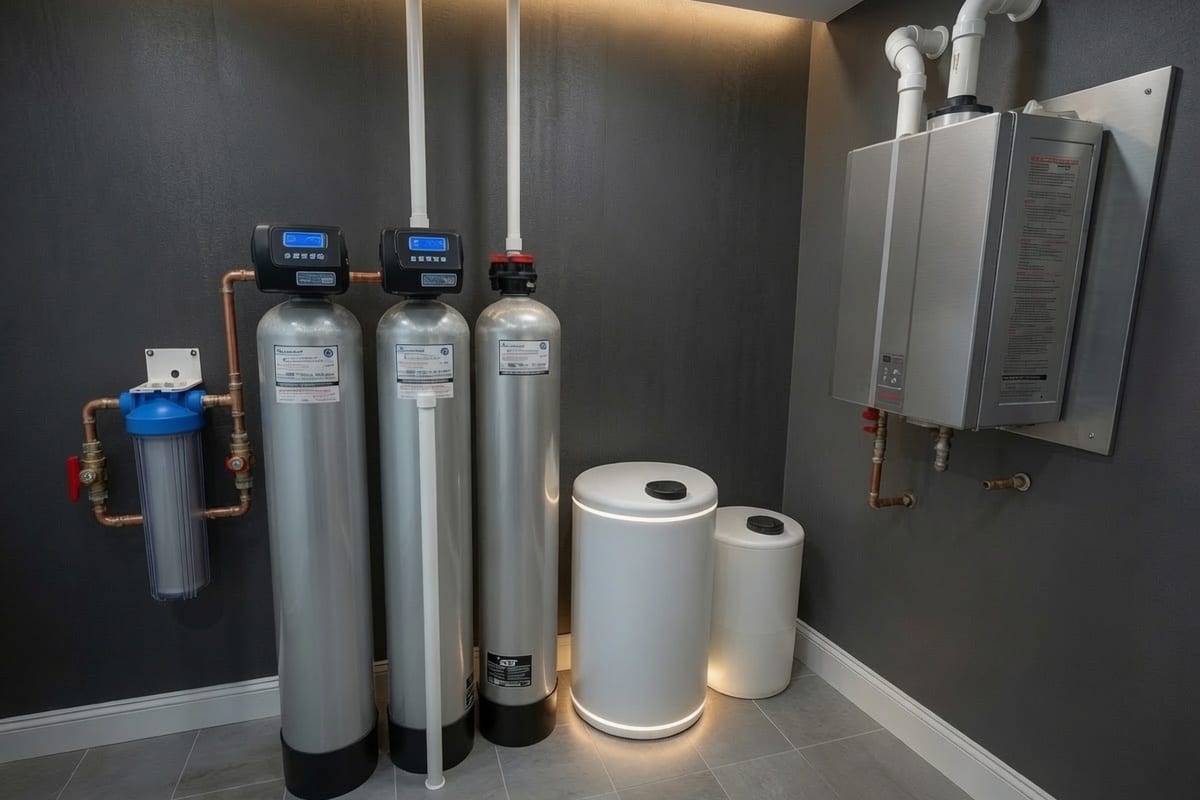
Pro tip: Chlorination pushes a slug of chlorinated water through your softener and carbon tank on the way out. Carbon absorbs chlorine, which is exactly what it is built to do, and a heavy dose can burn through a good share of a bed’s life in one afternoon. Bypass the treatment equipment first and sanitize it separately per the manufacturer, as NCDHHS instructs for flood disinfection.
What does a UV system need to actually work?
Clear water, a correct flow rate, a current lamp, and something that tells you when it stopped working. UV fails quietly, so the supporting equipment matters as much as the chamber.
Pre-filtration. UV light has to reach the organism, and suspended solids shield bacteria from the lamp. UGA Extension’s guidance is that “a sediment filter should free the untreated water entering the unit from turbidity as much as possible.” Red clay fines after a hard rain are the usual Triangle cause.
Iron and hardness. Both coat the quartz sleeve. Extension’s wording: hard water salts of calcium and magnesium “may coat the quartz sleeve with scale” and reduce the actual output of UV light, while iron and manganese “can impart color to the water and reduce the UV light output.” EPA’s ultraviolet treatment toolkit watches the same short list before a UV facility is designed: calcium, alkalinity, hardness, iron, manganese and pH. That is why a well with an iron and sulfur problem gets treated ahead of the UV chamber rather than after it.
Transmittance and flow. EPA calls ultraviolet transmittance “the most important water quality characteristic affecting UV facility design.” Tinted water passes less light, and a unit sized for 8 gallons per minute delivers a smaller dose at 14. Sizing is a peak-flow question.
An alarm. EPA’s alarm list for a UV installation includes lamp age, low UV intensity, low transmittance and lamp or ballast failure, with critical conditions triggering shutdown. Household units carry a simpler version, and you should ask for one: without an indicator you cannot know the system stopped disinfecting. Units certified to NSF/ANSI 55 deliver a minimum dose of 40 mJ/cm2, the Class A benchmark Extension cites for microbiologically unsafe water.
Which one do you need, and in what order?
Usually both, in this order: test, find the defect, repair it, chlorinate, retest, then install UV if the water still needs protecting.
| Your situation | What to do first | Where UV fits |
|---|---|---|
| One positive result, no history | Confirm with a second sample first | Only if the second is positive too |
| Confirmed positive, wellhead sound | Disinfect per county procedure, then retest | Worth it on a shallow, old or low-lying well |
| Positive again after chlorination | County inspection of casing, cap, seal, grout | After the repair, as ongoing protection |
| Surface water reaching the well after rain | Wellhead repair and grading, by a contractor | Strongly worth it, the exposure recurs |
| You want no chemicals at all | Test first, so you know what else is there | This is the case UV was built for |
The last row is where most people start. UV appeals because there is nothing to add, nothing to taste and nothing to store, and that is genuinely true of UV water purification. What it does not do is make a defective well sound, and it does not sanitize the casing, the pressure tank or the pipe upstream of it.
Our well water treatment work starts with a test, because the equipment order depends on what is in the water. The well water treatment cost guide shows how the stages stack up.
Frequently Asked Questions
Does shock chlorination kill bacteria for good?
Only if nothing is letting bacteria back in. Chlorine disinfects the well and plumbing on the day you do it and leaves no protection once flushed. NCDHHS treats a repeat positive as a sign of a construction, source or operation problem, which is a question for your county health department and a certified well contractor, not a second round of chlorine.
How soon can I retest after shocking my well?
Wake County says at least 24 hours after all chlorine has cleared the system; the state’s disinfection guidance says about seven to ten days. Follow your county’s written instruction, and wait the longer interval if you can. Water testing settles it either way.
Does UV work if my well has iron or sediment?
Not on its own. Iron and manganese colour the water and cut the light reaching the organisms, and hardness scales the quartz sleeve, so both get handled upstream. A sediment filter goes in front as standard, which matters on the red clay wells around Clayton and Johnston County after a storm.
Is UV disinfection really chemical free?
Yes. UV adds nothing and changes no taste, which is why well owners in Durham County and Wake County ask for it by name. The trade is that it protects only the water flowing through the chamber.
What does a UV system cost to install in North Carolina?
$700 to $1,500 installed is the typical range for UV disinfection on a private well, with the spread coming from flow rate, pre-filtration and the plumbing at the install point. Treat it as a planning range, never a quote; the Raleigh water filtration cost guide breaks down what moves it.
Who repairs a cracked well casing or a bad well cap?
A certified well contractor, with your county health department inspecting first. We do not do that work and would not quote it. Once the wellhead is sound, treating the water is our part, in Fuquay-Varina and Wake Forest.
Sources
Read in September 2026. Guidance changes, so confirm the current version first.
- Wake County Well Chlorination/Disinfection Guidelines: the doses, the 24 hour hold, flushing, the 24 hour resample.
- NCDHHS Biological Analysis Report: what a repeat positive indicates.
- NCDHHS Private Well Water Fact Sheet 3, Coliform Bacteria, July 2009: cracked and unsealed wells as the pathway.
- NC Aquifer Protection Section, Disinfecting a Water Well: the seven to ten day retest interval.
- EPA Ultraviolet Treatment Toolkit and UGA Extension Bulletin 1487: transmittance, sleeve fouling, alarms, the 40 mJ/cm2 dose.
Getting well disinfection right in Raleigh and the Triangle
If your well failed a bacteria test, the order is test, inspect, repair, disinfect, retest, then protect. Bring whatever results you have to a free consultation and we will talk through the disinfection equipment those results support.
We install and size UV disinfection and full well treatment across Raleigh, Garner, Clayton, Fuquay-Varina and Durham, and a written quote from us names the flow rate, the pre-filtration and the alarm rather than just a model number. Call (984) 384-6991 or book a free consultation and we will start from your numbers.