City Water vs Well Water in NC: What Changes
Raleigh Water Pros • September 26, 2026 • 9 min read
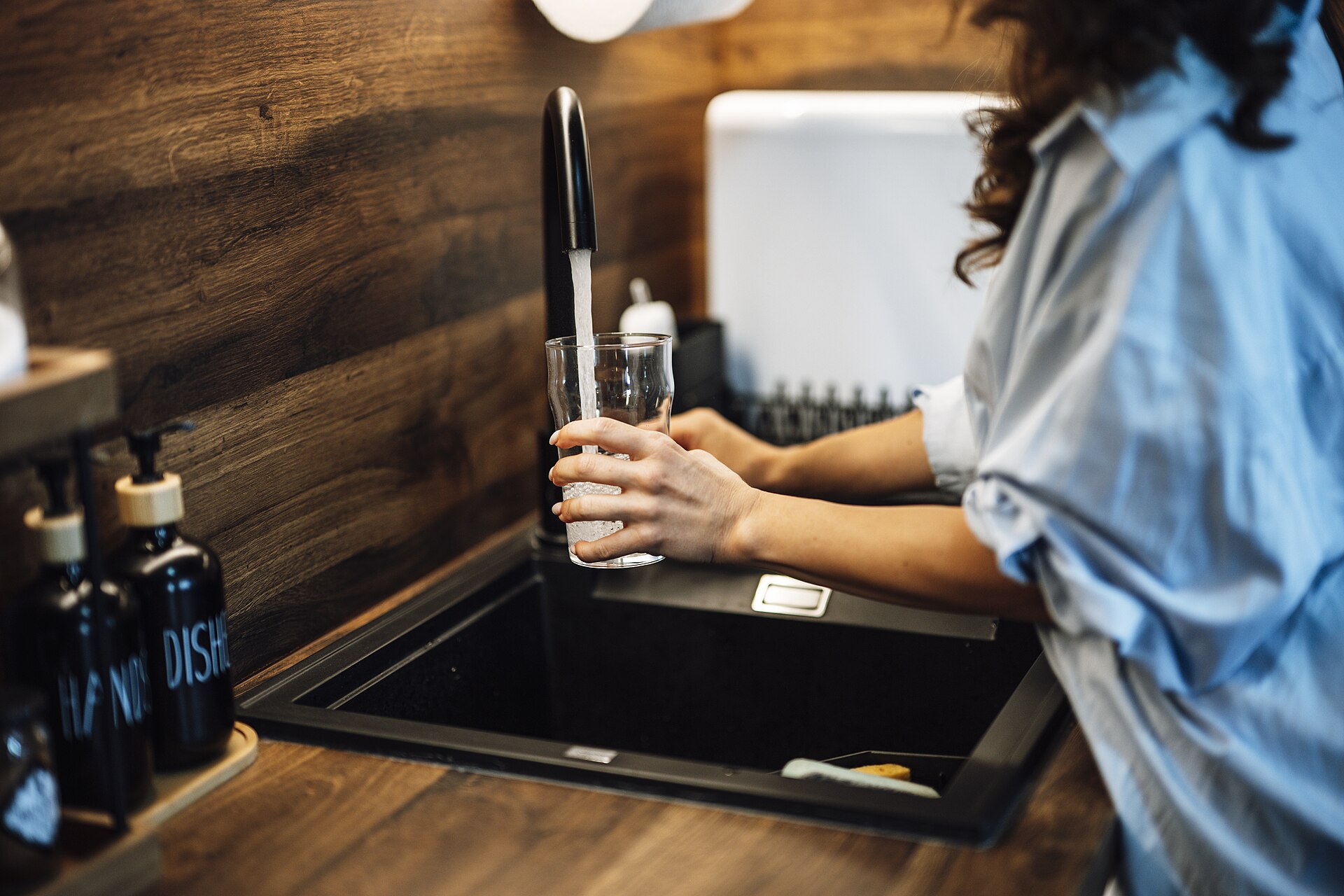
Around the Triangle you can drive five minutes and cross from one water world into the other. A subdivision in Garner or Wake Forest drinks treated lake water from Raleigh Water. A few miles out, a house on a couple of acres pulls its water from a hole in the rock under the side yard. Both come out of a kitchen tap. Almost everything else about them is different.
City water vs well water is not really a question of which is cleaner. It is a question of who is responsible. On city water, a utility tests, treats and reports, and your job is to decide whether you want anything extra at the tap. On a well, you are the utility, and nobody tests or treats anything unless you do.
This guide compares the two side by side for North Carolina: who tests, who treats, what each typically needs, what it costs to run, and how to decide which setup a home needs. The home purchase checklist lives in our guide to buying a house with well water in NC; this one is about living with each.
What Is the Difference Between City Water and Well Water?
City water is treated and tested by a regulated utility before it reaches you; well water is untreated groundwater that nobody but you is responsible for. That single difference drives everything else.
| City water (Raleigh Water example) | Private well | |
|---|---|---|
| Source | Falls Lake and Lake Benson, 100% surface water | Groundwater from the rock or sand under your lot |
| Who treats it | The utility: ozone, carbon, and chloramine disinfection | Nobody, unless you install equipment |
| Who tests it | The utility’s certified lab, about 52,664 samples a year | The county once when the well is built, then you |
| Federal drinking water rules | Apply | Do not apply |
| Disinfectant in the water | Chloramine most of the year | None |
| Hardness | 25.2 mg/L in 2025, which Raleigh Water classifies as “Soft” | Unknown until measured |
| Who fixes a problem | The utility | You, with a well contractor or treatment installer |
| What you pay | A monthly water bill | Pump electricity, testing and equipment upkeep |
City figures from Raleigh Water’s 2025 Consumer Confidence Report and 2025 Annual Finished Water Quality Report (Raleigh Water CCR 2025). Raleigh Water also serves Garner, Wake Forest, Knightdale, Rolesville, Wendell and Zebulon under the same system, so those towns share these numbers.
Not sure which one you are on, or what your water needs? Request a free consultation and we test first, then quote in writing.
Who Tests the Water?
On city water, the utility tests continuously and publishes the results every year; on a well, the state requires one test when the well is built and leaves the rest to you.
Raleigh Water’s 2025 report describes its certified drinking water lab checking “71 things in drinking water” and handling “about 52,664 samples a year.” Every utility publishes an annual report of what it found, and our North Carolina water quality guide links the main city reports.
For a private well, North Carolina’s rule is G.S. 87-97(h). Within 30 days of a new well’s certificate of completion, the county tests it for a fixed panel: arsenic, barium, cadmium, chromium, copper, fluoride, lead, iron, magnesium, manganese, mercury, nitrates, nitrites, selenium, silver, sodium, zinc, pH and bacteria (NCGS 87-97). That is the only test the law requires, and it applies only to wells built since 1 July 2008.
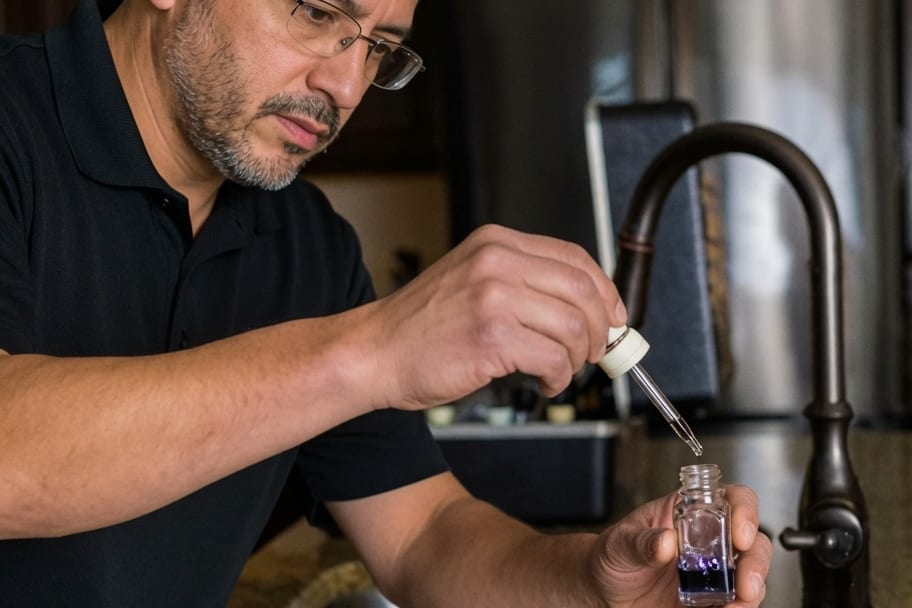
After that, the schedule is yours. NC State Extension recommends testing for coliform bacteria, nitrate, pH and total dissolved solids every year, and for sulfate, chloride, iron, manganese, lead and hardness every three years (NC State Extension). NCDHHS suggests a slightly different rhythm: bacteria every year and heavy metals, nitrate, lead and copper every two years. Our water testing and analysis page covers ordering those.
Is City Water or Well Water Better?
Neither is better by default; each has its own set of typical problems, and the right answer depends on the numbers for your tap. The honest comparison is between what each tends to carry.
City water in the Triangle is disinfected, tested and generally soft. What people notice is the disinfectant: Raleigh uses chloramine most of the year and switches to free chlorine for about five weeks in late winter, which changes the taste and smell. It also carries low levels of PFAS. Raleigh Water’s 2025 annual averages at the E.M. Johnson plant were PFOA 2.69 ng/L and PFOS 2.60 ng/L, both below the federal 4.0 ppt limits for those two compounds, whose compliance deadline has not yet arrived. Those are measured, reported numbers, not a violation.
Well water has no disinfectant and no treatment, so its problems are whatever the ground puts in. NC DEQ’s statewide private well data for 2018 and 2019 found manganese above the standard in 27.99 percent of samples, iron in 16.94 percent, arsenic in 2.26 percent and nitrate in 0.59 percent (NC DEQ, private well information). Low pH that eats copper pipe and sulfur smell are common too. Hardness is not on the state panel, so no dataset exists; around the Triangle our field observation is that many wells run harder than city water, but that is not a measurement and cannot predict yours. Measure it.
A well also answers to the weather in a way city water does not. Water that changes colour after heavy rain can mean surface water is reaching the well, which is a bacteria question first, covered in why well water turns brown after heavy rain.
Pro tip: if you move from a well to city water, or the other way, keep the first annual water quality report or lab result you get as a baseline. Every later question about taste, staining or a new appliance is easier to answer against a number you already have.
What Does Each Usually Need for Treatment?
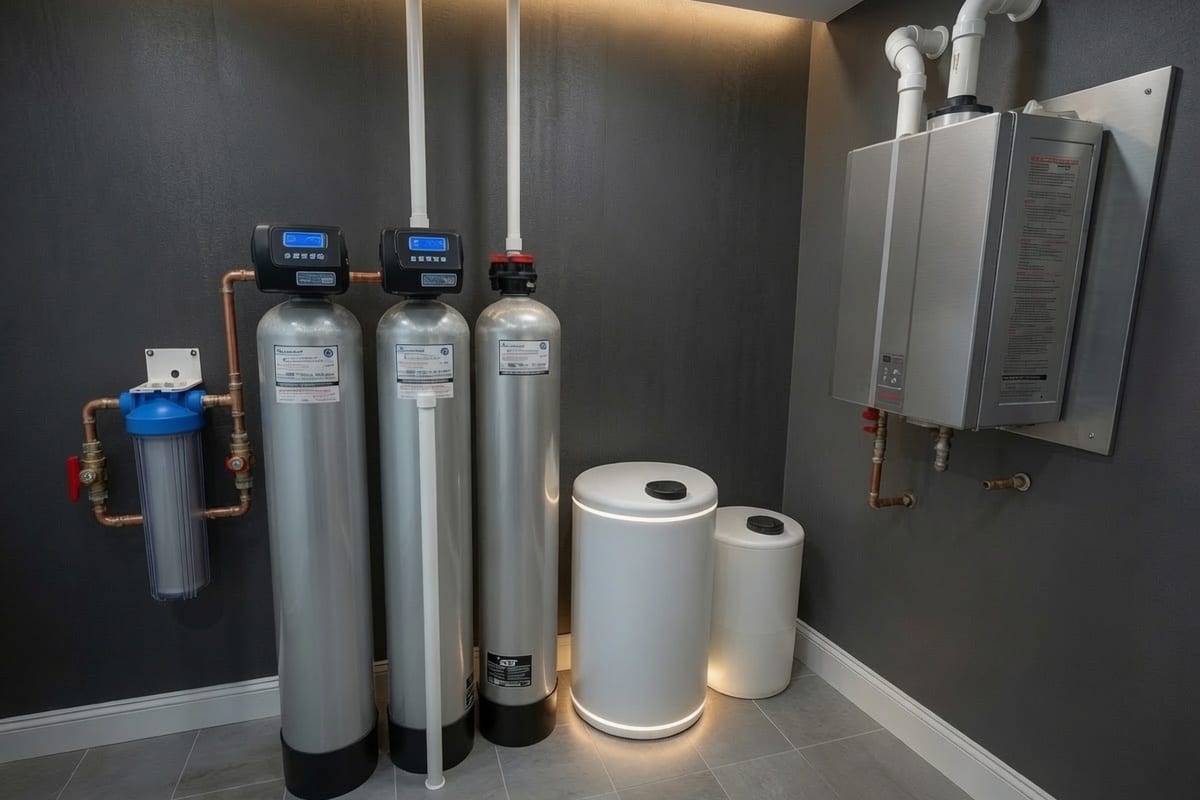
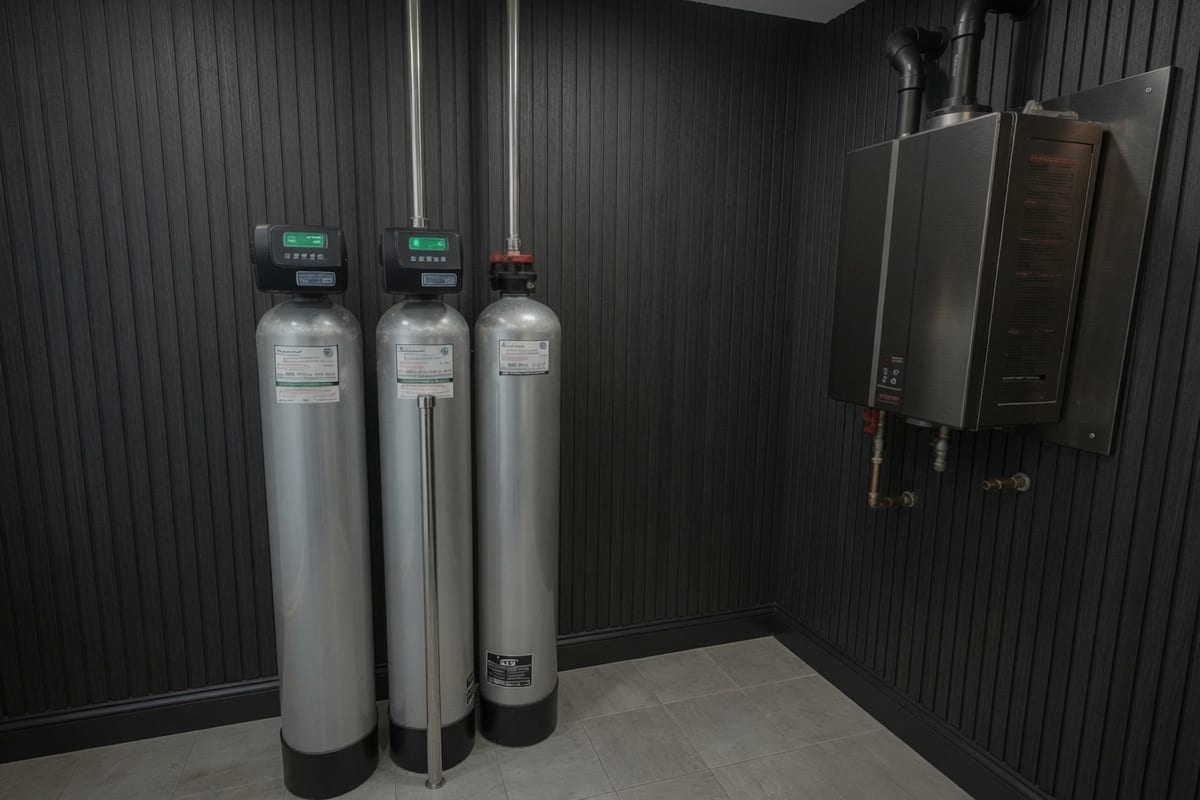
City water usually needs nothing, or one targeted system for taste or drinking water; a well usually needs something, and often a sequence of equipment. Here is how that typically plays out, with prices from the bands in our Raleigh water filtration cost guide. Every figure is a planning range, not a quote.
| Situation | Typical approach | Installed band |
|---|---|---|
| City water, taste or smell of chloramine | Whole house catalytic carbon | $1,500 to $3,500 |
| City water, drinking and cooking only | Under-sink reverse osmosis | $350 to $900 |
| City water, hardness | Usually nothing in Raleigh’s system, where the utility reports soft water | None |
| Well, acidic water | Acid neutralizer | $1,200 to $2,200 |
| Well, iron or sulfur | Iron and sulfur filter | $1,800 to $3,500 |
| Well, recurring bacteria | UV disinfection after the source is fixed | $700 to $1,500 |
| Well, several problems at once | A staged well water system | $4,000 to $8,000+ |
On city water, the decision is mostly about preference. Our city water treatment page covers the chloramine question, and whole house water filtration covers carbon for the whole home. The full water filtration cost breakdown shows what moves those prices.
On a well, the lab result decides the list and the order. Our well water treatment page covers the equipment, and the well water treatment cost guide prices each piece and the combinations.
What Does It Cost to Live With Each?
City water costs a monthly bill; a well costs nothing per gallon but carries testing, electricity and upkeep that are all yours. We do not publish utility rates or connection fees here, because they vary by town and change, and hookups are a job for the utility and a licensed contractor, not us.
What a well owner should budget for, beyond the pump’s electricity, is the testing schedule above, the running cost of any treatment (softener salt runs $50 to $150 a year on our cost band, and filters and UV lamps need periodic replacement), and eventually work on the well itself, which is a well contractor’s job.
What a city customer should budget for is the bill and, if they choose, one system for taste or drinking water. Many need nothing at all.
Frequently Asked Questions
Is well water healthier than city water?
Not automatically. Well water has no added disinfectant, which some people prefer, but it also has no treatment or routine testing unless you provide them. City water is disinfected and tested but carries disinfectant and low levels of compounds like PFAS. Your own test results are the only fair comparison.
Does well water or city water have more minerals?
It varies, and only a test tells you. Raleigh Water reported 25.2 mg/L of hardness in 2025 and calls its water soft. Private wells range widely, and North Carolina does not require a hardness test on new wells, so many owners have never seen their number.
Do I need a water filter on city water?
Often not. If the taste of chloramine bothers you, catalytic carbon handles it, and an under-sink RO system covers drinking water. Homeowners in Wake Forest and Garner share Raleigh’s water and its annual report, which is the place to start.
Can I switch from well water to city water?
Where a utility’s lines reach your road, yes, but that is a question for the utility and a licensed contractor, and it is not work we do. Whether an existing well can stay in use for irrigation afterward is a county determination, and requirements vary by parcel.
Who do I call if my well water has a problem?
It depends on the problem. A lab or the county health department tests it, a certified well contractor fixes the well, pump or casing, and a treatment installer handles the water. In Clayton and across Johnston and Wake counties, that last part is where we come in.
Is city water or well water cheaper?
It depends on usage and how much treatment the well needs. A well has no water bill, but a staged well system can run $4,000 to $8,000+ installed, plus testing and upkeep. Book a free consultation for a written price based on your water.
Sources
- Raleigh Water, 2025 Consumer Confidence Report and 2025 Annual Finished Water Quality Report: sources, service area, lab volume, hardness, chloramine and PFAS averages.
- NCGS 87-97: the required test for newly constructed private wells.
- NC State Extension, Should You Have Your Water Tested?, observed 26 September 2026: the annual and three-year testing schedule.
- NC DEQ, private well information, observed 26 September 2026: statewide 2018 to 2019 exceedance rates.
City Water or Well Water, Know What You Have
Whichever side of the line your house sits on, the useful step is the same: know your numbers. On city water that means reading your utility’s report and deciding if anything bothers you. On a well it means testing on a schedule and treating what the lab finds, in the right order.
We test, size and install water treatment for city and well homes across Raleigh, Wake Forest, Garner, Clayton and Fuquay-Varina, and we read the water before quoting anything.
Call (984) 384-6991 or schedule a free consultation for an up-front written price on your city water or well water.