Why Well Water Turns Brown After Heavy Rain in NC
Raleigh Water Pros • September 20, 2026 • 11 min read
Three inches of rain fall overnight, and in the morning the water out of the kitchen tap is brown. Or yellow, or the color of weak tea, or just clouded enough that you can see it against a white sink. By Thursday it has cleared on its own, so you forget about it until the next storm.
That timing is the useful part. Well water that turns brown after heavy rain is telling you something specific that year-round cloudy water does not, because whatever changed, the rain changed it. In the North Carolina Piedmont, with red clay soil and a water table that moves fast under a wet week, three causes account for nearly all of it, and only one of them is a filter problem.
Below: the three causes and how to separate them, the safety point that makes this different from ordinary sediment, what North Carolina geology and storm season add, and what actually fixes each one. If your water is cloudy all the time rather than only after rain, our post on cloudy well water is the better starting point.
Why does well water turn brown after heavy rain?
Because rain either pushed something into the well or moved something that was already in the aquifer. Those are genuinely different problems with different fixes, and the one that matters most is the one people are quickest to filter away.
| Cause | What you see | Timing after rain | What confirms it | Who fixes it |
|---|---|---|---|---|
| Surface water reaching the well through a damaged cap, casing or seal | Brown or muddy, sometimes with grit or organic bits | Hours, often the same day | A coliform bacteria test, plus a look at the wellhead | A certified well contractor |
| Sediment and clay disturbed in the aquifer or drawn in by a moving water table | Tan, reddish or hazy, particles settle out of a still glass | Hours to a day or two | A sediment or turbidity test, plus the settling test | Sediment prefiltration |
| Iron or manganese mobilised as the water table rises and falls | Yellow to tea-colored, or grey to black, does not settle | A day or more, and often lingers | Iron and manganese as numbers on a lab panel | Oxidation and filtration |
Pour a glass and leave it on the counter for half an hour without touching it. If the color drops to the bottom and leaves clear water above, you are looking at particles. If the whole glass stays evenly tinted, it is dissolved metal. That fifty-cent test does not replace a laboratory report, but it decides which report to order. An evenly yellow or tea-colored glass can also be tannins, which our guide to tannins in NC well water explains.
Not sure which one you have? Request a free consultation and we will read the glass, the wellhead photos and your last lab sheet before anyone quotes equipment.
Water that changes after rain is a bacteria question first
A well that responds to rainfall within hours is a well that is connected to the surface, and surface water carries more than mud. Penn State Extension states it plainly for flooded and storm-affected systems: “Contaminated surface water may enter directly into a well through a loosely fitting well cap or damaged well casing.” NC DHHS describes the same path from the bacteria side: “poorly constructed, cracked or unsealed wells can provide a path for coliform bacteria to enter groundwater and to contaminate your drinking water.”
The numbers North Carolina has on this are not small. NCDHHS reported that after Hurricane Florence in 2018, “nearly 45 percent of wells tested by the State Laboratory of Public Health were found to have bacterial contamination. More than 13% of these wells had detectable E. coli.”
And you cannot check this yourself by looking. The same NCDHHS guidance says: “You cannot see, taste or smell bacterial contamination in your well.” The brown color is the visible symptom; the bacteria risk is the invisible one riding along with it. That is why the first purchase after a storm-driven color change is a water test, not a filter cartridge. If the result comes back positive, our post on what happens after a coliform positive well test walks the North Carolina steps in order, and our guide to well water testing in North Carolina covers what the state panel includes and what it leaves out.
NCDHHS also says that if extensive flooding has occurred, do not drink the water, and do not turn the pump’s electricity back on until flood waters recede. Health questions about your household belong with your county health department or your doctor, not with a water company.
What North Carolina adds: red clay, the Piedmont water table and storm season
Piedmont wells sit in a two-layer system. NC DEQ describes it as a surficial regolith aquifer over fractured crystalline bedrock, with the regolith feeding water into the fractures below. There is no deep sand bed filtering things on the way down, so what happens at the surface reaches the fractures faster here than in the Coastal Plain, and a heavy rain can move the water table enough to stir fines that had settled.
Red clay is the second half of it. Clay particles are fine enough to stay suspended for hours rather than dropping out in minutes, which is why Piedmont well water often looks tea-brown rather than gritty, and why it can take two or three days to clear instead of an afternoon.
Then there is the season. North Carolina’s worst well water weeks arrive with tropical systems, and the state has had two recent reminders: Florence in 2018 and Helene in 2024, both of which produced NCDHHS well safety guidance. A well that browns slightly after an ordinary thunderstorm is worth watching. The same well after a tropical system is worth testing.
Pro tip: walk out to the wellhead during the rain, not after it. Standing water pooling against the casing, a cap sitting level with the dirt, or ground that slopes toward the well instead of away from it are all visible only while it is actually raining. Take a photo with the date on it. That single image tells a well contractor more than any description of the water color, and it costs nothing.
What fixes each cause
A damaged cap, casing or seal is a repair, not a filter. This is the honest part of the answer, and it is the one the equipment industry skips. Wake County’s own list of common well problems includes an old well with a deteriorating casing, and the county’s advice for a well that suddenly carries much more sediment than it used to is to consult a registered well contractor. We do not drill wells, repair casings, replace caps or grout annular seals. A certified well contractor does that work, and until it is done, treatment equipment downstream is filtering a problem that keeps being re-supplied.
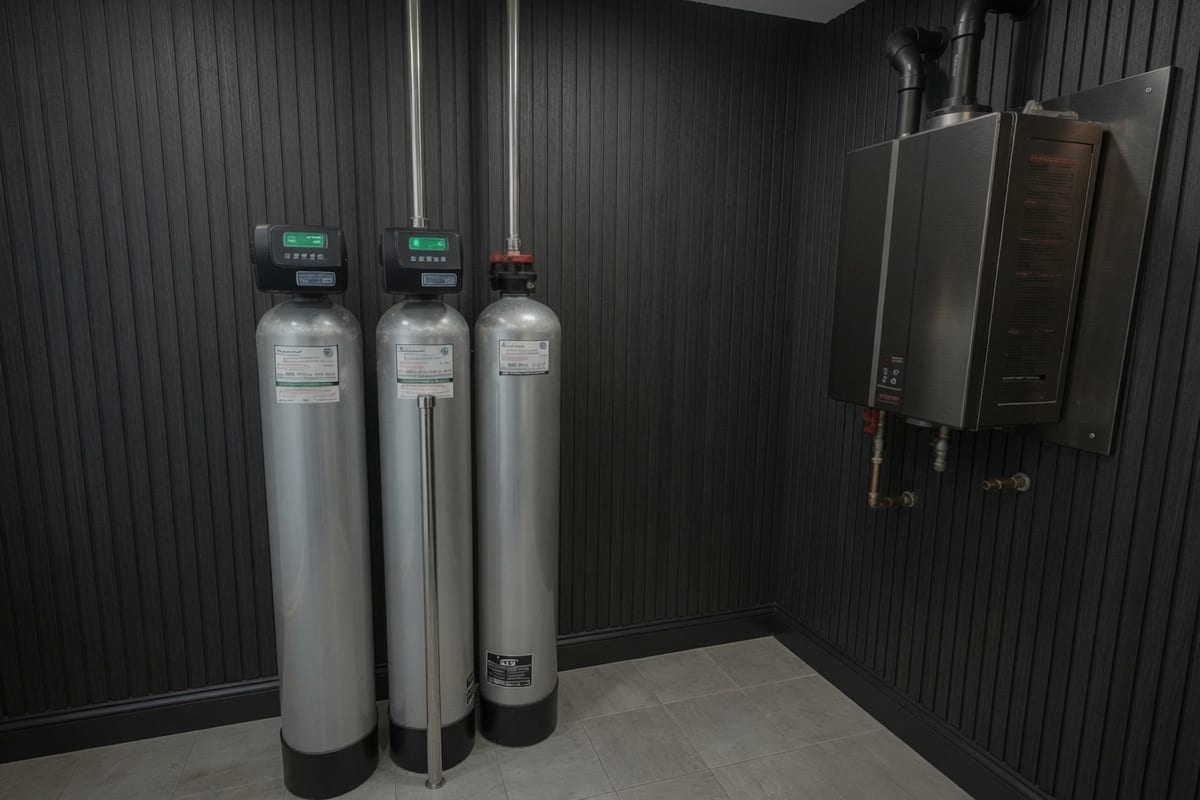
Sediment gets a prefilter, sized after the water is characterized. A sediment prefilter is the right answer for clay and silt that genuinely originates in the aquifer rather than at the surface. It is also the one piece of equipment on this page with no published band on our water filtration cost guide, so we quote it in writing after we see the sediment load and the flow rate rather than printing a number here that might not survive contact with your water. Heavy clay loads change cartridges fast, which is usually the argument for a backwashing filter instead of a cartridge housing.
Iron and manganese get oxidation and filtration. If the glass stays evenly tinted, the color is dissolved. EPA’s secondary standards put iron at 0.3 mg/L and manganese at 0.05 mg/L, both non-enforceable guidelines the agency sets for “aesthetic considerations, such as taste, color, and odor” rather than health. An iron and sulfur filter runs $1,800 to $3,500 installed in this market, a planning range and never a quote, and our well water treatment cost guide carries the rest of the ranges.
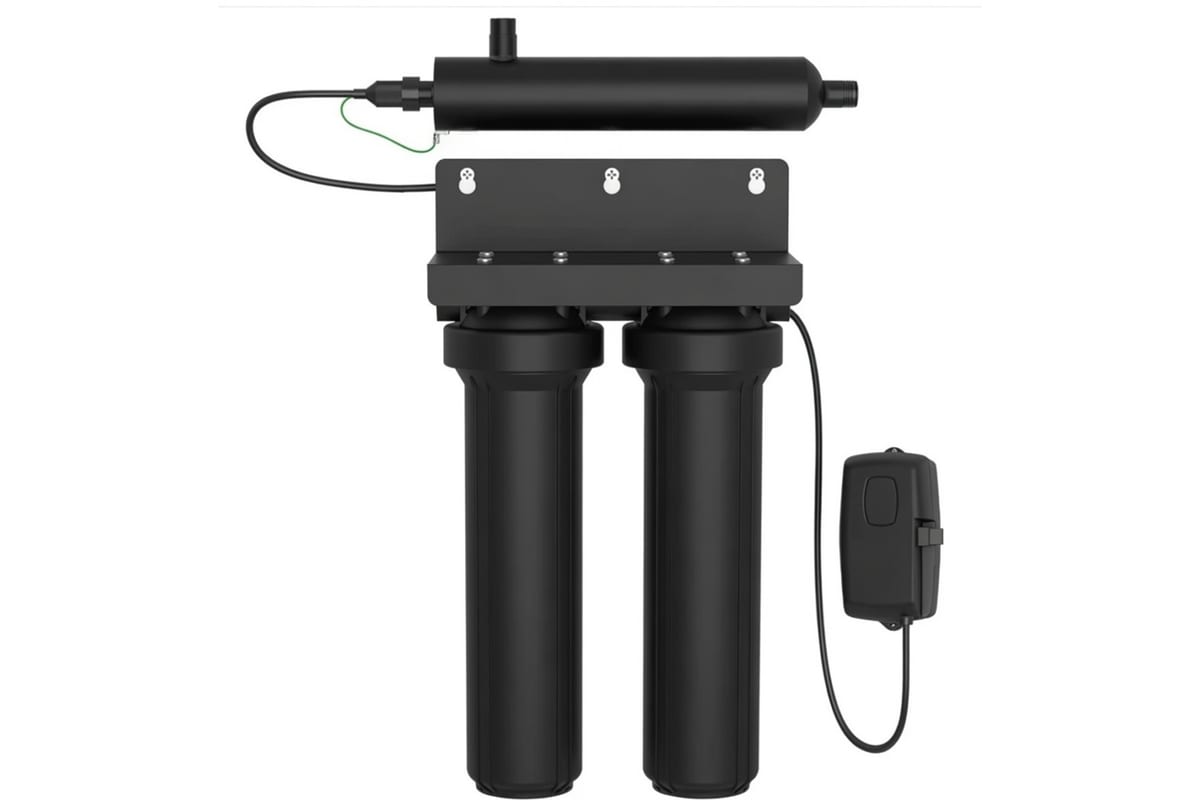
Confirmed bacteria gets disinfection, then continuous treatment if it returns. Shock chlorination is the published first step, and your county health department publishes the procedure. If the well keeps failing after the construction has been checked and fixed, UV water purification at $700 to $1,500 installed treats every drop on the way in. UV needs clear water to work, so on a well that browns after rain the sediment comes out first and the lamp goes in last.
Frequently Asked Questions
Is brown well water after heavy rain safe to drink?
Treat it as unsafe until a test says otherwise, because the same opening that lets mud in lets bacteria in. NCDHHS says you cannot see, taste or smell bacterial contamination, and that after extensive flooding you should not drink the water at all. Bottled water, or another known-safe supply, is the right answer while you wait on a coliform result.
One limit on boiling is worth stating plainly, because it is the part most pages leave out. Boiling deals with microbes and nothing else. If there is any reason to suspect fuel, solvent, pesticide or other chemical contamination, for instance flooding that reached a fuel tank, a chemical store or farm chemicals, do not boil it: boiling concentrates chemical contaminants rather than removing them. Use another source and call your county health department, who can tell you what to test for and whether the well should be out of service in the meantime. Health questions go to them or to your doctor, not to us.
How long should brown well water take to clear?
Hours to a couple of days is typical for clay and silt in the Piedmont, because fine clay stays suspended far longer than sand does. Water that clears within an hour points at a short, sharp surface event; water that never fully clears points at dissolved iron or manganese rather than particles. Either way, the clearing tells you nothing about bacteria.
Do I need a sediment filter or a bacteria test first?
The test, every time. A sediment filter removes particles and does nothing to bacteria, so installing one first can leave you drinking clear contaminated water and feeling reassured by it. Wake County lists a coliform bacteria test at $25, plus a $50 trip fee when the county collects the sample, observed on its fee page 20 September 2026; fees change and vary by county, so confirm with yours.
Will a whole house filter stop my well water going brown after storms?
It will stop the particles reaching your fixtures, which is worth having, but it will not stop them entering the well. Well owners around Fuquay-Varina and Pittsboro often discover the filter was treating a wellhead problem after the third cartridge in a season. Fix the entry point, then filter what the aquifer genuinely delivers.
Can a new well cap fix brown water after rain?
Sometimes, and it is the cheapest thing to rule out. A cap that is cracked, loose, missing its gasket or sitting at or below ground level is a direct path for runoff, and Wake County notes that a below-grade cap has to be dug up before a well can even be disinfected. A certified well contractor inspects and replaces it; we do not.
Does this mean my well is too shallow?
Not necessarily, and depth alone does not settle it. Piedmont wells draw from fractures in bedrock beneath a regolith layer, so a deep well with a failed seal can behave worse after rain than a shallower well that is properly constructed and graded. The well water treatment plan follows the lab report and the wellhead inspection, not the drilling depth.
Sources
- NCDHHS, How to Keep Wells Safe Before and After Flood, 8 August 2024: the Hurricane Florence testing figures, the flooding guidance, and the statement that bacterial contamination cannot be seen, tasted or smelled.
- Penn State Extension, Post-Flood Drinking Water Safety for Private Water Systems, observed 20 September 2026: surface water entering through a loose cap or damaged casing, and testing for coliform and E. coli.
- NC DHHS, Protect Yourself from Coliform Bacteria in Well Water, Private Well Water Fact Sheet 3: cracked or unsealed wells as a path for bacteria.
- NC DEQ Division of Water Resources, Piedmont and Blue Ridge groundwater, observed 20 September 2026: the regolith over fractured bedrock aquifer system.
- Wake County, common well problems and well water tests available, observed 20 September 2026: deteriorating casings, increased sediment, and the $25 coliform test with a $50 trip fee.
- EPA, Secondary Drinking Water Standards, observed 20 September 2026: iron at 0.3 mg/L and manganese at 0.05 mg/L as non-enforceable aesthetic guidelines.
Getting brown well water after rain sorted out
The order that works is the same every time: test for bacteria, look at the wellhead while it is raining, fix the entry point with a certified well contractor if there is one, and only then decide what equipment the water actually needs. Doing it the other way round is how people end up with a filter, a recurring problem and no answer.
Bring your results to a free consultation and we will go through what the numbers support. We size, install and service well water treatment across Garner, Clayton, Fuquay-Varina and Pittsboro, and where sediment, iron or disinfection is the answer we will quote it in writing with the stage sizes spelled out. Where the reading points at the wellhead instead, we will tell you that too, because a filter on a compromised well is money spent on the wrong problem.
Call (984) 384-6991 or book a free consultation, and we will start with the lab report rather than the truck inventory.