Do You Need Both a Softener and a Filter?
Raleigh Water Pros • September 20, 2026 • 9 min read
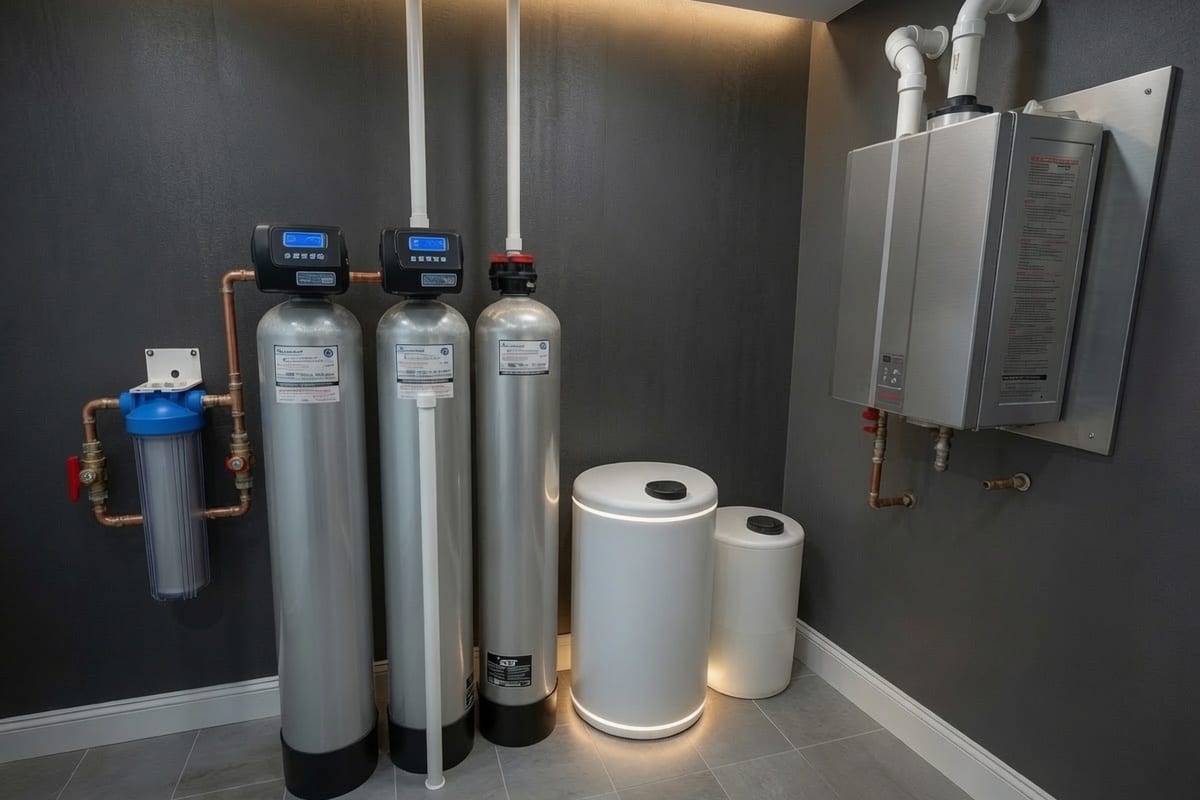
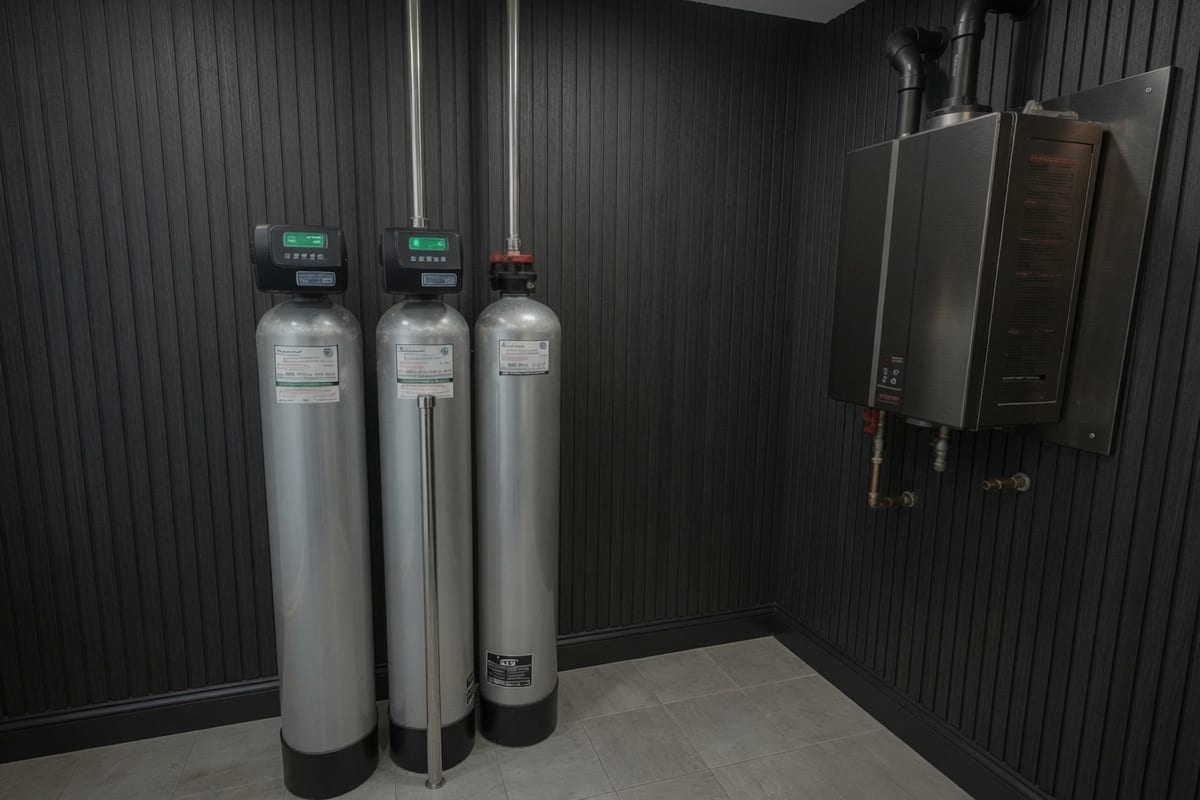
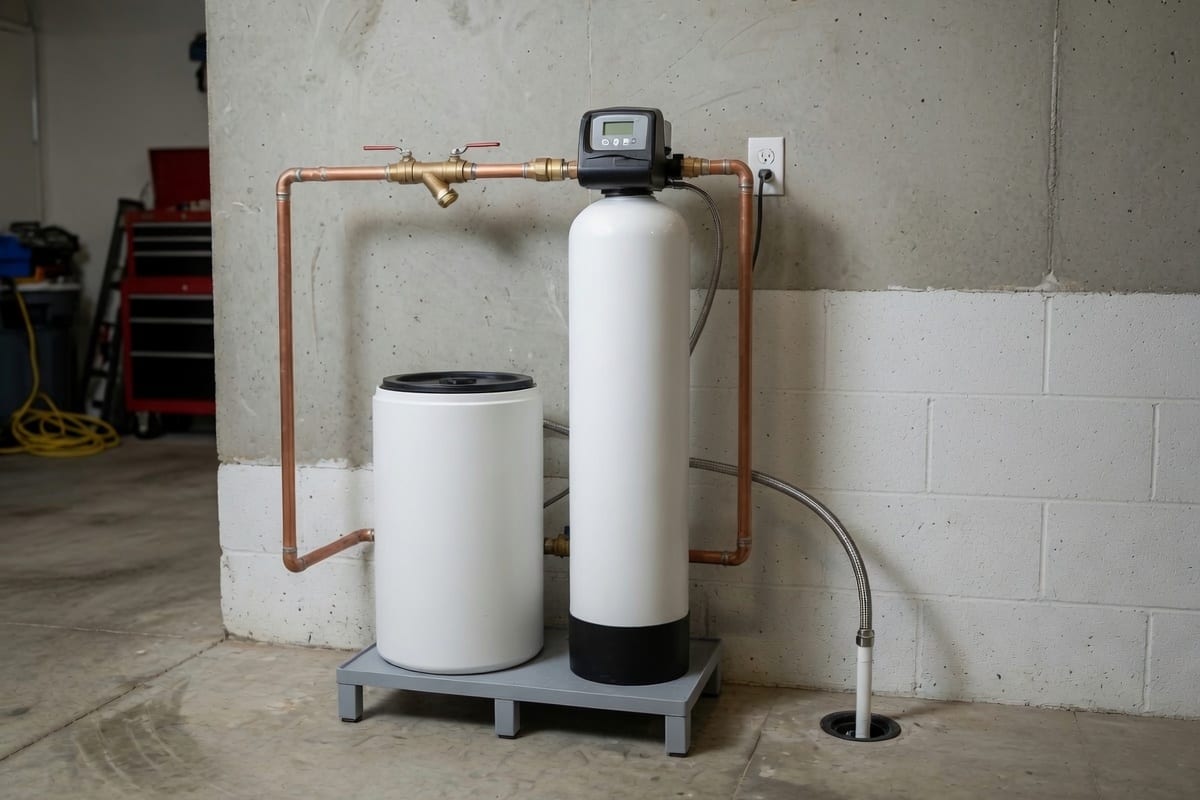
Somebody has quoted you a softener and a whole house filter as a package, and you are trying to work out whether that is two necessary machines or one machine and one upsell.
It is a fair question, because the two get sold as a set and described as though they overlap. They do not overlap at all. A softener and a carbon filter remove different things by completely different mechanisms, and whether you need both a softener and a filter depends on one thing: what is actually in the water arriving at your house.
This post sets out what each one removes, what neither one touches, and how the answer splits between Triangle city water and a private well. If both go in, it also covers the order they belong in on the pipe.
Do I need both a water softener and a filter?
Only if your water gives both of them something to do, and on most Triangle city supplies it does not. A softener runs ion exchange: it swaps calcium and magnesium for sodium and removes hardness. That is the whole of its job. Carbon filtration adsorbs chlorine, chloramine, and the tastes and smells that ride along with them. Neither one does the other’s work, and neither is a barrier against bacteria. PFAS is a more careful answer than either yes or no: EPA identifies both activated carbon and reverse osmosis as technologies that can reduce PFAS, so whether a given filter does depends on that specific product’s tested reduction claim, its capacity and whether it is maintained, not on the category it belongs to. A softener does nothing for PFAS in any configuration. If PFAS is your reason for buying, ask for the model’s certified reduction claim in writing rather than accepting a category answer.
So the question is never which is better. It is whether you have a hardness problem, a taste problem, both, or neither.
What each one actually removes
| What is in your water | Softener (ion exchange) | Whole house carbon |
|---|---|---|
| Calcium and magnesium hardness | Removes it | No effect |
| Scale on heaters and fixtures | Prevents it | No effect |
| Chlorine taste and smell | No effect | Removes it |
| Chloramine | No effect | Catalytic carbon handles it; standard carbon struggles |
| Earthy or musty taste | No effect | Usually helps |
| Dissolved iron | Small amounts only, then it fouls | No, that needs an oxidising iron filter |
| Sediment and red clay | No, and grit wears the resin | Only behind a prefilter |
| Bacteria and coliform | No | No |
| PFAS, lead, nitrate | No | Not a barrier to rely on |
Read that table as a checklist against a real test result. If every row a softener owns says “not present in my water”, a softener has nothing to do in your house, however good the unit is.
Not sure which rows apply to you? Request a free consultation and we test first, then put a written price on only what the results support.
Do you need both on Raleigh or Cary city water?
Usually not. Carbon, generally yes; softener, generally no. Raleigh Water reports total hardness at 25.2 mg/L as calcium carbonate, about 1.47 grains per gallon, and prints its own one word classification beside the figure: “Soft”. The Cary and Apex plant reports 30 mg/L, about 1.8 grains, and calls it “moderately soft”. Across the North Carolina utility reports we have read, published hardness runs from 0.25 to 4.2 grains per gallon and not one system crosses 7 grains into genuinely hard water.
There is nothing there for ion exchange to remove. What there is instead is disinfectant. Cary reports a chloramine residual of 2.96 ppm, with a free chlorine period each March, and chloramine is the reason a plain carbon cartridge often disappoints people in Cary, Apex and Morrisville. Chloramine needs contact time and the right media, which is why catalytic carbon rather than standard carbon is the specification that matters here.
So on city water the shopping list is usually one item, not two. We worked through the hardness side of that in detail in do you need a softener on Raleigh city water.
Pro tip: if a quote bundles a softener with a filter for a Raleigh, Garner or Wake Forest address, ask the salesperson to write down your hardness in grains per gallon and read it back against the utility’s published figure. A bundle is not wrong because it is a bundle. It is wrong when half of it has no measurable job.
Do you need both on a Triangle private well?
Often, and frequently more than two units. A well has no utility treating it, so everything the ground put in the water is still there when it reaches the tap. That usually means hardness, and it often means iron, hydrogen sulfide, low pH or sediment alongside it.
Here is the part worth being straight about. Private wells around the Triangle commonly run far harder than city water, but we have no representative dataset behind that. North Carolina’s required panel for a new well, listed by name in NCGS 87-97(h), does not include hardness, and it does not include calcium either, so the state has never collected the numbers that would make a well hardness range honest. Your well in Pittsboro or the Chatham and Johnston county fringe could land anywhere. Measure it.
Once you have the results, “both” is often an understatement. A well with hardness and orange staining needs iron and sulfur treatment before the softener, because iron fouls resin. A well with low pH needs a neutralizer or it keeps eating copper. A well with a positive coliform result needs disinfection and UV water purification, which neither a softener nor a carbon tank provides.
What order do a softener and filter go in?
On chlorinated city water, carbon goes ahead of the softener; on a well, the softener usually goes ahead of the carbon. The reasoning is different in each case.
On city water, chlorine and chloramine shorten the life of softening resin, so removing them first protects the resin behind it. On a well there is no disinfectant to strip, and the usual sequence runs sediment, then iron or sulfur treatment, then a neutralizer if the pH is low, then the softener, then carbon, and UV last because ultraviolet needs water that is already clear to work.
Treat that as the common arrangement rather than a rule. The correct order follows your test results and the equipment being fitted, and manufacturers publish their own sequencing for their own media. A whole house water filtration layout is designed around the results, not around a diagram someone found online.
What neither one does
This is where most buyer disappointment starts. A softener and a whole house carbon filter together still leave gaps:
- Bacteria. Neither disinfects. A coliform positive is a shock chlorination and UV question.
- PFAS and lead. A softener does nothing for either. General purpose whole house carbon is not a barrier you should rely on for them, which is why an under sink reverse osmosis drinking water unit is the usual answer at the tap you drink from. Our reverse osmosis versus whole house comparison covers that split.
- Nitrate. Not a softener job and not a carbon job.
- Very high iron or sulfur. A softener tolerates small amounts of dissolved iron and then fouls. Anything more wants a dedicated filter ahead of it.
A whole home softener runs $1,500 to $3,500 installed and a whole house carbon filter the same $1,500 to $3,500, so buying one you do not need is not a rounding error. Under sink reverse osmosis runs $350 to $900. All of those are planning ranges rather than quotes, and the Raleigh water filtration cost guide sets out what moves them.
Frequently Asked Questions
Do I need a whole house water filter if I have a water softener?
Probably, because the softener is not filtering anything. Ion exchange removes hardness and leaves chlorine, chloramine, taste and odour untouched. If your complaint is smell or flavour rather than scale, carbon is the unit that fixes it and the softener never will.
Do I need a water softener if I have a whole house filter?
Only if your water is genuinely hard, which on Triangle city water it is not. Raleigh Water publishes 1.47 grains per gallon and classifies its own water as soft. On a private well it changes completely, and the measured number decides both that and what size softener you need.
Is a water softener and filter combo worth it?
It is worth exactly as much as the half of it your water needs. On a well with measured hardness plus a taste or iron problem, a combined build is right, and the softener install is sized to the hardness the test found. On a Raleigh or Cary city supply, paying for the softening half buys you the removal of about one and a half grains per gallon plus a salt bill.
Can one tank do both jobs?
Some units combine softening resin and carbon media in a single tank, and they are a real compromise rather than a free lunch. You get less of each medium in the same vessel, and the two need different backwash behaviour. For a house that genuinely needs both jobs done properly, two vessels usually outperform one.
Does a water softener remove chlorine or PFAS?
No to both. A softener exchanges calcium and magnesium ions and has no mechanism for either one. Chlorine and chloramine are a carbon job, and PFAS is a reverse osmosis or specialist media job at the point you drink from.
How do I find out which one I actually need?
Test the water, then read the results against the table above. On city water you can start free by looking up your utility’s published hardness and disinfectant. On a well you need a lab panel, because water testing is the only thing that tells you whether the softener half of any quote has a job to do.
Sources
- Raleigh’s 25.2 mg/L as CaCO3 and its own classification “Soft” come from Raleigh Water’s 2025 annual reports. The 1.47 grains is our conversion at 17.1 mg/L to the grain.
- Cary and Apex at 30 mg/L, about 1.8 grains converted, labelled “moderately soft”, and the 2.96 ppm chloramine residual with a free chlorine period each March, come from the Cary/Apex Water Treatment Facility’s 2025 reporting.
- The required analyte list for a new North Carolina well, which contains no hardness and no calcium, is NCGS 87-97(h).
- Sequencing guidance is the common industry arrangement, not a code requirement. Follow your equipment manufacturer’s own specification.
Getting a straight answer for your own water
If you are in Raleigh, Garner or Wake Forest on city water, we will usually tell you that carbon is the buy and the softener is not, and show you the utility’s own hardness figure as the reason. If you are on a well near Pittsboro, Fuquay-Varina or Clayton, the results often call for more than two units, and we will say that too, with the reading behind each one.
Either way it starts the same: a free consultation, a test at your tap, and an up-front written price for only the equipment your results justify. Call (984) 384-6991 or book a free consultation and we will size what you need before anyone talks about a package.