Do You Need a Softener on Raleigh City Water?
Raleigh Water Pros • September 20, 2026 • 9 min read
Somebody at a cookout in North Raleigh says their softener changed their life. The glasses come out of the dishwasher spotty. So you go looking for whether you need a water softener on Raleigh city water, and the first ten results agree that you do.
Raleigh Water does not. The city publishes its hardness every year in two separate reports, in two units, plant by plant, and in the column where a legal limit would normally sit it prints one word about its own water: “Soft”.
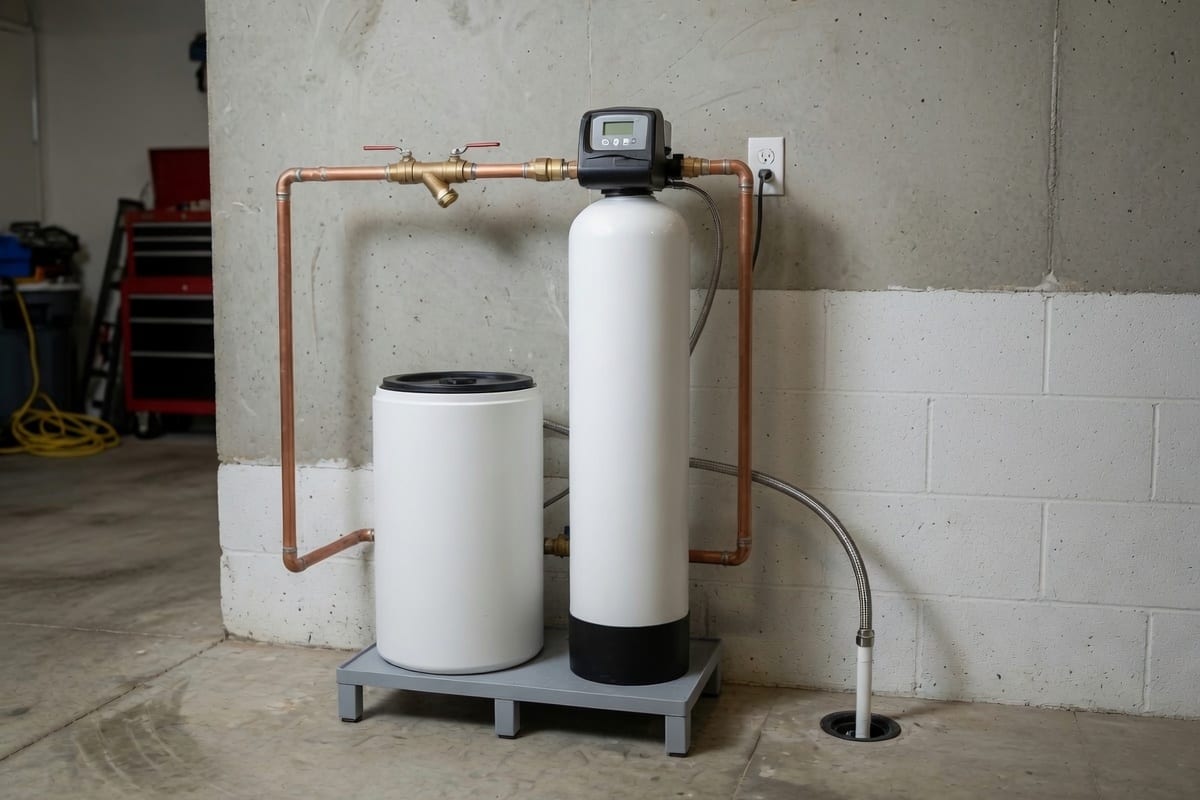
We install softeners. We are not going to sell you one here, because the numbers do not support it and you can check them yourself in two minutes. Below: what Raleigh Water publishes and where to read it, what soft means on the standard scale, why spots still turn up in soft-water houses, who here genuinely does have hard water, and what a city customer usually wants instead.
Do you need a water softener on Raleigh city water?
No. Not on hardness grounds, and that answer covers every community Raleigh Water serves.
The 2025 Annual Finished Water Quality Report gives hardness as 1.49 grains per gallon at the E.M. Johnson plant and 1.44 at Dempsey E. Benton. The 2025 Consumer Confidence Report gives a system-wide figure of 25.2 milligrams per litre as calcium carbonate, with a range of 21.9 to 35.3. Those are the same number in two units, and both are the utility’s own, not a conversion by us and not a figure off a chart.
One system serves seven communities under public water system ID NC0392010: Raleigh, Garner, Wake Forest, Rolesville, Knightdale, Wendell and Zebulon. Two plants, one report, one hardness figure. If you are on a meter in any of them, the answer above is your answer.
What Raleigh Water publishes about hardness
Both of Raleigh’s annual reports carry hardness, and the detailed one carries it in grains per gallon without asking you to convert anything.
| Measure, 2025 reporting year | E.M. Johnson plant | Dempsey E. Benton plant |
|---|---|---|
| Hardness, grains per gallon | 1.49 | 1.44 |
| Hardness, mg/L as calcium carbonate | 25.5 | 24.7 |
| What the report prints where the limit goes | Classified as “Soft” | Classified as “Soft” |
E.M. Johnson treats Falls Lake water and Dempsey E. Benton treats Lake Benson water. The two land within 0.8 milligrams per litre of each other, so there is no harder half of the service area.
Hardness does move with the season. At the E.M. Johnson tap in 2026 it ran 22.0 milligrams per litre in January and 31.2 in August. That late-summer peak is 1.82 grains per gallon converted, still soft by a wide margin. Every report sits on one page at Raleigh Water’s reports index, monthly ones included, so you can read the current month rather than take our word for it.
Want the reading at your own fixture rather than the plant average? Request a free consultation and we measure it at your tap, then tell you plainly if the answer is that you need nothing.
What counts as hard water?
The scale most of the industry uses is the one published by the US Geological Survey, in milligrams per litre of calcium carbonate. The grains column below is our conversion at 17.1 milligrams per litre to the grain.
| Classification | mg/L as calcium carbonate | Grains per gallon |
|---|---|---|
| Soft | 0 to 60 | under 3.5 |
| Moderately hard | 61 to 120 | 3.6 to 7.0 |
| Hard | 121 to 180 | 7.1 to 10.5 |
| Very hard | over 180 | over 10.5 |
Raleigh at 25.2 milligrams per litre sits less than halfway up the soft band. The water would have to roughly quintuple to reach the bottom of the hard band, where scale on heater elements and soap that will not lather actually start.
That is not unusual for this state. Our read of 21 North Carolina utility reports found city hardness running from 0.25 to 4.2 grains per gallon statewide, and no city system crossing 7 grains at all. Piedmont reservoirs sit on granite and gneiss, which give up very little to the water running over them.
Then why does my water spot the glasses?
Because spotting is about everything dissolved in the water, not the calcium and magnesium alone, and calcium and magnesium are the only two things a softener removes.
Raleigh’s published minerals go well beyond hardness: alkalinity at 29.8 milligrams per litre, sodium at 24.3, sulfate at 46.3, silica at 7.71 and chloride at 11.8. When a droplet dries on a glass, all of that stays behind. An ion exchange softener swaps calcium and magnesium for sodium, so the total dissolved load does not fall; it changes character. At 1.5 grains there is very little to swap.
Two other causes are worth ruling out before any equipment gets bought.
- Detergent and rinse aid film. Cloudy glassware is very often the dishwasher, not the supply. Cheap to test: run a load with no detergent and look.
- Premise plumbing, for staining. Iron and manganese are non-detect at both Raleigh plants in the 2025 annual report, and non-detect at the E.M. Johnson tap in every month of 2026 so far. Orange staining or black specks in a Raleigh house are coming from a pipe, a fixture or a water heater inside the property line, not from the water the city delivers.
Pro tip: open the current month’s E.M. Johnson report on Raleigh Water’s reports page and find the “Total Hardness” row before you talk to anybody about a softener. If the figure starts with a 2 or a 3 in milligrams per litre, you are reading soft water, and that row ends the conversation.
Who in the Raleigh Water service area does have hard water?
Well owners, and in practice almost nobody else.
The seven communities on PWSID NC0392010 all drink the same treated surface water, so Knightdale, Wendell and Zebulon get the same soft answer Raleigh does. Outside the meters it changes completely. The rural fringe of Wake, Franklin, Johnston and Chatham counties runs on private wells in fractured Piedmont bedrock, where groundwater sits against rock far longer than reservoir water ever does. That contact time is the whole difference.
North Carolina publishes no dataset of private well hardness, and the state’s required panel for a new well does not measure it. Nobody can tell a well owner their number from a map or a neighbour’s system; it has to be measured at the property. If that is you, our well water treatment page is the better starting point, and the same goes out through Clayton and the Johnston County well belt.
What a Raleigh city customer usually wants instead
Catalytic carbon, for chloramine taste and odour. That is the live complaint here, and it is a different product for a different problem.
Raleigh chloraminates year round. The 2025 report puts the chloramine detected at 2.80 parts per million, with a range of 0.02 to 4.00, against a maximum residual disinfectant level of 4. Chloramine does not off-gas in a pitcher the way free chlorine does, and standard activated carbon does not strip it at normal contact times. Catalytic carbon does, which is why the media grade matters more here than the tank size.
Once a year, on state guidance, the system converts to free chlorine for about five weeks. Raleigh prints the dates as a footnote on its monthly report; the 2026 window was 26 February to 2 April. That is the swimming pool smell in late winter, and it is scheduled, published and temporary.
Two other numbers shape what people fit here. Total trihalomethanes averaged 34.2 parts per billion in the distribution system in 2025 against a limit of 80, and PFOA and PFOS show up in Raleigh’s own quarterly testing at roughly 2 to 3 parts per trillion, below the 4.0 federal limit. Our guide to whether Raleigh tap water is safe to drink works through both in detail.
A whole house catalytic carbon filtration system runs $1,500 to $3,500 installed. If the goal is drinking water rather than every tap, an under-sink reverse osmosis unit runs $350 to $900.
Both are planning ranges, not quotes, and the Raleigh water filtration cost guide sets out what moves them.
Frequently Asked Questions
Does Raleigh have hard water?
No. Raleigh Water reports total hardness of 25.2 milligrams per litre as calcium carbonate for 2025, which is 1.47 grains per gallon converted, and its own detailed report prints 1.49 and 1.44 grains at the two plants with the classification “Soft” beside them. That is soft on the US Geological Survey scale by a factor of more than two.
Is Garner or Wake Forest water harder than Raleigh’s?
No, it is the same water. Garner, Wake Forest, Rolesville, Knightdale, Wendell and Zebulon are inside public water system NC0392010 with Raleigh, covered by one annual report and fed by the same two plants, so every hardness figure on this page applies to them unchanged.
Will a water softener fix the chlorine taste in my Raleigh water?
No. Ion exchange targets calcium and magnesium and does nothing meaningful for chloramine, which is what Raleigh carries as its residual disinfectant. Taste and odour here is a carbon job, and because of the chloramine it needs catalytic carbon rather than standard carbon.
Why do hardness charts online give Raleigh a different number?
No rule requires a published hardness figure to come from the utility. Raleigh Water’s own reports are the only figure we will quote, they are free to read, and where a chart and the utility disagree, read the utility.
How do I find the hardness number for my own house?
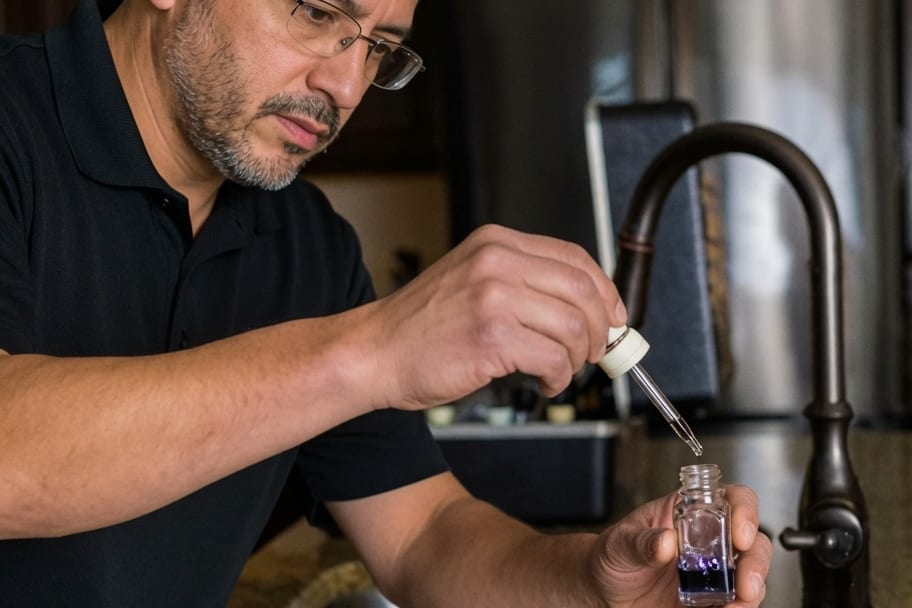
Have it measured at your tap, ahead of any treatment already fitted. A hardware store test strip gets you close for a few dollars, and our water testing visit covers hardness alongside the readings that actually decide equipment.
Do you install water softeners in Raleigh at all?
Yes, where the water justifies one, which in this area means private wells rather than city meters. If you are on a well and your reading comes back above 7 grains, water softener installation is a straightforward job and we will size it off your test rather than off a catalogue.
Sources and reporting dates
- Raleigh Water’s 2025 Consumer Confidence Report, 2025 Annual Finished Water Quality Report and 2026 monthly reports, all at raleighnc.gov water reports. Every hardness, chloramine, mineral and iron figure above comes from those.
- US Geological Survey, hardness of water, for the classification bands. Grains per gallon are our conversion at 17.1 milligrams per litre to the grain, except 1.49 and 1.44, which Raleigh publishes in grains itself.
- A plant average does not describe every address on every day, so check the current report before acting on any figure here.
Softeners, carbon and Raleigh city water
If you are on a meter in Raleigh, Garner, Wake Forest or Knightdale, the softener question is settled by your own utility’s report, and the answer is no. What is worth your money here is chloramine taste, seasonal disinfection byproducts and, if you want it, drinking water treatment at the kitchen sink.
Every visit starts with a free consultation. We measure your tap, compare it against what Raleigh Water publishes, give you an up-front written price for only what the readings support, and say so when they support nothing. Call (984) 384-6991 or book a free consultation online.