Is Raleigh Tap Water Safe to Drink? (2026)
Raleigh Water Pros • July 5, 2026 • 10 min read • Updated September 14, 2026
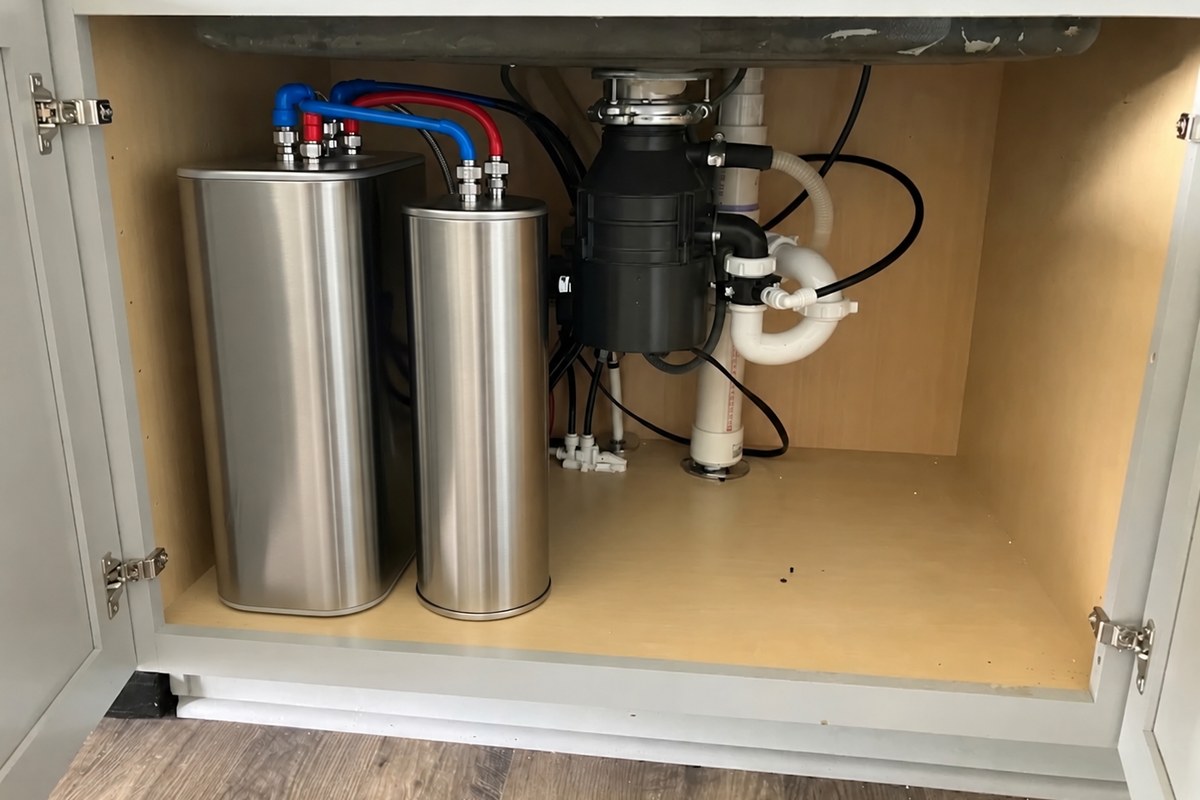
Short answer: yes, Raleigh city tap water meets every federal drinking water standard, and the city tests it constantly. But “meets federal standards” and “tastes great and has nothing you would rather filter out” are two different things. That gap is why so many Raleigh homeowners still put a filter on their water.
This guide walks through where your water comes from, why it can smell like a swimming pool, what the PFAS headlines actually mean for the Triangle, and what kind of filter fixes what. No scare tactics, just plain facts.
Where does Raleigh tap water come from?
Raleigh Water draws from two reservoirs in the Neuse River basin. The E.M. Johnson Water Treatment Plant in north Raleigh treats Falls Lake water, and the Dempsey E. Benton Water Treatment Plant to the south treats Lake Benson water. Together they serve Raleigh, Garner, Wake Forest, Rolesville, Knightdale, Wendell and Zebulon, which are part of the same public water system rather than separate utilities buying from the city.
That surface water source matters. Lake and river water picks up more organic material than deep groundwater, so it needs more treatment to be safe, and that treatment is a big part of why it can taste and smell the way it does.
If you are on the west side of the Triangle, your water may come from somewhere else entirely. Cary, Apex, and Morrisville pull from Jordan Lake, which sits in the Cape Fear River basin. That difference matters for the PFAS conversation below, and it is why we cover water filtration in Cary and water filtration in Apex a little differently than Raleigh proper.
Does Raleigh use chlorine or chloramine?
Raleigh disinfects its water with chloramine, which is chlorine combined with a small amount of ammonia. Chloramine is used because it is more stable than free chlorine, so it keeps protecting the water as it travels miles of pipe to your house. That is a good thing for safety.
The trade-off is taste and smell. Chloramine gives water that classic “chlorine” or swimming-pool note that a lot of people notice most when they fill a glass, run a bath, or brew coffee. It is not dangerous at the levels used, but it is the number one reason people call us about taste.
A couple of practical notes about chloramine:
- It does not gas off if you leave water sitting on the counter the way plain chlorine does, so the old “let it breathe overnight” trick does not really work.
- It matters for aquariums and fish tanks. Chloramine is toxic to fish and does not evaporate, so tank owners need a conditioner made for chloramine.
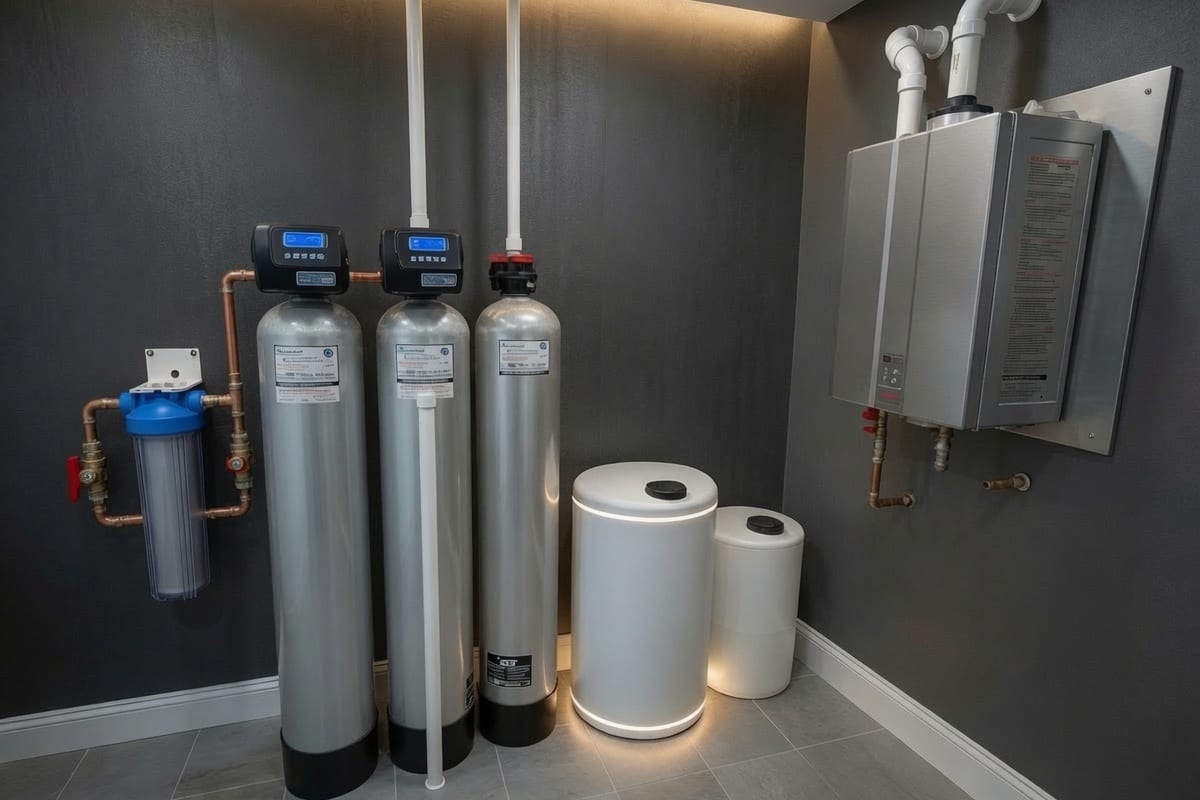
- The fix for taste is simple: a good carbon filter. Activated carbon grabs chloramine and the chlorine taste and smell, which is why a whole-house water filtration system or a countertop/under-sink carbon filter makes such an obvious difference.
What about disinfection byproducts?
Whenever you disinfect water that has natural organic material in it (and lake water has plenty), you create small amounts of disinfection byproducts (DBPs), groups like trihalomethanes (THMs) and haloacetic acids (HAA5). These are regulated, and Raleigh reports them in its annual water quality report.
One reason Raleigh switched to chloramine years ago is that chloramine produces fewer of these byproducts than free chlorine does. So the disinfection method already helps here. If you want to reduce DBPs further at the tap, activated carbon again does most of the work, which is another point in favor of carbon filtration for drinking water.
Is Raleigh water hard or soft?
Raleigh city water is moderately soft to soft. Compared to a lot of the country, that is good news. You are much less likely to fight the heavy scale, spotty dishes, and crusty faucets that plague hard-water regions.
This is a real difference between city water and well water in the Triangle. City customers usually do not need a water softener. Private well owners often do, because Triangle groundwater can run 10 to 20+ grains per gallon of hardness. If you are on a well, our well water treatment guide is a better starting point than this one.
Is there PFAS in Raleigh water?
This is the question we get most, so let’s be careful and honest about it.
PFAS (“forever chemicals”), along with the specific compounds GenX and 1,4-dioxane, are a well-documented problem in North Carolina, but the worst of it is tied to the Cape Fear River basin and the Haw River, not the Neuse. The Haw and Cape Fear have carried industrial discharge for years, and the town of Pittsboro, which pulls its drinking water directly from the Haw, has measured among the highest PFAS levels in the state. That is why water filtration in Pittsboro is a bigger deal than in most towns.
Here is what that means depending on where you live:
- Raleigh, Wake Forest, Garner, and the rest of Raleigh’s Neuse/Falls Lake system: lower exposure to the Cape Fear PFAS story simply because of the different source water. Raleigh’s reported levels are far lower than the Haw River communities.
- Cary, Apex, Morrisville (Jordan Lake / Cape Fear basin): more exposure to the basin’s PFAS discussion, since Jordan Lake is downstream of parts of that watershed.
- Pittsboro (Haw River): the highest-profile case in the region.
Federal PFAS drinking water limits are now in force, and utilities across the state are investing in treatment to meet them. So the trend is toward lower levels over time, not higher. Still, many homeowners do not want to wait, and PFAS is exactly the kind of thing people filter for “peace of mind” even when their utility is in compliance. That is a completely reasonable choice.
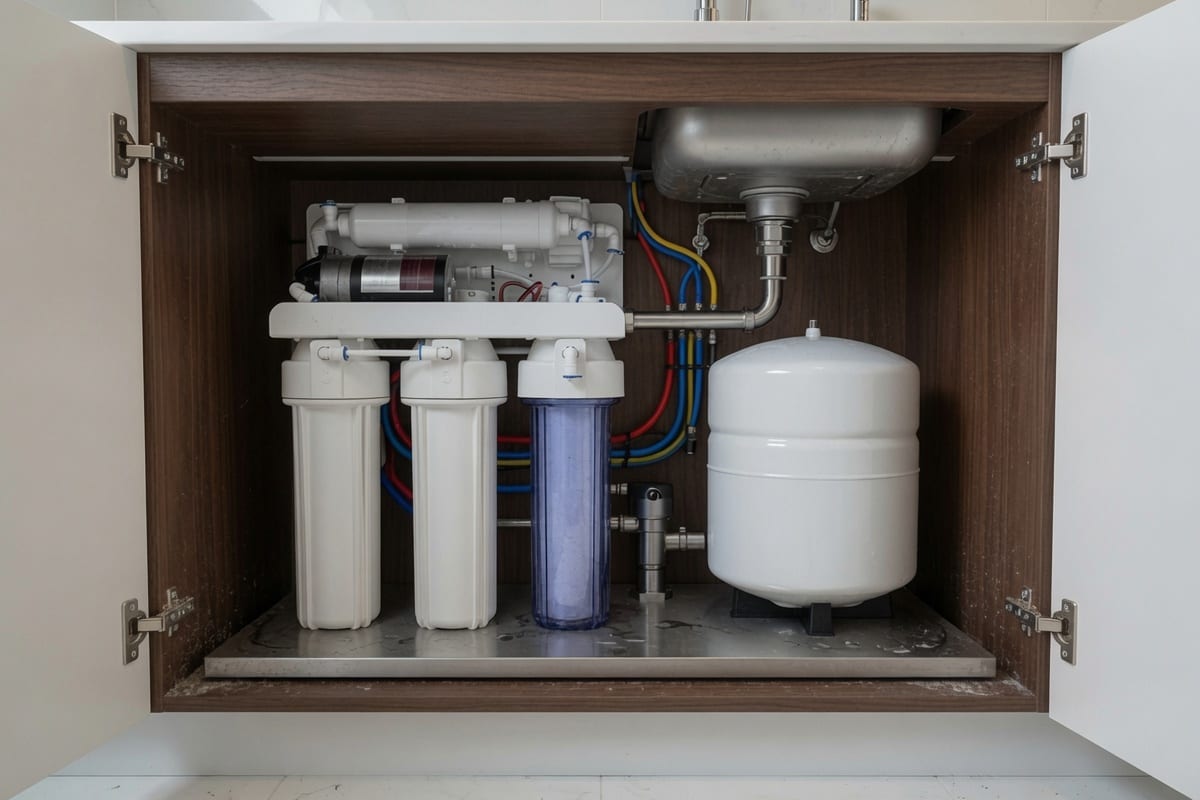
The important part: not every filter removes PFAS. A basic carbon taste filter helps with chlorine but is not your best tool for forever chemicals. For PFAS, the two proven home options are reverse osmosis and high-quality activated carbon rated for PFAS. Our reverse osmosis drinking water systems are the most thorough at-the-tap answer.
What actually removes what?
This is where a lot of confusion lives, because “water filter” covers everything from a pitcher to a whole-home system. Here is a straight breakdown of the common things in Triangle tap water and the filter that actually addresses each one.
| Concern | Where it shows up | What handles it |
|---|---|---|
| Chlorine / chloramine taste and smell | Raleigh city water | Activated carbon (whole-house or under-sink) |
| Disinfection byproducts (THMs, HAA5) | Any disinfected city water | Activated carbon |
| PFAS / GenX | Cape Fear basin (Cary, Apex, Pittsboro) | Reverse osmosis, or carbon rated for PFAS |
| 1,4-dioxane | Cape Fear / Haw basin | Reverse osmosis (hard to remove otherwise) |
| Hardness / scale | Mostly well water, some borderline city | Water softener (ion exchange) |
| Sediment / cloudiness | Older pipes, mains work | Sediment pre-filter |
| Lead (from old home plumbing) | Homes with older fixtures/solder | RO or certified lead filter at the tap |
A few takeaways from that table:
- If your only complaint is taste and smell, carbon solves it and you do not need to overbuy.
- If you are worried about PFAS or 1,4-dioxane, carbon alone is not enough. You want reverse osmosis for drinking and cooking water, usually installed under the kitchen sink.
- Lead is not a Raleigh source-water problem. It comes from old plumbing inside individual homes, so if that is your worry, a certified tap filter or RO is the fix, not a whole-house system.
Pro tip: chloramine is not free chlorine, and the difference decides what you buy. Standard activated carbon is poor at removing chloramine; catalytic carbon is built for it. Raleigh Water chloraminates, so specify catalytic carbon and ask any installer to confirm the media rating in writing.
Not sure which bucket you fall in? That is exactly what a free in-home consultation is for. We measure what is actually coming out of your tap so you can right-size the solution instead of guessing.
The honest bottom line
Raleigh city tap water is safe to drink by every federal standard, and the city does a solid job. If you are perfectly happy with the taste and you are not worried about PFAS, you do not strictly need a filter.
Most people who call us are in one of two camps: they are tired of the chlorine taste, or they want extra protection against PFAS and other trace contaminants. Both are legitimate, and the right filter depends on which one you are.
- Just want better taste? A carbon whole-house filter or a simple under-sink carbon unit does it.
- Want PFAS peace of mind? Add a reverse osmosis system at the kitchen sink.
- On a well or in Cary/Apex/Pittsboro? Your water profile is different, and testing first is worth it.
Costs vary by home and by what you actually need, so we keep a plain-English breakdown on our water filtration cost guide for Raleigh with up-front planning ranges.
Frequently Asked Questions
Does Raleigh have hard water?
No, and Raleigh Water publishes the number. Its 2025 report gives 25.2 milligrams per litre system-wide, and its plant tables print 1.49 grains per gallon at E.M. Johnson and 1.44 at Dempsey Benton. In the column where a limit would sit, the utility prints its own verdict: soft. Genuine hard water in this region shows up on private wells rather than on city supply, and it varies well by well, so the only figure that describes yours is a measured one. The statewide hardness table sets Raleigh against every other NC city.
Is Raleigh water worse than other North Carolina cities?
No, and the comparison is worth making. Greensboro’s monitoring found PFOS several times over the federal limit and it is building carbon plants in response. Charlotte tested clean for both regulated compounds. Raleigh sits closer to Charlotte than to Greensboro on that measure.
What filter removes PFAS from tap water?
Reverse osmosis at the point of use is the household answer, and granular activated carbon is what utilities use at plant scale. Wilmington built the largest carbon installation in the state after GenX was found in its supply, and its treated water now averages a fraction of a part per trillion. At home, an under-sink unit covers the water you drink and cook with.
Do I need a whole-house filter or just one at the sink?
It depends which problem you have. Chlorine taste and shower odour are whole-house problems, because you breathe volatile compounds in hot water. PFAS and lead are drinking-water problems, and a unit at the kitchen sink handles them for a fraction of the cost. Our guide to whether you need a whole house filter on city water works through that choice.
How do I find out what is in my own tap?
Read Raleigh Water’s annual report for the system-wide picture, then test at your own tap for the things that vary by address, which are lead, copper and hardness. We do that as part of a free consultation and give you the numbers in writing.
Is bottled water safer than Raleigh tap water?
Not by default. Bottled water is regulated as a food product and is not required to publish the annual testing report a public utility must produce. If a specific contaminant concerns you, a filter certified for that contaminant is a more reliable answer than switching to bottles.
Sources and reporting dates
Every figure above comes from the sources below. Water quality changes between reports, and a reported average does not describe conditions at every address on every day, so check the current report before acting on any number here.
- Raleigh Water annual water quality report, covering calendar year 2025. Source of the hardness, disinfectant, byproduct, lead and copper figures.
- EPA Safe Drinking Water Information System, for population served, violation history and compliance dates.
- EPA UCMR5 occurrence data, the national PFAS monitoring round, for any result described as federal monitoring.
- NC DEQ Source Water Assessment Program, for source water susceptibility ratings.
- EPA PFAS drinking water rule, for the limits and their compliance dates.
Getting Raleigh water right
Compare this supply with other cities in our North Carolina water quality guide, or see how we approach city water treatment.
The fastest way to stop guessing is to have your water tested. Raleigh Water Pros offers a free in-home consultation across Raleigh and the Triangle (Cary, Apex, Wake Forest, Holly Springs, Fuquay-Varina, Garner, Durham, Pittsboro, and more), with up-front pricing and licensed installers. We will tell you honestly what you have and what, if anything, is worth filtering. Call (984) 384-6991 or request a free consultation and we will help you get water you are happy to drink.