Do You Need a Whole House Filter on City Water?
Raleigh Water Pros • September 26, 2026 • 8 min read
If you are on a town meter in Raleigh, Cary, Clayton or Holly Springs, someone has probably told you that a whole house water filter for city water is the responsible thing to own. Someone else has told you it is a waste of money because the city already treats the water. Both can be right, and which one applies to you depends on your utility and on what is actually bothering you.
Here is the frame we use. City water in the Triangle arrives treated, disinfected and tested, so a whole house filter is never fixing a safety failure. What it can fix is something the utility adds on purpose: the disinfectant that keeps the water safe on the way to your house.
Below: what every major Triangle utility adds, when a whole house filter earns its place, when a single tap filter is the smarter buy, and when the right answer is neither.
Do you need a whole house filter on city water?
Usually not for safety, sometimes for comfort. Every Triangle city system in this guide met its limits in its latest report, so a whole house filter on city water is a choice about taste, smell and bathing water, not a fix for unsafe supply.
The deciding question is simple: does the thing that bothers you happen at every tap, or only in the glass you drink? Chlorine smell in the shower and a pool odour in the bath happen at every tap, and only a filter at the main line reaches them. PFAS, lead and plain drinking-water taste are about what you swallow, and a filter at the kitchen sink handles them for far less money.
If nothing bothers you, you may not need either. That is a legitimate outcome.
What does your utility put in the water?
Chloramine, in almost every case. Utilities add chlorine and ammonia together as a residual disinfectant that lasts through miles of pipe. It is the main thing a whole house carbon filter on city water exists to remove.
| Utility (latest report) | Residual disinfectant | Published average | Hardness published |
|---|---|---|---|
| Raleigh Water (Raleigh, Garner, Wake Forest, Knightdale, Rolesville, Wendell, Zebulon), 2025 | chloramine; free chlorine about five weeks each late winter | 2.80 ppm | 1.49 grains per gallon, “Soft” |
| Town of Cary (Cary, Morrisville, RTP South), 2025 | chloramine; free chlorine in March | 2.96 ppm | about 1.8 grains, “moderately soft” |
| Town of Apex, 2024 | chloramine | 3.23 ppm | 1.9 grains, “moderately soft” |
| Johnston County West, 2025 | chloramine | 2.31 ppm | none published |
| Town of Clayton, 2025 | chloramine; chlorine only for about six weeks in late winter | 1.95 ppm | none published |
| Holly Springs, 2025 | chloramine (read from the published residuals) | 2.16 ppm | none published |
| Fuquay-Varina, 2024 | chloramine (read from the published residuals) | 2.24 ppm | none published |
| City of Durham, 2025 | chloramine; free chlorine 27 February to 13 April 2026 | 1.5 ppm | about 1.5 grains (2023 report; none published since) |
| OWASA (Chapel Hill, Carrboro), 2025 | chloramine; free chlorine every March | 3.1 ppm | 25.1 mg/L, about 1.5 grains |
| Johnston County East, 2025 | free chlorine; no chloramine line published | 1.03 ppm | none published |
Every one of those residuals sits under the 4 ppm federal limit. Nine of the ten carry chloramine for most of the year. The exception, Johnston County East, reports only free chlorine, and it also reports the highest trihalomethane figure of the group at 69 ppb, still under the 80 ppb limit. That is the one Triangle system where the byproduct argument for carbon is stronger than the taste argument.
The hardness column matters as much. Raleigh, Cary and Apex publish soft-water figures, Durham and OWASA publish similarly soft numbers, and the other systems in the table publish no hardness number at all. A whole house filter is not a softener, and on those systems a softener has little to do; our guide to softeners on Raleigh city water covers that decision.
Not sure which utility serves your address, or what your own tap reads? Request a free consultation and we measure first, then recommend in writing.
When is a whole house filter worth it on city water?
When chloramine bothers you somewhere other than the kitchen glass. The common signs:
- A pool smell when you run a hot shower or fill the bath
- Coffee and tea that taste off even with filtered drinking water
- Someone in the house who finds the smell unpleasant in the shower
- A seasonal complaint that spikes in late winter, when Raleigh, Cary and Clayton switch to free chlorine for several weeks and the smell sharpens
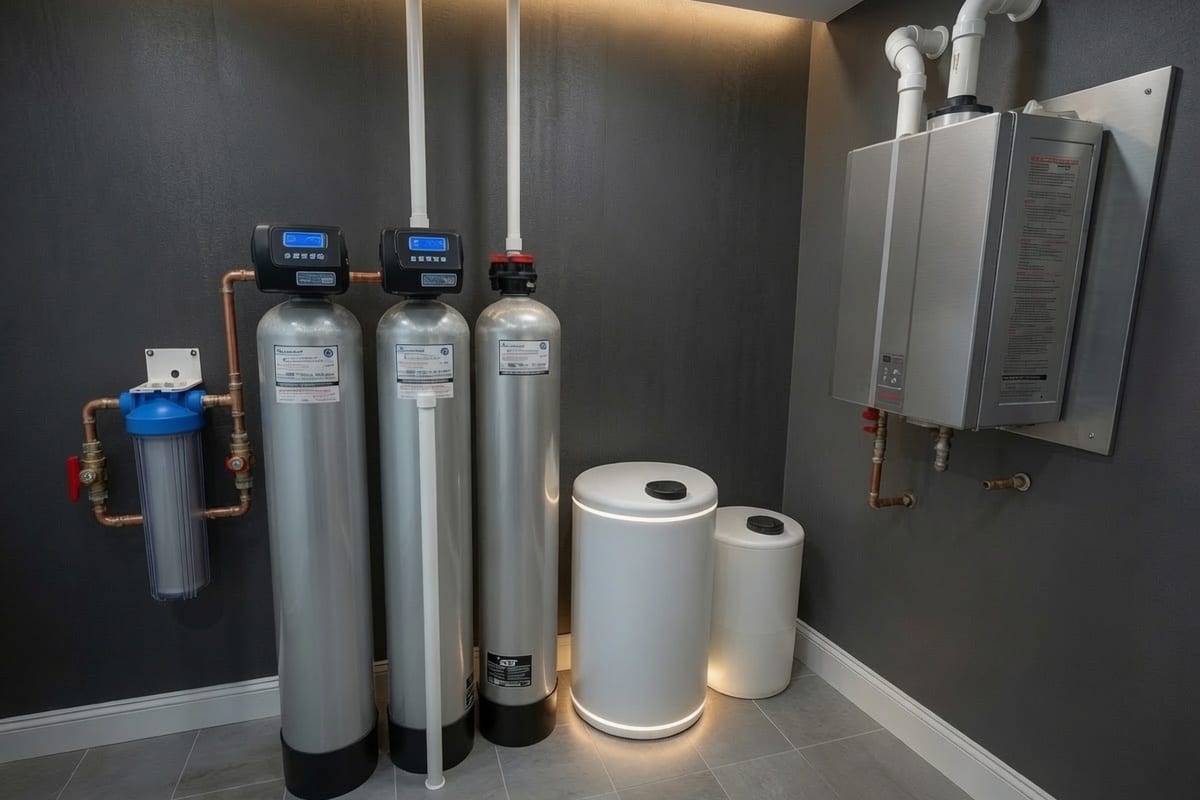
In those cases, whole house water filtration with the right media is the fix, because the filter sits where the water enters the house and every tap after it gets treated water.
The media is where people get burned. Chloramine is far harder to remove than free chlorine, and standard activated carbon does little to it at normal household flow. Catalytic carbon is built for it. On any system in the table except Johnston County East, a quote that does not name catalytic media is quoting the wrong product. Our catalytic versus standard carbon guide explains the chemistry.
Pro tip: in Raleigh, the free-chlorine window is published with exact dates; in 2026 it ran from 26 February to 2 April. If your water only bothers you in those weeks, you are noticing the switch, not a change in your plumbing, and that is worth knowing before you buy anything. Our guide to Raleigh’s chlorine switch covers what it does.
When is a filter at one tap the better answer?
When your concern is what you drink, not what you bathe in. Three common worries fall here:
- PFAS. Several Triangle suppliers report PFOS or PFOA above the 4 parts per trillion federal limit whose deadline is still in the future. That is an ingestion question, and an under-sink reverse osmosis unit covers drinking and cooking water directly.
- Lead. Every Triangle system whose lead results we have read reports a 90th percentile far under the 15 ppb action level. Lead that does show up comes from fixtures and solder inside a house, and a filter at the main line sits upstream of those fittings, so it cannot catch it. A certified filter at the tap can.
- Drinking water taste only. If the shower does not bother you, there is no reason to treat the water that goes to the toilets and the hose bib.
A point-of-use unit is also the honest middle ground for many homes: city water treatment often means one under-sink unit, not a system on the main line.
What does each option cost?
A whole house carbon filter runs $1,500 to $3,500 installed; an under-sink reverse osmosis unit runs $350 to $900. Both are planning ranges from our water filtration cost page, never quotes.
| Option | What it treats | Installed, typical |
|---|---|---|
| Whole house catalytic carbon | chloramine taste and odour at every tap | $1,500 to $3,500 |
| Under-sink reverse osmosis | drinking and cooking water at one tap | $350 to $900 |
| Both | every tap, plus a second barrier at the kitchen | the two bands together |
| Neither | nothing, and nothing needed | $0 |
What moves a carbon price inside its band (tank size, flow rate, where the main enters the house) is covered in our whole house carbon filter cost guide.
Frequently Asked Questions
Is a whole house water filter worth it on city water?
It is worth it if chloramine taste or smell bothers you at more than one tap, especially in the shower. If your only concern is drinking water, an under-sink unit at $350 to $900 does the job for less. If nothing bothers you, city water in the Triangle does not need one for safety.
Does city water need filtering at all?
Not for safety on any Triangle system we have read: all of them met their limits in their latest reports. Filtering city water is about taste, smell and personal preference on drinking water.
Will a whole house filter remove PFAS?
It is not the tool we would pick for it. For the water you drink, an under-sink reverse osmosis unit certified for PFOA and PFOS reduction is the dependable home option. See our reverse osmosis drinking water page for how it is fitted.
Do I need a whole house filter and a softener on city water?
Rarely a softener. Raleigh publishes 1.49 grains per gallon and calls it soft, and Cary calls its water moderately soft. Apex also calls its water moderately soft. Johnston County, Clayton, Holly Springs and Fuquay-Varina publish no hardness figure, so measure before buying one.
What about Garner and Wake Forest?
Both are on Raleigh Water, so the Raleigh row applies: chloramine most of the year and soft water. See our pages on Garner water filtration and Wake Forest water filtration.
What kind of whole house filter works on chloramine?
Catalytic carbon, sized for your household flow. Ask any installer to name the media in writing. We confirm the residual at your tap during a free consultation in Cary, Raleigh or Clayton before recommending anything.
Sources and reporting dates
- Raleigh Water annual and monthly water quality reports, reporting year 2025, and the March 2026 monthly report for the free-chlorine dates.
- Town of Cary 2025 water quality report; Town of Apex report, 2024.
- Johnston County West and East 2025 reports; Town of Clayton 2025 report and its Drinking Water page for the chlorine-only weeks.
- Town of Holly Springs 2025 report; Town of Fuquay-Varina 2024 report, the newest it has published.
Whole house filters on Triangle city water
On a city meter in Raleigh, Garner, Wake Forest, Cary or Clayton, the decision comes down to where the problem shows up. Every tap: catalytic carbon on the main line. The drinking glass only: a unit under the sink. Nowhere: keep your money.
Every visit starts with a free consultation. We read your utility’s report, measure your own tap and give you an up-front written price for only what the readings support. Call (984) 384-6991 or book your free consultation.