Whole House Carbon Filter Cost in NC (2026)
Raleigh Water Pros • September 20, 2026 • 10 min read
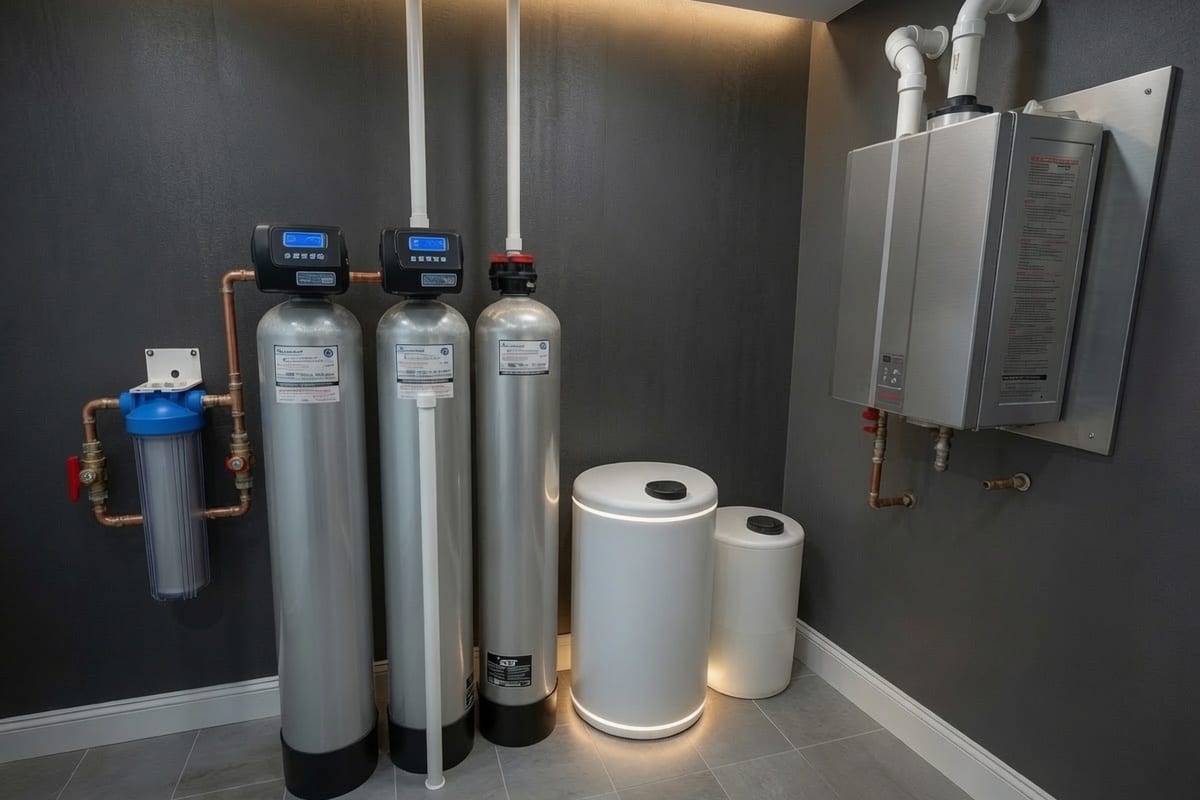
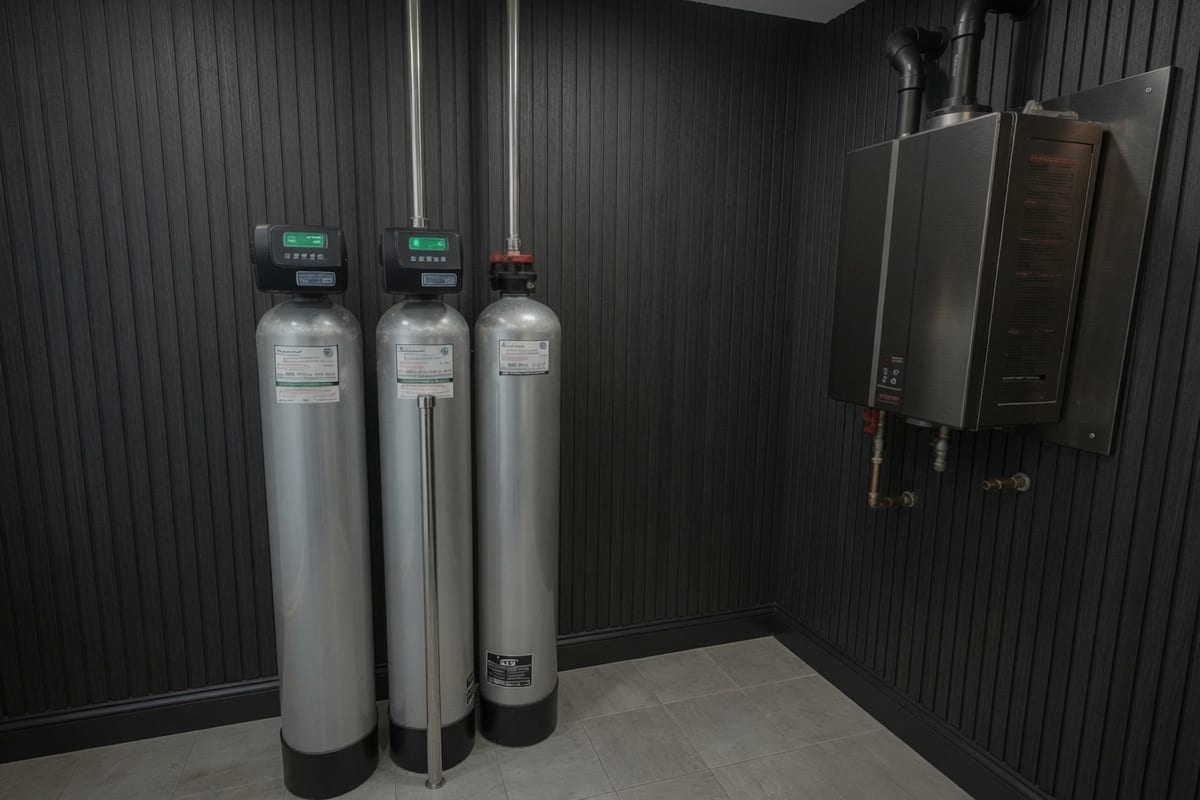
The shower smells like a swimming pool, the coffee tastes like the tap it came out of, and the two quotes on your kitchen table are eleven hundred dollars apart for what looks like the same grey tank in the garage. That gap is why whole house carbon filter cost is so hard to pin down online. The tank is the cheap part, and almost everything that decides whether the tank actually works is invisible on a one-line quote.
This guide gives the range North Carolina homes pay in 2026, what pushes a quote from one end of that range to the other, how a backwashing tank differs from a cartridge housing, how often the media gets replaced, and the lines a quote has to itemize before you can compare it to anything else. Every figure here is a planning range for the Triangle market, not a price for your house.
How Much Does a Whole House Carbon Filter Cost in NC?
Most North Carolina homes pay $1,500 to $3,500 installed for a whole house carbon filter in 2026. That covers the tank, the media inside it, the control valve, a bypass, and the labor to cut it into your main line. Cartridge housings sit below that range and do a smaller job. Large beds sized for high peak flow, or a carbon stage added onto well treatment, sit at the top of it.
| Setup | Typical installed (2026) | Who it usually fits |
|---|---|---|
| Single backwashing carbon tank, standard sizing | $1,500 to $2,200 | Two or three baths on city water in Garner or Knightdale |
| Larger bed sized to real peak flow | $2,200 to $2,900 | Four or more baths, several fixtures running at once |
| Carbon tank with added plumbing, relocation or a prefilter stage | $2,700 to $3,500 | Tight crawlspaces, slab homes, a polish stage on a well |
Two notes on that table. It is the carbon filter only, so a softener, a drinking water system or well iron treatment are separate line items with their own ranges on our Raleigh water system cost guide. And the difference between the rows is mostly bed size and plumbing work, not brand.
Want the exact number for your water? Request a free consultation and we test your water first, then quote in writing.
What Drives the Price of a Whole House Carbon Filter?
Five things move a carbon quote, and only one of them is the logo on the tank.
Tank size and how much media is in it
Carbon works by adsorption: water passes through a bed of porous media and contaminants stick to the surface instead of reaching your tap. More media means more surface area and more service life, and media is sold by volume, so bed size is the single biggest line item in the quote. A bed sized for a two-bath ranch and a bed sized for a five-bath house with irrigation are different purchases, even when the tanks look similar from across the garage.
Which carbon goes in the tank
Standard granular activated carbon and catalytic carbon are not interchangeable, and the question that decides which one you need is whether your utility carries free chlorine or chloramine. That is the single most consequential specification on a Triangle carbon quote, and we wrote it up separately in catalytic versus standard carbon for chloramine, including a table of North Carolina utilities. Read that before you sign anything.
The cost consequence is smaller than people expect. Catalytic media costs more per cubic foot, but the tank, valve, bypass and labor dominate the installed price, so both land inside the same $1,500 to $3,500 range. Paying for the wrong media is the expensive mistake, not paying for the right one.
Contact time, which is really your peak flow
Media only works while water is touching it, and the seconds each gallon spends inside the bed fall as flow rises. A shower on its own is gentle. A shower, a dishwasher and an irrigation zone together is not. Sizing to realistic peak flow rather than a brochure number separates a system that still tastes right in year three from one that quietly stops keeping up, and it is why two honest quotes on the same house can differ by a thousand dollars.
The valve, the drain and the bypass
A backwashing tank rinses and re-levels its own bed on a set cycle, which prevents channeling and keeps contact time consistent. It needs a drain line. Where there is no drain within reach, an upflow system without a backwash cycle is the usual answer, and it trades a little media life for a much simpler install. A bypass valve belongs on every job so the system can be serviced without shutting off the house.
Where your main line enters
Garage installs are the cheapest. Crawlspace work, a slab home where the main enters through a wall, or a tank relocated to reach a drain all add labor and pipe. This line item explains most gaps between two otherwise identical quotes in Cary and Apex.
Pro tip: Size for your worst month, not your average one. Raleigh Water’s own monthly reports put total trihalomethanes at the E.M. Johnson plant tap at about 11 ppb in March 2026 and about 32 ppb in August 2026, the seasonal swing that warmer water and higher organics produce. The annual average makes a bed look adequate that is working much harder in late summer.
Carbon Tank or Cartridge Filter: Which Are You Being Quoted?
A cartridge housing and a backwashing carbon tank are different purchases, and quotes rarely say which one you are getting. A cartridge is a canister holding a replaceable carbon block or a small bed. A tank holds cubic feet of loose media with a control valve on top.
| Cartridge housing | Backwashing carbon tank | |
|---|---|---|
| Media volume | Small, measured in inches of block | Large, measured in cubic feet |
| Contact time at peak flow | Short, falls off fast as flow rises | Designed around your peak flow |
| Service | Swap the cartridge on a schedule | Backwashes itself, media changed on a multi-year cycle |
| Drain needed | No | Yes, unless it is an upflow design |
| Best job | Sediment, a light taste polish, a prefilter stage | Chlorine or chloramine, taste and odor, organics, whole house |
Neither is wrong. A cartridge in front of a tank is a sensible pairing, because it catches grit before the grit reaches the expensive media. A cartridge sold instead of a tank, on a chloraminated supply, is what has people back in the shower in six months wondering what they bought. Pink film in the shower is a separate question, and our guide to pink slime in the shower explains how whole house carbon affects it.
How Often Does Carbon Media Get Replaced?
Carbon is a consumable, and the interval depends on what it is pulling out and how many gallons run through it, not on the calendar. A cartridge is a months-scale item. A properly sized tank bed is a multi-year item. Anyone quoting you a single number for both is guessing.
The rule that holds is the one the CDC gives: you maintain a filter “to keep it working properly and prevent germs from growing in it,” by “regularly changing the filters according to the manufacturer’s recommendations” (CDC, About Choosing Home Water Filters, last reviewed 10 April 2024). That manufacturer figure is written for your media and your bed volume, which is one more reason bed size belongs on the quote.
We do not publish a price band for media or cartridges, because the number moves with tank size and media type, and a band that covered both would be useless. We quote it with the system, in writing, so the running cost is on the page before you buy. For intervals by filter type, and how to tell a filter is overdue without guessing, see how often to change a whole house filter.
What a Whole House Carbon Filter Quote Must Itemize
Ask for these six lines. A quote with all six can be compared to another quote. A quote without them cannot.
- Media type and volume. “Catalytic carbon, 1.5 cubic feet”, not “carbon system”.
- Tank size and vessel dimensions, so you can check it fits where it is going.
- Valve model and cycle, including whether it backwashes and how often.
- Bypass valve, included or excluded, stated either way.
- Plumbing scope: pipe size, fittings, any relocation, any drain line run.
- Service interval and what the media change will involve when it comes.
Two red flags worth naming. A price that expires today is a sales tactic, not a discount. And a quote that names a brand but no bed size is not a specification, it is a receipt. Our carbon filtration page covers the system types we install and where each one fits.
On a private well, carbon is the last stage rather than the first: iron, sulfur, sediment and pH get handled ahead of it, and the train is priced differently. Our whole house water filtration cost guide shows how those stages stack up.
Frequently Asked Questions
How much does a whole house carbon filter cost installed in NC?
$1,500 to $3,500 installed is the range most Triangle homes land in for 2026, with bed size, media type and plumbing work deciding where inside it you fall. A cartridge-only setup costs less and does a smaller job. Treat any figure before a water test as a planning number rather than a quote.
Does a carbon filter soften my water?
No. Carbon adsorbs chlorine, chloramine, disinfection byproducts, organics, taste and odor, and it does nothing to hardness minerals. On Raleigh Water that matters less than people assume: the utility’s 2025 report puts system-wide hardness at 25.2 mg/L, about 1.47 grains per gallon, and labels it “Soft”. Carbon is usually the right buy on city water here, and a softener usually is not.
How long does a whole house carbon filter last?
The tank and valve are long-lived hardware; the media inside is the part with a service life, and it is measured in years for a correctly sized bed rather than months. Flow volume, disinfectant load and sediment all shorten it. How often to change a whole house filter walks through the intervals by type.
Do I need a sediment prefilter with a carbon tank?
Often, and it is cheap insurance for the media behind it. Grit and fine clay load up a carbon bed and cost you contact time, which is the thing you actually paid for. We price the prefilter line with the job rather than guessing at a range here.
Is a carbon filter worth it on Raleigh city water?
It is the treatment that matches what is actually in the water here. Raleigh Water disinfects with chloramine and reported a 2.80 ppm chloramine residual in 2025 against a 4 ppm maximum, and the same system serves Garner, Wake Forest, Rolesville, Knightdale, Wendell and Zebulon. Chloramine does not off-gas in a pitcher, which is why filtration at the point of entry is the fix rather than patience. Our city water treatment page covers the rest, and our guide to whether you need a whole house filter on city water covers when one is not needed at all.
Can I install a whole house carbon filter myself?
You can, and the two things people get wrong are sizing and the drain. An undersized bed passes water barely treated while the homeowner sees only that pressure held up, and a backwashing valve needs somewhere legal to discharge. Ask for the sizing math during the consultation even if you plan to do the work yourself.
Sources
Local figures above come from Raleigh Water’s own published reports, read in September 2026. Reports update yearly, so confirm the current one before you buy.
- Raleigh Water reports index, for the 2025 hardness and chloramine figures and the monthly finished water quality reports behind the seasonal trihalomethane numbers.
- CDC, About Choosing Home Water Filters, last reviewed 10 April 2024, for filter maintenance and manufacturer replacement schedules.
Get a Written Carbon Filter Price in Raleigh, Cary and Garner
If you are on city water in Raleigh, Cary, Apex, Garner or Wake Forest, a correctly specified carbon system is usually the single piece of equipment that changes how your water tastes and smells at every tap. The work is getting the media and the bed size right for your house, and that starts with a test, not a catalog.
We size and install whole house water filtration across the Triangle, on city supply and on wells. Call (984) 384-6991 or book a free consultation, and you get an up-front written price with the media type, the bed volume and the plumbing scope on it, not just a headline number.