Whole House Water Filtration System Cost in NC (2026)
Raleigh Water Pros • August 16, 2026 • 9 min read • Updated September 10, 2026
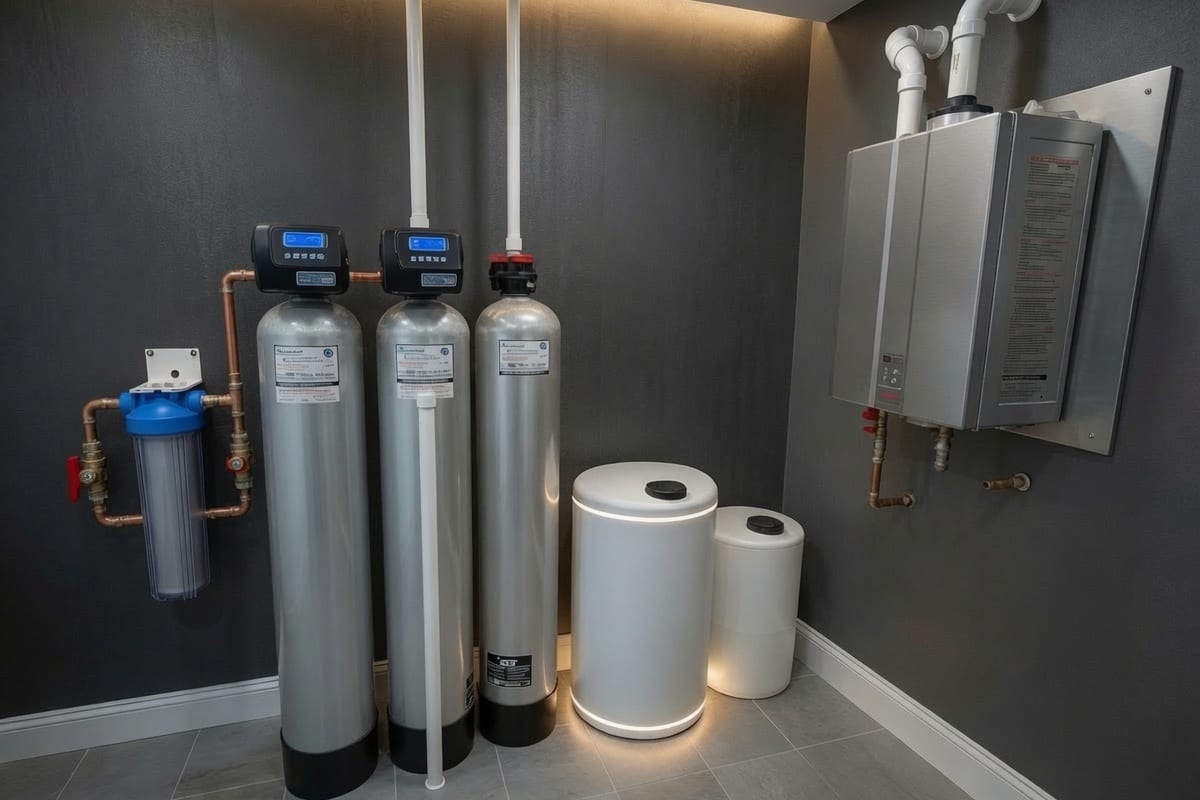
Maybe it is the chlorine smell in your shower, the crusty white scale on your faucets, or the headlines about PFAS and GenX in North Carolina water. Whatever pushed you here, you have probably already discovered that whole house filtration prices online run from $400 DIY kits to $15,000 sales pitches, with no explanation of the gap. This guide breaks down what NC homeowners actually pay in 2026, system by system, so you can budget with real numbers and spot a bad quote from across the room.
Every figure here is a planning range for the Triangle market, not a binding quote. Your exact price depends on your water, your plumbing, and your home.
How Much Does a Whole House Water Filtration System Cost in NC?
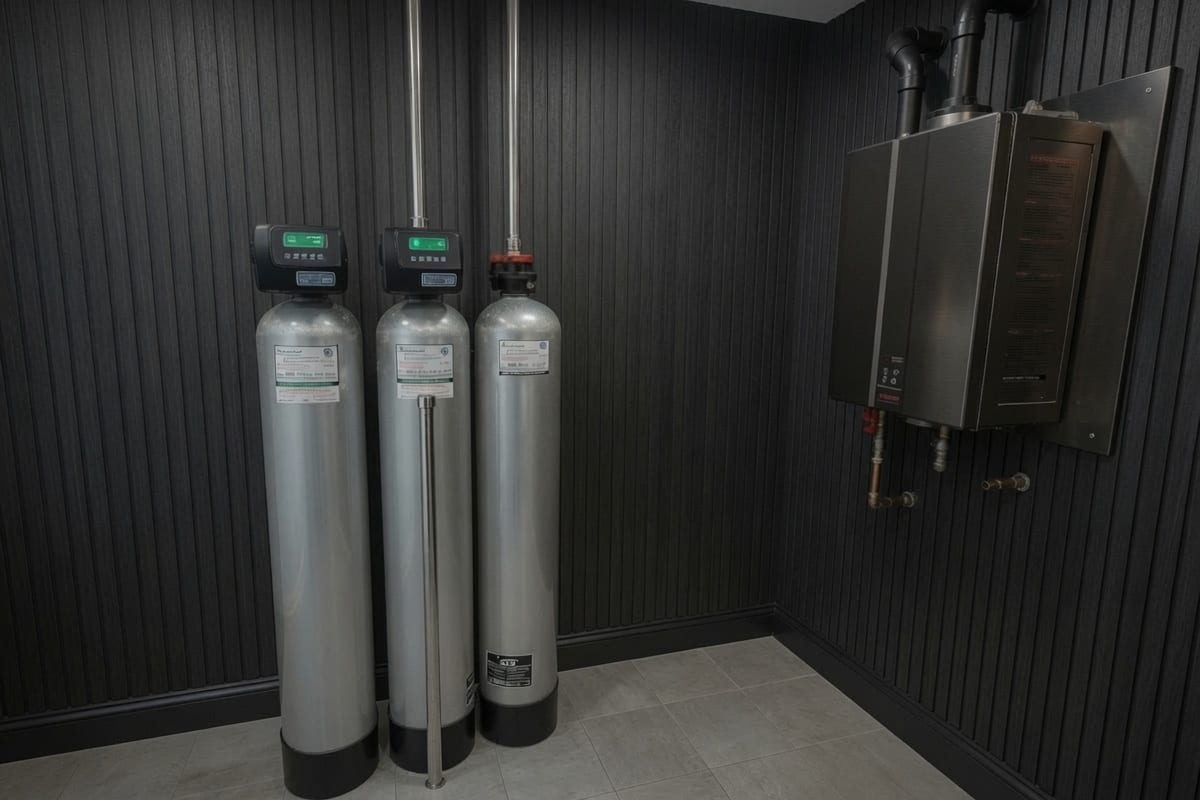
Most North Carolina homes pay roughly $1,500 to $3,500 installed for a whole house water filtration system in 2026. That range covers the most common setup: a whole-home carbon filtration system that removes chlorine, chloramine, taste, and odor from every tap. Simpler cartridge setups can come in under that, and large high-flow builds, complex well-water treatment stacks, or whole-house reverse osmosis can go well above it.
Here is how the main options price out across the Triangle:
| System type | Typical installed cost (2026) | Common fit |
|---|---|---|
| Whole-house cartridge filter | $600 to $1,500 | Sediment and basic taste, smaller homes in Garner and Knightdale |
| Whole-house carbon system | $1,500 to $3,500 | Chlorine, taste, and odor on city water in Raleigh, Cary, and Apex |
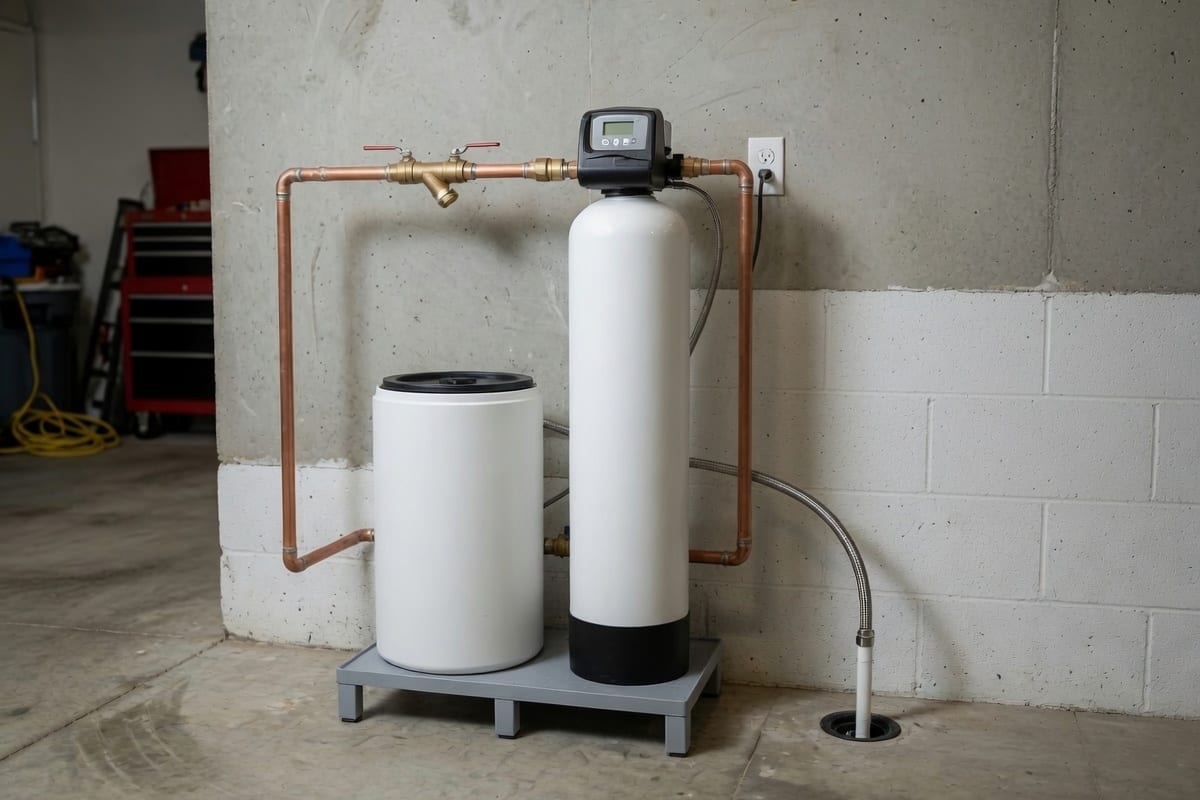
| Water softener | $1,500 to $3,500 | Hard water and scale, common in Wake Forest and well homes |
| Well treatment stack (iron, sulfur, softening) | $3,500 to $6,000+ | Private wells around Clayton, Johnston, and Chatham counties |
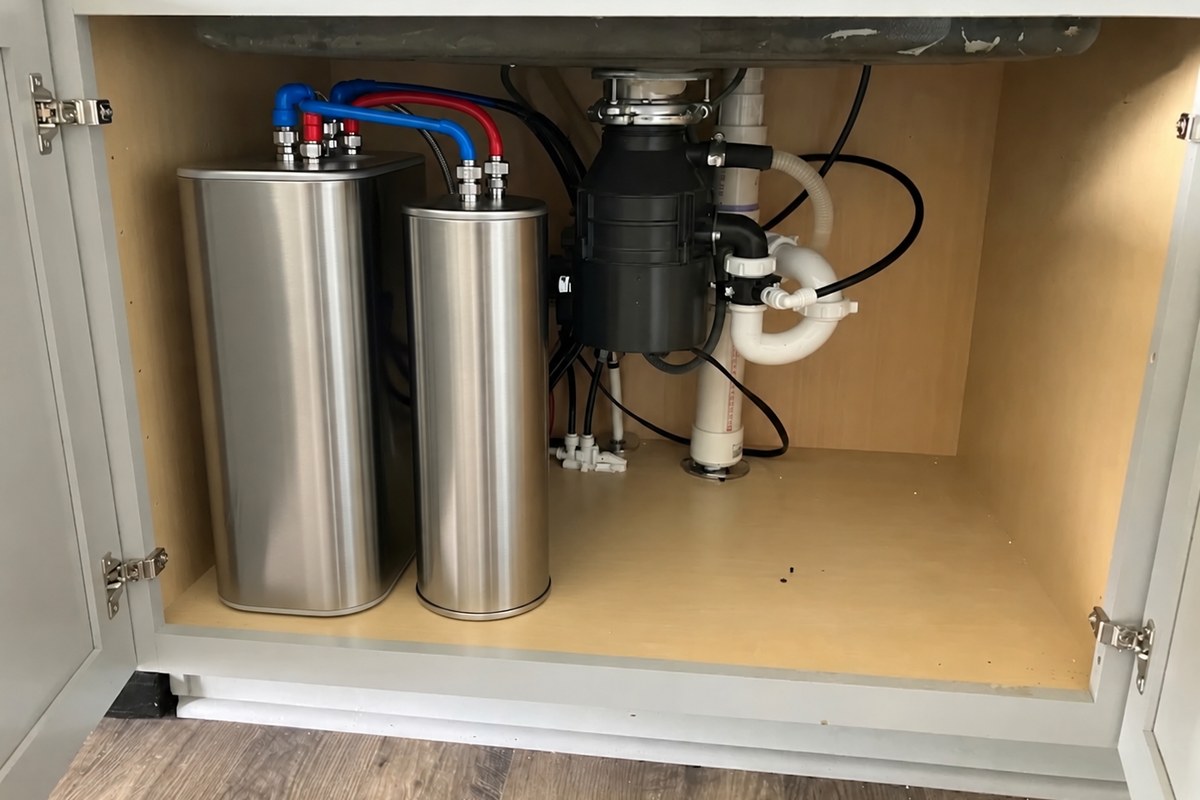
| Under-sink reverse osmosis | $400 to $1,200 | Drinking water polish for PFAS, lead, and taste |
| Whole-house reverse osmosis | $4,000 to $12,000 | Severe contamination, rarely needed in the Triangle |
Two takeaways from that table. First, most city-water homes in Durham, Raleigh, and Cary land in the carbon-system range, and many pair it with an under-sink RO for drinking water. Second, well homes should budget more, because they usually need multiple pieces of equipment working together. We cover those in depth in our well water treatment cost guide.
What Factors Affect Whole House Filtration Cost in NC?
Two neighbors can get quotes $2,000 apart for good reasons. These are the levers that move the number.
City water vs well water
This is the biggest fork in the road. City water in the Triangle comes from Falls Lake (Raleigh) and Jordan Lake (Cary and Apex), and it arrives already disinfected. Treatment is mostly about removing chlorine and improving taste, so a single carbon system usually does the job. Well water in Johnston County, Chatham County, and northern Wake arrives raw, often carrying iron, sulfur, hardness, and acidity all at once. Fixing several problems means several stages of equipment, and the price climbs with each stage.
Home size and flow rate
A filtration system has to keep up with your plumbing. A 1,500 square foot ranch with one bathroom needs less flow capacity than a 3,500 square foot new build in Apex or Holly Springs with three and a half baths. Bigger tanks and higher-flow valves cost more, typically adding $500 to $1,500 as you move up in size.
Water hardness in grains per gallon
Hardness decides whether a softener joins the project. Raleigh city water is soft to moderately soft, so many city homes skip softening entirely. Triangle well water commonly tests at 10 to 20+ grains per gallon, which is firmly hard, and at that level a softener is usually worth adding. Our water softener cost guide breaks down that piece of the budget.
Install complexity
An easy install is a visible main line in a garage with a drain nearby. A hard install involves rerouting pipe, adding a drain line, or upgrading old plumbing to accept the tie-in. Labor differences alone can swing a quote by $300 to $1,000.
Crawlspace vs slab
Much of the Triangle’s older housing sits on crawlspaces, and a tight, damp crawlspace makes every step slower. Slab homes route plumbing differently and sometimes force the system into a garage corner or an exterior enclosure. Neither is a dealbreaker, but access affects labor time and therefore price.
Sediment and red clay
Our region’s red clay geology sends fine grit through many wells and even some municipal lines after main breaks. If your water carries visible sediment, plan on a spin-down or cartridge prefilter ahead of the main system, usually $200 to $500 added to the project. It is cheap insurance that keeps grit from wearing out the expensive equipment behind it.
Here is how those factors tend to stack up in practice:
| Scenario | Typical installed cost (2026) |
|---|---|
| Small city-water home, easy garage install | $1,500 to $2,500 |
| Mid-size city-water home, carbon plus under-sink RO | $2,000 to $4,000 |
| Large new build, high-flow carbon system | $2,500 to $4,500 |
| Well home, iron filter plus softener | $3,500 to $6,000+ |
| Well home, full stack with UV disinfection | $4,500 to $7,500 |
Ongoing Cost of Ownership
The install price is only part of the number, and it is the part most quotes lead with. Budget for the running costs too.
| Ongoing item | Typical annual cost |
|---|---|
| Sediment and carbon cartridge changes | $80 to $250 |
| Media replacement (tank systems) | $300 to $900, every 5 to 10 years |
| Annual service and water check | $100 to $250 |
| Salt, if a softener is part of the system | $60 to $180 |
| UV lamp replacement, where fitted | $80 to $180 per year |
For a typical NC whole-house setup, plan on $150 to $400 a year in running costs. Cartridge-based systems are cheaper to buy and more expensive to maintain; backwashing tank systems are the reverse.
How Can You Save Money on a Whole House System?
You do not have to overpay to get good water. A few honest ways to keep the number down:
- Test first, buy second. A proper water test tells you what you actually need. Plenty of Raleigh city-water homes are sold softeners they do not need. Start with our water testing cost guide to see what testing runs.
- Match the system to the problem. If your only complaint is drinking-water taste, a $400 to $1,200 under-sink RO beats a $4,000 whole-house project. Our reverse osmosis cost guide covers that route.
- Get two or three quotes. The Triangle has a wide spread between fair local pricing and national-brand sales pricing for near-identical equipment.
- Skip the proprietary lock-in. Systems with standard tanks, valves, and cartridges cost less to maintain for decades. Proprietary cartridges can double your ongoing costs.
- Bundle if you are on a well. Installing an iron filter, softener, and UV in one visit is cheaper than three separate projects.
What’s Included in a Whole House Filtration Quote?
A complete quote should itemize the equipment (tank, media, valve), installation labor, plumbing materials, a bypass valve, startup and testing, and the warranty terms on both equipment and labor. If any of those are vague, ask.
Watch for these red flags, because the water treatment industry has a well-earned reputation for high-pressure tactics:
- The three-hour in-home presentation. Legitimate sizing takes a water test and a look at your plumbing, not a scripted evening pitch.
- “Free water tests” that are sales demos. The precipitation trick that turns your water cloudy looks alarming and proves almost nothing. Real testing reports numbers, like hardness in gpg and iron in mg/L.
- Tonight-only pricing. A price that expires when the rep leaves is a pressure tactic, not a deal.
- One system for every home. If the quote came before anyone measured your water, it is a guess.
- Five-figure quotes for city water. Raleigh and Cary water rarely needs more than carbon filtration plus optional RO. A $10,000 quote on city water deserves a second opinion.
Frequently Asked Questions
How much does a whole house water filter cost installed in NC?
Most NC homes pay $1,500 to $3,500 installed for a whole-house carbon filtration system in 2026. Basic cartridge setups run $600 to $1,500, and well-water treatment stacks run $3,500 to $6,000 or more.
Does a whole house filter remove PFAS and GenX?
Partially. Quality carbon systems reduce many PFAS compounds, but for drinking water most Triangle homes add an under-sink reverse osmosis system at $400 to $1,200 installed, since RO is one of the most effective residential PFAS treatments. This matters most in the Cape Fear basin, where GenX contamination made national news. Our PFAS and GenX guide for Triangle water covers which local supplies are affected.
Do I need a softener with my filtration system?
Only if your water is hard. Raleigh city water is soft enough that many homes skip it, while Triangle wells often test 10 to 20+ gpg and benefit from a softener at $1,500 to $3,500 installed. Test first, then decide.
How much does well water treatment cost compared to city water?
More, usually. City-water filtration typically lands between $1,500 and $3,500, while well setups run $3,500 to $6,000+ because iron, sulfur, hardness, and pH problems each need their own stage. See our well water treatment services page for how those stacks are built.
How long does a whole house system last?
Quality carbon media lasts about 5 to 10 years before a rebed, which typically costs $300 to $600. Tanks and valves commonly run 10 to 20 years. Cartridge systems need filter changes every 6 to 12 months at $50 to $150 per year.
Is a whole house reverse osmosis system worth it?
Rarely in the Triangle. Whole-house RO costs $4,000 to $12,000 and is designed for severe contamination cases. Most homes here get better value from whole-house carbon plus a point-of-use RO at the kitchen sink.
Related Cost Guides
- Water softener installation cost in NC, if hardness is your main issue rather than filtration
- Iron filter cost for well water, the most common well water add-on in the Triangle
- Water softener repair cost, if you already have a system that has stopped working
- Reverse osmosis system cost, a far cheaper option if you only care about drinking water
Get an Honest Whole House Filtration Quote
The right system starts with knowing what is in your water, not with a sales script. Raleigh Water Pros offers free consultations and up-front pricing on whole house water filtration across Raleigh, Cary, Apex, Wake Forest, Holly Springs, Clayton, Durham, and the rest of the Triangle. We will measure your water, recommend only what the numbers support, and give you a clear installed price. Call (984) 384-6991 or request your free quote online today.