Reverse Osmosis System Cost Installed in NC (2026)
Raleigh Water Pros • August 16, 2026 • 8 min read
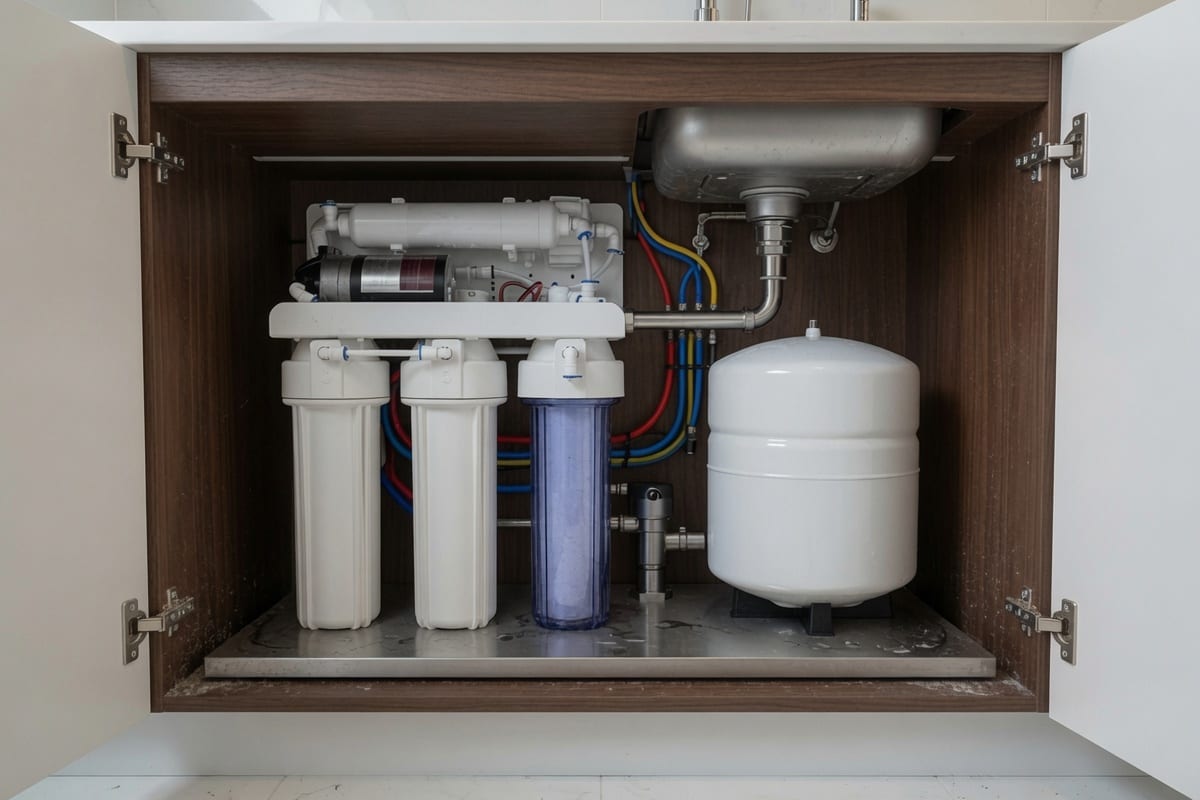
You have read about PFAS and GenX in North Carolina water, or maybe your tap water just tastes like a swimming pool and you are done buying bottled water by the case. Reverse osmosis is the fix most people land on, and then the price confusion starts: Amazon lists RO systems for $200 while a salesman quoted your neighbor $8,000. Both are real numbers for very different things. This guide sorts out what RO actually costs installed in NC in 2026, and which version you actually need.
These are typical Triangle-market planning ranges, not quotes. Your price depends on your sink, your plumbing, and your water.
How Much Does a Reverse Osmosis System Cost Installed in NC?
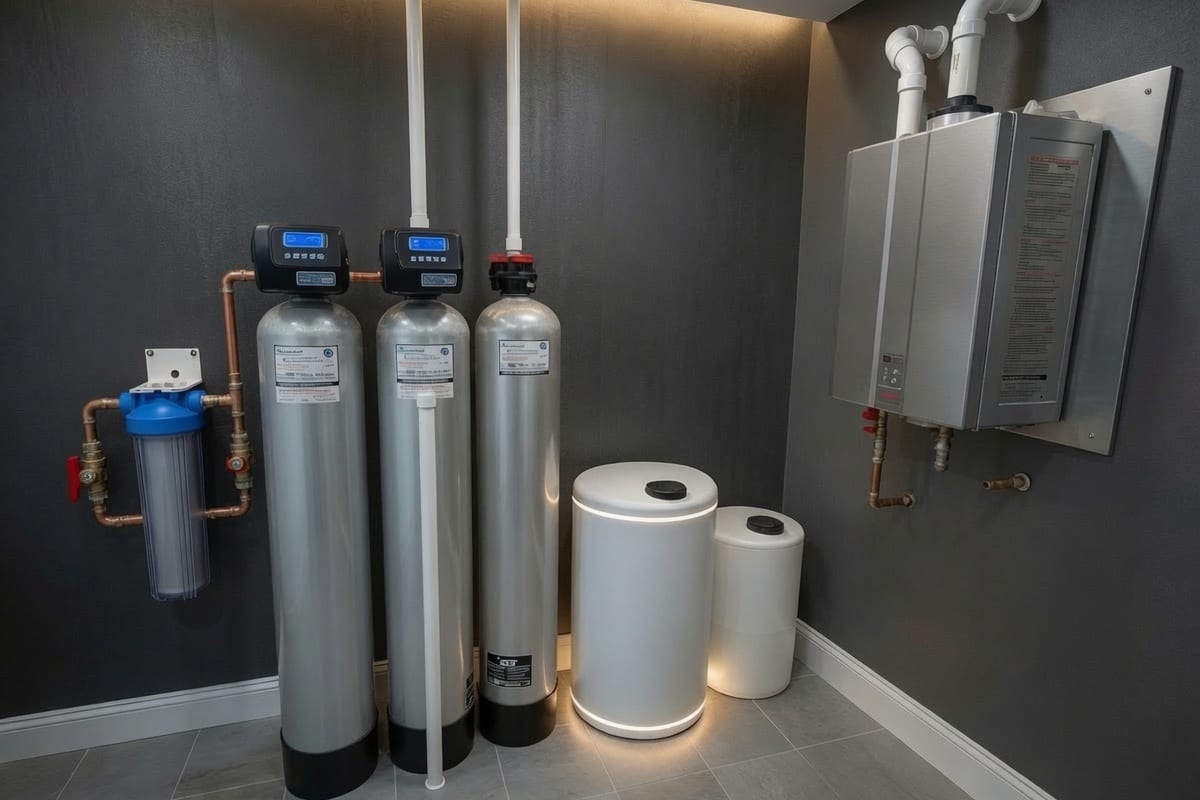
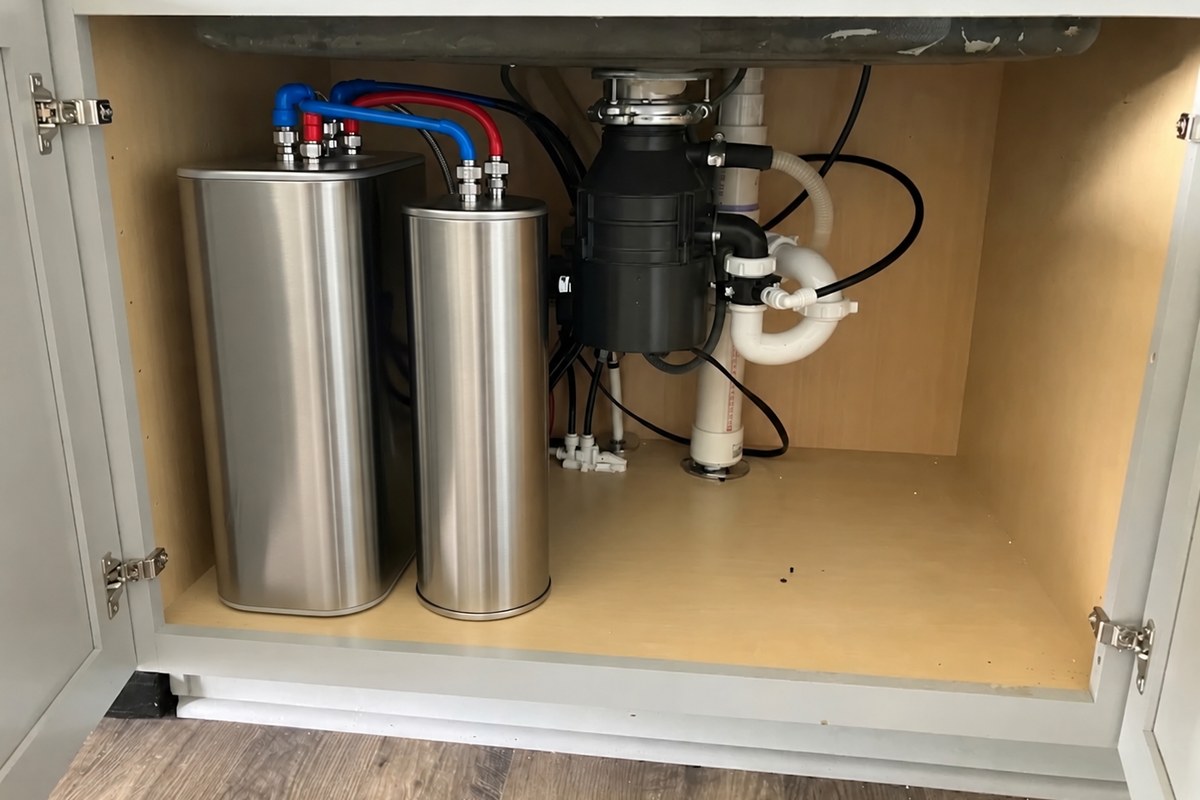
A quality under-sink reverse osmosis system typically costs $400 to $1,200 installed in North Carolina in 2026. That covers the RO unit, a dedicated drinking-water faucet, the drain and supply connections, and professional installation. Whole-house RO is a different animal entirely, running $4,000 to $12,000, and very few Triangle homes need it.
Here is the full pricing picture:
| RO setup | Typical installed cost (2026) | Best for |
|---|---|---|
| Basic 3 to 4 stage under-sink RO | $400 to $700 | Taste and odor on city water in Raleigh and Garner |
| 5 to 6 stage under-sink RO with remineralization | $600 to $1,000 | PFAS-focused households in Cary and Apex |
| Tankless / high-output under-sink RO | $800 to $1,200 | Big cooking households, new construction in Holly Springs |
| RO plus fridge/ice maker line | Add $100 to $250 | Filtered water and ice from the fridge |
| Whole-house RO | $4,000 to $12,000 | Severe contamination on wells, rare in the Triangle |
The pattern for most homes in Durham, Raleigh, and Cary: an under-sink system at the kitchen sink handles the water you drink and cook with, and if the rest of the house needs help, a whole-house carbon system covers showers and laundry. We compare those two budgets in our whole house water filtration cost guide.
What Factors Affect Reverse Osmosis Cost in NC?
RO quotes move around less than whole-house quotes, but these factors still decide where you land in the range.
City water vs well water
Raleigh’s Falls Lake water and the Jordan Lake supply feeding Cary and Apex are already treated, so an RO unit only has to polish it. Well water is tougher on RO membranes. Iron, sediment, and hardness will clog and destroy a membrane early, so well homes usually need pretreatment (a sediment filter, iron filter, or softener) before RO makes sense. That is a big reason well setups cost more overall, covered in our well water treatment cost guide.
Number of stages and features
A basic 3-stage unit filters sediment, carbon, and membrane. Add stages for extra carbon polishing, remineralization (which restores a crisp taste RO can strip out), or UV, and the price steps up roughly $100 to $200 per stage. Tankless models with electric pumps cost more up front but deliver faster flow and fit tighter cabinets.
Under-sink space and plumbing
Most installs are straightforward: mount the unit, tee off the cold line, drill the faucet hole, connect the drain. Granite and quartz countertops need a careful faucet drill. Homes on slabs with tight island sinks, or older plumbing without a usable shutoff, add labor. Expect $150 to $350 of a typical quote to be installation labor.
Home layout: fridge lines and crawlspaces
Running a line from the RO to a refrigerator across the kitchen is easy in a crawlspace home, where the tubing can route below the floor, and harder on a slab, where it may have to snake through cabinets. That single choice often decides whether the fridge line adds $100 or $250.
Water hardness
Hard water scales up RO membranes and shortens their life. On Triangle wells running 10 to 20+ grains per gallon, a softener ahead of the RO protects the investment. City water in Raleigh is soft enough that this usually is not a factor.
Ongoing costs matter as much as the install price, so compare those too:
| Cost item | Under-sink RO | Whole-house RO |
|---|---|---|
| Installed price | $400 to $1,200 | $4,000 to $12,000 |
| Annual filter changes | $60 to $150 | $300 to $800 |
| Membrane replacement | $50 to $150 every 2 to 5 years | $300 to $900 every 2 to 5 years |
| Water usage | Modest drain water at one tap | Significant reject water, may need a storage tank and pump |
It is also worth running the bottled-water math before deciding RO is expensive. A household drinking two cases of bottled water a week spends $400 to $600 per year, every year. An under-sink RO costs about that once, then $60 to $150 per year to maintain, and the water quality is comparable or better. Most Triangle families who make the switch find the system pays for itself inside the first two years, with no plastic hauled to the curb.
How Can You Save Money on a Reverse Osmosis System?
- Buy point-of-use, not whole-house, unless testing proves otherwise. Drinking and cooking water is about one percent of home water use. Treating 100 percent of your water with RO to fix a drinking-water problem is paying for 99 percent you shower with.
- Test before you buy. A real water test shows whether you need RO at all, or whether a simpler carbon filter fixes your complaint. See our water testing cost guide for what that costs.
- Choose standard-size filters. Systems that take industry-standard cartridges cost far less to maintain than proprietary-cartridge systems, which can run double per year.
- Do annual filter changes on schedule. A neglected prefilter kills the expensive membrane early. A $60 habit protects a $150 part.
- Bundle installs. If you are already having a whole house filtration system installed, adding RO in the same visit trims labor cost.
What’s Included in a Reverse Osmosis Quote?
A proper RO quote itemizes the system (with the stage count and brand named), the dedicated faucet, installation labor, drain and supply fittings, the first set of filters, and warranty terms. If the quote is one number with no detail, ask for the breakdown.
Red flags to watch for, because RO gets sold with the same pressure tactics as every other water product:
- “Free water tests” that are really sales demos. The cloudy-water precipitation show is theater. Real results come with numbers.
- Whole-house RO pitched to city-water homes. Raleigh and Cary water does not need a $10,000 whole-house RO. That pitch is about commission, not chemistry.
- Scare framing around PFAS. PFAS is a legitimate concern worth addressing, and an under-sink RO addresses it for hundreds of dollars, not thousands. Read our PFAS and GenX Triangle water guide for the facts without the fear.
- Tonight-only discounts and pricing that requires both spouses present. Those are pressure-sales scripts.
- No mention of maintenance costs. An honest installer tells you what filters cost per year before you sign.
Frequently Asked Questions
How much does an under-sink reverse osmosis system cost installed?
$400 to $1,200 installed is the typical 2026 range in NC. Basic 3 to 4 stage systems land at the low end, and tankless or remineralizing systems at the high end.
How much does a whole-house reverse osmosis system cost?
$4,000 to $12,000 installed, and most Triangle homes should not buy one. Whole-house RO is for severe contamination cases, usually on wells with documented problems. For everyone else, whole-house carbon plus under-sink RO delivers better value. Our guide on reverse osmosis vs whole house filtration walks through that decision.
Does reverse osmosis remove PFAS and GenX?
Yes, RO is one of the most effective residential treatments for PFAS, which is why it is the standard recommendation in the Cape Fear basin and a smart add in the Triangle. A $400 to $1,200 under-sink system covers the water you actually drink.
What do RO filter changes cost per year?
Plan on $60 to $150 per year for prefilters and postfilters, plus a membrane at $50 to $150 every 2 to 5 years. Standard-cartridge systems sit at the low end of that range. If an existing system has slowed down or started tasting off, our guide to reverse osmosis not working covers the usual causes before you spend anything.
Can I install a reverse osmosis system myself?
Handy homeowners can install a basic unit, and the labor savings are real, roughly $150 to $350. The common DIY failures are leaks at the drain saddle, a bad faucet drill through stone countertops, and skipping pretreatment on well water. Professional reverse osmosis installation includes the faucet drill, leak check, and startup flush.
Do I need RO if I have a whole-house filter?
Often yes, if PFAS, lead, or dissolved solids are your concern. Carbon systems handle chlorine, taste, and odor for the whole house, while RO polishes drinking water to a higher standard. The two together typically total $2,000 to $5,500 installed and cover almost any Triangle city-water situation.
Get a Straight Answer on RO Pricing
If you want to know what reverse osmosis would cost in your kitchen, the answer takes one visit, not a three-hour pitch. Raleigh Water Pros installs reverse osmosis drinking water systems across Raleigh, Cary, Apex, Wake Forest, Holly Springs, Durham, Clayton, and the surrounding Triangle, with free consultations and up-front pricing. Call (984) 384-6991 or request a free quote and we will tell you exactly what your water needs, and what it does not.