Water Treatment Cost in Durham, NC (2026)
Raleigh Water Pros • September 26, 2026 • 9 min read
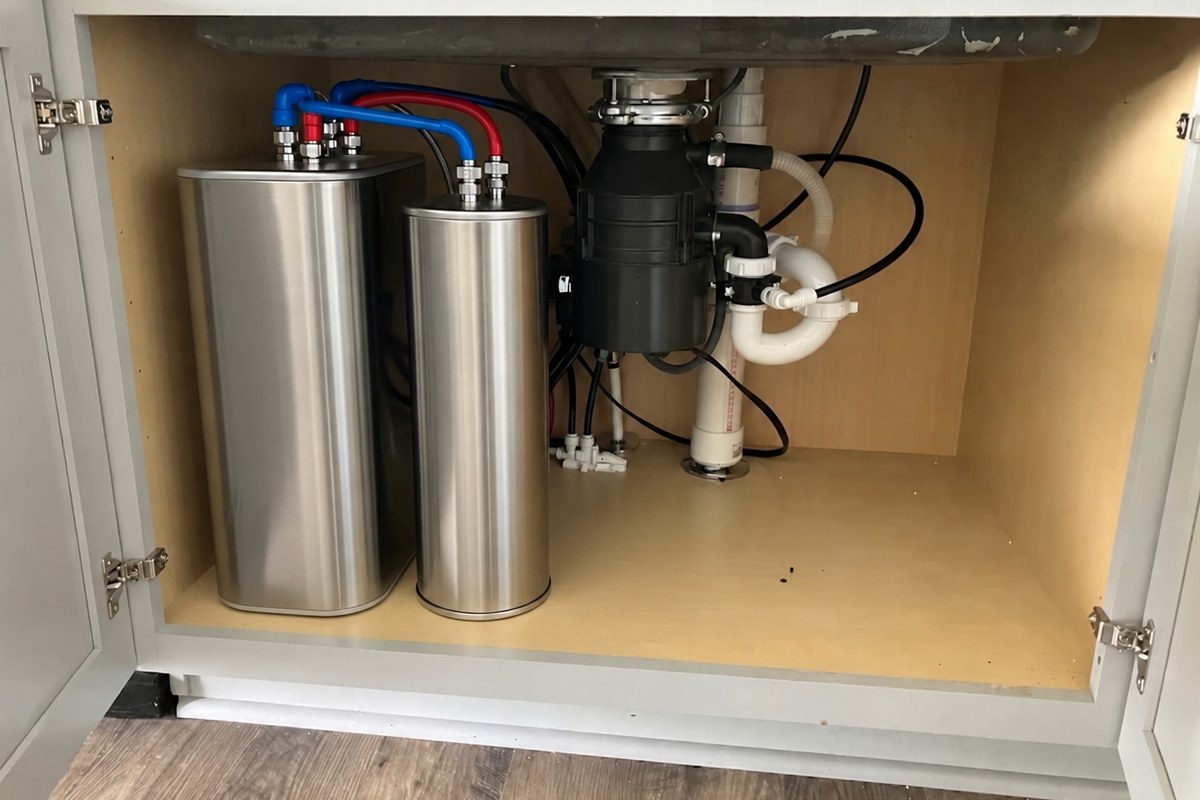
Most people pricing water treatment in Durham start by asking about a water softener. The City of Durham’s own reports answer that before we can: the last hardness figure the city published was about 25 milligrams per litre, roughly 1.5 grains per gallon, which is soft water by any common scale.
So this is a water treatment cost guide for Durham rather than a softener price list. On a city meter the water calls for different equipment: catalytic carbon for the chloramine, and possibly reverse osmosis at the kitchen tap while PFAS sits close to the new federal limits. On a private well in rural Durham County it is a different job again, and a softener may or may not be part of it.
Below: what each system costs installed, what city water and well water each call for, what moves the price, and what a written quote should show.
How much does water treatment cost in Durham, NC?
A whole house catalytic carbon filter runs $1,500 to $3,500 installed in Durham, and an under-sink reverse osmosis unit runs $350 to $900.
On a private well, single-stage equipment runs $700 to $3,500 depending on the problem, and a full well water system covering several problems runs $4,000 to $8,000+.
| System | Where it fits in Durham | Installed, typical |
|---|---|---|
| Whole house catalytic carbon filter | City water: chloramine taste and odour at every tap | $1,500 to $3,500 |
| Under-sink reverse osmosis | City or well: drinking and cooking water | $350 to $900 |
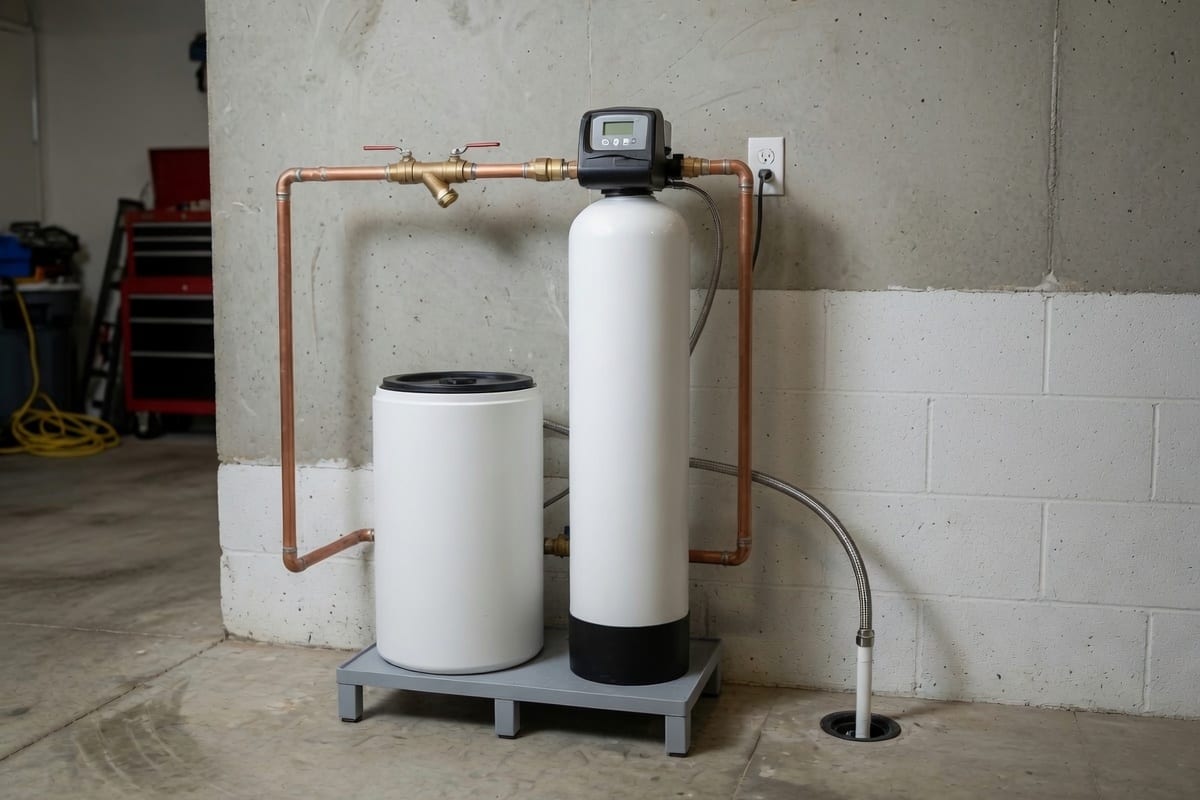
| Water softener | A well with measured hardness; rarely city water | $1,500 to $3,500 |
| Salt-free conditioner | Little to do at 1.5 grains on city water | $1,200 to $2,500 |
| Iron and sulfur filter | Well: orange or black staining, rotten-egg smell | $1,800 to $3,500 |
| Acid neutralizer | Well: low pH, blue-green stains | $1,200 to $2,200 |
| UV disinfection | Well: after a positive bacteria test | $700 to $1,500 |
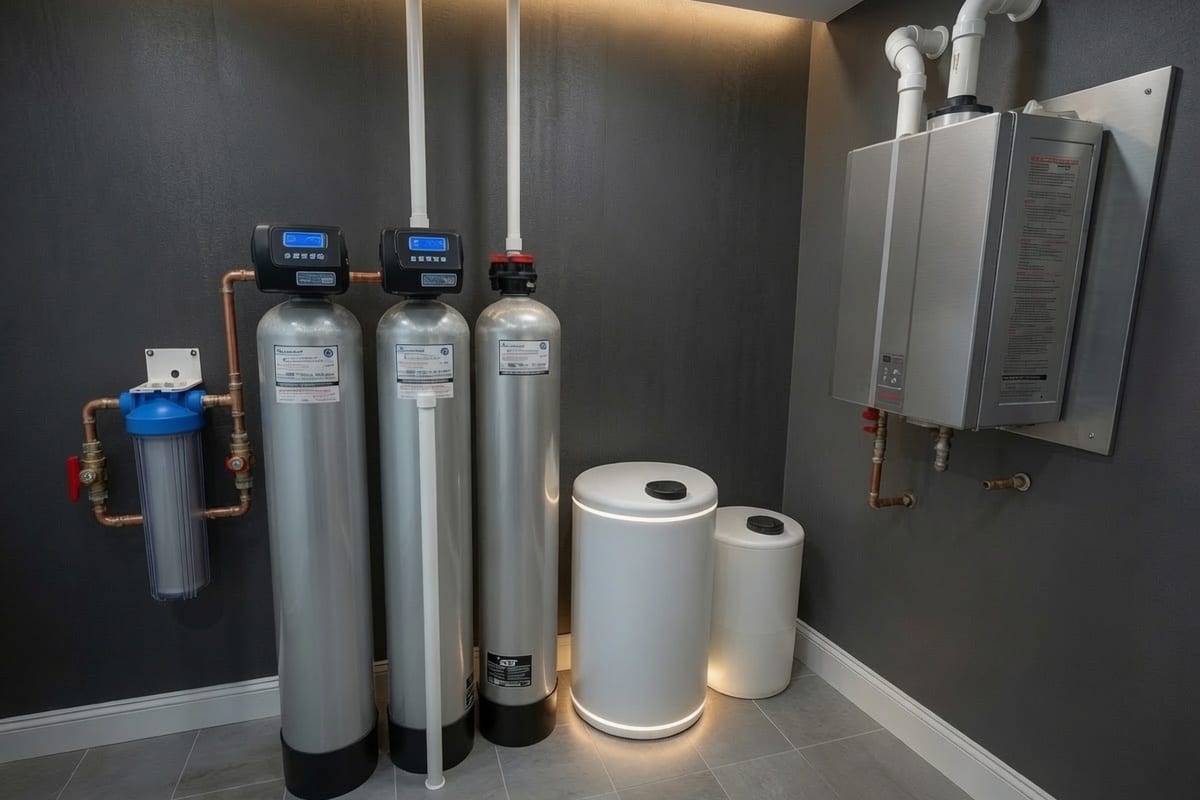
| Full well water system | Well with several problems at once | $4,000 to $8,000+ |
Every figure is a planning range from our water filtration cost page, never a quote. The quote comes after a reading at your own tap.
Want the number for your own address? Request a free consultation and we measure your water first, then price it in writing.
Do you need a water softener in Durham?
Not on city water, on the published evidence. Durham’s 2023 report gave hardness as 25 milligrams per litre calculated and 26 by titration, about 1.5 grains per gallon. The 2024 and 2025 reports print no hardness figure, so the 2023 number is the newest one available.
The US Geological Survey classes anything under 60 milligrams per litre as soft. At 1.5 grains there is very little calcium and magnesium for ion exchange to remove, so a softener on a Durham city meter mostly adds salt, a drain line and a maintenance schedule. If someone quotes one on hardness grounds, ask to see the reading it rests on.
A well is the exception. Hardness on a private well is not known until somebody measures it, and North Carolina’s required new-well test list does not include it. If a measured reading supports it, water softener installation is straightforward and we size it off the number, not off the house.
What does Durham city water need treating for?
Chloramine, for about ten and a half months of the year. Durham has disinfected with chloramine since 2002 and stops adding ammonia each spring; in 2026 that ran from 27 February to 13 April. The rest of the year the residual is chloramine, which standard carbon removes poorly at household contact times.
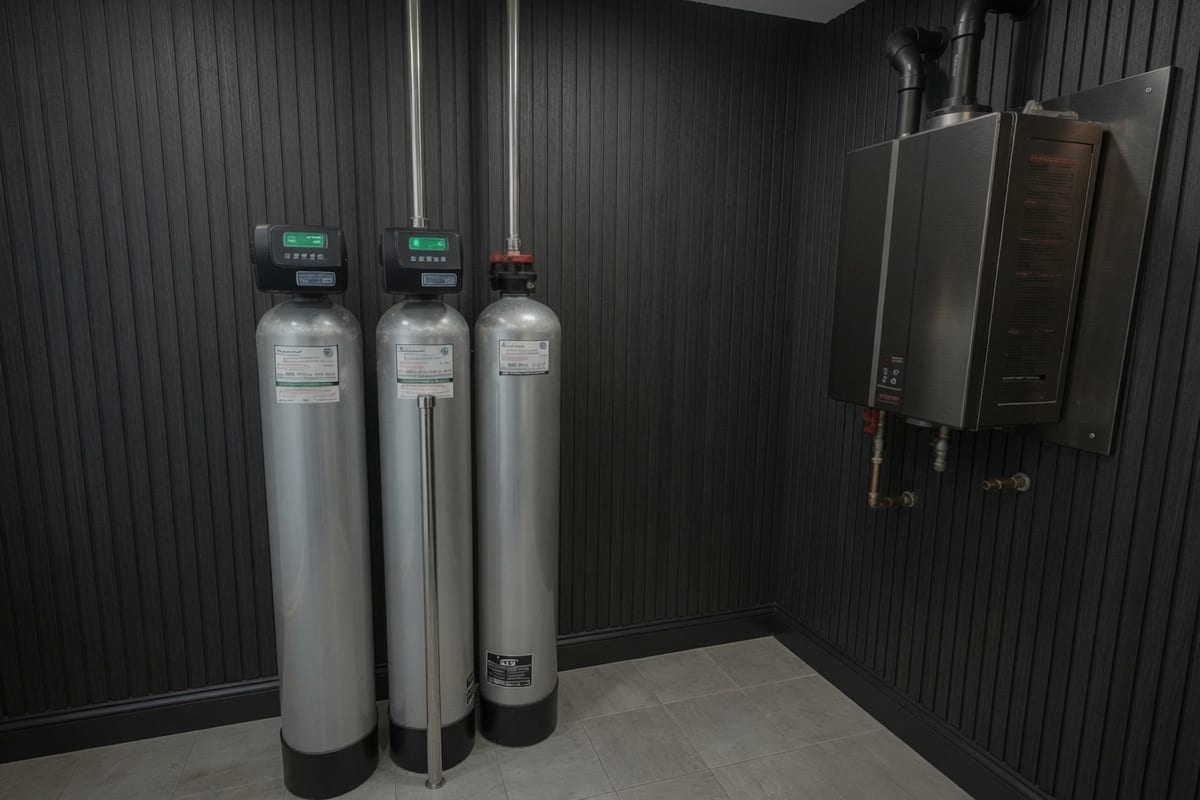
That sets the specification. A whole house water filtration system for Durham needs catalytic carbon, sized on flow so the water spends long enough in the media. The media grade matters more than the badge on the tank. Our whole house water filtration cost guide breaks down what drives that price across the Triangle.
The second item is PFAS. Durham’s 2025 averages were PFOA 3.8 and PFOS 5.6 parts per trillion; EPA set 4 for each in 2024, compliance is not due until 2029, EPA has proposed allowing extensions to 2031, and the city reports no violation. Durham describes its own position as “right at the proposed EPA limits” and plans powdered activated carbon treatment by 2029. Until then, an under-sink RO unit is the household step for drinking water. The full report read is in our Durham tap water guide.
Pro tip: read the media line on any Durham quote. “Carbon filter” with no grade is written for chlorine, which Durham uses for about six weeks a year. For the other ten and a half months you want the word catalytic, and the media volume in cubic feet, in writing.
What does a Durham County well need?
Most often something for manganese or iron, sometimes pH correction, and a softener only if hardness is measured. Durham is mostly a city-water county: USGS 2015 figures put about 8.5 percent of residents on self-supplied water.
State lab samples from Durham County wells between 1998 and 2010 show what turns up:
| State lab result, Durham County wells, 1998 to 2010 | Share of samples | Typical treatment |
|---|---|---|
| Manganese above 0.05 mg/L | 34.68% of 470 | Oxidising filter, iron and sulfur band |
| Iron above 0.3 mg/L | 22.44% of 468 | Iron and sulfur filter, $1,800 to $3,500 |
| pH below 6.5 | 5.64% | Acid neutralizer, $1,200 to $2,200 |
| Arsenic above 10 ug/L | 0.63% of 473 | Under-sink RO at the drinking tap |
| Lead above 15 ug/L | 6.87% of 1,107 | Find the plumbing source first |
These are samples homeowners chose to send to the state lab, not a random survey. Manganese is the headline: of Durham, Orange and Chatham counties, Durham had the highest rate above the 0.05 mg/L level, and it needs higher pH than iron to remove. Our guide to manganese and black slime explains why an iron filter alone can miss it. The lead figure likely reflects household plumbing as much as groundwater (our inference, not the state’s), which is why a lead result needs a second look before anyone sells equipment.
Parts of Durham County sit in the Deep River Triassic basin, where NC DEQ warns that “Water well yields are typically very low, and many dry holes have been drilled.” Yield and pressure are a well contractor’s department, not ours, but they matter to sizing: a low-yield well can struggle to backwash a large filter, so the flow rate belongs on the quote.
Durham County Environmental Health tests existing wells at $135 per category, and its inorganic category includes metals, pH and water hardness. A new well permit is $425 on the county’s fee page (undated, read 26 September 2026). Planning ranges for complete well systems are in our well water treatment cost guide.
What moves the price in Durham?
House size and flow
Whole house carbon is sized on peak flow and bathroom count. A larger house in Hope Valley or Woodcroft needs more media than a two-bathroom bungalow in Trinity Park, and undersized carbon wears out early and costs pressure.
Media grade
Catalytic carbon costs more per cubic foot than standard carbon. On Durham city water it is the grade that does the work for ten and a half months, so a cheaper standard-carbon quote is not a like-for-like saving.
How many well problems at once
A single iron filter sits in the $1,800 to $3,500 band. Low pH plus manganese plus bacteria is three stages, which is how a well job reaches the full-system range.
Where the equipment goes
A garage wall with a drain and an outlet is the cheapest install. A crawlspace, or an island sink for an RO unit, adds labour.
What a written quote should show
- The reading the recommendation rests on, in the unit it was measured in
- Model and media volume, not “whole house system” as a single line
- Whether fittings, bypass valve and removal of old equipment are included
- The service interval and what the media costs to change later
Frequently Asked Questions
How much does a water softener cost in Durham?
$1,500 to $3,500 installed for a whole-home softener, plus $50 to $150 a year in salt. On Durham city water, at about 1.5 grains per gallon in the city’s 2023 report, it is rarely the right purchase. On a rural Durham County well it depends on a measured hardness reading.
Is Durham water hard?
No. The city’s 2023 report put hardness at 25 to 26 milligrams per litre, about 1.5 grains per gallon, and the 2024 and 2025 reports print no figure. Soft water is the norm across the local city systems; OWASA in Chapel Hill reports about the same.
What is the best water filter for Durham city water?
Catalytic carbon for the whole house, because Durham uses chloramine for all but about six weeks of the year. Add an under-sink reverse osmosis unit if you want PFAS lowered further at the drinking tap.
How much does reverse osmosis cost in Durham?
$350 to $900 installed for an under-sink unit. The spread comes mostly from the sink location, the faucet and whether a drain connection is ready.
How much does well water treatment cost in Durham County?
$700 to $3,500 for a single stage, and $4,000 to $8,000+ for a full system. Durham County’s inorganic well test, $135, includes metals, pH and hardness, which are the numbers that set the design.
Does the Durham drought change what I should buy?
No. Durham has been in a Stage 2 Water Shortage Response since 15 June 2026, in effect as of 26 September 2026, which bans spray irrigation. It is a supply measure, not a water quality notice. Ask about backwash and reject water volumes on any quote while it lasts.
Sources and reporting dates
- City of Durham 2025 Annual Drinking Water Quality Report and 2023 report (hardness), its PFAS Treatment Upgrade Project page, and its 2026 changeover and Stage 2 news releases.
- NCDHHS State Laboratory of Public Health Durham County well water summary, private well samples 1998 to 2010.
- Durham County Environmental Health fee schedule and water analysis application, read 26 September 2026.
- USGS 2015 county water use estimates, and the NC DEQ Geological Survey guide to the Triassic basins.
- EPA’s proposed PFOA and PFOS compliance extension, proposed 18 May 2026, not final. Prices are planning ranges as of 26 September 2026, never quotes.
Water treatment cost in Durham, the short version
On a Durham city meter the shortlist is short: catalytic carbon for the chloramine, an under-sink RO unit if you want the drinking tap taken further, and usually no softener, because the water is soft. On a Durham County well it starts with a test, and manganese is the number to watch.
Every visit starts with a free consultation in Durham, Chapel Hill, Pittsboro or Raleigh. We measure the water at your own tap, compare it with what the city publishes, and give an up-front written price for only what the readings support, including when that is nothing. Call (984) 384-6991 or book a free consultation.