Water Filtration System Cost in Clayton NC (2026)
Raleigh Water Pros • September 20, 2026 • 10 min read
Two houses four miles apart in Clayton can get completely different quotes for what sounds like the same job, and both can be right. One is on the town meter. The other is on a private well, out past where the county main stops.
Water filtration cost in Clayton splits on that single question and almost nothing else moves the number as much. Town water arrives already treated, disinfected and tested by somebody else, so the work left is taste, odour and drinking water. A private well arrives as the ground delivers it, and the work is whatever a test finds.
Below: what Clayton and Johnston County publish, what each system costs installed, and what a written quote has to contain.
How much does water filtration cost in Clayton, NC?
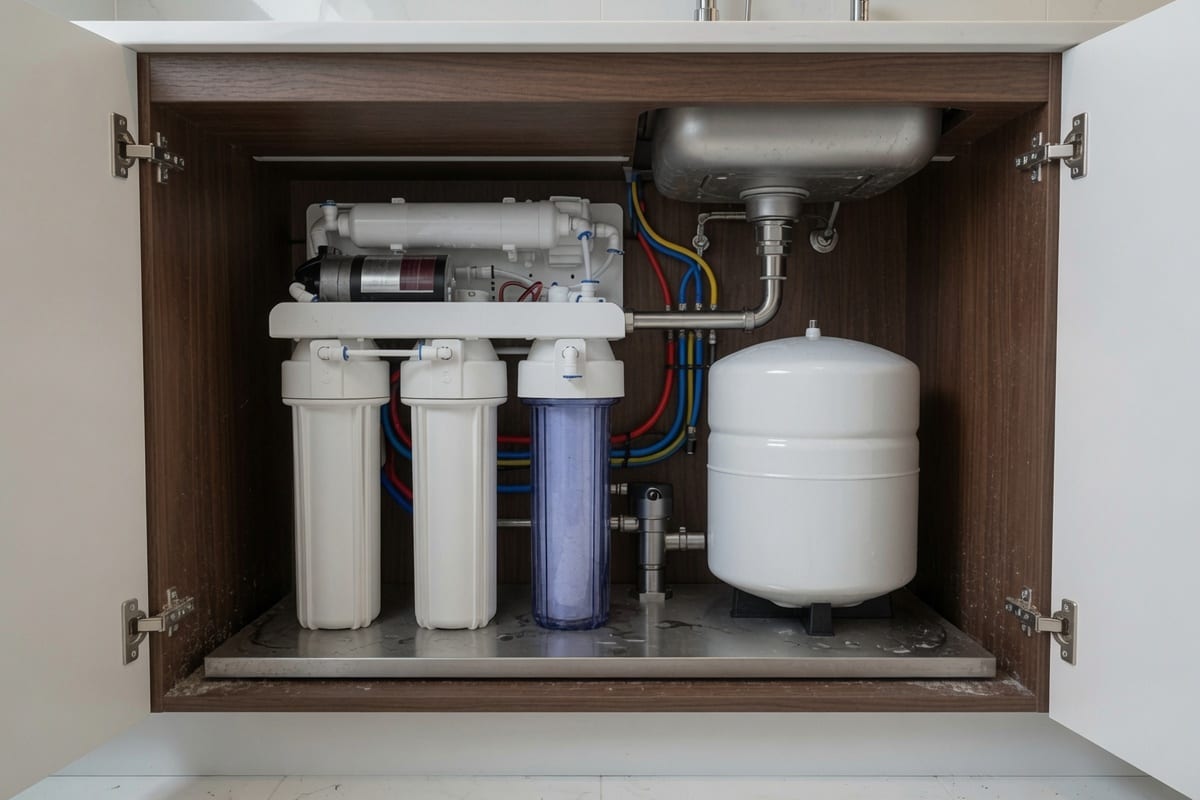
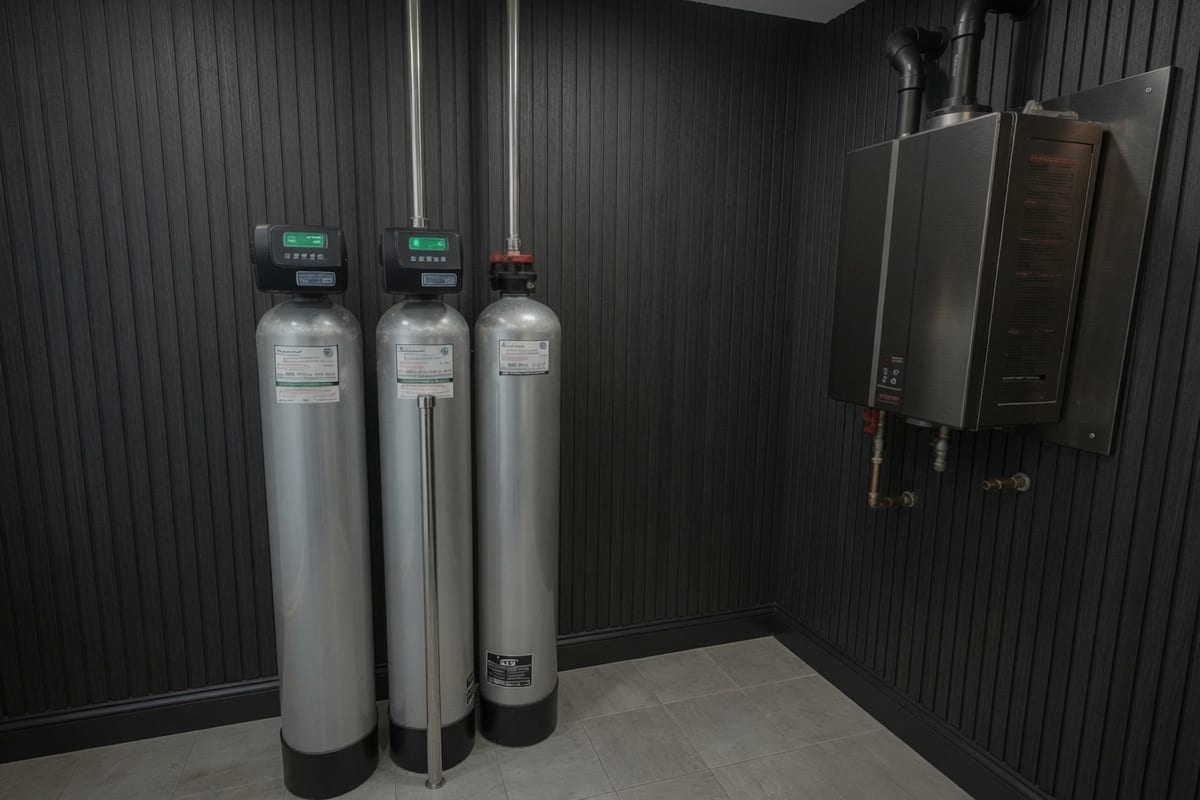
On Clayton town water, a whole house catalytic carbon filter runs $1,500 to $3,500 installed and an under-sink reverse osmosis unit runs $350 to $900. On a private well in the surrounding county, one system sized from a test runs $700 to $3,500 and a full well water system runs $4,000 to $8,000+.
Every figure here is a planning range from our Raleigh water filtration cost guide, not a quote. Which half of the table applies to you is decided by your supply.
| Situation in Clayton | Typical first system | Installed, typical |
|---|---|---|
| Town water, chloramine taste at every tap | whole house catalytic carbon | $1,500 to $3,500 |
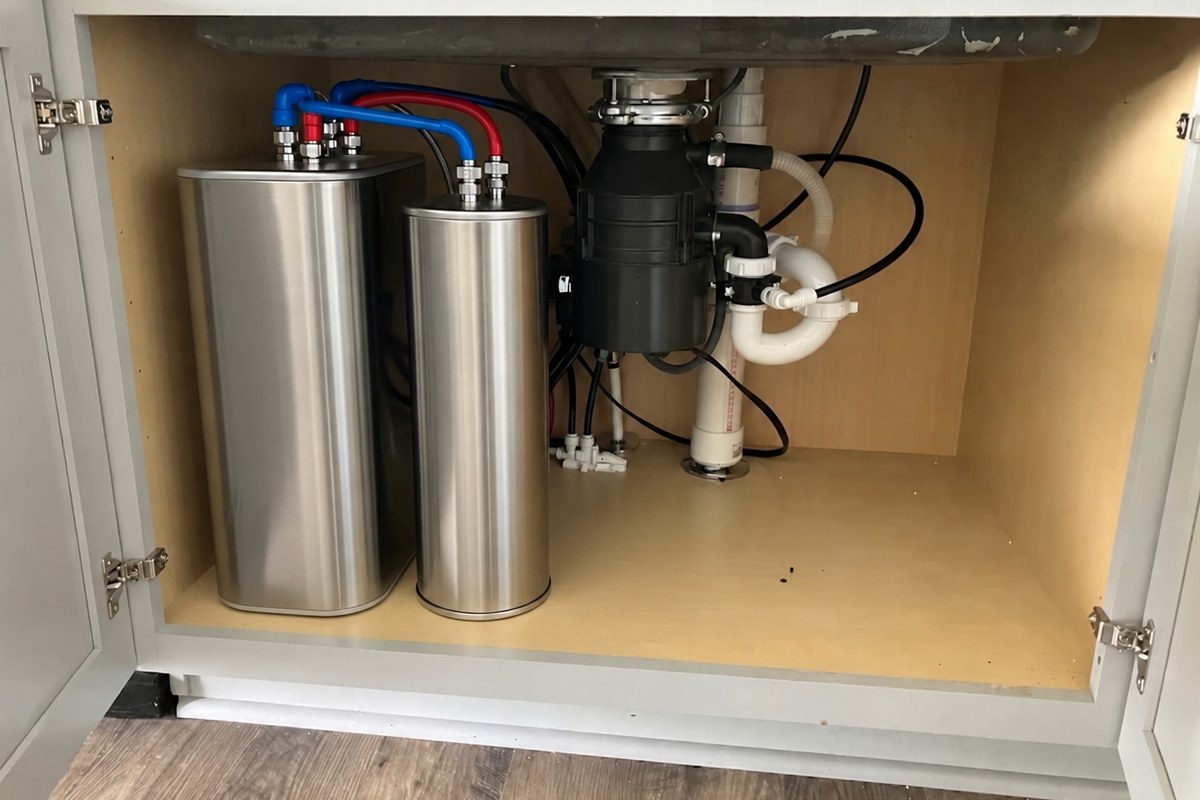
| Town water, drinking and cooking only | under-sink reverse osmosis | $350 to $900 |
| Private well, one clear problem | one filter, sized from the test result | $700 to $3,500 |
| Private well, several problems at once | full well water system | $4,000 to $8,000+ |
Want the number for your own address? Request a free consultation and we test your water first, then put a price in writing for what the readings support.
Where does Clayton’s water come from?
The Town of Clayton runs no treatment plant and buys 100 percent of its drinking water from Johnston County West.
Three separate records say the same thing. Clayton’s own 2025 water quality report states it plainly: “This system purchases water from Johnston County West: PWS# NC0351070.” EPA’s Safe Drinking Water Information System classifies Clayton as purchased surface water, and its facility register holds no intake and no treatment plant, only tanks, distribution and connections that buy from the county. NC DEQ’s Local Water Supply Plan lists one purchase line, 4.2127 million gallons a day against a 6.1 million gallon contract.
Johnston County draws from the Neuse River at an intake and treatment facility half a mile east of Wilson’s Mills, with two on-site reservoirs holding 35 million gallons each. Treatment is presedimentation, coagulation, clarification, filtration through multimedia high-rate filters, and disinfection. The county sells to a long list of systems beyond Clayton, Fuquay-Varina among them.
One caveat, and the county prints it itself: Johnston County also buys bulk water from Smithfield, Harnett County and the City of Raleigh to supplement Johnston County West, and “water purchased from bulk suppliers mixes with water produced by the County in the distribution system”. A Clayton tap is a blend, and its exact composition varies.
Past the town limits it changes completely. Much of the county’s rural edge, out toward Archer Lodge, Wilson’s Mills and Four Oaks, is on private wells with no utility behind them. Our Clayton water filtration page covers both, because they are not the same job or the same price.
What is in Clayton town water?
Chloramine at a running annual average of 1.95 parts per million, disinfection byproducts well inside their limits, and no published hardness figure at all. For the safety side of the same report, see our guide to whether Clayton tap water is safe to drink.
| Published for the 2025 reporting year | Town of Clayton | Clayton North |
|---|---|---|
| Chloramine, running annual average | 1.95 ppm (0.00 to 2.83) | 1.34 ppm (0.00 to 2.09) |
| Chlorine, running annual average | 0.57 ppm (0.00 to 3.48) | 0.35 ppm (0.05 to 3.02) |
| Total trihalomethanes, limit 80 ppb | 47 ppb (6.10 to 52.90) | 52 ppb (26.20 to 64.20) |
| Haloacetic acids, limit 60 ppb | 37 ppb (4.50 to 42.10) | 30.49 ppb (20.20 to 44.30) |
| Total hardness | not published | not published |
| E. coli positives | 0 of 360 samples | 0 of 60 samples |
The chloramine line is the one that decides equipment. Chloramine is chlorine combined with ammonia, and unlike free chlorine it does not off-gas from a jug on the counter, nor does standard activated carbon strip it at normal contact times. Catalytic carbon does, which is why the media grade matters more here than the badge on the tank. Our guide to catalytic versus standard carbon for chloramine works through the difference, and the carbon filtration page covers how a system gets sized.
Hardness is the interesting absence. Clayton publishes no hardness figure, and neither does Clayton North, Johnston County West or Johnston County East. Their miscellaneous characteristics tables carry pH and sodium and stop there. We will not estimate one and we will not borrow Raleigh’s, because Clayton’s water is Neuse water blended with purchased Smithfield, Raleigh and Harnett supply, and Harnett is a different river. If somebody quotes you a softener for Clayton town water, ask which grains-per-gallon reading it rests on.
Clayton publishes no PFAS results of its own, so the figures describing its supply are Johnston County West’s. Recent testing in the West service area found PFOS at 7.9 parts per trillion and PFOA at 4.0 parts per trillion. EPA set a maximum contaminant level of 4 parts per trillion for each in 2024, with a compliance deadline still in the future, and the system reports no violation. NC DEQ has funded a PFAS treatment study at Johnston County’s treatment facility.
One thing this side of the Triangle does not carry: 1,4-dioxane, the solvent that dominates the Cape Fear conversation, is effectively absent from the Neuse. NC DEQ’s basin monitoring returned a single detection in 383 results over four years.
Pro tip: Clayton’s annual report and Johnston County West’s are two separate documents and you want both. Clayton’s gives you the residual in your street; the county’s gives you what left the plant, including the PFAS numbers Clayton does not publish. Read both before anyone shows you a brochure.
What does well water treatment cost outside Clayton?
On a private well in Johnston County, a single system runs $700 to $3,500 installed and a full stack covering several problems at once runs $4,000 to $8,000+.
| System on a private well | What it treats | Installed, typical |
|---|---|---|
| Iron and sulfur filter | orange staining and rotten-egg smell | $1,800 to $3,500 |
| Acid neutralizer | low pH that corrodes copper pipe | $1,200 to $2,200 |
| UV disinfection | bacteria, after a positive result | $700 to $1,500 |
| Water softener | hardness, once it has been measured | $1,500 to $3,500 |
| Full well water system | several of the above on one line | $4,000 to $8,000+ |
Order matters more than the total. Iron and sediment foul softener resin if they reach it first, so the sequence is set by the test result rather than by price. Our well water treatment cost guide sets out that sequencing, and the well water treatment page covers what gets installed.
Hardness is the one line nobody can quote in advance. Private wells around the Triangle commonly run far harder than city water, though we have no representative dataset that would predict yours and yours could land anywhere. There is a structural reason no dataset exists: General Statute 87-97 lists what a new private well has to be tested for, and hardness is not on it. Your number exists only if somebody paid to measure it, which is why the softener row above is a band and not a recommendation.
Well owners around Clayton share a testing list with the well fringe of Garner and Knightdale: iron, hydrogen sulfide, pH, hardness and bacteria. What comes back differs well by well.
What moves the price in Clayton
How many problems the test finds
On town water it is usually one, chloramine, and one tank answers it. On a well it can be four, and each one adds a vessel, a connection and a service point.
House size and the flow rate it has to pass
A whole house filter has to carry peak flow without dropping pressure, so carbon volume scales with bathrooms and fixture count. An undersized tank is the most common reason a filter that looked right on the quote disappoints inside a year.
Media grade and where the equipment goes
Catalytic carbon costs more per cubic foot than standard carbon, and on a chloraminated supply like Clayton’s it is the grade that does the work, so it is the wrong line to trim. Placement matters too: a garage wall with a drain and a power point already there is cheap, a tight crawlspace is not. A water testing visit keeps both decisions honest.
What a written quote has to show
- The reading the recommendation rests on, in the unit it was measured in
- Model and media volume, not “whole house system” as a line item
- Whether fittings, bypass valve and removal of any old unit are included
- The service interval, and what the media costs to change later
Frequently Asked Questions
How much does whole house water filtration cost in Clayton, NC?
$1,500 to $3,500 installed for a whole house catalytic carbon filter on Clayton town water, which is the right specification because Clayton’s published residual is chloramine. If you only want the kitchen tap treated, an under-sink reverse osmosis drinking water system is $350 to $900. Both are planning ranges, not quotes.
Does Clayton have hard water?
Nobody can answer that from a published document, because Clayton publishes no hardness figure. The Town’s 2025 report lists pH and nothing else in its miscellaneous characteristics table, and Clayton North and both Johnston County systems publish no hardness number either. Measure it at your own tap before choosing anything.
Where does the Town of Clayton get its water?
From Johnston County West, all of it. Clayton owns no intake and no treatment plant, and its own 2025 report names its supplier by public water system number.
Do I need a whole house filter or just a drinking water system?
It depends on whether the chloramine bothers you in the shower or only in the glass. A whole house catalytic carbon filter treats every tap and is the larger spend; an under-sink unit treats drinking and cooking water only. Plenty of Clayton houses end up with both, and carbon usually goes in first. Full ranges sit on the Raleigh cost guide.
How much does well water treatment cost near Clayton?
A full well water system runs $4,000 to $8,000+ installed in Johnston County when several problems need treating at once, and one filter sized from a test result runs $700 to $3,500. The number depends on what the water contains, which is why nothing gets quoted before it gets measured.
How do I find out what is actually in my Clayton water?
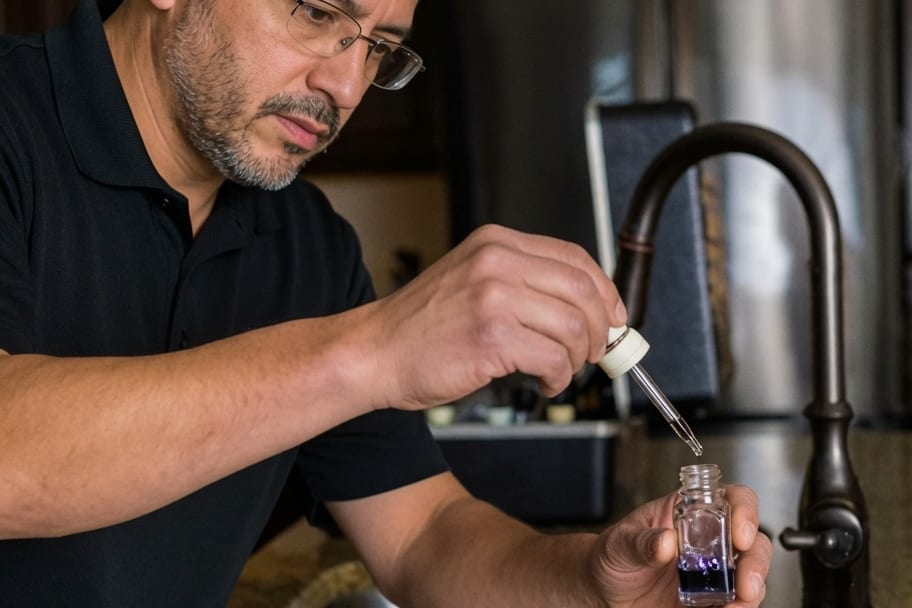
Start with the two annual reports, Clayton’s and Johnston County West’s, then have your own tap measured for what they do not cover, hardness first. Our guide to water testing cost in NC explains which panels are worth paying a lab for.
Sources and reporting dates
- Town of Clayton and Clayton North 2025 Consumer Confidence Reports, on the Town’s water quality reports page. Every Clayton chloramine, byproduct, pH and E. coli figure above comes from those.
- Johnston County West’s 2025 Consumer Confidence Report, for the Neuse source, the treatment description, the bulk purchase blend and the PFAS figures.
- NC DEQ’s Local Water Supply Plan for Clayton, for the purchase volume and contract.
- EPA’s Safe Drinking Water Information System record for public water system NC0351020, for the purchased-surface-water classification and the facility register.
- NC General Statute 87-97, for what a new private well must be tested for.
- Prices are planning ranges as of 20 September 2026, never quotes. A utility report describes an average rather than your address.
Water filtration pricing in Clayton and Johnston County
On the town meter in Clayton or Clayton North, the work is chloramine and drinking water, and the figures that justify it are published every year. On a well out toward Archer Lodge, Wilson’s Mills or Four Oaks, almost nothing is published and the test comes first.
Either way it starts the same. Every visit begins with a free consultation: we measure the water at your own tap, compare it against what Clayton and Johnston County publish, and give you an up-front written price for only what the readings support. Call (984) 384-6991 or book a free consultation.