Acid Neutralizer Cost for Well Water in NC (2026)
Raleigh Water Pros • September 20, 2026 • 10 min read
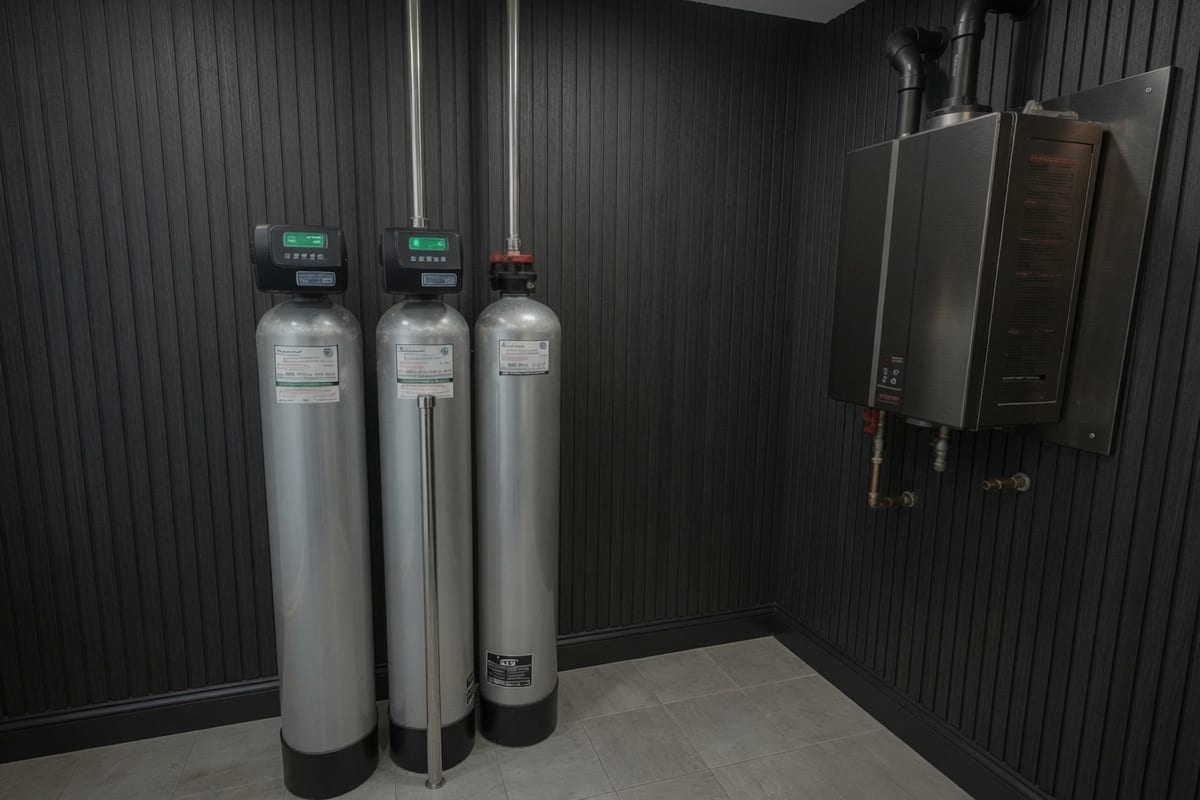
Low pH is the well water problem nobody quotes on, because it does not smell, does not stain the laundry and does not make the water look wrong. It shows up as turquoise streaks in the tub, a metallic edge to the coffee, and eventually a plumber’s invoice.
An acid neutralizer is the standard fix, and almost nothing published online tells a North Carolina homeowner what one costs here. This guide gives the installed price band, what moves a quote from one end of it to the other, what it costs to keep running, and when a calcite tank is the wrong purchase. Every figure below is a planning range rather than a quote, because sizing depends on numbers off your own water.
How Much Does an Acid Neutralizer Cost in NC?
Most North Carolina homes pay $1,200 to $2,200 installed for an acid neutralizer in 2026. That is the band published on our Raleigh water filtration cost guide, and where a specific house lands inside it comes down to tank size, media, whether a backwashing control valve is needed, and how much plumbing has to be moved.
| What you are buying | Installed, typical | Suits |
|---|---|---|
| Compact upflow neutralizer, no control valve | $1,200 to $1,500 | Low flow, clean water, mildly acidic |
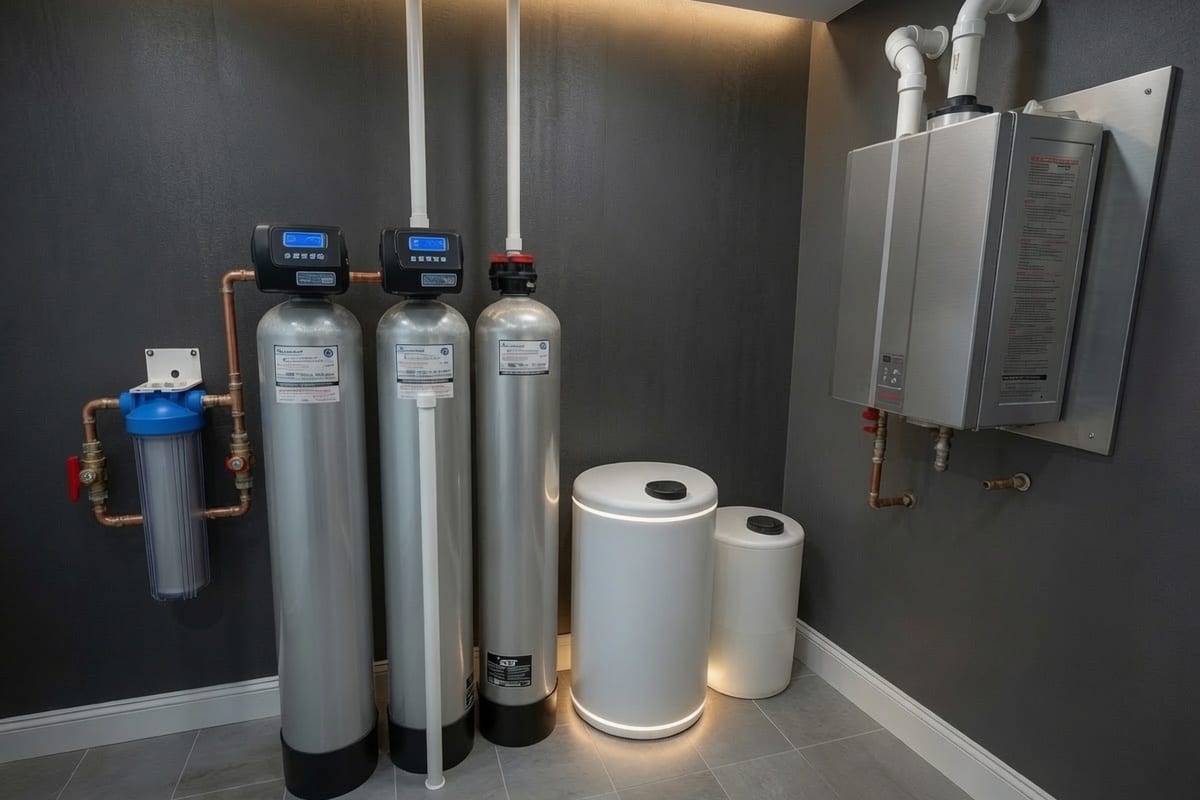
| Standard backwashing neutralizer tank | $1,500 to $1,900 | Most three and four bedroom homes |
| Larger tank, or blended calcite and magnesia media | $1,800 to $2,200 | Higher flow, strongly acidic water, or sediment present |
Two figures are deliberately missing from that table. Our cost page publishes no band for a soda ash chemical feed system and none for media top-up, so this post prints neither. Ask for both in writing before signing anything.
Want the number for your water rather than a range? Request a free consultation and we read the water first, then quote in writing.
How Does a Calcite Neutralizer Actually Work?
A calcite neutralizer is a tank of crushed limestone that the water dissolves a little of on its way into the house. Calcite is calcium carbonate, and acidic water is hungry for it, so as water passes through the bed a small amount goes into solution. That does two things at once: it raises pH, and it adds alkalinity, the buffering capacity that keeps pH stable instead of swinging around.
Alkalinity is the half most sales copy skips. Corrosion research consistently finds that low-alkalinity water is the aggressive kind, and that raising alkalinity is part of what protects the metal.
The media is consumed by design. It is not a filter that catches something and holds it; it is a mineral that dissolves into your water on purpose, so the bed drops and has to be topped up. That is the trade for a system with no pump, no chemicals to mix and no electricity.
There are two common media choices:
- Calcite alone. The default. Gentle, predictable, and generally brings a mildly acidic well up toward neutral.
- Calcite blended with magnesium oxide (sold under names like Corosex). Magnesia dissolves faster and lifts pH harder, which is what strongly acidic water needs. It is blended rather than used alone because on its own it can overshoot.
Both add a little hardness as a side effect, since calcium and magnesium are what hardness is. On a well that already needs softening that is a sequencing question rather than a problem, and our well water treatment page covers what goes where on the line.
Pro tip: ask what your pH reads after the neutralizer, not just before it. A tank sized for 6.4 water will not hold a well that has drifted to 5.9, and the only way to find that out is by measuring the treated side. A quote that never mentions a post-treatment target has not been sized.
What Changes the Price
Tank size and flow rate
The single biggest driver. Neutralizing depends on contact time, so the bigger the household demand, the bigger the tank has to be. A two-bathroom house with a modest well pump sits at the bottom of the band. A four-bathroom house on Wake Forest-style acreage with irrigation demand on the same line sits at the top. Anyone quoting without asking about flow rate and fixture count is guessing.
Media choice
Calcite is the cheaper fill. A calcite and magnesia blend costs more per cubic foot and gets specified when pH is low enough that calcite alone will not lift it far enough. The media decision follows the test result, not the other way round.
Whether a backwashing valve is needed
Calcite beds compact and channel over time, and any sediment in the well ends up on top of the bed. A backwashing control valve periodically reverses flow to lift, rinse and re-bed the media. Most installations get one. A non-backwashing upflow design costs less and is a reasonable choice on genuinely clean water at low flow, but it is the wrong economy on a well that carries red clay sediment after a storm.
The plumbing at the point of entry
The quiet variable. A tank needs floor space, a drain for the backwash, a power outlet and a bypass so the house can run while it is serviced. A well-house with all four in place is a straightforward day. A crawl space with no drain in reach is not, and that difference is worth several hundred dollars on its own.
Testing first
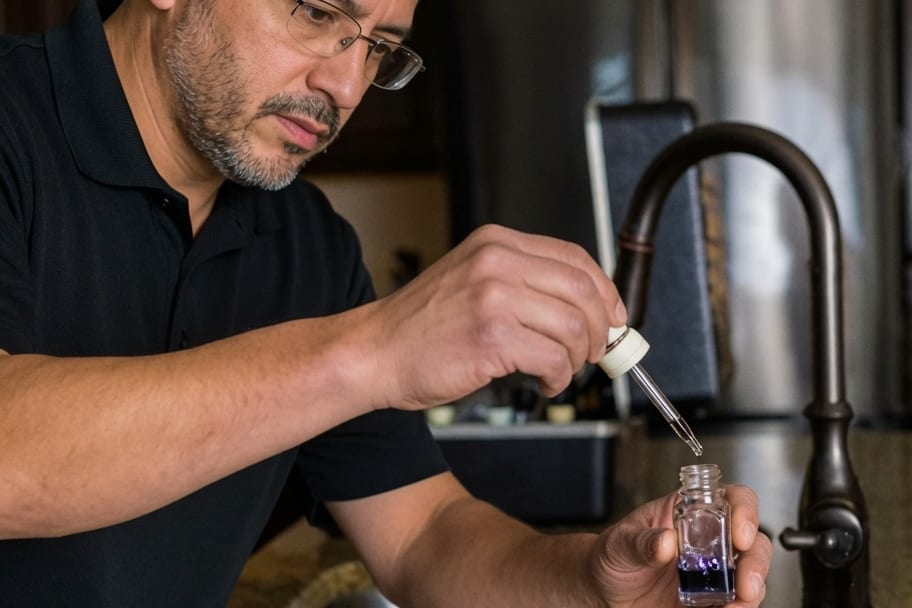
pH, alkalinity and flow rate are the three numbers that size the system. pH is on the panel the state already requires for new wells under 15A NCAC 18A .3800, but alkalinity is not, so it has to be requested. Our water testing and analysis page covers which panel to ask for.
What Does an Acid Neutralizer Cost to Run?
The running cost is media, and it is the part that varies most between houses. The bed dissolves into your water by design, so it drops and has to be topped up. Nobody can tell you how often without knowing your pH and your water use, and a company that quotes an interval before testing is guessing.
There is a useful signal in the interval itself. A tank that needs refilling every few months is telling you the water is aggressive enough, or the demand high enough, that a larger tank or a chemical feed system would be cheaper over five years. Have that conversation at the second top-up rather than the fifth.
The other running costs are small but real. A backwashing valve sends some water to drain on a cycle, which on a well is pump run time rather than a bill; the valve draws a nominal amount of electricity; and it has the same wear parts as any control valve, on the same kind of schedule.
Our cost page publishes no band for media top-up, so no figure appears here. Get it in writing as part of the quote, per bag and per visit, before you buy the system. The wider picture of what well equipment costs to own is in our well water treatment cost guide.
When Is Soda Ash Injection the Better Answer?
When calcite physically cannot do the job, which happens in three situations. A soda ash system is a small chemical feed pump that injects sodium carbonate into the line, with a tank of solution that gets mixed and refilled.
It becomes the better choice when:
- pH is very low. There is a floor to what a calcite bed can lift, because the reaction depends on the water’s appetite for the mineral. Strongly acidic water runs past a calcite tank without coming up far enough.
- Flow rate is too high for practical contact time. Past a certain demand, the tank a calcite system would need stops being realistic for the space available.
- Adding hardness is a problem. Calcite and magnesia add calcium or magnesium. On a well that is already hard and already softened, that extra load means more salt and more regeneration. Soda ash adds sodium instead, which is its own trade-off and worth raising if anyone in the house is watching sodium intake.
The running costs go the other way. A chemical feed system takes ongoing attention: solution to mix, a tank to refill, a pump to maintain and a dose to check. A calcite tank is nearly passive by comparison. That difference usually decides it, not the purchase price.
Why pH Has to Be Fixed Before an Iron Filter Will Work
An oxidizing iron filter on acidic water underperforms from the day it is installed. Iron removal works by oxidizing dissolved iron into a particle and then catching the particle. That step is pH dependent, and the media that do it carry a minimum pH on their specification sheets, typically above 7. Manganese needs more pH than iron does.
This is not theoretical here. The USGS Ground Water Atlas, describing the Piedmont crystalline-rock aquifers, notes that weathering rocks “can contribute iron and manganese to ground water, particularly if the water is slightly acidic” (USGS Ground Water Atlas, Segment 11). The same chemistry that eats copper is part of why the iron is dissolved in the first place. Acidic and iron-bearing is a common pairing on wells around Garner, Clayton and the Johnston County line.
So the order on the line matters: neutralizer first, iron filter second, softener after that. An iron filter quote that never mentions your pH is incomplete, and our iron filter cost guide walks through that sequence. For an iron and sulfur filter, expect $1,800 to $3,500 installed, again as a planning range.
Frequently Asked Questions
How much does an acid neutralizer cost installed in NC?
$1,200 to $2,200 installed for most North Carolina homes in 2026, with compact non-backwashing units at the bottom of the band and larger or blended-media tanks at the top. That is a planning range, because tank size follows flow rate and starting pH. The full band table sits on our Raleigh cost guide.
How often do you add calcite to a neutralizer?
It depends on how acidic the water is and how much the house uses, which is why no answer comes before a test. The media dissolves into the water on purpose, so it is consumed rather than clogged. A tank needing a top-up every few months was sized small for the water it got.
Does an acid neutralizer make water hard?
Slightly, and that is how it works. Calcite adds calcium and magnesia adds magnesium, which is what hardness is measured as, so treated water comes out marginally harder. On a well in Holly Springs that is already softened, it means a little more work for the softener rather than a new problem. If white spots are what you notice after a neutralizer goes in, our guide to white residue from well water explains where they come from.
Can I just put a neutralizer in myself?
Physically it is a tank, a valve and two connections, so people do. The parts worth paying for are sizing and sequencing: the wrong tank size on acidic water never reaches target pH, and a neutralizer installed after an iron filter instead of before it wastes both. Get in touch if you want the numbers checked before you buy anything.
Will an acid neutralizer stop pinhole leaks in copper pipe?
It stops the chemistry that causes them, going forward. It does not repair pipe that is already thinned or already leaking, and that work belongs to a plumber. Our guide to pinhole leaks in copper pipe covers how to tell acidic water apart from the four other things that put holes in copper.
Do I need a permit to install an acid neutralizer?
Requirements vary by parcel, scope and jurisdiction, and the county or state office makes the determination rather than the installer. Water treatment equipment at the point of entry is treated differently from work on the well itself, which is a well contractor’s job. Ask your county environmental health office before scheduling, and get the answer in writing.
Get an Acid Neutralizer Price for Your Well
Low pH is cheap to measure and expensive to ignore. One water test tells you whether you need a neutralizer at all, which media it takes, and what size tank your demand calls for.
We size and install acid neutralizers and well water treatment across Raleigh, Garner, Clayton, Wake Forest and the rest of the Triangle, and we read the water before quoting. You get an up-front written price covering the equipment, the install and the media top-up.
Call (984) 384-6991 or book a free consultation and we will put a real number against your well rather than a range.