Iron Filter Cost for Well Water in NC (2026)
Raleigh Water Pros • September 10, 2026 • 7 min read
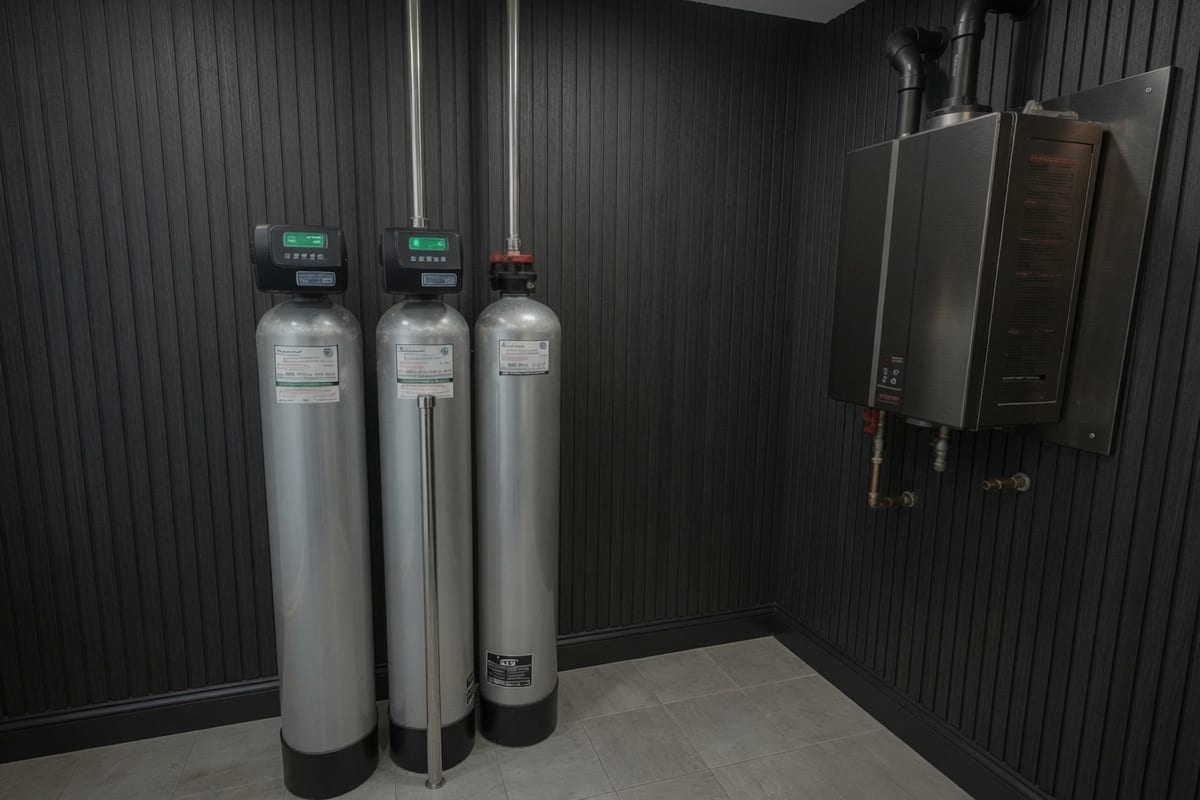
Orange staining in the toilet tank, rust-coloured rings in the tub, laundry coming out dingy, and water that tastes faintly metallic. Iron is the most common well water complaint across the Triangle after hardness, and it is the one most likely to be treated with the wrong equipment.
The critical thing to understand before spending anything: there are several forms of iron, and they need different systems. A filter that handles one form will not touch another. This guide covers what each system costs across North Carolina in 2026 and how to tell which you need. These are planning ranges rather than quotes.
How Much Does an Iron Filter Cost in NC?
Most iron removal systems run $1,500 to $4,000 installed in 2026. The spread comes down to which form of iron you have and at what concentration.
| System type | Installed cost | Treats | Typical capacity |
|---|---|---|---|
| Sediment pre-filter only | $150 to $400 | Visible rust particles | Low concentrations only |
| Water softener (incidental) | Included in softener | Clear-water iron under ~3 ppm | Limited; fouls resin |
| Air injection oxidizing filter | $1,500 to $3,000 | Ferrous and ferric iron, some sulfur | Up to ~10 ppm |
| Catalytic media filter | $1,600 to $3,200 | Iron plus manganese, sulfur | Up to ~10 ppm |
| Chemical injection plus filtration | $2,500 to $5,000 | High iron, iron bacteria | 10 ppm and above |
| Iron plus softener combination | $3,000 to $6,500 | Iron and hardness together | Most Triangle wells |
The most common correct answer for a Wake or Johnston county well is the last row: an oxidizing iron filter ahead of a softener. Iron fouls softener resin, so the iron has to come out first. Selling a softener alone into a well with meaningful iron is the most frequent mis-specification in this market, and it shortens the softener’s life considerably.
Which Kind of Iron Do You Have?
You can narrow this down yourself before any test, with one simple observation.
Fill a clear glass from the tap and let it stand for fifteen minutes.
| What you see | What it is | What treats it |
|---|---|---|
| Clear at first, then orange particles settle | Ferrous (clear-water) iron, dissolved | Oxidizing filter, or softener at low levels |
| Orange or rusty immediately from the tap | Ferric (red-water) iron, already oxidized | Sediment filtration plus oxidizing filter |
| Reddish slime in the tank, fixtures, or well cap | Iron bacteria | Shock chlorination plus chemical injection |
| Black staining alongside the orange | Manganese present too | Catalytic media rated for both |
| Rotten egg smell with the staining | Hydrogen sulfide as well | Air injection or catalytic, sized for both |
That last row is common here. Iron and sulfur frequently occur together in Triangle wells, and the good news is that air injection and catalytic systems generally handle both in one unit, so you are not buying two systems. Our guide on fixing rotten egg smell in well water covers the sulfur side.
The iron bacteria case is the one where cheap equipment fails outright. It is a living biofilm, not a mineral, and filtration alone will not resolve it. If you are seeing reddish slime, that needs shock chlorination first.
What Changes the Price
Iron concentration
Measured in parts per million. Under 3 ppm, options are broad and cheaper. Between 3 and 10 ppm needs a properly sized oxidizing system. Above 10 ppm generally requires chemical injection, which is a meaningfully more expensive and more maintenance-intensive setup.
pH of your water
This one surprises people. Oxidizing filters need pH above roughly 6.8 to work properly, and many Triangle wells run acidic, in the 5.5 to 6.5 range. If yours is low, you need a neutralizer ahead of the iron filter, adding $800 to $1,800. Any quote for an iron filter that does not reference your pH is incomplete.
Flow rate and household size
The system has to keep up with peak demand. A three-bathroom house needs more capacity than a two-bathroom, and undersizing shows up as iron breaking through during heavy use.
Whether a softener is going in too
Combination installs cost less than two separate projects, because there is one set of plumbing work, one drain line, and one visit.
Install location
Well house, garage, crawlspace, or outdoors each carry different labor and freeze-protection requirements. Crawlspace work in older NC homes adds time.
Drain access
Backwashing filters need an acceptable drain. If the nearest one is far from the install point, running it adds $150 to $400. Septic systems impose additional constraints on discharge.
Ongoing Costs
| Item | Typical cost |
|---|---|
| Media replacement | $300 to $900, every 5 to 10 years |
| Annual service | $100 to $250 |
| Chemical (injection systems only) | $100 to $300 per year |
| Air injection head repair | $150 to $400 when needed |
| Backwash water use | 30 to 100 gallons per cycle |
Air injection and catalytic systems are the cheaper ones to own because they use no chemicals. Chemical injection systems cost more to buy and more to run, and are reserved for the situations that genuinely need them. If stains come back on a filter you already own, our guide to an iron filter not working goes through the checks before any money is spent.
How Can You Save Money
- Test before buying, and test for the right things. A test covering iron, manganese, pH, hardness, and hydrogen sulfide is what determines the system. A test that only reports hardness tells you almost nothing about your iron problem. Our water testing cost guide covers what a proper panel runs.
- Do not let anyone sell you a softener for an iron problem. It will foul, and you will be buying twice.
- Bundle iron removal and softening. One project, one install, meaningfully cheaper than sequential.
- Check your pH first. Discovering you need a neutralizer after the iron filter is installed is the expensive order of operations.
- Ask for the sizing math. A legitimate quote references your measured ppm, your pH, and your peak flow rate. If those three numbers do not appear, the system was sized by guess.
- Consider point-of-use for drinking only. If the staining does not bother you and your concern is purely taste at the kitchen tap, a reverse osmosis system is far cheaper than whole-house iron removal.
Frequently Asked Questions
How much does an iron filter cost for well water?
$1,500 to $3,000 installed for a standard air injection or catalytic system in the NC market. High iron requiring chemical injection runs $2,500 to $5,000, and combined iron-plus-softener installs run $3,000 to $6,500.
Will a water softener remove iron?
Only clear-water iron at low concentration, generally under about 3 ppm, and it does so at a cost: iron fouls the resin and shortens the softener’s life. It does not remove ferric iron or iron bacteria at all. Treat iron separately and ahead of the softener.
How do I know how much iron is in my water?
A laboratory or professional field test reporting parts per million. Visual staining tells you iron is present but not the concentration, and concentration determines which system you need. Most treatment companies test free or for a nominal fee as part of quoting.
What is the orange slime in my toilet tank?
Most likely iron bacteria, particularly if it is slimy rather than gritty. It is a biofilm, not a mineral deposit, and filtration alone will not clear it. Shock chlorination of the well followed by ongoing treatment is the usual approach.
Does an iron filter need salt?
No. Air injection and catalytic filters regenerate by backwashing with water and, in the air injection case, an air pocket drawn in automatically. Only the softener in a combined system uses salt.
How long do iron filters last?
The tank and valve typically last 10 to 15 years. The media inside is the consumable, generally replaced every 5 to 10 years depending on iron load and how well the system is maintained.
Can I install an iron filter myself?
It is plumbing work with a drain line, a bypass, and in some cases electrical. Competent DIY plumbers do it. The larger risk is not installation but specification: buying the wrong system for your water is the expensive mistake, and that happens before any pipe is cut.
Get Your Well Water Tested First
Iron treatment is one of the few areas where the test genuinely determines the purchase. Form of iron, concentration, pH, and whether sulfur or manganese are present all change the answer, and all four are cheap to establish.
We provide iron and sulfur removal, well water treatment, and water testing across Raleigh, Clayton, Garner, Apex, and the surrounding Triangle. If hardness is also on your list, our water softener installation cost guide covers combining the two.
Call (984) 384-6991 or request a free consultation.