Water Softener Installation Cost in NC (2026)
Raleigh Water Pros • September 10, 2026 • 8 min read • Updated September 14, 2026
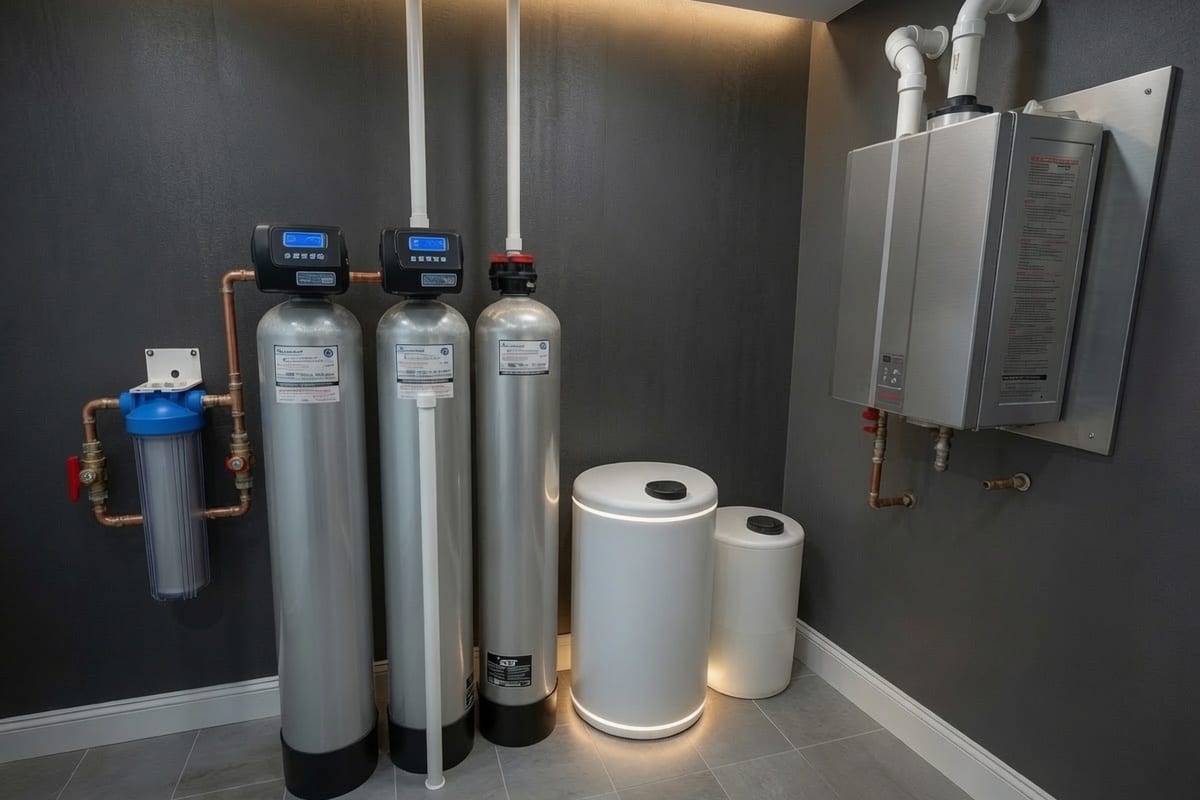
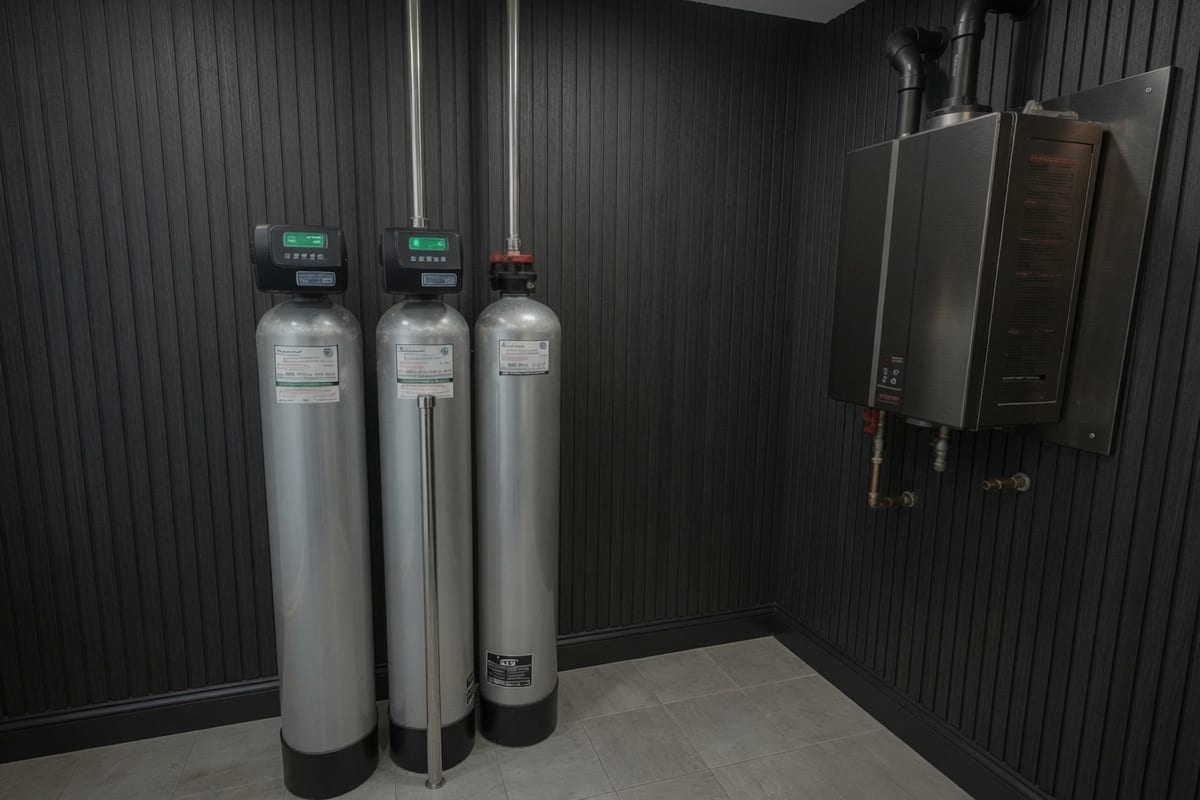
Hard water is the most common water complaint in North Carolina, and softener quotes are the most confusing thing homeowners have to compare. The same house can get a $900 quote and a $4,000 quote in the same week, both from licensed installers, because “water softener” covers everything from a hardware-store unit installed by a plumber to a multi-stage system on a service contract.
This guide separates the equipment cost from the installation cost, shows what each tier actually buys you, and flags the sales tactics that inflate the middle of the market. These are planning ranges for the NC market rather than quotes.
How Much Does a Water Softener Cost Installed in NC?
Most homes pay $1,200 to $3,500 for a water softener installed in 2026. The unit is roughly half to two thirds of that, and labor is the rest.
| System tier | Unit cost | Installed total | Who it suits |
|---|---|---|---|
| Entry-level ion exchange | $400 to $800 | $900 to $1,600 | City water, moderate hardness, simple install |
| Mid-range metered softener | $800 to $1,600 | $1,500 to $2,800 | Most NC homes; meters regenerate on demand |
| High-capacity or twin tank | $1,600 to $3,000 | $2,500 to $4,500 | Large households, very hard water, no downtime |
| Salt-free conditioner | $700 to $2,000 | $1,200 to $3,000 | Scale control without sodium; see caveat below |
| Softener plus well water treatment | $2,000 to $4,500 | $3,000 to $7,000 | Well water with iron or sulfur alongside hardness |
The single biggest mistake homeowners make is buying capacity they do not need, usually because a salesperson sized the system to the house rather than to the water test. Sizing depends on your measured hardness in grains per gallon and your household’s daily water use, and both are knowable before anyone quotes.
Installation Labor, Separately
Worth knowing what the labor portion should be, because this is where quotes diverge most.
| Install scenario | Typical labor | Why |
|---|---|---|
| Existing loop, simple swap | $300 to $600 | Pipe is already there; it is a changeout |
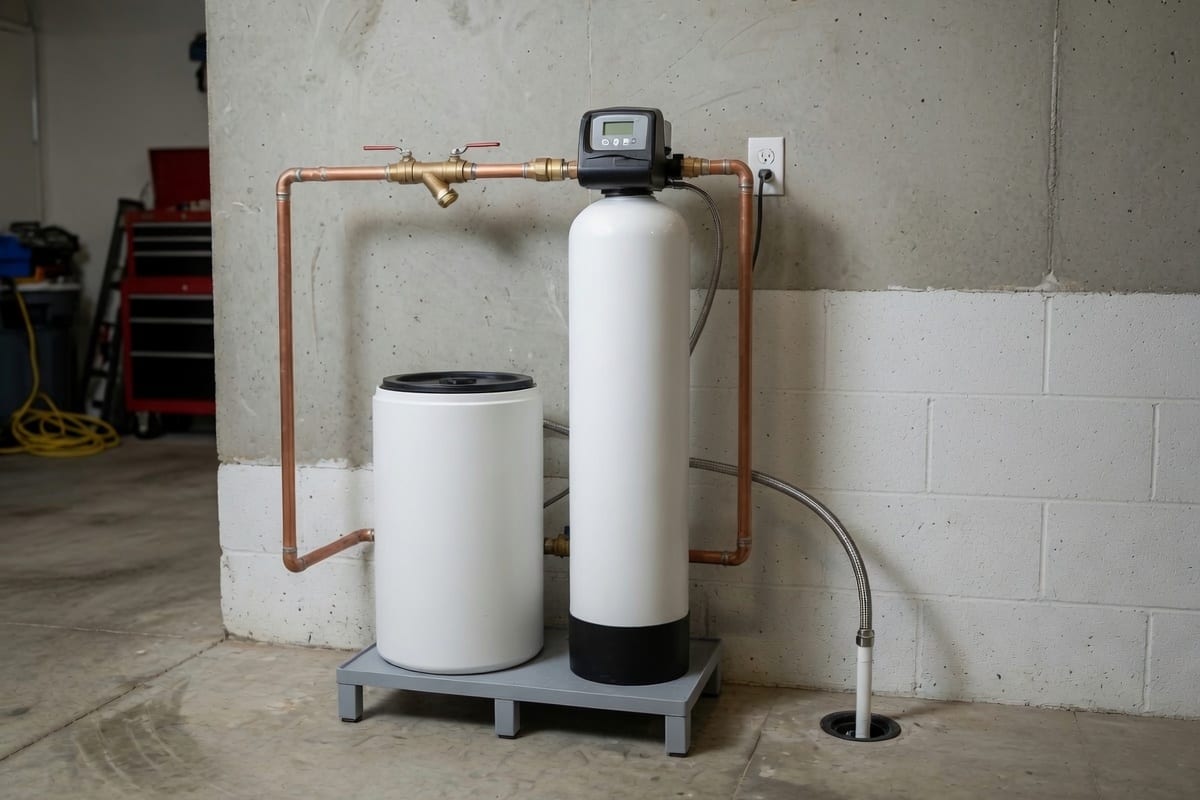
| No loop, garage or basement install | $600 to $1,200 | Cutting in, valves, drain line, electrical |
| Crawlspace install | $800 to $1,500 | Working in confined space, common in older NC homes |
| Outdoor or well house install | $700 to $1,400 | Freeze protection and enclosure needed |
| Install plus drain run to standpipe | Add $150 to $400 | Distance to an acceptable drain |
| Permit, where required | $50 to $200 | Varies by municipality |
If your house was built in the last twenty years or so in the Triangle, there is a reasonable chance you already have a softener loop roughed into the garage, which drops you into the cheapest labor row. Go look before you get quotes. It is usually a pair of capped pipes on the garage wall near the water heater, and knowing you have one is worth several hundred dollars of negotiating position.
Hardness in the Triangle, and Whether You Actually Need One
This is the part most cost guides skip, and it matters more than the price table.
Municipal water across the Triangle is soft, and the utilities say so themselves. Raleigh Water publishes 25.2 milligrams per litre, about 1.47 grains per gallon, and prints its own classification, “Soft”. The Cary/Apex Water Treatment Facility publishes 30 milligrams per litre, about 1.8 grains, printed “moderately soft”, and that covers Cary, Apex and Morrisville. At that level many households genuinely do not need a softener, and a salesperson telling a Raleigh city-water customer they have a severe hardness problem is worth a second opinion. Our guide on whether Raleigh tap water is safe to drink covers the municipal picture.
Well water is a different story. Private wells across Wake, Johnston, Chatham, and Franklin counties frequently run 10 to 25 grains per gallon, often with iron and sometimes sulfur alongside. That is genuine hard water, and a softener is usually the right call, though it may need pre-treatment to handle iron before the softener resin is damaged by it.
The honest sequence is: test first, then size, then quote. A water test costs far less than the wrong system, and it is the only way to know whether you need softening, iron removal, both, or neither. Our water testing cost guide covers what that runs.
Salt-Free Conditioners: The Honest Version
Salt-free systems are heavily marketed and widely misunderstood, so here is the straight comparison.
A salt-free conditioner does not soften water. It does not remove calcium and magnesium; it changes their form so they are less likely to form scale on surfaces. That means:
- You will still have the same hardness reading. A test will show no change.
- Scale in pipes and heaters is genuinely reduced, which is the main practical benefit.
- Soap will not lather better, spots will still appear on glassware, and laundry will not feel softer.
- No salt, no backwash, no drain line, no regeneration, which is why they suit homes on septic or with no drain nearby.
If your goal is protecting a tankless water heater from scale, a conditioner may be exactly right. If your goal is the feel of soft water and better soap performance, it will disappoint you and you will feel misled. Our salt-free versus traditional softener comparison goes deeper.
Ongoing Cost of Ownership
The install price is not the whole number.
| Ongoing item | Typical cost |
|---|---|
| Salt | $60 to $180 per year |
| Annual service and check | $100 to $250 |
| Resin bed replacement | $300 to $800, every 10 to 15 years |
| Control valve repair | $200 to $500 when it fails |
| Water use for regeneration | 30 to 80 gallons per cycle |
Budget roughly $150 to $350 a year in running costs for a typical metered softener. Our water softener maintenance cost guide covers the service side.
How Can You Save Money
- Test before you shop. A $100 to $200 test prevents buying a system sized for water you do not have.
- Check for an existing loop. It can halve the labor.
- Buy a metered unit, not a timer. Metered softeners regenerate based on actual use rather than on a clock, which cuts salt and water consumption meaningfully. The small premium pays back.
- Be wary of in-home demonstration sales. The soap-suds demonstration is theatre, and systems sold that way routinely run two to three times the price of equivalent equipment quoted conventionally.
- Skip the whole-house UV unless you have a reason. UV is for microbiological concerns on well water, not for hardness. If a softener quote includes UV and you have never had a coliform hit, ask why.
- Bundle well treatment. If you need iron removal and softening, one visit and one install is cheaper than two. See our well water treatment cost guide.
- Get three quotes, all sized from the same test result. This is the only way to compare fairly.
Frequently Asked Questions
How much does a water softener cost installed?
$1,200 to $3,500 for most NC homes in 2026. Entry-level units on an existing loop can come in near $900; large twin-tank systems or well water setups with iron pre-treatment run $3,000 to $7,000.
How much is labor to install a water softener?
$300 to $600 with an existing softener loop, and $600 to $1,200 where the plumbing has to be cut in. Crawlspace installs, common in older NC housing stock, run $800 to $1,500.
Do I need a water softener in Raleigh?
Often not, if you are on city water. Municipal supply in the Triangle is typically 1 to 5 grains per gallon, which is moderately soft. On a private well, hardness of 10 to 25 grains is common and a softener usually is warranted. Test before deciding.
How long does a water softener last?
10 to 15 years for a decent unit with routine maintenance, and sometimes longer. The resin bed and the control valve are the components that fail; the tanks themselves outlast both.
Is a salt-free water softener as good?
It is a different product. Salt-free conditioners reduce scale formation but do not remove hardness minerals, so soap performance, spotting, and the feel of the water are unchanged. Good for scale protection, poor substitute if you want genuinely soft water.
Will a water softener remove iron from well water?
Only a little, and doing so shortens the softener’s life. Softener resin is fouled by iron. If your well has meaningful iron, you need dedicated iron and sulfur removal ahead of the softener, not instead of it. Our post on iron staining in well water covers the symptoms.
Do I need a permit to install a water softener in NC?
Frequently yes, as a plumbing alteration, and requirements vary by municipality. A licensed installer handles it as part of the job. Permit fees typically run $50 to $200. Confirm it is included rather than assuming.
Get a Water Softener Quote Based on Your Actual Water
The right sequence saves money: test the water, size the system to the result, then compare quotes on matched specifications. Anyone quoting a softener without a test result is guessing, and guesses in this market tend to run large.
We handle water softener installation and water testing across Raleigh, Cary, Apex, Garner, Clayton, and the surrounding Triangle. If you are weighing softening against full filtration, our whole house water filtration cost guide covers the alternative.
Call (984) 384-6991 or request a free quote, and we will tell you if we think you do not need a softener at all.