Salt-Free vs Traditional Water Softeners in NC
Raleigh Water Pros • August 16, 2026 • 8 min read • Updated September 14, 2026
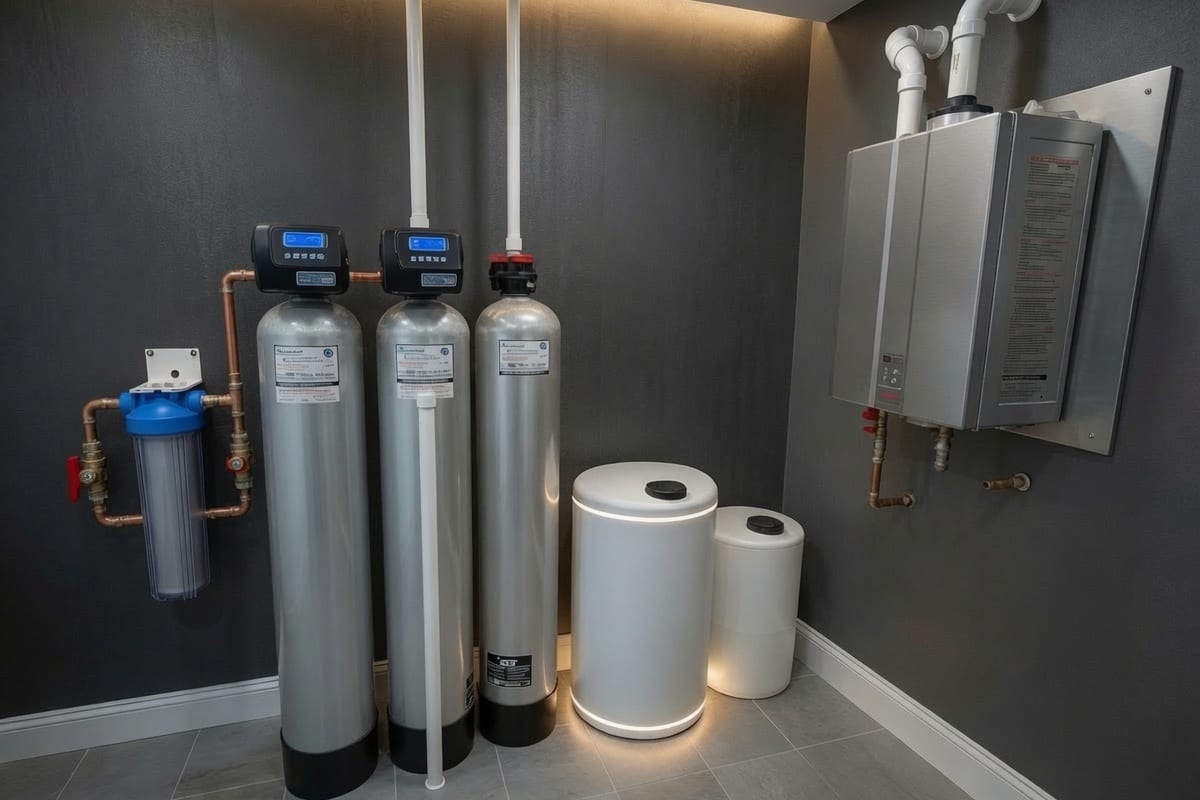
Crusty white buildup on the shower head, spotted glasses out of the dishwasher, and now two competing pitches: one company says you need a traditional salt softener, another swears salt-free is the modern answer with no bags to lug. Both claim theirs is better, and neither explains that the two products do fundamentally different jobs. This guide gives you the honest comparison for Triangle water specifically, including what each costs installed in 2026 and which homes each one actually fits.
Which Is Right for Triangle Water: Salt-Free or Traditional?
For most Triangle homes with genuinely hard water, especially well homes, a traditional salt-based softener is the right choice; salt-free conditioners fit city-water homes with mild scale who mainly want appliance protection without salt. That is the short answer, and here is the reason: a salt-free unit is not actually a softener. It is a conditioner. It does not remove hardness minerals, it changes them (through template-assisted crystallization) so they are less likely to stick as scale. A traditional softener physically removes the hardness through ion exchange, which is the only way to get truly soft water.
The local context decides a lot here. Raleigh, Cary, and Apex city water off Falls Lake and Jordan Lake is soft to moderately soft, so city homes often need only light scale control, if anything. Triangle well water is a different world, commonly testing 10 to 20+ grains per gallon, and at that hardness a conditioner is outmatched.
Here is how the two compare on cost:
| Cost item | Traditional (salt-based) softener | Salt-free conditioner |
|---|---|---|
| Installed price (2026) | $1,500 to $3,500 | $1,500 to $3,000 |
| Dual-tank upgrade | $3,000 to $4,500 | Not applicable |
| Salt | $5 to $15 per month | $0 |
| Media replacement | Resin lasts 10 to 15+ years | TAC media cartridge every few years, roughly $200 to $500 |
| Drain and electricity | Required | Not required |
| With iron/sulfur treatment (well homes) | $3,500 to $6,000+ combined | Not suited to iron-bearing well water |
Notice the installed prices overlap almost completely. This is not a budget decision, it is a what-does-your-water-need decision. Homes in Cary, Apex, and Morrisville on city water are the classic conditioner candidates; well homes around Wake Forest and Clayton almost always belong in the traditional column. Full softener pricing detail lives in our water softener cost guide.
What Does Each System Actually Do?
Traditional softener: removes hardness
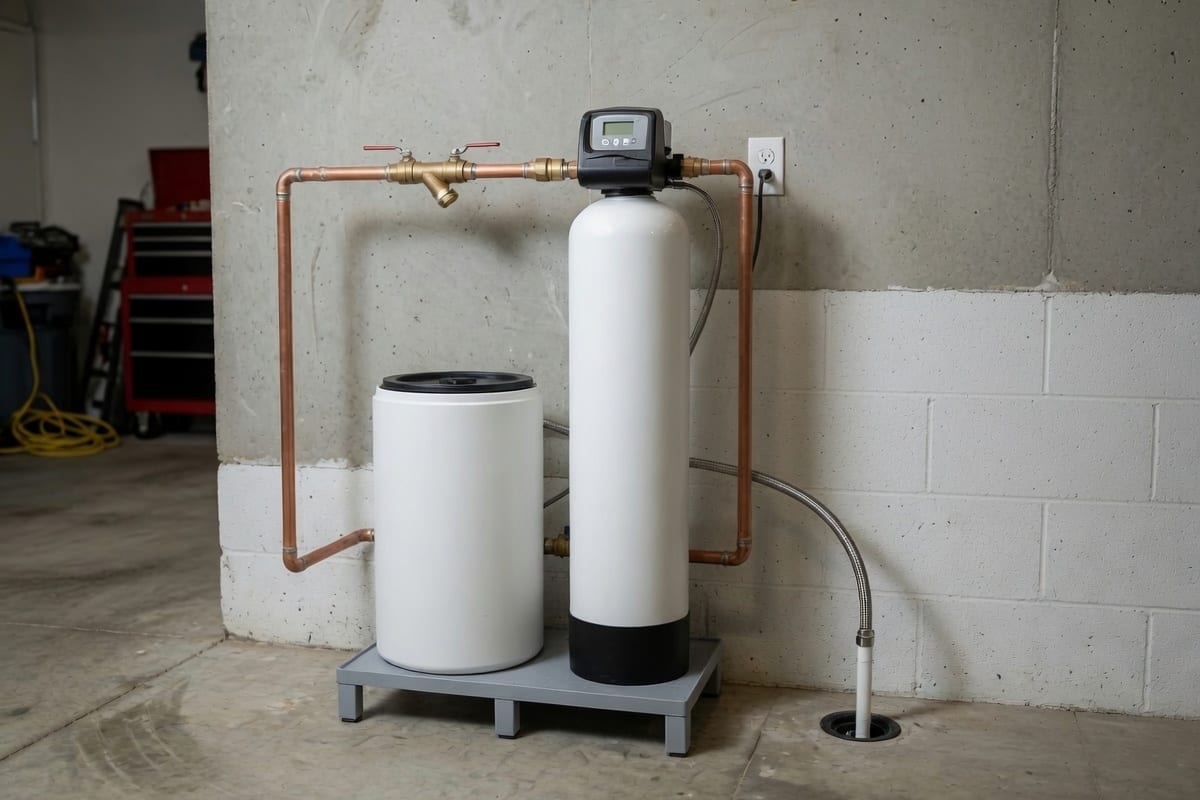
Ion-exchange resin swaps calcium and magnesium for sodium as water passes through, then periodically regenerates by rinsing with brine, which is why it needs salt, a drain, and power. The result is measurably soft water: soap lathers properly, glasses dry spotless, skin and laundry feel softer, and scale stops forming because the minerals are gone.
Salt-free conditioner: neutralizes scale
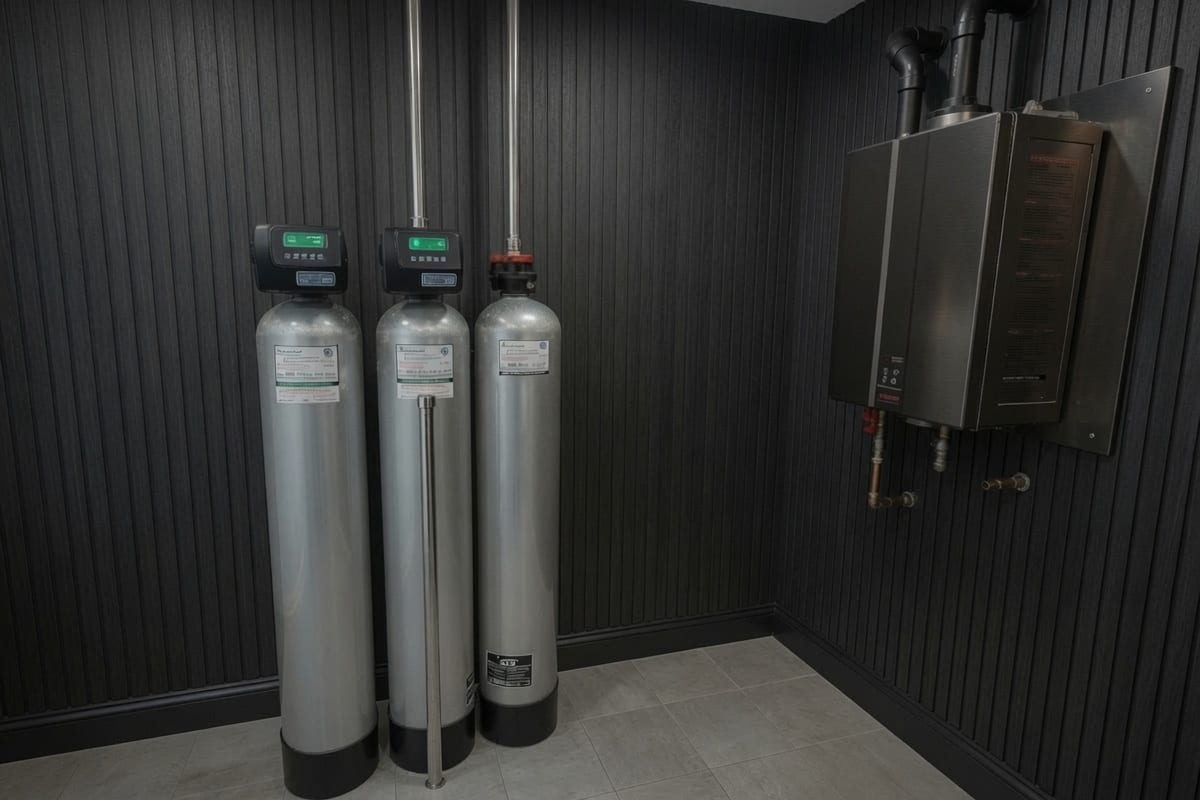
Template-assisted crystallization converts dissolved hardness into microscopic crystals that stay suspended instead of plating onto pipes and heating elements. Scale formation drops substantially, with no salt, drain, wastewater, or electricity. But the minerals are still in the water, so it still tests hard, soap still lathers like hard water, and spotting improves only modestly. Anyone telling you a conditioner delivers the same result as a softener is overselling, and that claim is one of the most common tricks in water treatment sales.
What Factors Should Drive Your Choice?
City water vs well water
The clearest dividing line. City water in the Triangle is mild enough that a conditioner’s partial scale control can be all you need. Well water with 10 to 20+ gpg hardness, plus the iron that Piedmont groundwater loves to add, needs real softening. Iron also fouls TAC media, so conditioners and iron-bearing wells simply do not mix; wells typically need an iron filter and softener together, priced in our well water treatment cost guide.
Your actual hardness in gpg
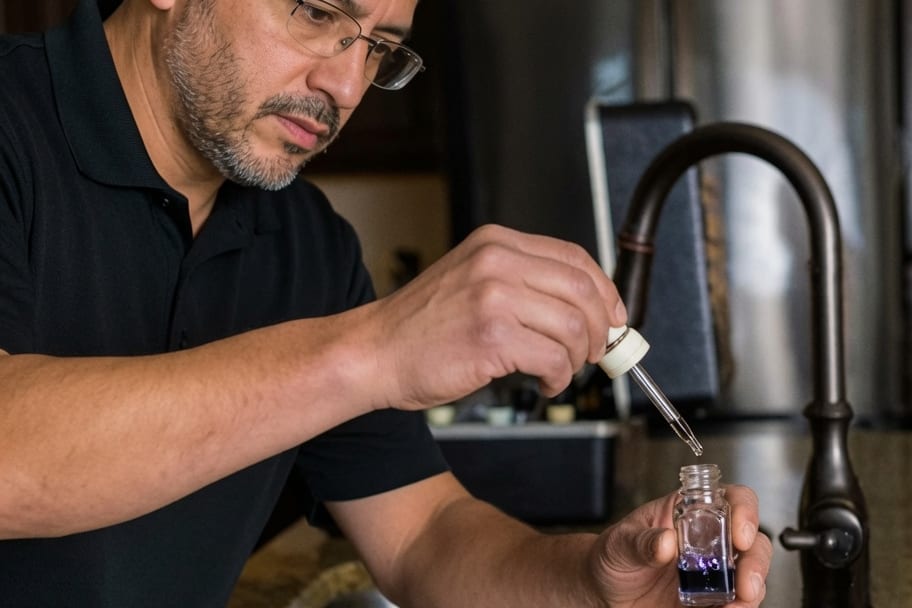
Get a number before you buy anything. Under about 5 gpg, you may need nothing. From 5 to 10 gpg, a conditioner is a reasonable scale-control play. Above 10 gpg, traditional softening earns its keep. A free in-home water test settles this in minutes.
What outcome you want
If the goal is the full soft-water experience (lather, spotless glass, softer skin and laundry), only a salt-based softener delivers it. If the goal is protecting a tankless water heater and appliances from scale with zero maintenance, a conditioner covers that.
Home constraints: drain, space, septic
Softeners need a drain, power, and floor space, and regeneration sends brine to your septic or sewer. Slab homes without a nearby drain, tight closets in townhomes, and salt-restricted diets all tilt toward salt-free. New construction in Apex and Holly Springs often includes a pre-plumbed softener loop, which makes either install cheap and easy.
Install complexity
Both systems tie into the main line, so install labor is similar, but softeners add drain and power runs. A crawlspace install with no nearby drain can add several hundred dollars to the softener side; a conditioner dodges that cost entirely.
Here is the decision in one table:
| Your situation | Better fit |
|---|---|
| Well water, 10+ gpg, any iron | Traditional softener (with iron pretreatment) |
| City water, mild scale on fixtures | Salt-free conditioner |
| Want spot-free glasses and soft-water feel | Traditional softener |
| Tankless water heater protection, low maintenance | Salt-free conditioner |
| Septic system or sodium-restricted diet | Salt-free conditioner |
| Large family, very hard water | Traditional softener, possibly dual-tank |
How Can You Save Money on Either System?
- Test hardness first. Raleigh city water is soft enough that some homes need neither system, and a filter for taste serves them better. A measured test beats a guess, and it beats a sales demo disguised as a test.
- Right-size instead of upgrading. Softener capacity should match measured hardness and household size. Oversizing adds hundreds for nothing.
- Use a pre-plumbed loop if you have one. Many newer Triangle homes include one, cutting install labor significantly.
- Compare standard-equipment quotes. Softening chemistry is mature; a fair local quote and a national-brand quote can differ by thousands for equivalent performance.
- Bundle with other treatment. If a well needs iron treatment anyway, one combined install runs $3,500 to $6,000+ but costs less than staging the projects separately. City homes adding whole-house filtration can compare bundles in our whole house water filtration cost guide.
What’s Included in a Softener or Conditioner Quote?
Either way, the quote should name the equipment and capacity (grain rating for softeners, flow rating for conditioners), itemize install labor and plumbing, include a bypass valve, cover startup and hardness verification, and state warranties on tank, valve, and labor.
Red flags to watch for:
- A “test” with no numbers. The cloudy-water demonstration is a sales prop. Real testing reports hardness in gpg you can verify independently.
- Salt-free sold as identical to softening. It is a different technology with a different outcome. Honest sellers say so.
- High-pressure evening presentations with tonight-only pricing and a demand that both spouses attend. No legitimate price expires at 9 pm.
- A conditioner quoted for an iron-bearing well. That system will underdeliver and the seller should know it.
- Five-figure softener quotes. A quality softener installed is $1,500 to $3,500 in this market. Quotes far above that deserve a second opinion.
Frequently Asked Questions
Does a salt-free water softener really work?
Yes, for what it actually does: TAC conditioners substantially reduce scale buildup in pipes, water heaters, and appliances. What they do not do is soften. Your water still measures the same hardness, so lather, spotting, and feel improve only modestly. Expect $1,500 to $3,000 installed.
How much more does a traditional softener cost to run?
Roughly $60 to $180 per year in salt ($5 to $15 per month), plus small water and power use during regeneration. Salt-free systems skip salt but need a $200 to $500 media cartridge every few years, so lifetime costs are closer than the marketing suggests.
Which lasts longer?
Traditional softeners are the durability winners: resin commonly lasts 10 to 15+ years and quality valves 10 to 20 years. Conditioner tanks last similarly, but their TAC media is replaced every few years.
Is Raleigh city water hard enough to need either one?
Often not. Raleigh’s Falls Lake supply is soft to moderately soft, and many city homes skip softening entirely. Where city homes do act, it is usually mild scale control (a conditioner) or taste filtration instead; see the options in our water softener installation service and get the water measured first.
Can I use a salt-free conditioner on well water?
Usually no. Triangle wells commonly run 10 to 20+ gpg with iron and manganese, which both overwhelm and foul TAC media. Well homes nearly always need an ion-exchange softener, often paired with iron filtration at $3,500 to $6,000+ combined.
Which one is better for a septic system?
Salt-free, if your water is mild enough to allow it, because conditioners send no brine discharge to the septic field. If your hardness demands a true softener, modern efficient models minimize brine volume, and millions run on septic without trouble.
Get a Straight Recommendation for Your Water
The right answer here is measurable: your hardness in grains per gallon, your iron level, and what you want your water to do. Raleigh Water Pros offers free in-home consultations across Raleigh, Cary, Apex, Wake Forest, Holly Springs, Clayton, Durham, and the surrounding Triangle, and we will tell you plainly whether a softener, a conditioner, or neither fits your numbers. Call (984) 384-6991 or request your free consultation and quote today.