Water Softener Cost in Raleigh, NC (2026 Price Guide)
Raleigh Water Pros • July 15, 2026 • 7 min read • Updated September 14, 2026
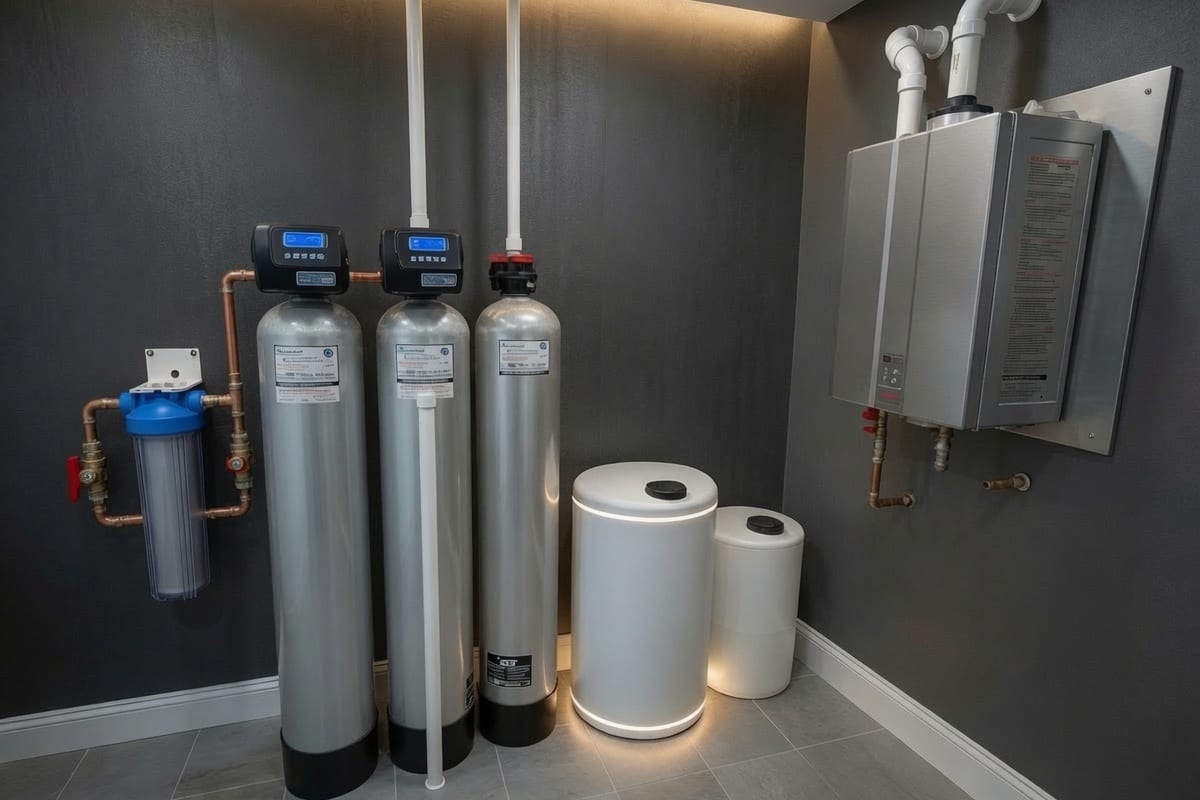
If you are shopping for a water softener in Raleigh, you have probably found prices all over the map, from a few hundred dollars at a big-box store to five figures from a high-pressure sales rep at your kitchen table. This guide gives you honest, up-front planning ranges so you can tell a fair quote from a bad one.
One thing up front: every number here is a planning estimate, not a binding quote. Your real price depends on your water, your home, and your plumbing. The only way to get an exact figure is a look at your setup, and we do that for free.
How much does a water softener cost in Raleigh?
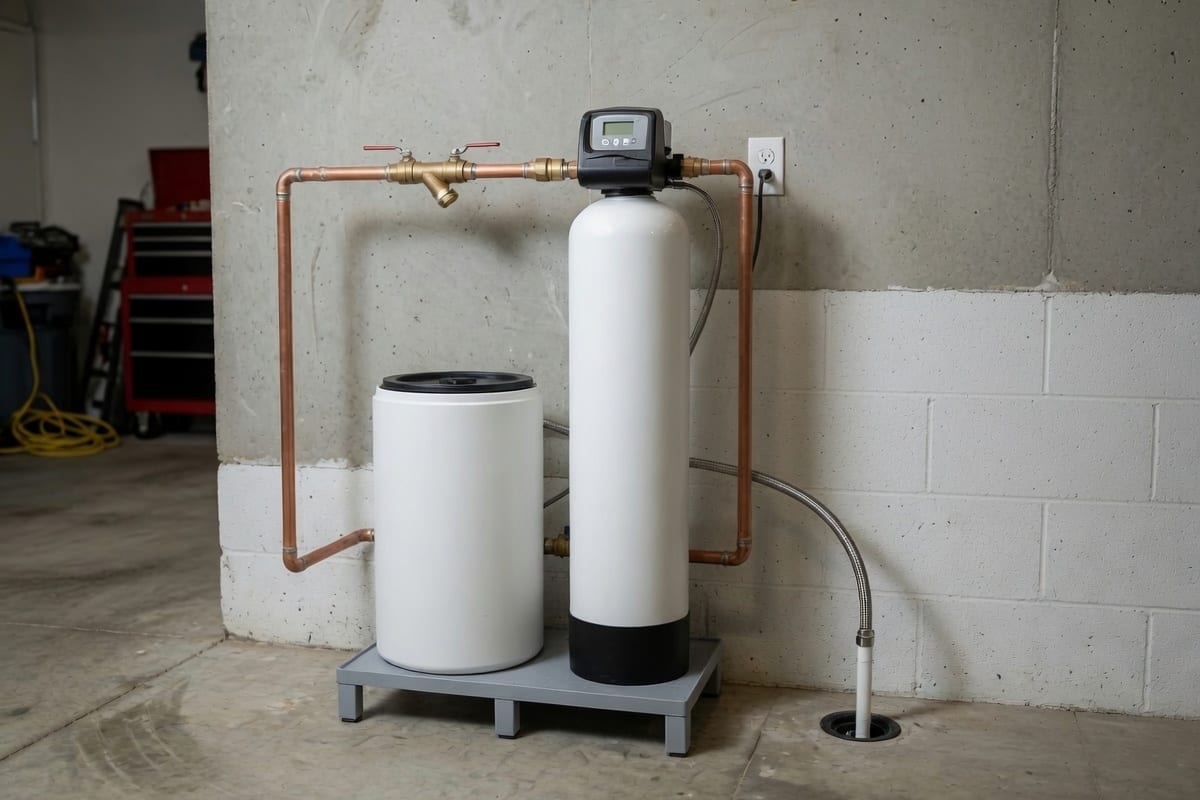
For most Raleigh-area homes, a mid-range, whole-home ion-exchange water softener typically runs roughly $1,500 to $3,500 installed. That range covers the softener itself, the install labor, and the basic plumbing to tie it into your main line.
Where you land inside that range depends mostly on three things:
- Grain capacity (how big the softener is, sized to your household and water).
- Water hardness (harder water needs more capacity).
- Your plumbing (how easy it is to tie into your main and drain).
Here is a rough breakdown of what different setups tend to cost, installed:
| System type | Typical installed range | Best for |
|---|---|---|
| Basic single-tank softener | $1,500 to $2,500 | Average city-water homes, moderate hardness |
| Higher-capacity / smart softener | $2,500 to $3,500 | Larger homes, harder water, more usage |
| Dual-tank (twin) softener | $3,000 to $4,500 | Large households wanting 24/7 soft water |
| Salt-free water conditioner | $1,500 to $3,000 | Homes that want scale control without salt |
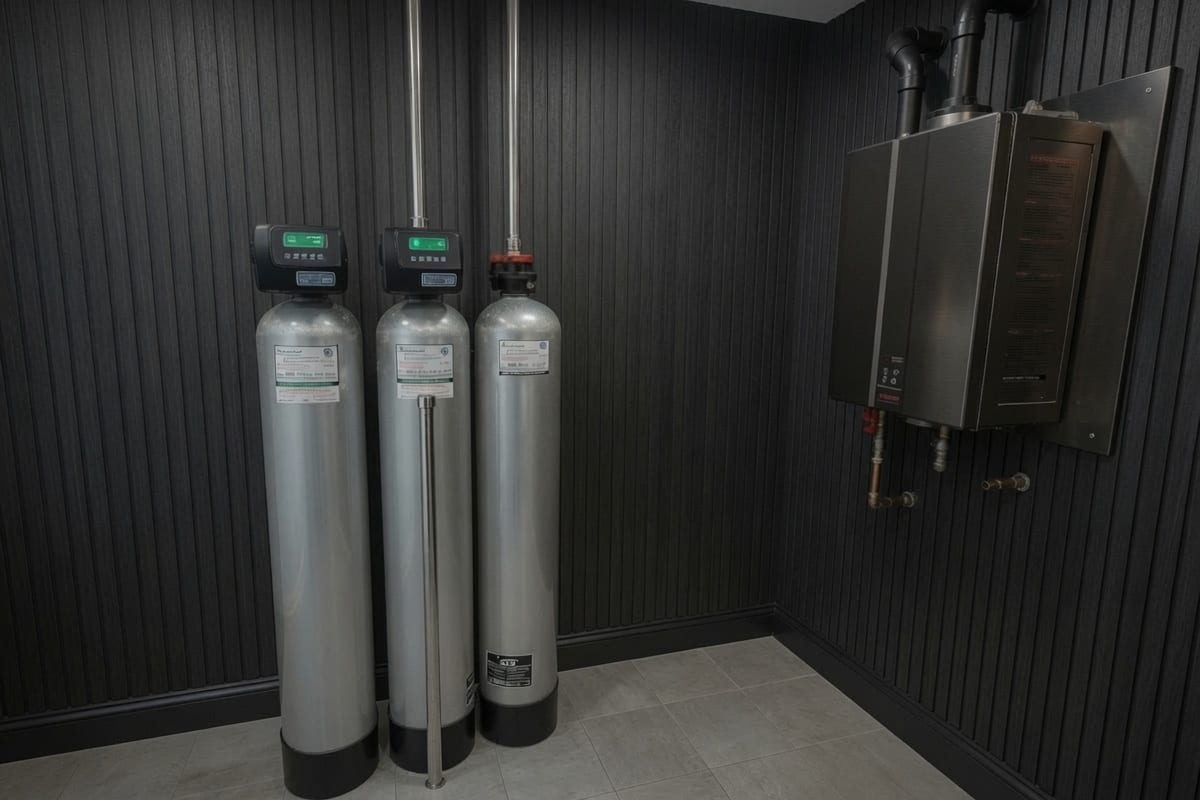
| Softener + iron/sulfur system (well) | $3,500 to $6,000+ | Well water with iron, manganese, or sulfur |
Again, these are planning ranges, not quotes. They exist so you can sanity-check what you are told. If someone quotes you $8,000 for a basic city-water softener, that is a red flag worth a second opinion.
Most Raleigh city water customers actually have it easier here, because Raleigh city water is only moderately soft to soft. Many city homes do not need a softener at all and are better served by a taste filter. It is well water homes that usually need softening, and they often need more than just a softener (more on that below).
What drives the price up or down?
Understanding the cost levers helps you make a smart choice instead of just chasing the lowest sticker.
Things that push cost up:
- Higher grain capacity for larger homes or very hard water.
- Well water that also needs iron, manganese, or sulfur treatment.
- Difficult plumbing: no nearby drain, tight crawlspace, needing a loop added, or moving the connection point.
- Add-ons like a bypass valve, sediment pre-filter, or smart metering.
- Dual-tank designs that provide soft water even during regeneration.
Things that keep cost down:
- Softer or moderate water (typical of Raleigh city supply).
- An existing softener loop already plumbed in.
- Easy access to the main line and a drain.
- Right-sizing instead of overbuying capacity you will never use.
This is exactly why an in-home look matters. Two houses on the same street can get different quotes because one has a plumbed-in loop by the garage and the other needs a line run across a crawlspace.
Is a salt-free water softener worth it?
This is where a lot of marketing gets slippery, so here is the honest version.
A salt-free “softener” is not technically a softener. It is a water conditioner. It does not remove the hardness minerals from your water. Instead, it changes the minerals (a process called template-assisted crystallization) so they are less likely to stick and form scale.
What that means in practice:
- A real (salt-based) softener actually removes hardness. You get the classic soft-water feel: better lather, softer laundry and skin, no spots, no scale. It needs salt and a drain, and it sends a little sodium into your water.
- A salt-free conditioner reduces scale buildup in pipes and appliances without salt, without a drain, and without adding sodium. But your water is still technically hard. You will not get the slippery soft-water feel, and it does less for spotting and lather.
So is it worth it? It depends on your goal:
- If your main concern is protecting pipes and water heaters from scale and you would rather not deal with salt, a conditioner can be a good fit.
- If you want the full soft-water experience (skin, laundry, no spots, no scale), you want a traditional salt-based softener.
- If you are on a salt-restricted diet or have concerns about sodium and a septic system, salt-free is worth considering.
Neither is a scam. They just do different jobs. Anyone telling you salt-free is magically identical to a real softener is overselling.
Ongoing cost: salt and maintenance
A softener is not just an upfront cost. Salt-based systems use salt, which you refill periodically. For a typical household, plan on roughly $5 to $15 per month in salt depending on your water hardness and usage. Harder water and bigger families use more.
Other ongoing costs are minor: the system uses a small amount of water and electricity during regeneration, and you will occasionally want it checked and the settings verified. Salt-free conditioners skip the salt cost entirely, which is part of their appeal, though the media cartridge is replaced every few years.
None of this is expensive compared to the damage hard water does to water heaters, fixtures, and appliances over time. A softener usually pays for itself in longer appliance life and less scale.
DIY vs professional installation
You can buy a softener and install it yourself, and for a handy homeowner with an existing loop and easy access, it is doable. But there are real reasons most people go pro:
- Sizing. The most common DIY mistake is buying the wrong capacity, either too small (constant regeneration, worn-out media) or too big (wasteful). Correct sizing depends on your measured hardness and household size.
- Plumbing and drain. You need a proper tie-in to the main, a bypass, and a drain for regeneration. Getting this wrong risks leaks and code issues.
- Well water complexity. If you are on a well, the softener is usually one piece of a larger treatment train, and order matters (see below). DIY here is easy to get wrong.
- Warranty and support. Professional installs typically come with labor coverage and someone to call.
The DIY savings are real (mostly the labor), but so is the risk of an undersized system or a leak behind a wall. We offer up-front pricing on professional water softener installation so you can compare fairly.
Why well water often needs a softener PLUS iron/sulfur treatment
If you are on a private well, budget for this honestly: a softener alone often is not enough.
Triangle well water frequently carries iron (orange stains), manganese (black stains), and hydrogen sulfide (rotten-egg smell) along with hardness. A standard softener is built to remove hardness, not to handle real iron and sulfur loads. Throw iron-heavy water at a plain softener and you will foul the media and shorten its life.
The right setup for many wells is a treatment train: an iron/sulfur oxidizing filter first, then the softener, in that order, so the softener only has to deal with hardness. Sometimes a pH neutralizer and UV get added too. That is why well quotes land higher, often in the $3,500 to $6,000+ range for a combined system, because you are buying two or three pieces of equipment, not one.
This is not upselling, it is matching the equipment to the water. We break down the full picture in our well water treatment guide, and homeowners in areas like Fuquay-Varina, Holly Springs, and Wake Forest run into this combination constantly.
The honest bottom line
For a typical Raleigh-area home, plan on roughly $1,500 to $3,500 installed for a quality softener, more if you are on a well and need iron or sulfur treatment bundled in. Salt-free conditioners land in a similar range but do a different job. Ongoing salt runs a few dollars a month.
The smartest first step is not picking a system, it is getting your water tested so you buy the right size and the right type. Overbuying wastes money and underbuying wastes the whole investment.
For a broader look at filtration pricing beyond softeners, see our water filtration cost guide for Raleigh.
Get an up-front softener quote
Raleigh Water Pros offers a free in-home consultation and up-front pricing on water softeners across Raleigh and the Triangle (Cary, Apex, Wake Forest, Holly Springs, Fuquay-Varina, Garner, Durham, Pittsboro, Clayton, and more), installed by licensed technicians. We will measure your water, size the system correctly, and give you a clear, honest price with no pressure. Contact us for your free consultation and softener quote today.