Pinhole Leaks in Copper Pipe? Check Your Well pH
Raleigh Water Pros • September 20, 2026 • 10 min read
A damp patch on the ceiling drywall. A drip in the crawl space that was not there last month. Then a second, six feet away, in pipe that looks sound.
Pinhole leaks in copper pipe are the most expensive thing acidic well water does to a house, and they rarely arrive alone. On a Triangle well the usual order is blue-green staining around a slow drip, a metallic edge to the water, the first leak, then two more within a year.
What makes this hard is that low pH is one cause among several. High water velocity, a bad solder joint, stray electrical current and genuinely old tube all produce the same hole in the same metal. This post covers what separates them, what pH reading to look for, and why the chemistry fix is raising pH at the point of entry rather than putting fresh copper into the same water.
What Causes Pinhole Leaks in Copper Pipe?
There is no single cause, and any page that gives you one is selling something. A 2021 review in AWWA Water Science says it plainly: “despite decades of research, the pitting of copper pipes is poorly understood.” The same review puts the scale at roughly 750,000 pinhole leaks a year in US copper tube (AWWA Water Science, 2021).
What the research agrees on is the shortlist. Five things put holes in household copper, and four belong to a plumber or an electrician.
| Cause | What it tends to look like | Who fixes it |
|---|---|---|
| Aggressive water chemistry | Blue-green staining first, then leaks in pipe of any age | Treatment at the point of entry |
| Erosion corrosion from velocity | Repeat failures at elbows and past tees, undersized pipe, high pressure | A plumber, after a pressure reading |
| Workmanship | Leaks clustered on joints done at one time, years after the work | A plumber |
| Stray electrical current | One hole near a ground clamp, no staining anywhere else | A licensed electrician |
| Age and wall thickness | Thin-wall tube at the end of its life, failing in several places | A plumber, usually as a repipe |
Row one is our work and the other four are not, worth saying before anyone spends money. Not sure which row you are on? Request a free consultation and we read the water first, then quote in writing.
How Do You Tell Water Chemistry From the Other Causes?
By the pattern across the house, not by the hole itself. One leak proves nothing. Where the leaks sit, what the fixtures look like and what the water report says separate the five.
Chemistry leaves fingerprints everywhere, not just at the leak. Blue-green staining in the tub under a dripping tap, and a green crust outside the pipe at the pinhole. Leaks turn up in pipe of different ages, installed by different people, with no pattern in the fittings. The hot side often goes first, because heat speeds the reaction.
Velocity repeats itself in the same places. Two leaks on the same short branch, at the elbow past a tee, or on a recirculation loop mean water moving too fast for the pipe it is in. That failure looks like a smooth scooped groove rather than a crusted pit.
Workmanship shows up as a cluster with a date. Excess flux left inside a joint keeps working on the copper for years, so a remodel from four years ago can start leaking while forty-year-old pipe in the same house stays dry. Stray current is the rare one: an improperly bonded electrical system uses the water line as a conductor and the metal goes at a single point, with clean fixtures everywhere else.
Pro tip: ask the plumber to keep the cut-out piece of pipe. A crusted green pit reads completely differently from a smooth undercut groove on the inside of an elbow. That two-inch scrap is the cheapest diagnostic in the house, and it costs nothing but asking before the truck leaves.
What pH Reading Should You Look For?
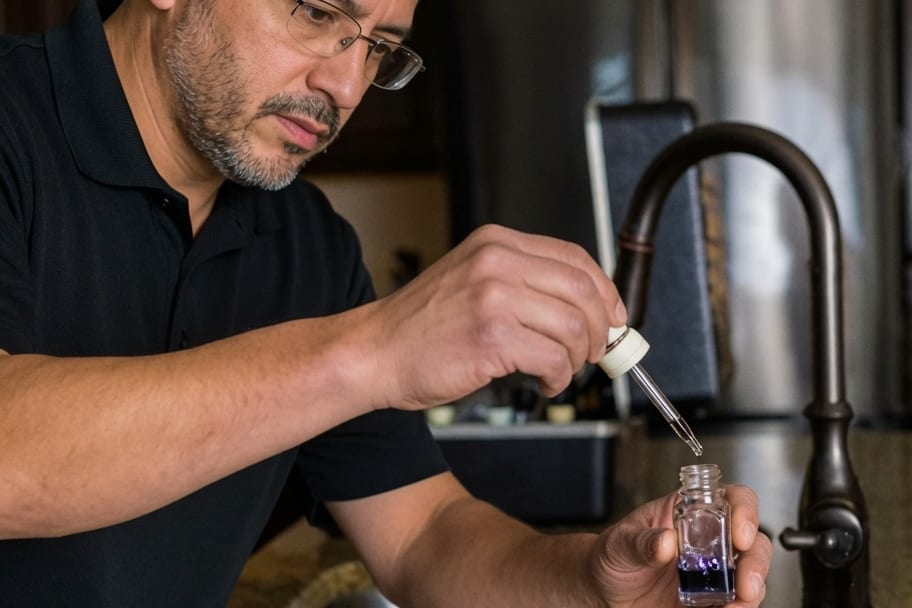
Anything under 6.5 puts copper at risk, and the number you want beside it is alkalinity. EPA’s secondary standard range for pH is 6.5 to 8.5. Secondary standards cover taste, appearance and effects on plumbing rather than health, which is why pH gets ignored on a well report and why it should not be.
Here is what is published about groundwater in this part of the state. The USGS Ground Water Atlas, describing the crystalline-rock aquifers of the Piedmont and Blue Ridge, reports that “the median hydrogen ion concentration, which is measured in pH units, is 6.7; consequently, the water is slightly acidic” (USGS Ground Water Atlas, Segment 11). Statewide, NC DEQ’s private well sampling for 2018 to 2019 found pH outside standards in 12.38 percent of samples (NC DEQ).
Two caveats. A regional median is not your well, and we have no representative Triangle well pH dataset. Private wells around Pittsboro and the Chatham and Wake county well fringe commonly read below that 6.7 median, but we have no representative dataset behind that, and yours could land anywhere.
| pH on your report | What it means for copper | What to do next |
|---|---|---|
| Below 6.0 | Strongly aggressive | Treat, after getting alkalinity and flow rate |
| 6.0 to 6.5 | Below the secondary standard | Treat at the point of entry |
| 6.5 to 7.0 | Inside the standard, soft side | Check alkalinity and copper first |
| 7.0 to 8.5 | Inside the standard | Unlikely culprit; work the other four |
| Above 8.5 | Outside the standard, high side | Not a neutralizer job, but pitting is still possible |
That last row is where most well-water pages go wrong. EPA research by Lytle and Schock reproduced copper pitting at pH 9 in water low in dissolved inorganic carbon with chloride present, and found that raising alkalinity stopped it starting (US EPA Science Inventory). Low pH is a real and common problem on Piedmont wells, but it is not the only chemistry that eats copper, and low alkalinity matters as much.
The useful part for a North Carolina well owner: pH and copper are both on the panel the state already requires. The new-well sampling rule, 15A NCAC 18A .3800 under NCGS 87-97, names both and leaves hardness and alkalinity off, so a recently drilled well already has the two numbers on file. Alkalinity is the one to ask the lab for. What else that panel misses is in our guide to well water testing in North Carolina.
What Actually Fixes the Chemistry Case
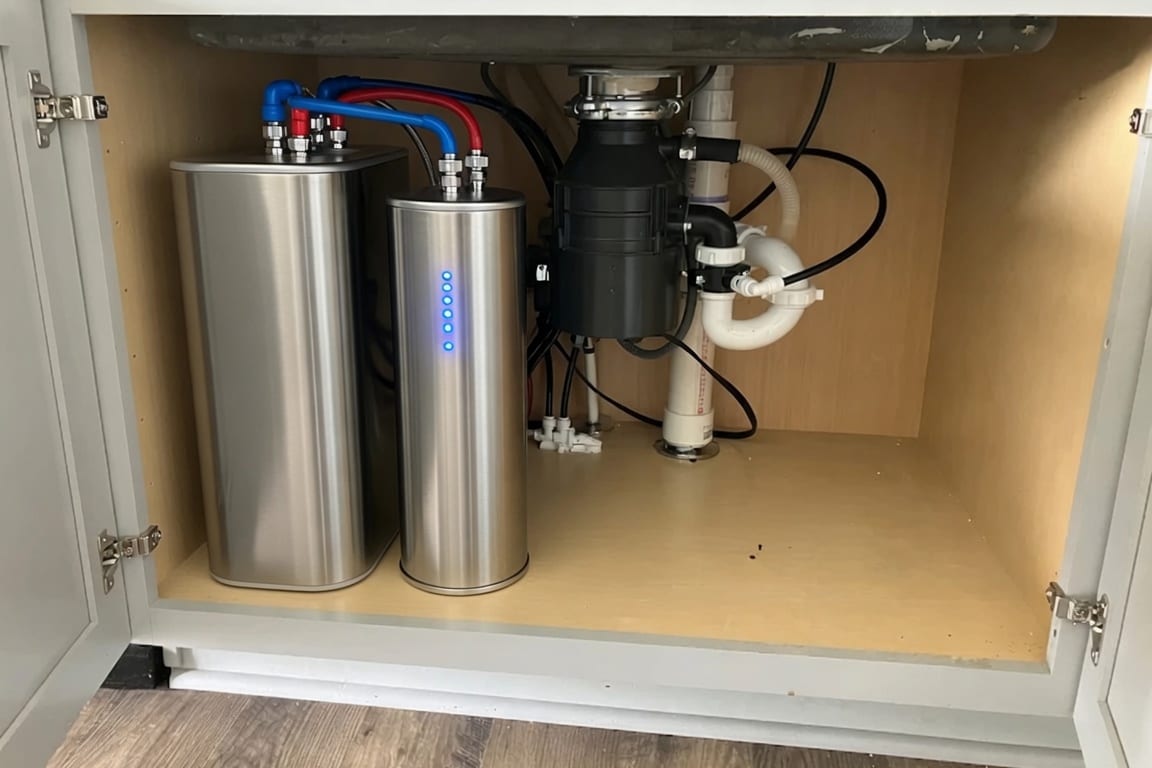
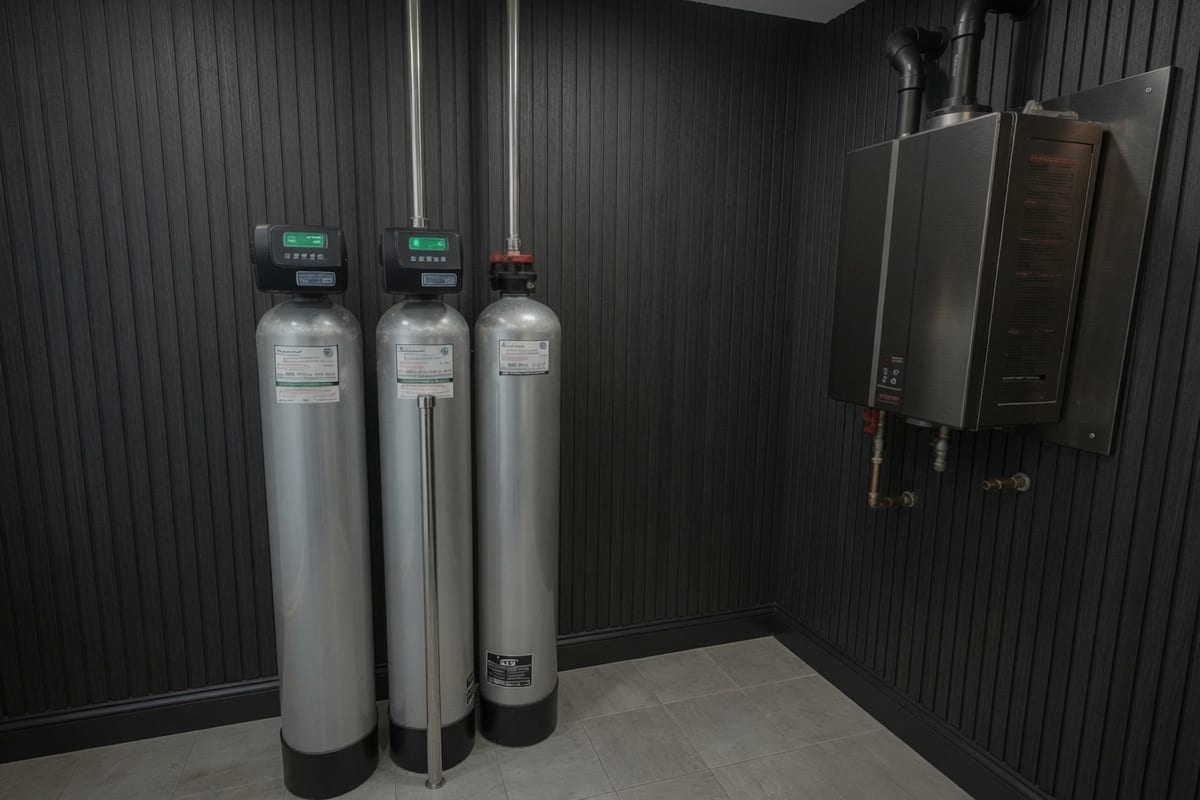
Raising pH at the point of entry protects every foot of copper still in the walls. An acid neutralizer is a tank of calcite media, ground limestone, that the water passes through on its way into the plumbing. The calcite dissolves slowly, lifting pH and adding alkalinity at once, which is the pairing the corrosion research keeps pointing at.
An acid neutralizer runs $1,200 to $2,200 installed, the band published on our water filtration cost guide. That is a planning range, not a quote; sizing depends on flow rate, starting pH and the plumbing layout. The full breakdown, including running costs and when a chemical feed system beats a calcite tank, sits in our acid neutralizer cost guide.
Be clear about what this does and does not do. Raising pH addresses one contributor to copper corrosion, so it can reduce the water-chemistry side of the problem going forward. It is not a guarantee against future leaks, because pH is not the only factor: alkalinity, dissolved oxygen, water velocity, the age and condition of the pipe and the quality of the original workmanship all play a part, and a neutralizer changes none of those. It also does not repair a pipe that already has a hole in it, or restore a wall that has been thinning for fifteen years. Leaks already in the drywall are a plumber’s job. What a measured pH, alkalinity and copper reading gives you is the evidence for whether water chemistry is part of your problem at all.
There is a second reason to fix pH. The same USGS chapter notes that weathering rocks contribute iron and manganese to groundwater “particularly if the water is slightly acidic”, and oxidizing iron filters carry a minimum pH on their specification sheets, typically north of 7. On an acidic, iron-bearing well the neutralizer goes first or the iron filter underperforms from day one. Wells around Fuquay-Varina and Apex hit that pairing often, and our iron and sulfur removal page covers the sequencing.
When Is a Repipe Genuinely the Right Call?
When the pipe is already too far gone to trust, a repipe is the right answer and no water treatment changes that. We install and service water treatment equipment. A repipe is a plumber’s job from the first cut to the last fitting, and anyone in our trade who claims a tank will save a failing system is wrong.
Three situations where the plumber is right:
- Three or more leaks in twelve to eighteen months, on different runs. At that point you are replacing pipe a foot at a time at emergency rates.
- Tube that is simply old. If wall thickness is the limiting factor, chemistry stops being the question.
- A leak inside a slab or finished walls, where access costs more than replacing the run.
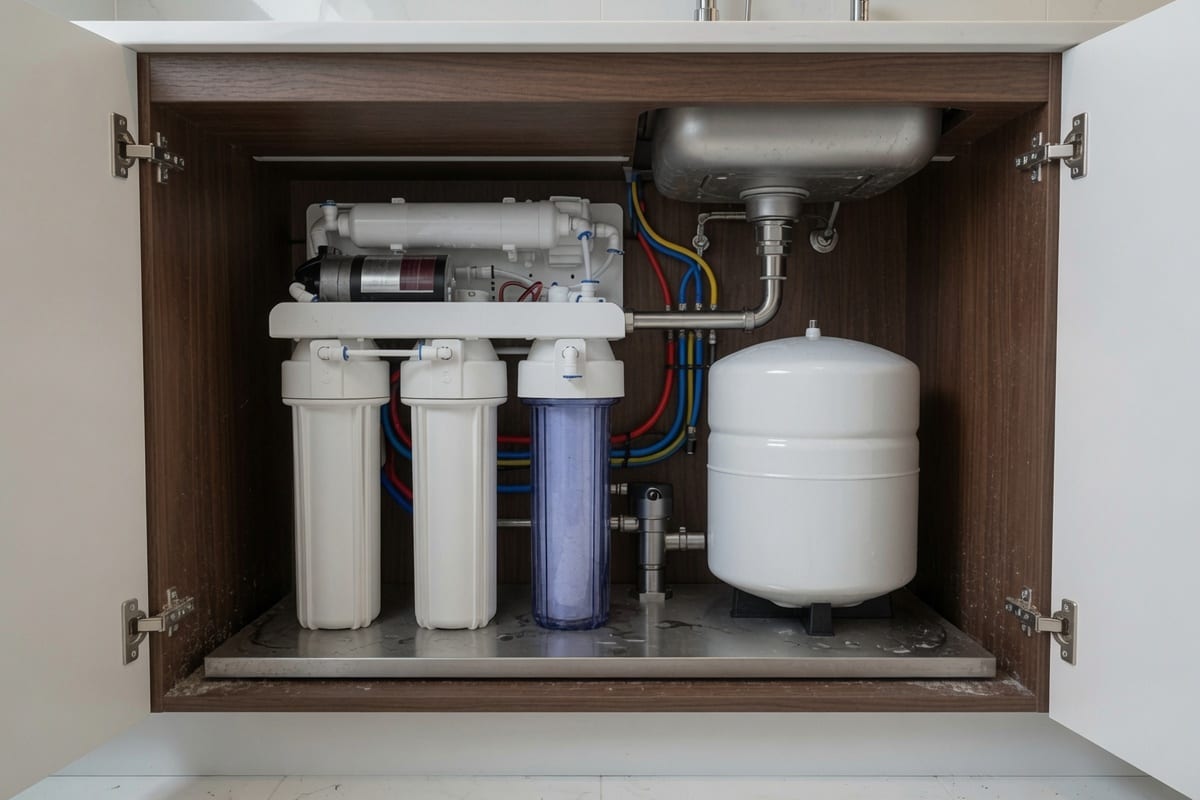
The part a plumber will not always raise, because it is not their trade: repipe without correcting the water and the new metal meets the same chemistry on day one. Plastic pipe does not corrode the way copper does, which is one reason a plumber may propose it, but the brass fittings, the valves and the water heater are still metal in the same water. Our well water treatment page covers what goes on the line and in what order.
Frequently Asked Questions
Can acidic well water really put a hole in copper pipe?
Yes, over years rather than months. Water below the 6.5 secondary standard dissolves copper steadily from inside the tube, which is where blue-green staining and a rising copper result come from. The damage is cumulative, which is why the first pinhole leak in a house is usually followed by others.
How long does it take for low pH to cause a pinhole leak?
Long enough that most people never connect the two. Copper in aggressive water commonly runs a decade or more before the first hole, which is why the leaks feel sudden. Staining is the early warning, and it shows up years ahead of the first drip.
Will a water softener fix acidic water?
No. A softener exchanges calcium and magnesium for sodium and does nothing to pH, so one installed on an acidic well leaves the copper as exposed as it was. Correcting pH takes a neutralizer or a chemical feed system, at $1,200 to $2,200 installed for a typical acid neutralizer. The Raleigh water filtration cost guide carries the full table.
Is it safe to drink water from pipes that are corroding?
Copper is on the panel North Carolina already requires for new wells, and EPA’s action level for copper in drinking water is 1.3 milligrams per litre, so there is a published number to compare against. A rising copper figure tells you about your plumbing rather than your aquifer. Anyone with a health concern should take it to their doctor or county health department rather than a filtration company. If the water tastes metallic as well, our guide to why well water tastes metallic covers how to tell copper from iron, manganese and low pH.
How do I find out my well’s pH?
If the well was drilled under the current state rule, pH is already on the report the county collected. Older wells need a lab panel, and alkalinity is worth adding since the state leaves it out. Homeowners in Chapel Hill and across Orange, Chatham and Wake counties can order it through the county health department or a certified lab, and our water testing page lists what to request.
Stop the Chemistry Before You Buy More Copper
A pinhole leak is a plumbing bill. Acidic water is the reason it keeps being one. Sorting out which of the five causes you have costs one water test and a careful read of the pattern in your house.
We size and install pH correction and well water treatment across Raleigh, Apex, Fuquay-Varina, Pittsboro and the rest of the Triangle, and we read the water before quoting. Pipe work stays with your plumber.
Call (984) 384-6991 or book a free consultation for an up-front written price on treating the water that is eating your pipe.