Why Your Well Water Tastes Metallic in NC
Raleigh Water Pros • September 26, 2026 • 10 min read
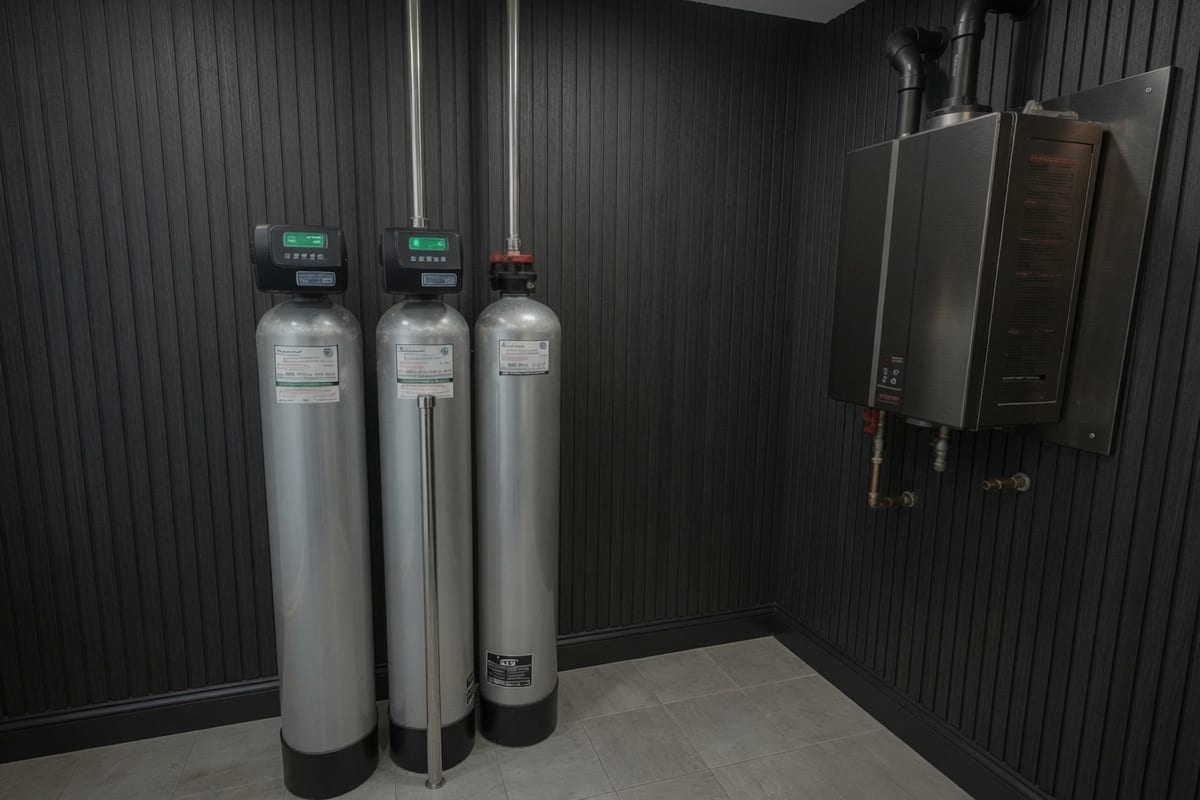
You pour a glass from the kitchen tap and it tastes like a coin. Coffee comes out bitter. If your house is on a private well in North Carolina, that metallic taste is one of the most common complaints there is, and it is also one of the most useful, because the taste is pointing at something specific in the water.
Well water that tastes metallic almost always comes down to iron, manganese, copper dissolved from your own pipes, or water acidic enough to do the dissolving. Each has a different fix.
Here is how to tell the four apart, what North Carolina well data shows, whether the water is safe to drink, and what removes the taste.
Why Does My Well Water Taste Metallic?
Because something metallic is dissolved in it, or the water is acidic enough to pick metal up on the way to your tap. The EPA’s own table of secondary drinking water standards lists a metallic taste as a noticeable effect of five separate things: copper above 1.0 mg/L, iron above 0.3 mg/L, manganese above 0.05 mg/L (“bitter metallic taste”), zinc above 5 mg/L, and low pH or corrosive water (EPA secondary standards).
The EPA does not enforce those standards, and on a private well nobody enforces anything, so they are simply the yardstick for your own lab result.
The taste rarely arrives alone, and the companion symptom usually names the cause.
| What you taste | What you also see | Most likely cause | Where to read more |
|---|---|---|---|
| Metallic, rusty | Orange or reddish stains, water that yellows in a glass | Iron | Iron staining guide |
| Bitter and metallic | Black or brown specks, dark stains in the toilet | Manganese | Manganese black slime |
| Sharp metallic, worse first thing in the morning | Blue-green stains on porcelain | Copper from your own pipes | Blue-green stains |
| Metallic, sometimes chalky | Pinhole leaks, green crust on fittings | Low pH (acidic water) | Pinhole leaks in copper pipe |
| Faintly metallic, nothing else | No stains, no colour | Zinc from galvanized pipe, or low levels of any of the above | A lab panel |
Not sure which row is yours? Request a free consultation and we read the water first, then put any price in writing.
Is It Safe to Drink Water That Tastes Metallic?
The taste itself is an aesthetic problem, but it tells you nothing about the metals you cannot taste, so treat it as a reason to test rather than a verdict. Iron, manganese, copper and zinc produce the taste at levels the EPA classes as nuisance thresholds, not health limits.
The catch is what the taste cannot tell you. The EPA states that “you cannot see, taste, or smell lead dissolved in water,” and that testing is the only sure way to know (EPA, lead in drinking water). The same page explains that lead enters drinking water when plumbing corrodes, “especially where the water has high acidity.” North Carolina’s groundwater fact sheet says the same about arsenic: it “is colorless, odorless and tasteless” (NC DEQ arsenic fact sheet).
So a metallic taste from acidic water means your pipes are dissolving, which is the same condition that lets lead from older solder and brass into the water. The right response is a lab test that includes lead and copper. A specific health question about your results belongs with your doctor or county health department, not a water treatment company.
What Makes North Carolina Well Water Taste Like Metal?
Geology, and it changes completely from the mountains to the coast. North Carolina’s Division of Public Health publishes county summaries of private well samples run by the State Laboratory of Public Health between 1998 and 2010. Iron and pH are both on the required new-well panel, so the counts are large. Here is how the metallic-taste suspects look across the state, with two more recent datasets alongside.
| Place (dataset) | Iron above 0.3 mg/L | pH below 6.5 | What it means for taste |
|---|---|---|---|
| Wake County (NC DPH, 1998 to 2010) | 23.91% of 2,560 wells | 21.45% of 2,578 wells | Both iron and acidic water are common |
| Johnston County (NC DPH) | 32.65% of 1,458 wells | 38.55% of 1,463 wells | The highest acidic share of the Triangle counties in the state data we compared |
| Catawba County (NC DPH) | 23.47% of 507 wells | 20.08% of 513 wells | Piedmont pattern: iron plus acidic water |
| Pitt County (NC DPH) | 31.58% of 133 wells | 5.66% of 159 wells | Iron is common, low pH much rarer |
| Craven County (USGS, 21 Castle Hayne wells, 1986 to 1988) | Median 0.78 mg/L | Median pH 7.25 | Iron is the normal condition, not the exception |
| Buncombe, Henderson, Transylvania (NC DEQ, 103 wells, 2005) | Median below 0.025 mg/L | Median pH 6.2 | Low iron; any metal taste points to pipes |
| North Carolina statewide (NC DEQ, 2018 to 2019) | 16.94% of 10,291 samples | 12.38% outside range | Manganese exceeded in 27.99% |
Sources: the NC DPH county reports for Wake, Johnston, Catawba and Pitt; USGS report WRI 88-4034 for Craven; the NC DEQ 2005 radon and radionuclide well study for the mountain counties; and NC DEQ private well information for the statewide row.
Caveats: NC DPH says its county averages “may not reflect the quality of groundwater in a single well,” and the Craven numbers are nearly forty years old, from one military installation.
The pattern still holds up. Piedmont wells like those around Raleigh, Hickory and Burlington draw from fractured crystalline rock that tends toward acidic, iron-bearing water. Coastal Plain wells around Greenville, New Bern and Jacksonville draw from sand and limestone where iron is common but low pH shows up far less often in the county data. The mountain wells are acidic and soft but, against expectation, low in iron, so a metallic taste there usually means the water is working on the plumbing.
Why Did My Well Water Suddenly Start Tasting Metallic?
A sudden change usually means something in the house changed, not the aquifer. When a taste appears within a week or two, look at the equipment and the plumbing before the well.
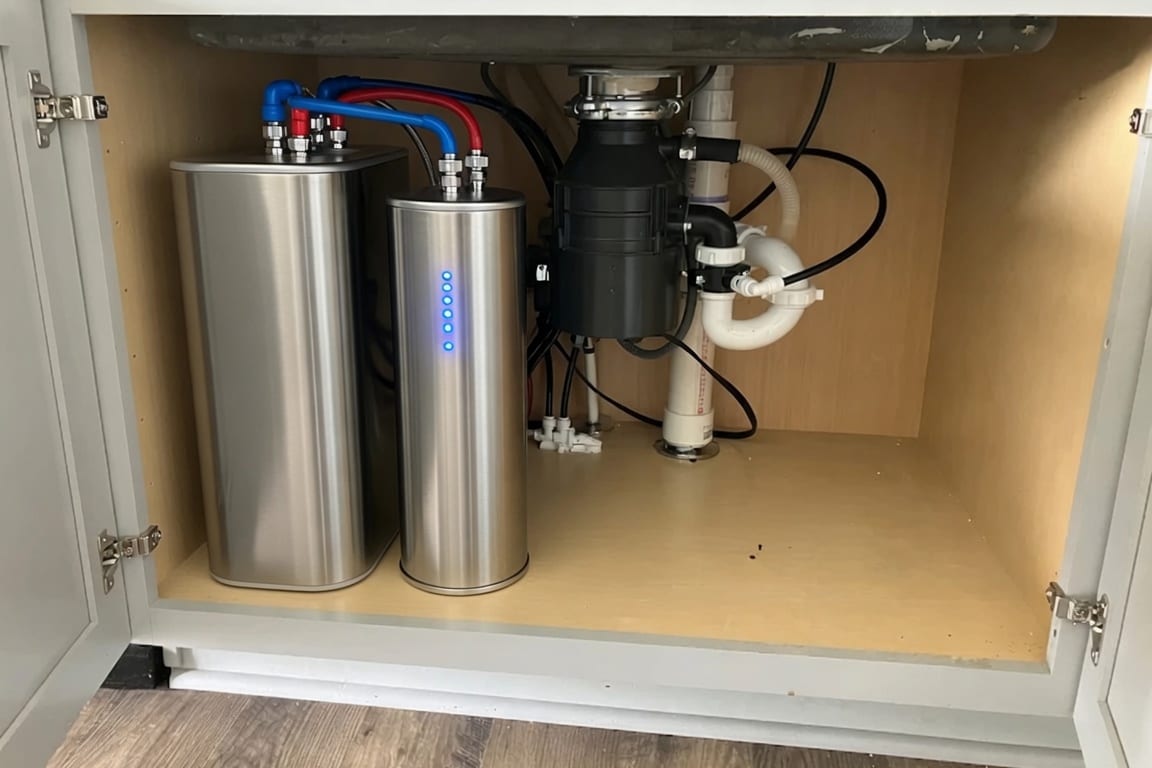
Treatment that has run out. An acid neutralizer works by dissolving calcite media, and when the media runs low the pH drops back and the taste returns. Our acid neutralizer cost guide covers media top-ups. An iron filter that has stopped backwashing properly lets iron straight through.
New plumbing. A repair or addition in new copper, or a new fixture, gives acidic water fresh metal to work on.
Water that sat still. Water that sits in copper overnight picks up more metal than water that has been running. If the first glass of the morning tastes worse than a glass after the tap has run for a minute, the metal is coming from your plumbing, not the well.
A change at the well itself. Storms and pump work can stir up sediment and iron; see why well water turns brown after heavy rain. Repairs at the well are a job for a certified well contractor.
Pro tip: run the two-glass test before you call anyone. Fill one glass from the cold tap first thing in the morning, then run the same tap for two minutes and fill a second. If the first tastes clearly worse, your pipes are the source and pH is the likely cause. If both taste the same, the metal is arriving from the well, and iron or manganese is the likely cause.
How Do You Fix a Metallic Taste in Well Water?
You fix the cause the test identifies, and on most North Carolina wells that means correcting pH before anything else. Here is how each cause is handled.
Low pH. An acid neutralizer raises pH with calcite media so the water stops dissolving copper and lead from your plumbing. On the band in our Raleigh water filtration cost guide, a neutralizer runs $1,200 to $2,200 installed. That is a planning range, not a quote.
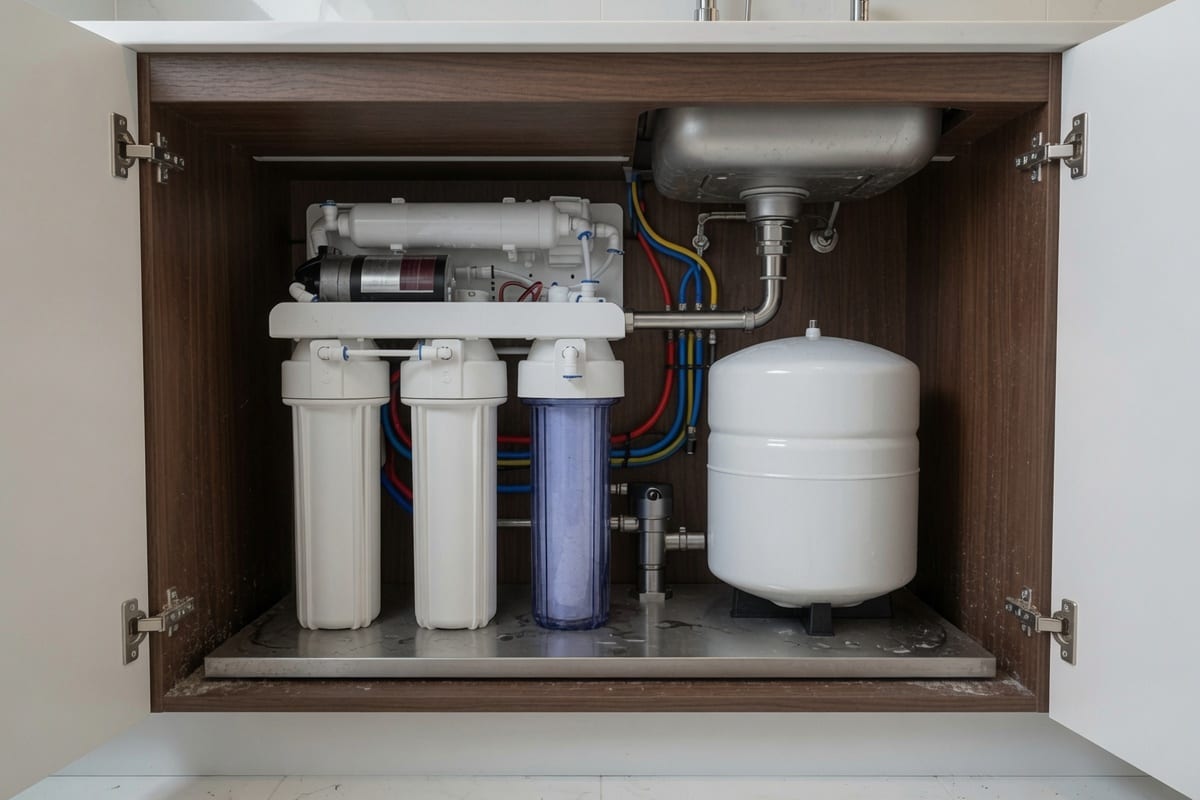
Iron and manganese. An oxidising filter removes them at the point of entry, and our iron and sulfur removal page covers the media. Oxidising media underperform on acidic water, so on a well that is both acidic and iron-bearing the neutralizer goes first. A dedicated filter falls in the $1,800 to $3,500 band for iron and sulfur systems.
Copper from your own pipes. No filter fixes this at the source. Stop the water being corrosive and the copper stops coming out. Filtering copper out at one tap while the rest of the plumbing keeps dissolving is treating the symptom.
When the lab result shows more than one problem, the equipment goes in a set order, explained in what order well water systems go in, and the full range of system prices is in our well water treatment cost guide.
Frequently Asked Questions
Why does my well water taste like blood?
A blood-like taste is iron, the same element that gives blood its taste. It usually arrives with orange staining and water that yellows in a glass as the iron oxidises. A lab result for iron tells you whether a filter is warranted or whether the level is marginal.
Can a water softener remove a metallic taste?
Only partly. A softener can take out a little dissolved iron but does not raise pH, so acidic water stays just as hard on your copper. On an acidic Triangle well in Fuquay-Varina or Clayton, a softener alone usually leaves the taste in place.
Is metallic tasting water bad for my pipes?
If the cause is low pH, yes. Acidic water dissolves copper from the inside of the pipe, and over years that thins the wall until it leaks. Blue-green staining is the early sign and pinhole leaks are the late one.
Does boiling water remove the metallic taste?
No. Boiling is a way to deal with bacteria, not dissolved metals, which stay in the pot when the water is boiled. Testing and treating the water is the fix.
How do I test my well for the cause of a metallic taste?
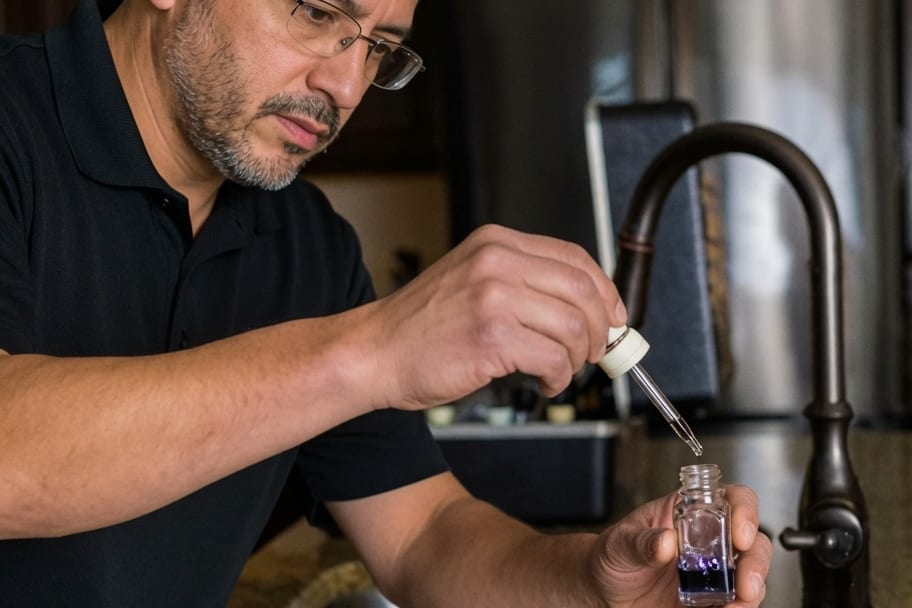
Ask a certified lab for pH, iron, manganese, copper, lead and alkalinity together. Our water testing and analysis page covers what to order, and the NC well water testing guide explains what the state’s required panel does and does not include.
What does it cost to fix a metallic taste in well water?
It depends on the cause. An acid neutralizer runs $1,200 to $2,200 installed and an iron filter $1,800 to $3,500, with the details on our well water treatment page. Homeowners in Holly Springs and Apex can book a free consultation for a written price once the water has been tested.
Sources
- EPA, Secondary Drinking Water Standards, observed 26 September 2026: the metallic-taste effects of copper, iron, manganese, zinc and low pH, and the statement that EPA does not enforce them.
- EPA, Basic Information about Lead in Drinking Water, observed 26 September 2026: lead cannot be seen, tasted or smelled, and acidic water drives corrosion.
- NC DPH county well water reports, 1998 to 2010 State Laboratory of Public Health samples: Wake, Johnston, Catawba and Pitt iron and pH figures.
- NC DEQ, private well information, 2018 to 2019 statewide exceedance rates.
- USGS Water-Resources Investigations Report 88-4034, Castle Hayne supply wells at MCAS Cherry Point, Craven County, 1986 to 1988; and the NC DEQ 2005 study of 103 private wells in Buncombe, Henderson and Transylvania counties.
Get the Metallic Taste Out of Your Well Water
A metallic taste tells you what to test for. Iron and manganese come from the rock, copper comes from your pipes, and low pH is usually why the copper is moving.
We test, size and install well water treatment across Raleigh, Apex, Holly Springs, Fuquay-Varina and Clayton, and we read the water before quoting anything. Work on the well, pump or pipes stays with your well contractor or plumber.
Call (984) 384-6991 or schedule a free consultation for an up-front written price on well water that tastes metallic.