What Order Do Well Water Systems Go In?
Raleigh Water Pros • September 20, 2026 • 10 min read
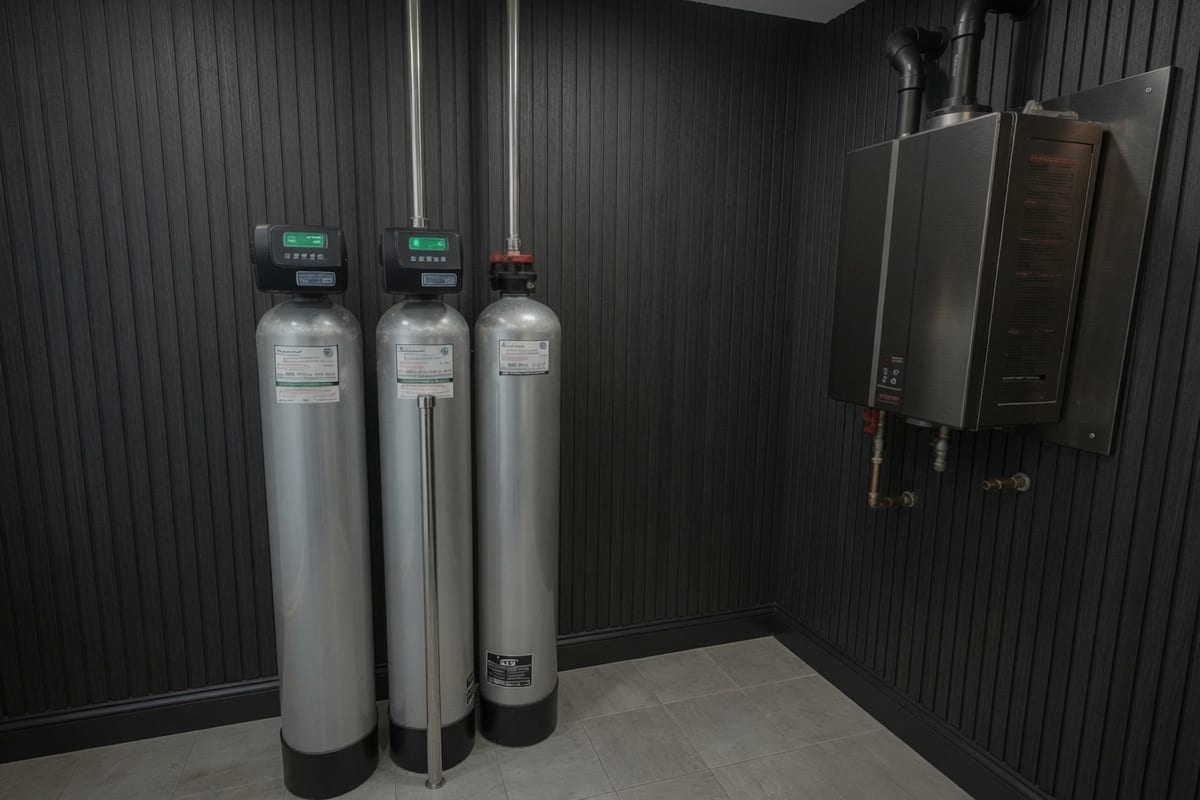
You have a quote with three or four tanks on it and no explanation of why they are plumbed in that particular line. Or you already own two of them, the softener is eating salt faster than it should, and somebody has suggested the iron filter is on the wrong side of it.
The order well water systems go in is not a matter of taste. Each stage exists to hand the next one water it can work on, and reversing any two of them fails in a specific, predictable way: a fouled resin bed, a lamp that cannot reach the bacteria, a filter that strips out what the next filter needed.
This guide gives the standard sequence, explains why every stage sits where it does, and covers the part most pages skip, which is what goes wrong when the order is reversed.
What order do well water systems go in?
From the pressure tank toward the house: sediment first, then iron and sulfur, then the acid neutralizer, then the softener, then carbon, then UV last. Each stage removes something that would damage or disable the one after it, which is why the sequence is the same on almost every well.
| Stage | Equipment | Why it sits here |
|---|---|---|
| 1 | Sediment prefilter | Sand, grit and red clay wreck control valves and channel media beds |
| 2 | Iron and sulfur filter | Oxidized iron fouls ion exchange resin, so it has to come out first |
| 3 | Acid neutralizer | Raises pH for the stages behind it, and adds hardness the softener then removes |
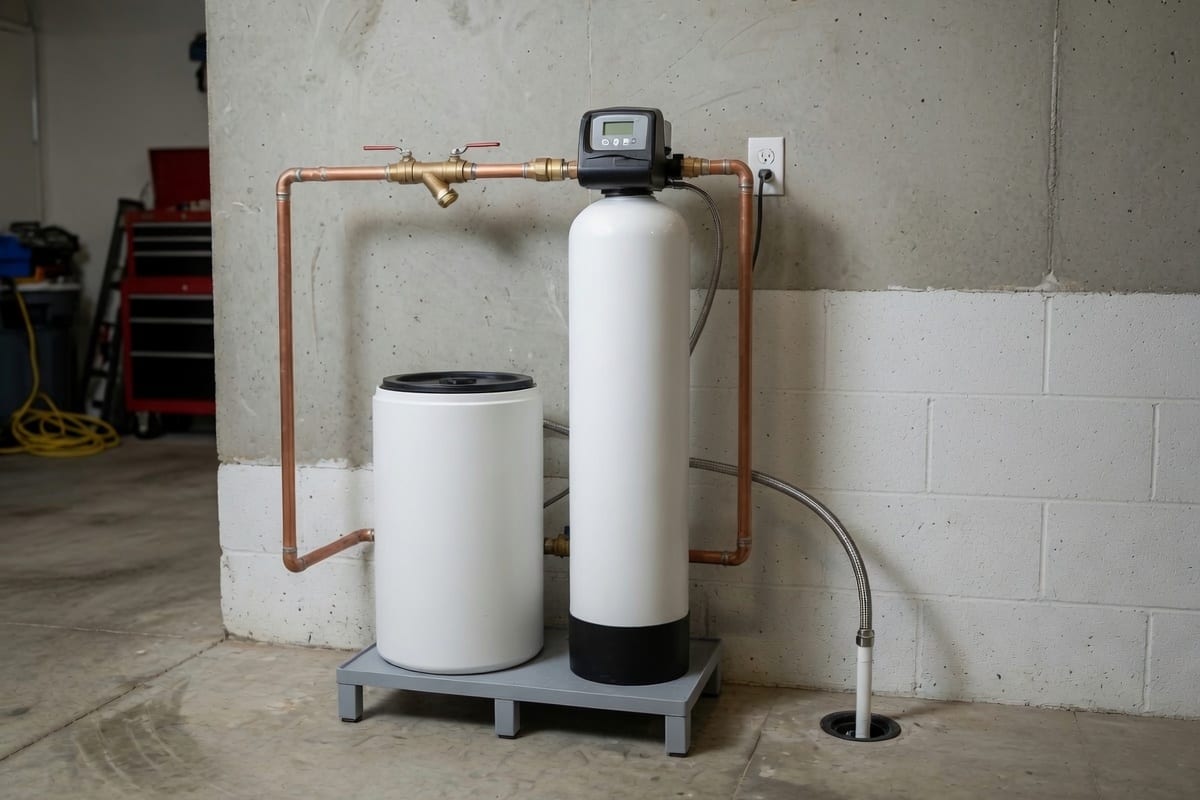
| 4 | Water softener | Removes the hardness that scales heaters and clouds a UV sleeve |
| 5 | Carbon filter | Polishes taste and odour once the heavy lifting is done |
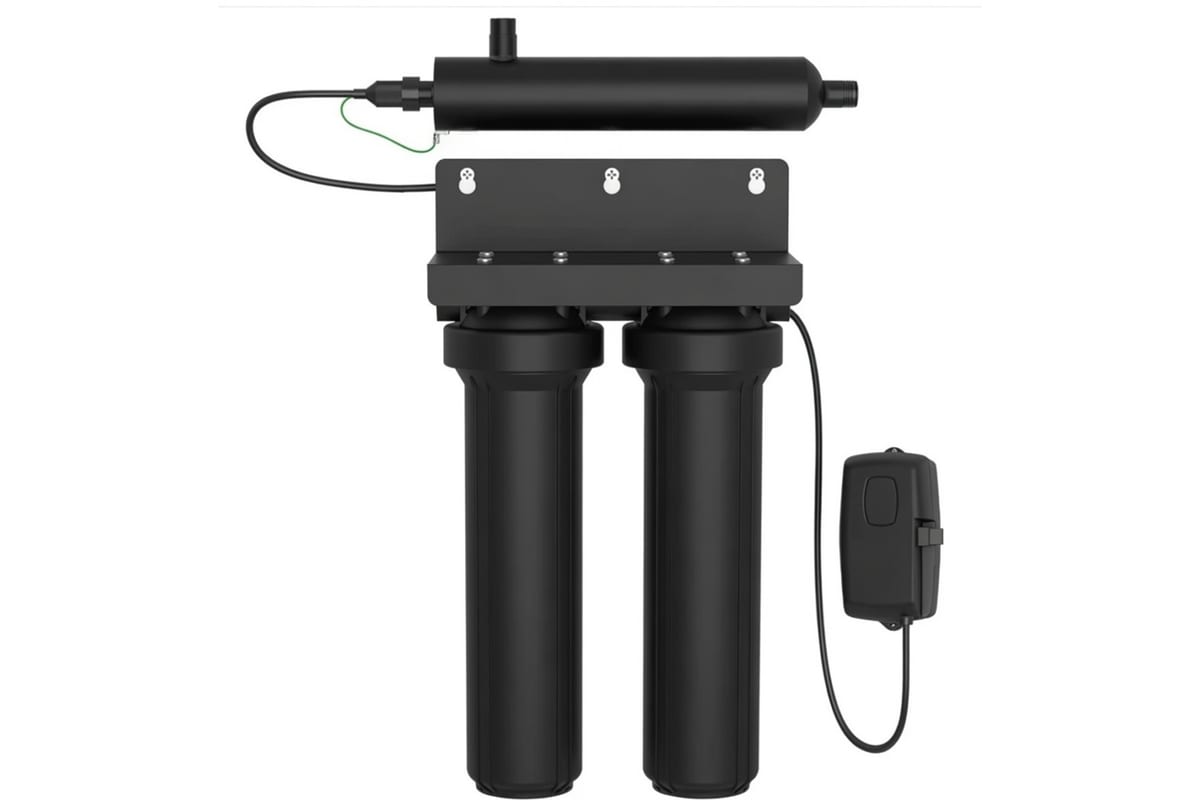
| 6 | UV lamp | Needs the clearest water in the house, so it goes last |
Not every well needs all six. Most Triangle wells need two or three, and the order still holds for the ones you have: you simply skip the stages your water does not call for.
Not sure which stages your water actually needs? Request a free consultation and we test at your tap first, then quote in writing.
Why sediment goes first
Sediment is the cheapest stage and it protects everything behind it. Well water in Wake, Johnston and Chatham counties carries fine red clay, sand from the formation, and grit shed by the well itself, none of which any downstream tank is designed to catch.
Grit does two things. It scores the seals in a control valve, which is the part that regenerates a softener or backwashes an iron filter, and it packs into the top of a media bed until water starts cutting channels through the media rather than flowing evenly across it. A channelled bed looks fine from the outside and treats almost nothing.
A prefilter is also the one stage you can service yourself, so putting it first means the cartridge takes the wear instead of the tanks.
Why iron and the neutralizer both go ahead of the softener
A softener is a bed of ion exchange resin, and iron is what kills it. Penn State Extension puts it plainly: “Oxidized forms of iron and manganese will foul the softener resin. Thus, it is critical that the raw water not come in contact with any oxidizing agents like air or chlorine before entering the softener.” Its guidance on softening is the same in reverse: “Filtration prior to softening insures that oxidized iron is not processed in the softener.”
A softener will handle a modest amount of dissolved iron. UGA Extension puts the working ceiling at 5.0 ppm of combined iron and manganese. Above that, or where the iron has already met air, the iron belongs in a dedicated iron and sulfur removal stage ahead of the resin.
The acid neutralizer sits ahead of the softener for a different reason. Calcite media works by dissolving into the water, so it lifts pH by adding calcium, which means it adds hardness. Penn State notes that neutralizing filters “may cause a noticeable increase in the hardness of your water”. Put the neutralizer after the softener and you have just re-hardened the water you paid to soften.
Between those two stages the order is conditional rather than fixed. Oxidizing iron media carry a minimum working pH on their own specification sheets, and acidic water sits below it, so on a low-pH well the neutralizer usually moves ahead of the iron filter. Raising pH first also helps dissolved iron come out of solution where the filter can catch it. On a well with normal pH, iron first is the simpler build.
Pro tip: ask for a sample port between each stage. Three small taps cost almost nothing at install and they are the only way to tell which stage has stopped working when the water goes off two years later. Without them, diagnosing a six-stage train means guessing or pulling it apart.
Why carbon comes after the softener
Carbon handles taste, odour and any chlorine residual, and it does that best on water that has already had the iron and hardness taken out of it. Run raw well water through carbon first and the bed loads up with iron and sediment it was never meant to hold, so the carbon you bought for taste is spent on particles.
There is one place carbon is not optional. If the iron stage uses chlorine injection, the residual has to come out afterwards, and Penn State’s guidance is direct: “It may be necessary to install an activated carbon filter to remove the objectionable taste and odor from the residual chlorine.” That is the same reasoning as on city water, where carbon filtration is the stage that handles disinfectant taste.
Why UV always goes last
UV kills bacteria with light, so anything that blocks light blocks the treatment. UGA Extension lists what interferes: “Color, turbidity, scale build-up due to hard water, and organic impurities in water interfere with the transmission of the ultraviolet energy.”
That single sentence explains the whole sequence in reverse. Sediment shadows bacteria from the lamp, iron both shadows the lamp and stains the quartz sleeve, and hardness scales the sleeve until a working lamp is delivering a fraction of its rated dose through a clouded window. So the lamp goes at the end of the line, where the water is the clearest it will ever be in that house.
Two limits worth knowing, and one myth worth killing. UV disinfects, it does not filter, so it removes nothing at all from the water: the sediment, iron and hardness leave the chamber exactly as they arrived. And it inactivates organisms rather than removing them, which is why the water has to be clear enough for the light to reach them in the first place.
The myth is that UV cannot handle Giardia and Cryptosporidium. Older guidance said exactly that and you will still find it repeated, including in some extension material. It is wrong. EPA’s Long Term 2 Enhanced Surface Water Treatment Rule sets UV dose credits for inactivating Cryptosporidium, Giardia and viruses at 40 CFR 141.720(d), and UV is in that rule’s microbial toolbox largely because both protozoa resist chlorine and are readily inactivated by UV. Dose and validated performance still matter, but “UV does not work on Crypto” is the opposite of the regulatory position.
What UV is genuinely not is a repair. UV purification answers a confirmed coliform result on a sound, sealed well. It does nothing about a cracked casing, a failed cap or a bad grout seal, and a well with one of those needs the defect corrected by a certified well contractor rather than a lamp installed downstream of it.
What happens when the order is wrong?
The failures are specific, and each one shows up as a symptom people usually blame on the wrong tank.
| Wrong order | What you see | What is actually happening |
|---|---|---|
| Softener ahead of the iron filter | Orange tint returns, salt use climbs, resin life collapses | Iron is coating resin the softener cannot regenerate off |
| Neutralizer after the softener | Water still feels hard, spotting continues | Calcite is adding hardness downstream of the only stage that removes it |
| UV ahead of the filters | Lamp reads fine, bacteria results still positive | Particles are shielding organisms from the light |
| Carbon first | Taste improves briefly, pressure drops early | The bed is loading with iron and sediment instead of organics |
| No sediment stage | Valves stick, media channels, tanks underperform | Grit is reaching parts that were never meant to see it |
The expensive one is the first row. Resin fouled with oxidized iron is usually a replacement rather than a clean, and homeowners in Fuquay-Varina and Holly Springs find it after paying for a softener that was sized correctly and plumbed wrongly. Our iron filter cost guide covers what the upstream stage runs.
Which stages does your well actually need?
Only testing answers that, and the test has to come before the layout. These are planning ranges from our Raleigh water filtration cost guide, never quotes.
| Stage | Installed, typical |
|---|---|
| Sediment prefilter | Cheapest stage, priced with the job |
| Iron and sulfur filter | $1,800 to $3,500 |
| Acid neutralizer | $1,200 to $2,200 |
| Water softener | $1,500 to $3,500 |
| Whole house carbon filter | $1,500 to $3,500 |
| UV disinfection | $700 to $1,500 |
Hardness is the stage people guess at most often, and it is the one number nobody can give you. Private wells around the Triangle commonly run far harder than city water, but we have no representative dataset that would predict yours, and yours could land anywhere. That is not an accident: General Statute 87-97(h) lists what a new private well must be tested for, and hardness is not on it, which is why no dataset exists to quote. Measure it at your own tap, ahead of any treatment already fitted.
Frequently Asked Questions
Does the softener go before or after the iron filter?
After, always. The iron filter removes what would otherwise foul the resin, and Penn State Extension’s guidance is that filtration ahead of softening keeps oxidized iron out of the softener entirely. Reversing the two puts the expensive consumable in front of the problem.
Does an acid neutralizer make my water harder?
Yes, and that is expected. Calcite raises pH by dissolving calcium into the water, and Penn State notes it “may cause a noticeable increase in the hardness of your water”. That is exactly why the neutralizer belongs upstream of the water softener rather than after it.
Can the UV lamp go somewhere other than last?
Not usefully. Turbidity, iron and scale all block the light, so a lamp placed early is treating water it cannot see through. Well owners around Clayton and rural Chatham County who get repeat positives after installing UV are usually looking at a placement problem rather than a lamp problem.
Where does reverse osmosis fit in the order?
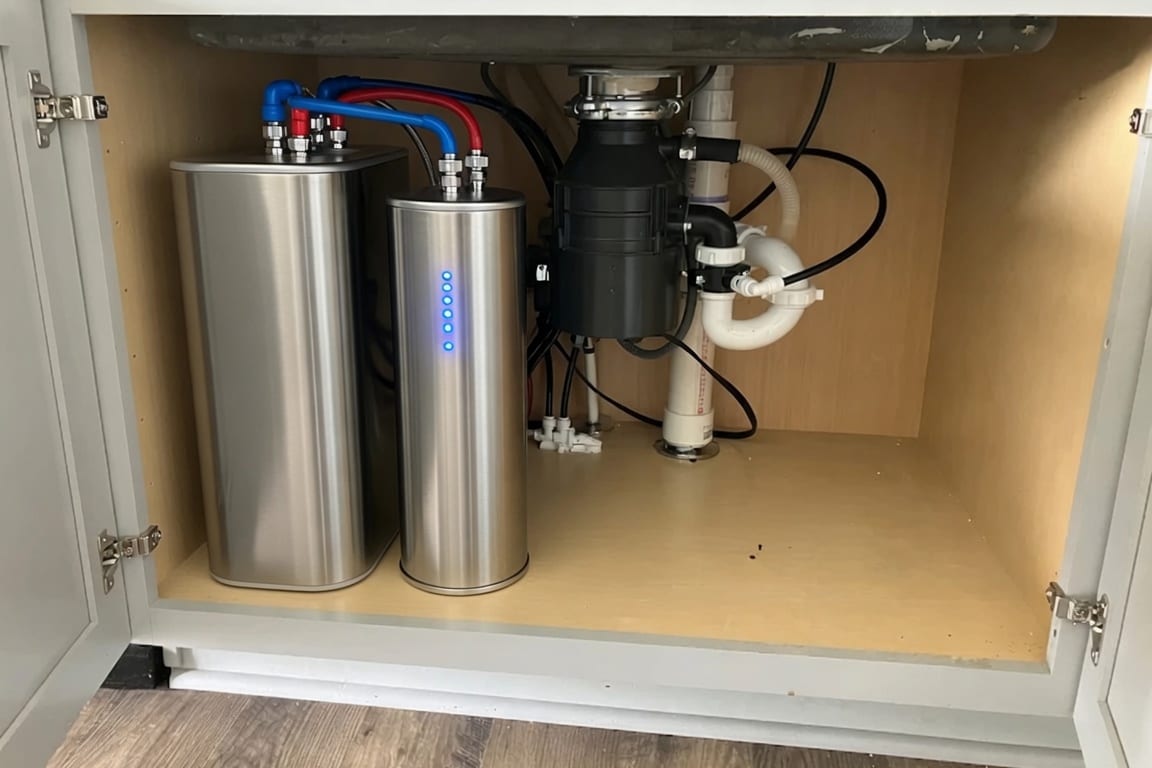
At the end, and usually at one sink rather than the whole house. An under-sink unit sits after every whole-house stage, which is what protects the membrane: sediment, iron and hardness shorten membrane life faster than anything else.
Do I still need a sediment filter if I have an iron filter?
Usually yes. An iron filter is built to oxidize and trap iron, not to catch sand and clay, and grit in the control valve is a common cause of a backwashing filter that quietly stops backwashing properly.
What does a full well water system cost?
A complete multi-stage build runs $4,000 to $8,000+ installed, and a two-stage build costs far less. Our well water treatment cost guide breaks it down by how many problems the water has, and every figure is a planning range rather than a quote.
Get your well water tested and the order right the first time
Getting the sequence right costs nothing extra at install and a great deal to correct afterwards, which is the whole argument for testing before anyone draws a layout. We size and install complete well water treatment for homes around Fuquay-Varina, Holly Springs, Clayton and Pittsboro, and we will tell you plainly when your water needs two stages rather than six.
Call (984) 384-6991 or book a free consultation for an up-front written price on only the stages your results support.
Sources
- Penn State Extension, Iron and Manganese in Private Water Systems, for oxidized iron fouling softener resin and for carbon after chlorine injection.
- Penn State Extension, Water Softening, for filtration ahead of softening.
- Penn State Extension, Lead in Drinking Water, for acid-neutralizing filters adding calcium, raising pH and increasing hardness.
- UGA Extension B939, Water Quality and Common Treatments for Private Drinking Water Systems, for the 5.0 ppm iron and manganese ceiling on softeners and for what interferes with UV.
- NC General Statute 87-97, subsection (h), for the required new-well analyte list, which does not include hardness.