Is Durham Tap Water Safe to Drink? (2026)
Raleigh Water Pros • September 26, 2026 • 9 min read
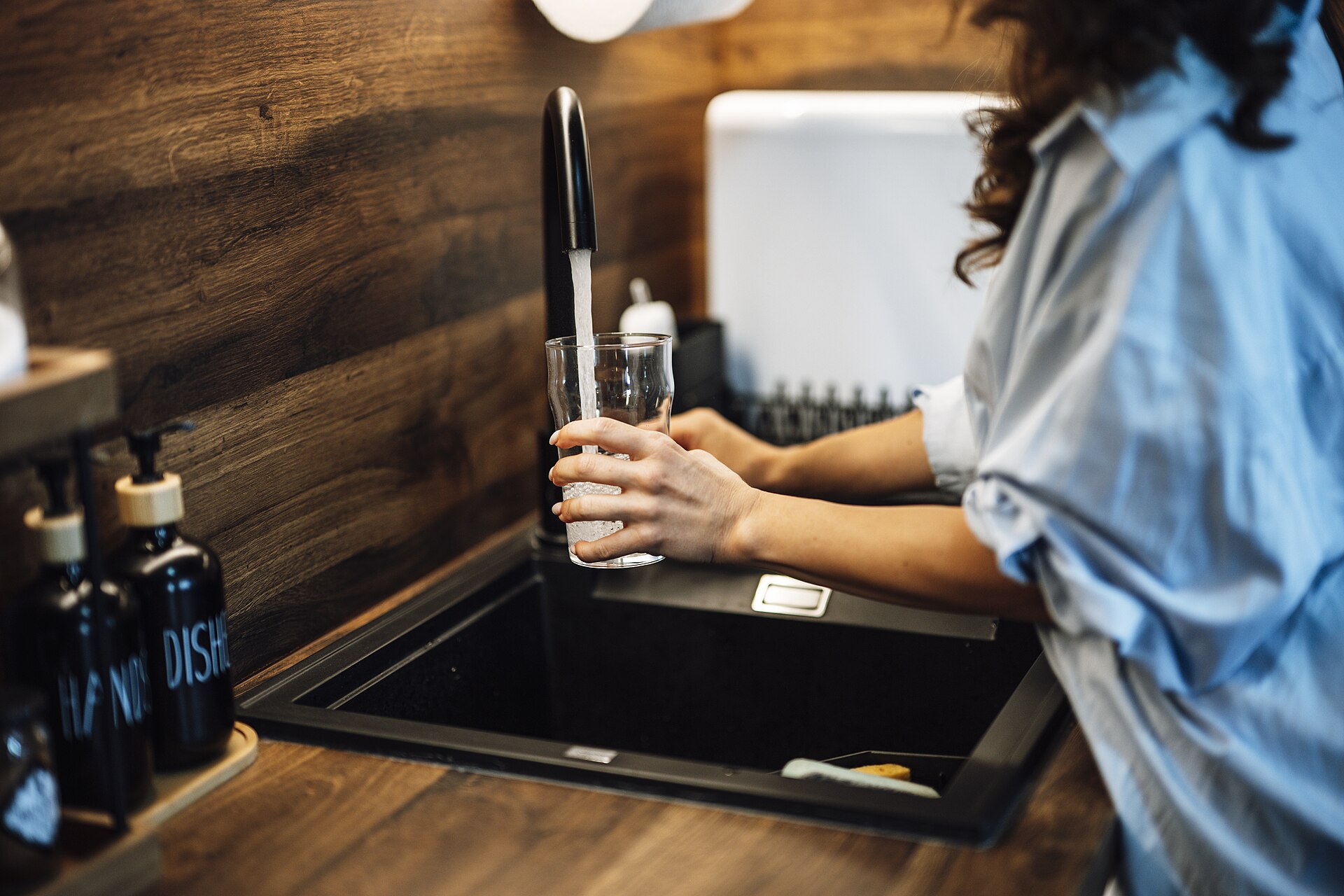
Durham’s water has two live stories in 2026: a PFAS treatment project and a drought. Put them together and it is easy to think something is wrong with the tap. The City of Durham’s annual report answers the question directly.
Is Durham tap water safe to drink? By every published measure, yes. The useful part is what sits inside that yes: a PFAS level the city itself calls “right at the proposed EPA limits”, a spring disinfectant change that many customers notice, and soft water that no softener salesman should be pitching.
Below: the source, the 2025 report, the PFAS plan, the drought, and what is worth filtering.
Is Durham tap water safe to drink?
Yes. Durham’s 2025 annual drinking water quality report states that “During 2025, or during any compliance period that ended in 2025, we received no violations”, and lead was not detected at the 90th percentile.
EPA’s record shows four violations in the system’s whole history, none health based; the latest was a February 2023 reporting item, results filed three days late.
Safe does not mean empty. Durham water carries a chloramine residual for about ten and a half months a year, and its PFAS readings sit close to the new federal limits. Neither is a violation.
Where does Durham’s water come from?
Two city reservoirs: Lake Michie and Little River Reservoir. The 2025 report says so in one line: “The water that is used by this system is surface water and is located at Lake Michie and Little River Reservoir.”
Two plants treat it: Brown on Infinity Road, permitted for 42 million gallons a day, and Williams on Hillandale Road, for 22. The system serves 333,490 people, per the city’s 2025 filing with the state.
Durham also holds a Jordan Lake allocation of 16.5 million gallons a day, but can only take that water already treated, through Cary. In 2025 that happened on a single day.
| Where you live | Water system | Source |
|---|---|---|
| City of Durham, and some customers outside city limits | City of Durham, NC0332010 | Lake Michie, Little River Reservoir |
| Chapel Hill and Carrboro | OWASA, NC0368010 | Cane Creek Reservoir, University Lake |
| Northern and eastern Chatham County | TriRiver Water, Chatham County North | Jordan Lake, plus about 30 percent bought from Durham (June 2026) |
| Rural Durham County on a private well | Your own well | Groundwater |
If you are in Chapel Hill or Carrboro, none of the Durham numbers below apply to you; our Chapel Hill tap water guide covers OWASA’s report instead.
Want to know what is in your own glass rather than the city average? Request a free consultation and we measure your tap first, then put the readings in writing.
What does Durham’s 2025 water report show?
Disinfection byproducts under their limits, lead not detected at the 90th percentile, and no violations.
| Published figure, 2025 | Durham result | Limit |
|---|---|---|
| Total trihalomethanes, highest locational average | 56 ppb | 80 ppb |
| Haloacetic acids, highest locational average | 49 ppb | 60 ppb |
| Chloramines, annual average | 1.5 ppm (0.01 to 3.0) | 4 ppm |
| Lead, 90th percentile (June to September 2025) | not detected, 0 sites above the action level | action level 15 ppb |
| Copper, 90th percentile | 0.105 ppm | action level 1.3 ppm |
| PFOA, average of four quarters | 3.8 ppt (2.8 to 5.7) | 4 ppt, compliance from 2029 |
| PFOS, average of four quarters | 5.6 ppt (4.6 to 7.2) | 4 ppt, compliance from 2029 |
One byproduct note is worth reading in full. In its 2024 report the city disclosed that while it met the running-average rule for haloacetic acids, “we exceeded the HAA5 MCL in individual tests at seven testing locations.” It notified the state and those property owners, and received no notice of violation. In 2025 even the highest single haloacetic acid result printed, 48 ppb, was under 60.
Lead is the cleanest line in the report. As of 1 December 2025, the city says, “no lead service lines have been found in Durham,” though it is still working through lines classed as unknown material.
Is there PFAS in Durham water?
Yes, at levels Durham itself describes as “right at the proposed EPA limits.” The city’s 2025 testing found PFOA averaging 3.8 parts per trillion and PFOS averaging 5.6 parts per trillion in treated water. EPA set a limit of 4 parts per trillion for each in 2024. The compliance date of 2029 has not arrived, EPA has proposed allowing extensions to 2031 (a proposal, not a final rule), and the city reports no violation.
Its PFAS project page says: “Some results are higher than the limits, others results show that we’re just under them,” and “The current treatment processes at Durham’s WTPs do not effectively remove PFAS.” The plan is a powdered activated carbon system, which the city says “will be implemented by 2029, sooner if possible.” A design team was selected in its April 2026 update, with a last round of jar testing set for May 2026.
EPA’s federal sampling in 2023 landed in the same place: PFOS 4.5 to 5.8 parts per trillion, PFOA detected once at 4.1. Durham says it has never detected GenX.
1,4-dioxane is a different story from Pittsboro’s. All six state samples of Durham water in 2022 were non-detect. Durham’s reservoirs sit in the Neuse basin, not on the Haw River, which is covered in our guide to 1,4-dioxane in the Haw River.
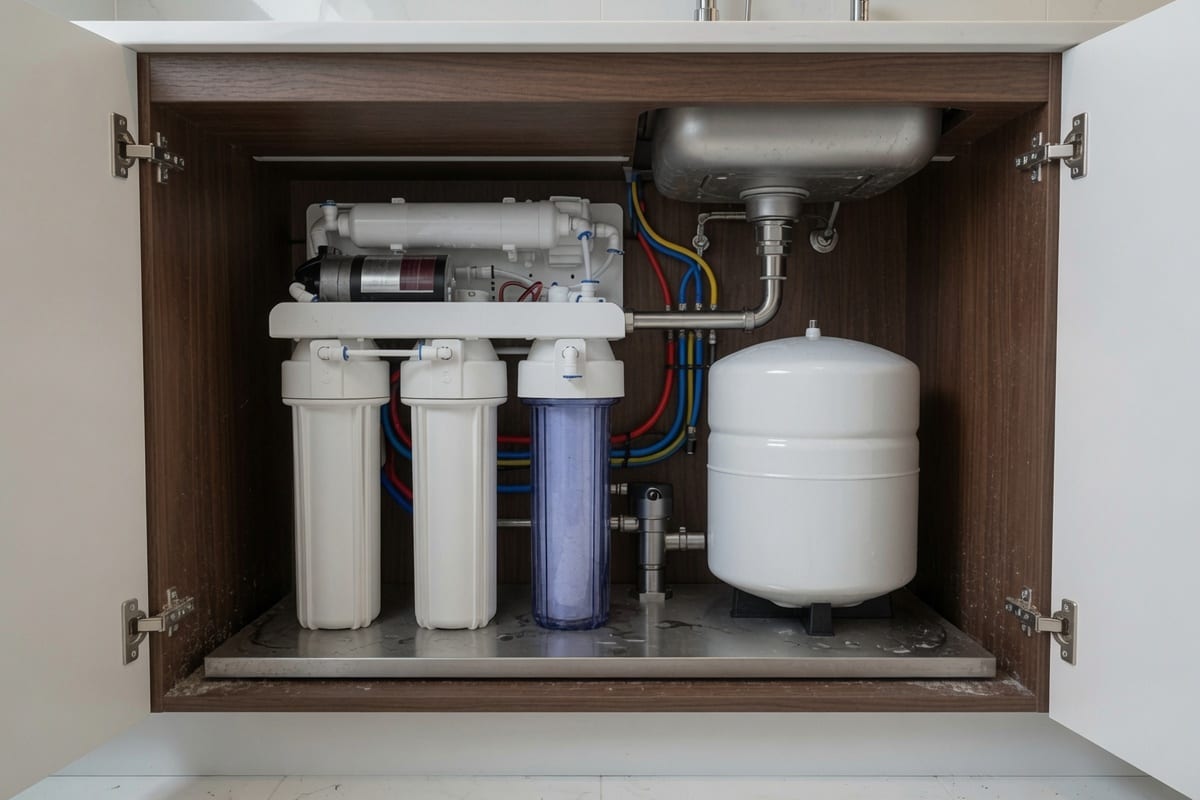
For anyone who wants PFAS taken from “near the limit” to “much lower” at the kitchen tap before 2029, an under-sink reverse osmosis drinking water system is the household tool, and our Triangle PFAS and GenX guide compares the region’s utilities.
Does Durham have hard water?
No. Durham’s last published hardness figure was 25 to 26 milligrams per litre, about 1.5 grains per gallon, in its 2023 report. The 2024 and 2025 reports do not print a hardness figure at all, so that 2023 number is the newest one available.
The US Geological Survey classifies anything under 60 milligrams per litre as soft, and Durham sits well inside that band. A softener has very little to remove on a Durham city meter; if someone quotes one on hardness grounds, ask to see the reading.
The picture changes on a private well in rural Durham County, where hardness is unknown until it is measured and state lab data show manganese is the more common problem. That is covered in our Durham water treatment cost guide.
Why does Durham water taste different in the spring?
Because the city stops adding ammonia for about six weeks, and the water runs on free chlorine instead of chloramine. In 2026 that ran from 27 February to 13 April. Durham has disinfected with chloramine, chlorine combined with ammonia, since 2002.
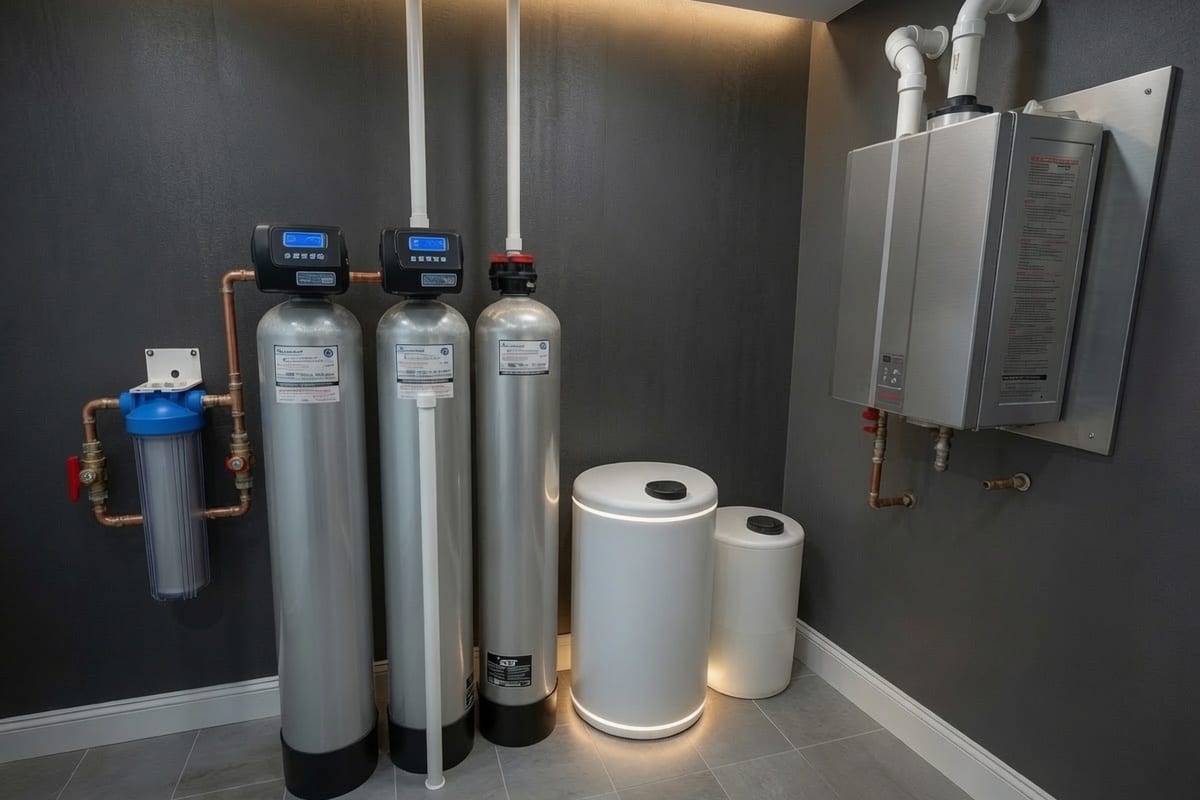
For the rest of the year the residual is chloramine, which standard carbon handles poorly. That is why a Durham filter needs catalytic carbon, explained in our guide to catalytic versus standard carbon for chloramine. The carbon filtration page covers sizing, and our annual chlorine switch guide explains why North Carolina utilities do this.
Pro tip: Durham’s changeover runs about six weeks, longer than OWASA’s March-only switch in Chapel Hill. If you notice a pool smell in late February, check the city’s news page before you call anyone about your filter.
Is Durham still in a drought?
Yes, as of 26 September 2026. Durham has been in a Stage 2 Water Shortage Response since 15 June 2026. Under Stage 2, “No spray irrigation is allowed”, and the city says restrictions “remain in effect until both reservoirs return to full levels.”
The Stage 2 announcement is about how much water is used, not what is in it. The restrictions also bind the Chatham County North district, which buys about 30 percent of its water from Durham under a contract that follows Durham’s restrictions. Check the city’s alert page before assuming the stage has changed.
Frequently Asked Questions
Is Durham NC tap water safe to drink?
Yes. Durham’s 2025 report lists no violations for any compliance period ending in 2025, lead was not detected at the 90th percentile, and byproducts sat under their limits. PFAS readings are close to the 4 parts per trillion limits EPA set in 2024, whose 2029 compliance date has not arrived (EPA has proposed allowing extensions to 2031).
Does Durham have a PFAS problem?
It has PFAS at levels the city calls “right at the proposed EPA limits”: PFOA 3.8 and PFOS 5.6 parts per trillion on average in 2025. There is no violation, the compliance date has not arrived, and the city is designing powdered activated carbon treatment for 2029. An under-sink RO unit lowers it further at your own tap.
Does Durham NC have hard water?
No. The city’s 2023 report put hardness at 25 to 26 milligrams per litre, about 1.5 grains per gallon, which is soft. The 2024 and 2025 reports print no hardness figure. A softener is a private well question in Durham County, not a city water one.
Why does my Durham water smell like a pool?
Chloramine for most of the year, and free chlorine between 27 February and 13 April 2026 when the city stopped adding ammonia. Both are legal and under the limit of 4 parts per million. A whole house catalytic carbon filter removes either.
Are there lead pipes in Durham?
The city says that as of 1 December 2025 “no lead service lines have been found in Durham”, though it is still identifying lines classed as unknown material. In older neighborhoods, lead is more likely to come from old solder or fixtures inside the house, which only a test at your own tap can show.
Is Chapel Hill water the same as Durham’s?
No. Chapel Hill and Carrboro are served by OWASA from Cane Creek Reservoir and University Lake, a separate system with its own report. Our Chapel Hill water filtration page and tap water guide cover it.
Sources and reporting dates
- City of Durham 2025 Annual Drinking Water Quality Report, posted 30 June 2026, plus the 2024 and 2023 reports for the HAA5 note and hardness.
- City of Durham PFAS Treatment Upgrade Project and Annual Disinfection Changeover pages, and its news releases of 16 February 2026 (changeover dates), 11 June 2026 (Stage 2) and 5 December 2025 (lead service lines).
- NC DEQ Local Water Supply Plan for Durham, 2025, for sources, plant capacities and the Jordan Lake arrangement.
- EPA’s UCMR 5 occurrence data and violation records for NC0332010, read September 2026. NC DEQ 2022 1,4-dioxane sampling.
- EPA’s proposed PFOA and PFOS compliance extension, proposed 18 May 2026, not final; the US Geological Survey hardness classification.
A system average does not describe every address on every day. Check the current report before acting on any single number.
Durham tap water, answered
Durham’s water passes every test it is required to pass. The honest watch items are PFAS near the future limit until the city’s carbon system arrives, and chloramine taste for most of the year. Soft water means a softener is rarely the answer on a city meter.
Every visit starts with a free consultation in Durham, Chapel Hill, Pittsboro or Raleigh: we test at your tap, compare it with what the city publishes, and give you an up-front written price for only what the readings support, including when that is nothing. Planning ranges sit on our water filtration cost page. Call (984) 384-6991 or book your free consultation.