Raleigh Water Chlorine Switch: Taste and Smell
Raleigh Water Pros • September 20, 2026 • 10 min read
In late February, the water in a lot of Raleigh kitchens starts to smell like a swimming pool. Coffee tastes thin. A glass poured for a guest gets a raised eyebrow. Then, weeks later, it goes back to normal and nobody explains what happened.
What happened is the Raleigh water chlorine switch, and it is scheduled. Once a year, Raleigh Water stops adding ammonia at its treatment plants, which turns the disinfectant travelling through the mains from chloramine into plain free chlorine for about five weeks. It is deliberate, it is recommended by the state, and the water is safe throughout. The taste is a side effect of a maintenance practice, not a sign of a problem.
This post covers what the changeover is, why utilities do it, when it happens, what you will notice, and what removes the taste if you would rather not wait it out.
What is Raleigh’s annual chlorine switch?
For about five weeks each late winter, Raleigh Water stops feeding ammonia, so the disinfectant in the pipes becomes free chlorine instead of chloramine. The utility calls it the chlorine burnout and publishes the exact window as a footnote in its own monthly water quality report.
For the other forty-seven weeks of the year, Raleigh runs chloramine: chlorine combined with a small amount of ammonia, which holds its disinfecting power far longer as water travels the system’s roughly 2,600 miles of water line. During the burnout, the ammonia feed simply stops. Nothing else about the water changes.
You can see it in the published numbers: finished water ammonia at the E.M. Johnson plant sat between 0.43 and 0.64 mg/L in every month of 2026 except March, when it dropped to 0.05 mg/L. That single low month is the changeover.
Why do utilities switch to free chlorine at all?
Because free chlorine is the more aggressive disinfectant, and a few weeks of it each year clears biological growth out of the distribution system that chloramine is too gentle to reach.
Raleigh Water puts the reasoning in the state’s own words in its customer newsletter: to promote optimal disinfection throughout the water distribution system, the North Carolina Department of Environmental Quality “recommends Raleigh Water and all other public water systems using chloramine disinfection switch to chlorine-only disinfection for a minimum of three (3) consecutive weeks every year or every other year.” The same newsletter notes plainly that the switch “can produce a temporary ‘chlorine taste and odor’ in some cases.”
Chloramine is chosen precisely because it is stable and long-lasting, which is what you want for a residual that has to survive miles of pipe. The trade-off is that a stable disinfectant is a less aggressive one. A short annual run of free chlorine is the housekeeping that keeps the mains in order. New Bern’s water quality report describes its own version the same way: it is “customary for water systems using chloramines to revert back to free chlorine for 4-6 weeks annually,” and “a standard water treatment practice.”
When does the chlorine switch happen each year?
Late February to early April, with the exact dates published by the utility each year. Two windows are on the public record:
| Year | Free chlorine window | Length | Where it is published |
|---|---|---|---|
| 2026 | 26 February to 2 April | About five weeks | Footnote on the ammonia row of the March monthly water quality report |
| 2020 | 25 February to 7 April | About six weeks | Raleigh Water customer newsletter, with times of day |
Two things follow. The window is consistent enough to plan around, and it does not have to repeat to the day, so check the current year before you assume. Raleigh Water lists every current report on its water reports page.
Distribution flushing runs at the same time. In the utility’s words, Raleigh Water “conducts flushing of the water distribution system during this period to hasten the change of chloramines to chlorine residual disinfectant. This flushing may cause some temporary discoloration in the water. The water is safe. However, as a precaution, customers may want to check to see if their water is discolored before laundering white clothes.”
That laundry note is the most practical sentence the utility publishes about this event.
Not sure your filter is keeping up? Request a free consultation and we test your water first, then quote in writing.
Pro tip: if your water looks tinted during the switch, run a cold tap at the lowest fixture in the house for a few minutes before you start a white wash. Discoloration from mains flushing clears on its own; a bleached load does not un-bleach.
What will you actually notice?
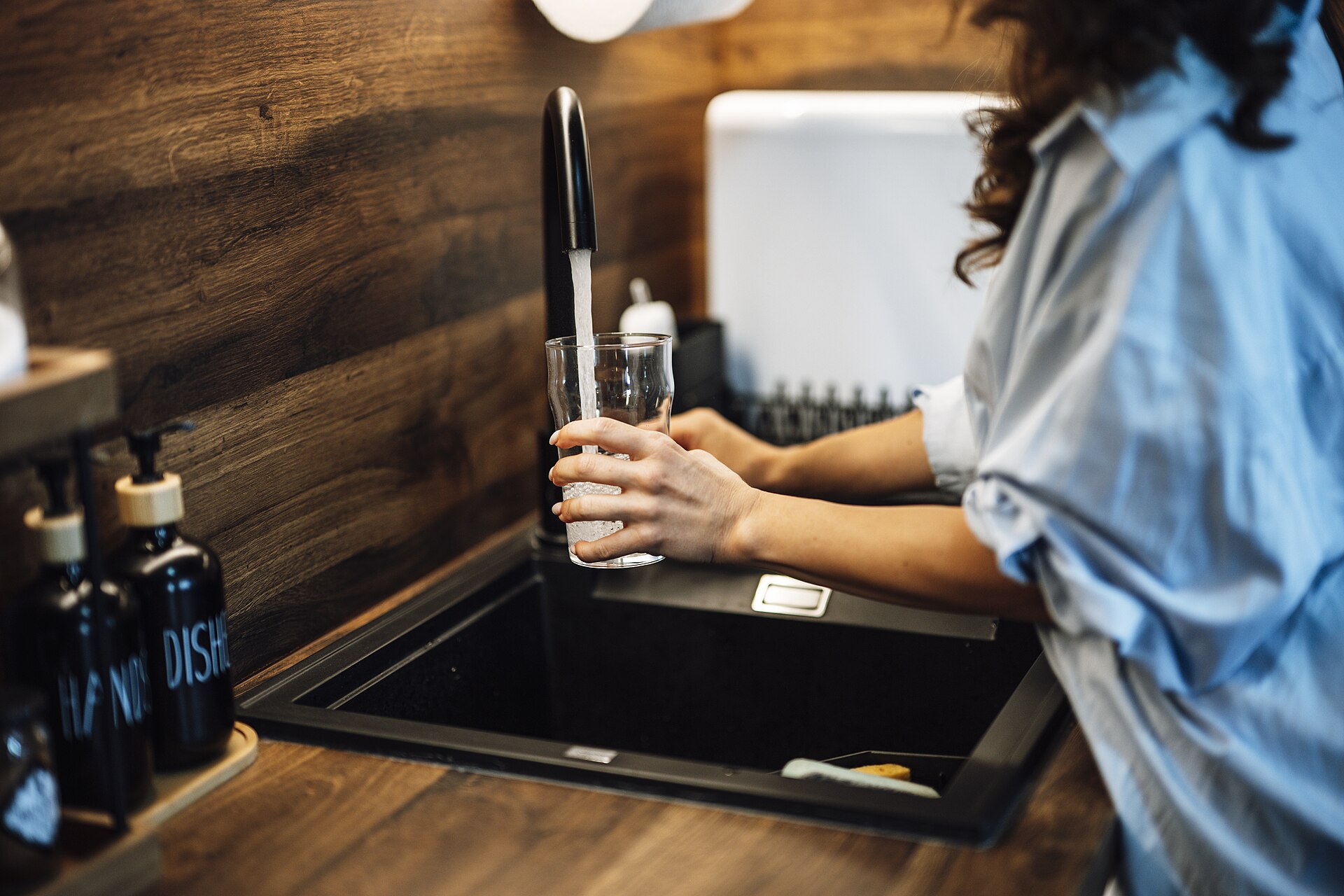
Taste and smell, and that is usually the whole list. Free chlorine has a sharper, more familiar pool-water note than chloramine, and it shows up most in cold water straight from the tap, in coffee and tea, and in ice made during those weeks. Some people never notice; others notice on day one.
The second thing you may see is short-lived cloudiness or tint from the flushing described above.
Two groups should pay closer attention, and North Carolina utilities that chloraminate flag the same two in their own reports: people on kidney dialysis and fish owners. Both chloramine and free chlorine have to be removed before water goes into a dialysis machine or an aquarium, pond or tank, and a product rated for one is not automatically right for the other. If you are on dialysis, follow the guidance from your clinic or equipment supplier; some utilities contact dialysis centres directly ahead of a reversion.
Nothing here makes the water unsafe to drink, bathe in or cook with. Raleigh’s 2025 report shows no violation in any category, as our Raleigh tap water guide sets out, and the disinfectant levels it reports sit under the federal maximum of 4 ppm.
What actually removes the taste and smell?
Carbon, and the media type matters here. Standard activated carbon handles free chlorine easily, which is why some people find their existing filter suddenly performs well during the burnout. The trouble is the other forty-seven weeks, when Raleigh is back on chloramine and standard carbon struggles to keep up at household flow rates.
Catalytic carbon handles both. That is why it is the year-round specification for anyone on Raleigh Water rather than a seasonal upgrade, and we walk through the difference in catalytic versus standard carbon.
Two practical shapes, depending on how far you want it to go:
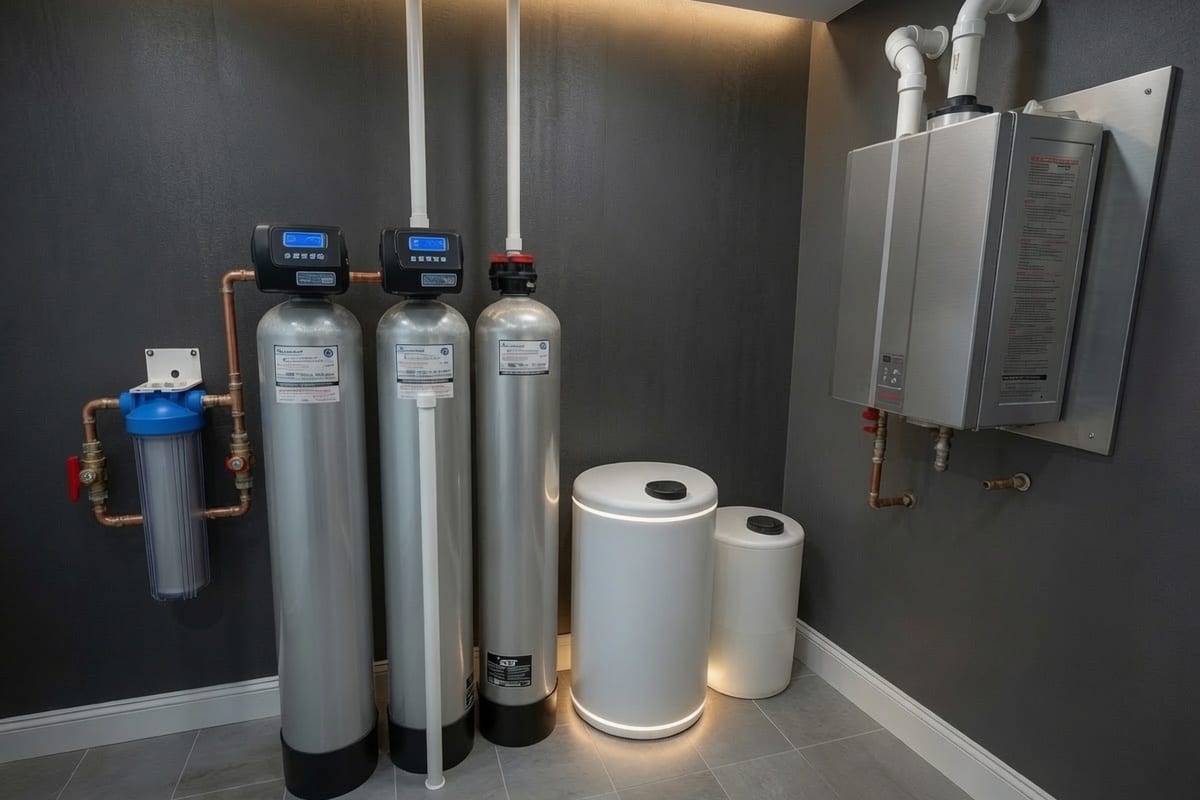
- A whole house carbon filter, which treats every tap and shower in the house, runs $1,500 to $3,500 installed. Our Raleigh cost guide explains what moves that number.
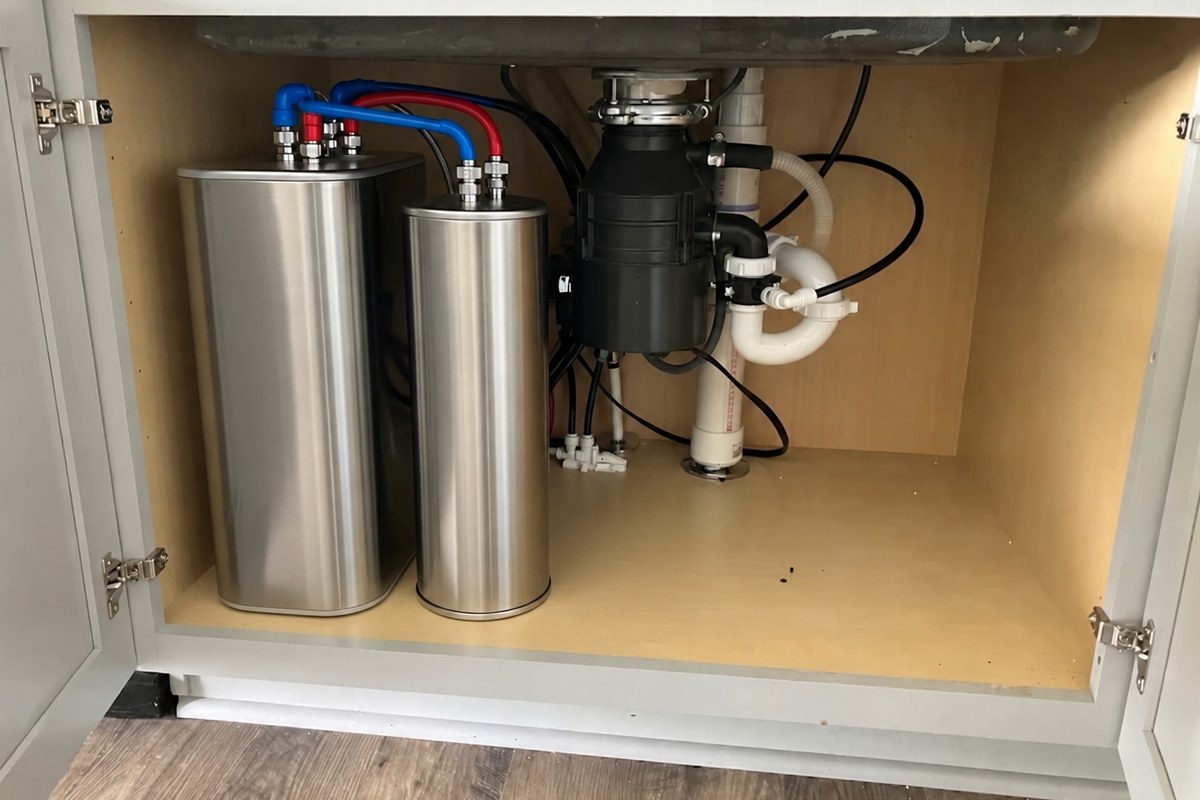
- An under-sink reverse osmosis system, which treats drinking and cooking water at one fixture, runs $350 to $900 installed and does its disinfectant work in the carbon stages ahead of the membrane.
Every figure here is a planning range, not a quote.
Does the switch affect Cary, Durham, Apex or Chapel Hill?
Raleigh Water’s published window covers Raleigh, Garner, Wake Forest, Rolesville, Knightdale, Wendell and Zebulon, because those seven communities are one public water system rather than separate utilities. If you live in any of them, the dates above are your dates.
Cary, Apex, Morrisville, Durham and Chapel Hill are separate systems drawing on different sources, and Raleigh Water does not list them.
Cary we can answer, because the Cary/Apex Water Treatment Facility publishes its own numbers. Cary runs its free-chlorine period in March, and only March. Its 2025 testing summary reports 137 free chlorine samples taken in March at an average of 2.19 ppm, against a chloramine residual the other eleven months of the year. Cary supplies Morrisville and co-owns the plant with Apex, so the same March window covers all three towns. That is a shorter conversion than Raleigh’s roughly five weeks, and it lands in a different part of the calendar, so neighbours a few miles apart can be tasting different things in the same week.
For Durham and Chapel Hill we have not read the utility’s own announcement, so we will not put a date in your calendar for them. The state’s recommendation applies to every North Carolina system that uses chloramine, and chloraminated utilities publish their own windows on their own schedules. Call your water department, or look for the changeover notice on its website in January and February. Our guides to Durham tap water and Chapel Hill tap water cover what each utility publishes about its own water.
Frequently Asked Questions
Is the water safe to drink during the chlorine switch?
Yes. This is a routine, deliberate maintenance practice carried out on the state’s recommendation, and Raleigh Water’s 2025 report records no violation in any category. The chloramine and free chlorine figures it reports, 2.80 and 2.26 ppm, both sit under the federal maximum of 4 ppm. The change you notice is aesthetic.
How long does the taste last?
About five weeks, based on the published windows: 26 February to 2 April in 2026 and 25 February to 7 April in 2020. The taste fades once the ammonia feed resumes, over days rather than weeks, as the new residual works through the mains in Garner and the rest of the service area.
Will boiling or letting water sit remove the chlorine taste?
Letting water stand helps during the switch and does very little the rest of the year. Free chlorine gasses off from an open jug; chloramine, which Raleigh runs for most of the year, does not. That is why the pitcher-on-the-counter trick seems to work in March and stops working in May.
Does a refrigerator filter handle it?
Partly, at one fixture. A fridge or pitcher filter improves the taste of cold drinking water but does nothing for the shower, the coffee maker on the counter or the ice maker in a second fridge. Whole house carbon filtration is the version that treats every outlet, and it is sized to your peak flow rather than to a cartridge count.
Why does Raleigh use chloramine the rest of the year?
Because it lasts. Chloramine holds a disinfecting residual much further into a large distribution system than free chlorine does, which is the whole reason large utilities adopt it. Raleigh Water serves roughly 650,000 people across seven communities through about 2,600 miles of water line, and the far end of that network is a long way from the plant.
Does the switch have anything to do with hard water?
No, and Raleigh does not have hard water. Raleigh Water’s own annual report puts total hardness at 25.2 mg/L, about 1.5 grains per gallon, and prints the classification “Soft” in its own table. Disinfectant taste and hardness are unrelated problems, and a softener does not address the first one. Our city water treatment page covers what does.
Sources
Every figure and quotation above comes from Raleigh Water’s own published documents or from another North Carolina utility’s own report, read in September 2026.
- Raleigh Water reports index, which carries the 2025 annual reports and every monthly report, including the March 2026 report whose ammonia row footnote records the burnout dates.
- Raleigh Water’s customer newsletter, for the NC DEQ recommendation, the 2020 window and the flushing and laundry guidance.
- City of New Bern annual water report, for the description of annual reversion to free chlorine as standard practice and for the guidance to dialysis patients and fish owners.
- NC Department of Environmental Quality, Public Water Supply Section, the agency that makes the recommendation.
Living with the Raleigh chlorine switch
The changeover is a few weeks of stronger-tasting water once a year, and it is the cheapest possible price for mains that stay clean. If you would rather not taste it at all, the fix is carbon, and in Raleigh that means catalytic carbon sized to your house so it keeps working in June as well as in March.
We size and install filtration across Raleigh, Garner, Wake Forest, Knightdale and the wider Triangle. Call (984) 384-6991 or book a free consultation, and we will test what is at your tap and give you an up-front written price before anything is installed.