1,4-Dioxane in the Haw River: What You Do About It
Raleigh Water Pros • September 20, 2026 • 10 min read
Every few months the same headline lands: a wastewater plant in the Triad has released a slug of 1,4-dioxane, and it is moving down the Haw River. The news story tells you a likely carcinogen is in the water. The state web pages give you a rule number. Neither tells you what you, standing in a kitchen in Pittsboro or Cary or Raleigh, do next.
This page is the missing half: who in the Triangle actually drinks Haw River water, what North Carolina has measured and against what, where the court case and the rulemaking stood on 20 September 2026, and which filtration removes 1,4-dioxane at a kitchen tap.
One thing up front, because the coverage almost never says it: nearly every alarming number you have read was measured in untreated river or reservoir water, not in finished drinking water at a tap. Those are different measurements, and this page keeps them apart.
Who actually drinks Haw River water?
Fewer Triangle households than the headlines suggest. The Haw runs through Chatham County into B. Everett Jordan Lake, so the systems with a stake in it draw from the Haw itself or from the Haw arm of that lake. Raleigh is not one of them.
| Where you live | Source water | River basin |
|---|---|---|
| Pittsboro | The Haw. Greensboro samples the Pittsboro intake weekly | Cape Fear |
| Cary, Apex, Morrisville, RTP South, RDU | Jordan Lake, treated at the Cary/Apex plant | Cape Fear |
| Raleigh, Garner, Wake Forest, Rolesville, Knightdale, Wendell, Zebulon | Falls Lake and Lake Benson | Neuse |
| Holly Springs | Bought finished from Harnett Regional Water | Cape Fear |
| Fuquay-Varina | Bought from Harnett, Raleigh and Johnston County | Both |
| A private well | Your own aquifer, not the river | Not applicable |
Those assignments come from each utility’s 2025 water quality report and NC DEQ’s Local Water Supply Plans. If you are on Falls Lake water, the Haw is not your river and this is not your contaminant, worth saying plainly because Raleigh homeowners get sold equipment every year on the strength of a Pittsboro headline. Our Raleigh tap water guide covers the Neuse supply instead.
Not sure which row you are in? Request a free consultation and we test at your tap first, then quote in writing.
What has been measured, and against what?
The high numbers come from untreated source water on the Haw, and the finished water tested at Triangle taps has been far lower or non-detect. Both halves are true at once, and you need both to decide sensibly.
Start with the two benchmarks, because they get quoted interchangeably and are not the same thing. North Carolina’s Division of Water Resources sets an in-stream target value of 0.35 ppb in surface waters classified as water supplies, and 80 ppb in everything else. EPA’s drinking water health advisory is 35 ppb. DEQ explains the relationship itself: 35 ppb is the concentration at a 1 in 10,000 estimated lifetime cancer risk, 0.35 ppb the concentration at 1 in 1,000,000. One risk curve read at two points, not two competing standards. There is no federal maximum contaminant level for 1,4-dioxane at all.
| What was sampled | When | Result | Against |
|---|---|---|---|
| Haw River, DEQ station B210000, untreated | 9 May 2018 | 35 ppb | Far above the 0.35 ppb value |
| Jordan Lake, Haw arm near Pittsboro, CPF055C, untreated | 12 July 2021 | 18 ppb, highest of five detections that season | Above the same value |
| Jordan Lake at the station DEQ calls closest to the Cary/Apex intake | 2018 study | No detection | Not applicable |
| Cary finished drinking water | 2025, 12 samples | Non-detect on all twelve | Not applicable |
| Falls Lake and Lake Benson, untreated | May to September 2020 | All below the 1.0 ppb reporting limit | DEQ notes 1.0 is not 0.35 |
| Neuse basin, 31 DEQ stations | Nov 2017 to Dec 2021 | One detection in 383 results, maximum 1 ppb | Effectively absent |
Every figure marked untreated is raw river or reservoir water. NC DEQ prints this caveat on its own reports and it travels with the numbers: data of this kind reflect analytes in untreated surface waters and do not represent concentrations in finished drinking water.
Where do the rules stand in 2026?
Two things moved in 2026 and neither is finished. On 5 February 2026, Wake County Superior Court upheld DEQ’s authority to write 1,4-dioxane limits into wastewater discharge permits, reversing a September 2024 administrative decision that had struck those limits from Asheboro’s permit. DEQ’s account is that the agency “followed proper state and U.S. Environmental Protection Agency protocols in creating the 1,4-dioxane limits” and created them “for the purpose of protecting the health and wellbeing of North Carolinians”, treating the compound as a pollutant likely to cause cancer in humans. Greensboro, Asheboro and Reidsville have appealed to the state Court of Appeals, which as of early September 2026 had not heard it.
Separately, the Environmental Management Commission has proposed two monitoring and minimization rules, 15A NCAC 02B .0513 and 15A NCAC 02H .0924, requiring targeted industrial dischargers to monitor for 1,4-dioxane and write plans to reduce it. Comment ran from 16 March to 15 June 2026. As of 20 September 2026 the adoption status is not confirmed on DEQ’s rulemaking page, so treat them as proposed, not in force.
What works in the meantime is notification. DEQ told downstream systems on 22 July 2026 about a 2,010 ppb sample from the Asheboro wastewater plant taken on 10 July. Greensboro publishes its own sampling results, covering the Pittsboro intake weekly and the Haw arm of Jordan Lake twice a month.
Does a carbon filter remove 1,4-dioxane?
Not reliably, and this is the most useful technical fact on the page. 1,4-dioxane is small, highly soluble and barely sticks to activated carbon, the same property that makes conventional drinking water treatment ineffective against it. The NC State University Superfund Research Center’s 1,4-dioxane infosheet states it directly: conventional treatment does not remove 1,4-dioxane, pitcher, faucet and refrigerator granular activated carbon filters are not effective against it, and point-of-use reverse osmosis is effective even when incoming levels vary.
| Device | 1,4-dioxane | What it is genuinely for |
|---|---|---|
| Sediment prefilter | No | Grit, rust flakes, red clay |
| Pitcher or faucet carbon | Poor | Chlorine taste and odour |
| Refrigerator carbon | Poor | Chlorine taste and odour |
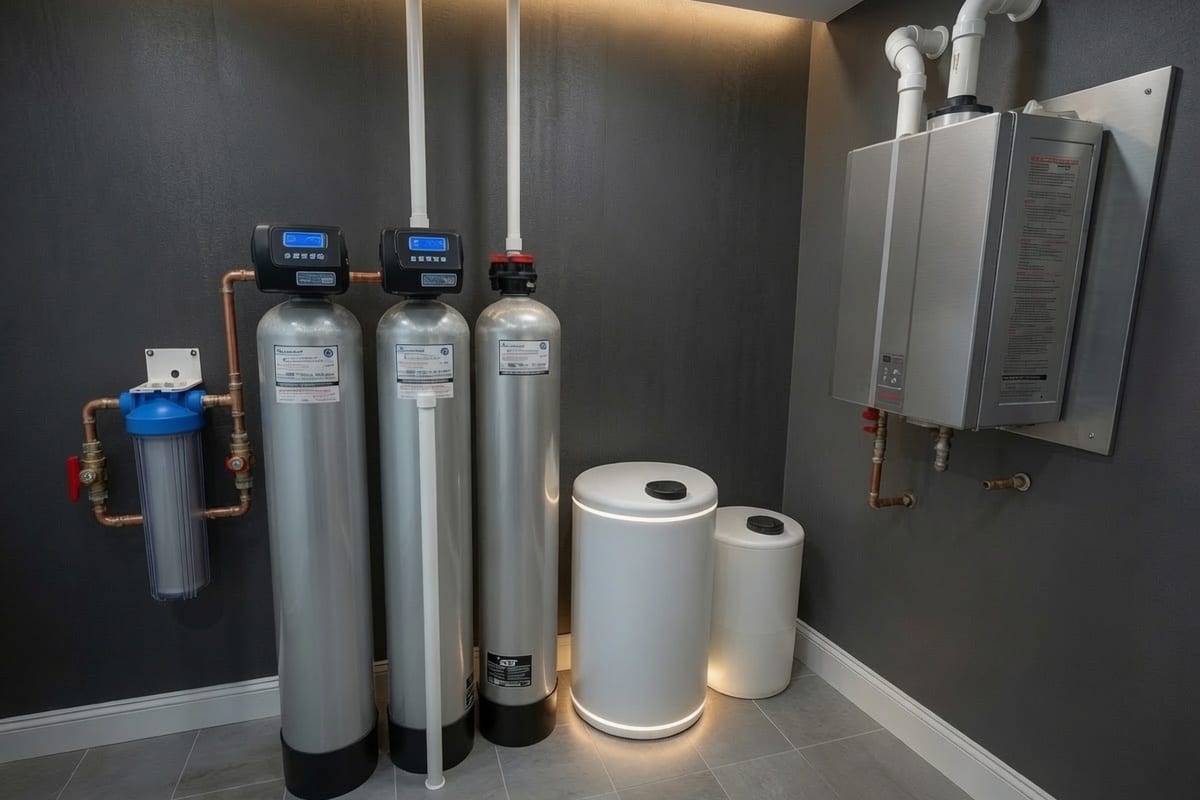
| Whole house carbon | Not what it is for | Chlorine, chloramine byproducts, taste |
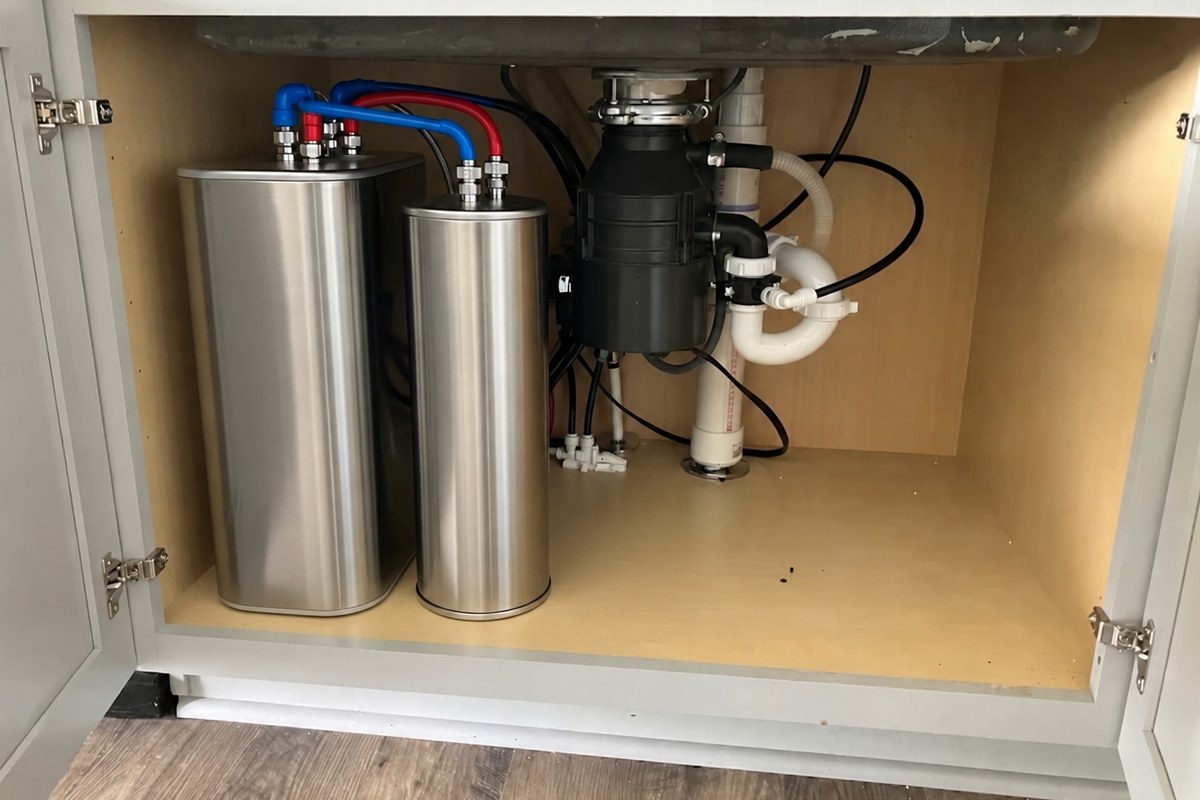
| Under-sink reverse osmosis | Effective | Drinking and cooking water |
| Boiling | No, it concentrates what stays behind | Nothing here |
An under-sink reverse osmosis drinking water system runs $350 to $900 installed for most Triangle homes, the band on our Raleigh water filtration cost page. That is a planning range, not a quote. A whole house carbon filtration system does real work on chlorine and taste, but no honest installer sells one as a 1,4-dioxane barrier.
Pro tip: If you live in Cary, Apex or Morrisville and a salesperson opens with Jordan Lake and 1,4-dioxane, ask to see the town’s finished water result rather than the lake result. Cary’s 2025 report shows twelve samples and twelve non-detects. Lake numbers and tap numbers are different measurements, and conflating them is the oldest move in this trade.
What do you actually do about it?
Work through these in order and stop when you run out of reasons to continue.
- Find out which utility serves you and which reservoir it draws from. Your annual water quality report says both. If you are on the Neuse, you are done.
- Read your own utility’s 1,4-dioxane line, not the river data. Systems on the Haw and Cape Fear publish results, and for Pittsboro, Greensboro’s weekly intake sampling is public too.
- Decide about drinking water, not the whole house. Point-of-use reverse osmosis at the kitchen sink is the barrier with the best evidence behind it here. The NC State Superfund Research Center tested point-of-use units and reported good reduction for the reverse osmosis systems in that work, along with partial reduction by some carbon products. That is a finding about the units tested rather than a promise about any RO system on a shelf, so ask for the specific reduction claim and the model it was certified against.
- Do not order a 1,4-dioxane lab test as a first move if you are on public water. It is a specialist commercial analysis, and where your utility publishes results you would be paying for a snapshot of something already monitored. Our water testing and analysis starts with what your report says.
- On a private well, do not assume it cannot reach you. Your well does not draw from the river, and the discharge story in this article is a surface water and public supply story. But 1,4-dioxane is mobile in groundwater, it does not bind to soil the way many solvents do, and it has turned up in groundwater near industrial sites, landfills and spill locations in a number of states. So river discharges are not your exposure pathway, while a nearby contaminated site could be. What decides it is what is near you and what your own well measures, not the basin you live in. If you have a specific reason to suspect a source nearby, that is a conversation for your county health department and a certified laboratory, and the general well panel is covered in our Chatham County well testing guide.
The Pittsboro picture, PFAS included, has its own page: 1,4-dioxane and PFAS in Pittsboro water. The discharger side is in our Greensboro tap water guide.
Frequently Asked Questions
Is my tap water unsafe because of 1,4-dioxane?
Nothing here says that, and the finished water results do not support it. The highest North Carolina figures are untreated river and reservoir samples, and the nearest finished water record, Cary’s 2025 report, is twelve non-detects out of twelve. What varies is source water after an upstream discharge, which argues for a point-of-use barrier, not for panic about today’s tap.
Does a Brita or a fridge filter remove 1,4-dioxane?
No. The NC State Superfund Research Center infosheet lists pitcher, faucet and refrigerator granular activated carbon filters as not effective for this compound, because 1,4-dioxane barely adsorbs onto carbon. Those filters still do a fine job on chlorine taste. They are the wrong tool here.
Does reverse osmosis remove 1,4-dioxane?
Point-of-use reverse osmosis is the effective residential option, and the same NC State infosheet says so even when incoming levels vary. Installed under the kitchen sink, it treats the drinking and cooking water where exposure matters. Costs are in our reverse osmosis system cost guide.
Does Raleigh water have 1,4-dioxane in it?
NC DEQ found all 1,4-dioxane samples from Falls Lake and Lake Benson below the laboratory reporting limit of 1.0 ppb when it sampled monthly from May to September 2020. Across the whole Neuse basin, DEQ logged one detection in 383 results over four years. This is a Cape Fear and Haw story.
What is North Carolina’s limit for 1,4-dioxane?
There is no federal maximum contaminant level. The Division of Water Resources uses an in-stream target value of 0.35 ppb in water supply surface waters, and EPA publishes a 35 ppb drinking water health advisory, the same cancer risk curve at 1 in 1,000,000 and 1 in 10,000.
Which Triangle towns should care about this?
Pittsboro first, then the Jordan Lake systems, which is why water filtration in Pittsboro and water filtration in Cary get asked about it most. Apex and Morrisville share Cary’s plant and source. Raleigh, Garner and the eastern Wake towns are on a different river.
Talk to Us About Haw River Water Before You Buy Equipment
We install reverse osmosis in Apex homes, in Pittsboro, in Cary and in Morrisville, and we will tell you when the equipment you were quoted does not do what the sales page implied. On 1,4-dioxane that means limits, not promises: point-of-use reverse osmosis is the barrier that works, whole house carbon is for other problems, pitcher filters are for taste.
Every visit starts with a free consultation. We test at your tap, walk you through the numbers, and give an up-front written price for what the results support. Call (984) 384-6991 or request a free consultation about your drinking water.
Sources, all read 20 September 2026: NC DEQ on the 5 February 2026 court ruling · NC DEQ rulemaking, 02B .0513 and 02H .0924 · Carolina Journal on the appeal, 3 September 2026 · NC State Superfund Research Center 1,4-dioxane infosheet · Greensboro continued sampling results · NC DEQ, Managing Emerging Compounds in Water. Sampling figures come from NC DWR Water Sciences Section reports on Jordan Lake (2019, 2024) and Neuse basin reservoirs (2021), and DEQ’s January 2023 annual 1,4-dioxane report.