Water Softener Repair Cost in NC (2026): Repair or Replace?
Raleigh Water Pros • September 10, 2026 • 7 min read
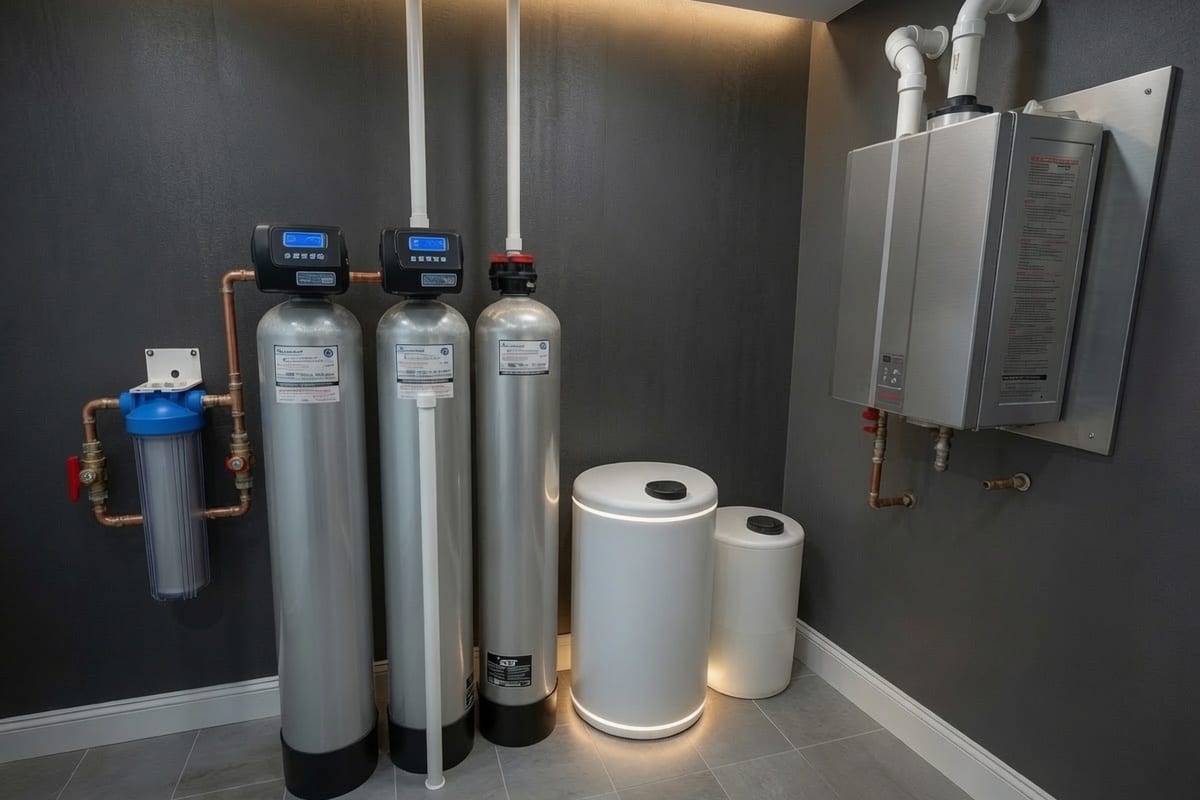
The water suddenly feels hard again, the salt tank is full of water, or the unit is running a regeneration cycle at three in the afternoon for no reason. Softener problems tend to arrive without warning, and the first question is always whether it is worth fixing.
This guide covers what specific repairs cost across North Carolina in 2026, and gives you a clear rule for when repair stops making financial sense. These are planning ranges rather than quotes.
How Much Does Water Softener Repair Cost in NC?
Most repairs run $150 to $600 in 2026, including the service call. The wide range reflects that some failures are a $20 part and some are most of a new unit.
| Repair | Typical cost (parts and labor) | How common |
|---|---|---|
| Service call and diagnosis | $75 to $150 | Often credited against the repair |
| Salt bridge or mush removal | $100 to $200 | Very common, often preventable |
| Venturi or injector cleaning | $125 to $250 | Common |
| Brine valve or float replacement | $150 to $300 | Common |
| Timer or control board | $200 to $450 | Moderate |
| Control valve rebuild | $250 to $500 | Moderate |
| Full control valve replacement | $400 to $800 | Less common |
| Resin bed replacement | $300 to $800 | Every 10-15 years |
| Full unit replacement | $900 to $3,500 | See the rule below |
Diagnose It Yourself First
Several of the most common complaints are not failures at all, and knowing which is which can save you a service call.
Water feels hard again
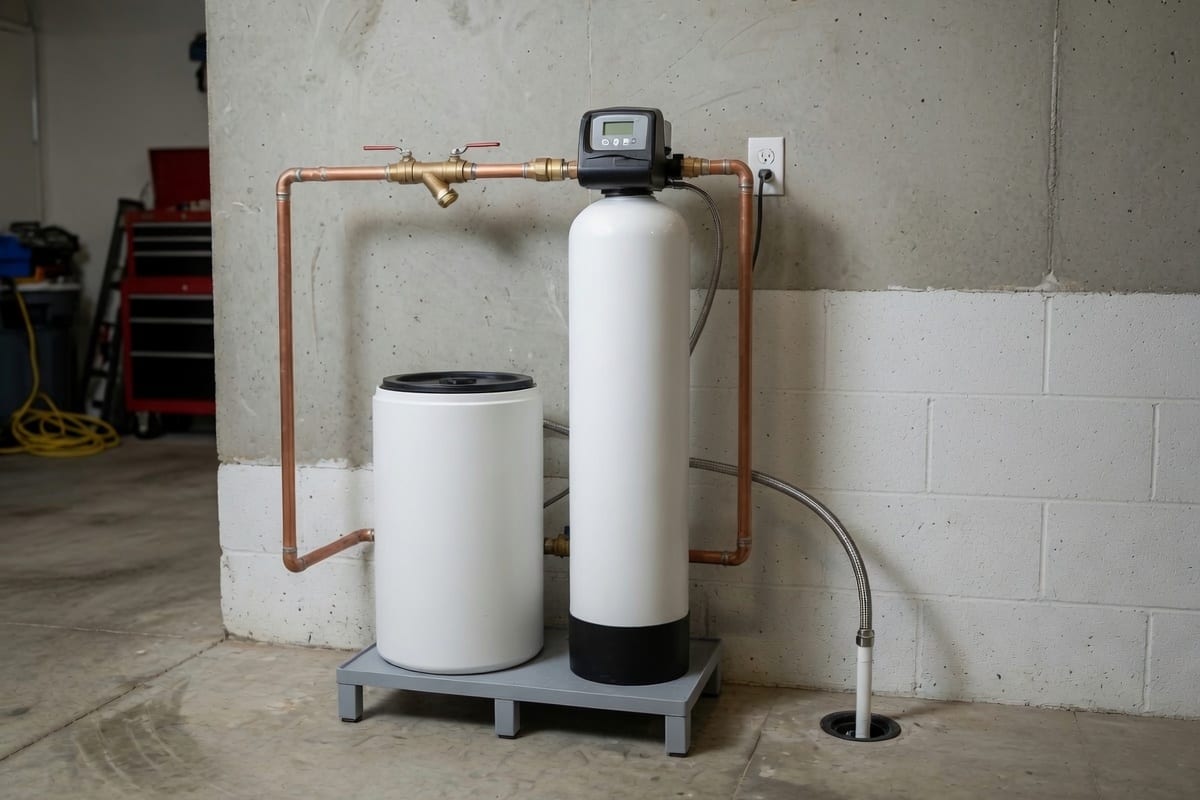
Check the salt level first. An empty brine tank is the single most common cause. Second, check for a salt bridge: a hard crust that forms across the tank leaving an air gap underneath, so the unit appears full while no brine is being made. Push a broom handle down through the salt; if it hits a hard shelf and breaks through into a void, that is your problem. Break it up and the softener usually recovers on the next cycle.
Salt bridging is more common in NC than in drier states because our humidity encourages the salt to cake. Using a higher-grade pellet salt rather than rock salt reduces it noticeably.
Standing water in the brine tank
A few inches is normal between cycles. A tank half full of water usually means a blocked drain line, a failed brine valve, or a clogged injector. This one needs a technician, but it is typically a $150 to $300 repair rather than a replacement.
Regenerating at odd times, or constantly
Usually the control board or timer. On older timer-based units, a power interruption resets the clock and it starts regenerating mid-afternoon. Resetting the time of day may fix it outright, at no cost.
Salty-tasting water
Generally a drain line restriction or a brine valve failing to shut, leaving brine in the system after a cycle. Worth addressing promptly, both for taste and because it wastes salt continuously.
No water pressure after the softener
Check the bypass valve first, which sometimes gets knocked partially closed. If that is not it, the resin bed may have broken down and be restricting flow, which is a bigger job.
The Repair-or-Replace Rule
A simple test that holds up well:
If the repair costs more than half the price of a new installed unit, and the softener is more than eight years old, replace it.
A typical mid-range softener installed runs $1,500 to $2,800. So a $400 valve repair on a six-year-old unit is clearly worth doing. The same repair on a thirteen-year-old unit is not, because the resin is near the end of its life and you will be back within two years.
Three additional factors push toward replacement:
- Resin age. Resin lasts 10 to 15 years. Replacing resin on an old unit costs $300 to $800, which is a large fraction of a new system.
- Timer-based control. If your unit regenerates on a clock rather than metering actual use, replacing it with a metered unit pays back in reduced salt and water. Older timer units are worth replacing even when repairable.
- Wrong sizing from the start. If the unit has always struggled, repairing it preserves the original mistake. Our water softener installation cost guide covers sizing properly.
Conversely, a well-sized metered unit under eight years old is almost always worth repairing. The tanks themselves rarely fail; it is nearly always the valve, the board, or the brine assembly, and all three are serviceable.
What Causes Premature Failure in NC
Two regional factors shorten softener life here.
Iron fouling. This is the big one on well water. Softener resin is damaged by iron, and a softener installed on a well with meaningful iron and no pre-treatment will lose capacity within a few years. If your softener is failing early and you are on a well, get the water tested for iron before you replace anything, because the replacement will fail the same way. Our iron filter cost guide covers what treating it properly involves.
Sediment. Wells without adequate sediment pre-filtration send grit into the valve, wearing seals and pistons. A $60 sediment filter ahead of the softener prevents a $500 valve rebuild.
How Can You Save Money
- Check salt and bridging before calling. A meaningful share of service calls resolve at this step.
- Ask whether the diagnostic fee is credited against the repair if you proceed. Most companies credit it.
- Use pellet salt, not rock salt. Less bridging, less mush, fewer service calls.
- Clean the brine tank every few years. Sediment accumulation at the bottom causes several of the failures above.
- Fix the upstream cause. Replacing a softener that failed from iron fouling, without adding iron removal, buys you the same failure again.
- Get the resin age. If a technician proposes a valve repair, ask how old the resin is. It changes the maths.
Frequently Asked Questions
How much does it cost to fix a water softener?
$150 to $600 for most repairs in the NC market, including the service call. Simple issues like salt bridging or injector cleaning land at the low end; valve replacement runs $400 to $800.
Is it worth repairing a water softener?
Generally yes if the unit is under about eight years old and the repair is less than half the cost of replacement. Beyond ten years, with resin approaching end of life, replacement is usually the better spend.
How long does a water softener last?
10 to 15 years with routine maintenance. Units on well water without iron pre-treatment often fall well short of that.
Why is my water softener not using salt?
Most commonly a salt bridge, a crust spanning the tank with an air gap beneath it, so the unit cannot draw brine. Also possible: a clogged injector, a failed brine valve, or a control set to regenerate too infrequently.
Why is there water in my salt tank?
Some water is normal between cycles. An excessive amount usually indicates a drain line restriction, a failed brine valve, or an injector blockage, all of which are repairable for $150 to $300.
Can I repair a water softener myself?
Salt bridging, resetting the timer, and cleaning the brine tank are straightforward DIY. Injector cleaning is feasible with care. Valve rebuilds and resin replacement involve depressurising and disassembly and are usually better left to a technician, particularly if the unit is under warranty.
Does a water softener need annual service?
It benefits from it. An annual check of salt quality, brine draw, valve operation, and hardness output catches the small problems before they become the $500 ones. Our water softener maintenance cost guide covers what that runs.
Get a Softener Diagnosed
Most softener problems are cheaper than people fear, and a meaningful share are salt bridging that costs nothing to fix. Before replacing a unit, it is worth knowing exactly what failed and why, particularly on well water where the cause often lies upstream.
We service and install softeners across Raleigh, Cary, Apex, Garner, and the surrounding Triangle, and we will tell you when a repair is not worth doing. See our water softener installation page for replacement options.
Call (984) 384-6991 or request service.