How Often to Change a Whole House Filter in NC
Raleigh Water Pros • September 20, 2026 • 10 min read
Nobody buys a water filter and then thinks about it again until the shower pressure drops or the swimming-pool smell comes back. By then the filter has usually been overdue for a while, and the question that follows is always the same one: how often should this have been changed?
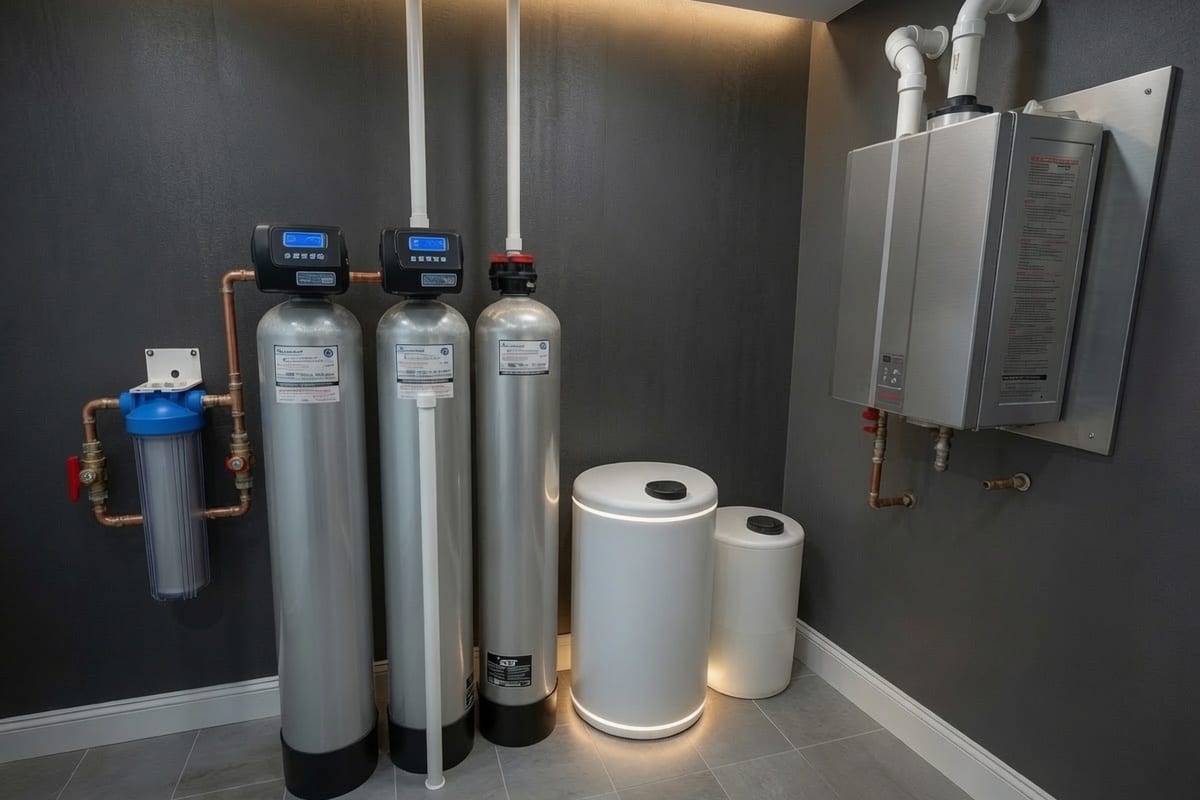
There is no single answer, because “whole house filter” covers five different things with five different service lives. A sediment cartridge is a months-scale item, a properly sized carbon bed is a multi-year item, and a UV lamp runs on a calendar regardless of how much water you use. Below: the interval for each type, what shortens it in Triangle water, the three signs a filter is overdue, and what it costs you to ignore them.
How Often Should You Change a Whole House Filter?
Sediment cartridges usually run 3 to 6 months, carbon cartridges 6 to 12 months, a backwashing carbon bed several years, an RO membrane 2 to 5 years, and a UV lamp about once a year. Those are starting points for planning, not rules for your house. The real interval is set by what is in your water and how many gallons you put through the filter.
| Filter type | Typical interval | What shortens it |
|---|---|---|
| Sediment cartridge (5 to 50 micron) | 3 to 6 months on city water, sometimes 1 to 3 on a silty well | Fine clay after heavy rain, iron, a well that surges |
| Carbon cartridge or carbon block | 6 to 12 months | Heavy chlorine or chloramine load, high household use |
| Backwashing carbon tank media | Years, on the manufacturer’s figure for that media and bed volume | An undersized bed, no prefilter, heavy organics |
| Reverse osmosis pre and post filters | 6 to 12 months | Sediment and disinfectant reaching the membrane |
| Reverse osmosis membrane | 2 to 5 years | Failed prefilters, scale, high dissolved solids |
| UV lamp | About once a year | Cycling the unit off and on |
| UV quartz sleeve | Clean on a schedule, replace when cleaning no longer restores output | Scale, iron, sediment passing the prefilter |
One figure in that table carries an outside citation: Penn State Extension states that a UV “light bulb will slowly lose intensity over time and will require replacement about once a year.” The rest are the manufacturer ranges printed on spec sheets, matched against what we find when we pull cartridges in Triangle homes. Your water decides which end of each range you live at.
Not sure which of these you own? Request a free consultation and we test your water first, then put the service schedule in writing.
Intervals by Filter Type
Sediment cartridges
A sediment cartridge is a mechanical strainer, so it fills up rather than wearing out, and the fill rate is entirely about your water. City-water homes in Wake Forest commonly get a comfortable six months out of one. Wells in Clayton and Fuquay-Varina can load the same cartridge in weeks after a wet stretch, because fine red clay passes a well screen easily and reaches the first thing that will catch it.
Micron rating matters too: a tighter cartridge catches more and clogs sooner, so a coarse cartridge ahead of a fine one stretches the fine one considerably.
Carbon cartridges
Carbon does not fill up, it fills its surface. Once the adsorption sites are occupied the cartridge stops working, and the only signal you get is the taste and smell coming back. That is why carbon runs on a calendar, typically 6 to 12 months, rather than on a pressure reading: a spent carbon cartridge does not restrict flow, it quietly stops treating.
Carbon tank media
A backwashing tank is a different animal. It holds cubic feet of loose media, rinses and re-levels its own bed on a cycle, and the media change is a multi-year event rather than an afternoon habit. The exact figure belongs to the media and bed volume in your tank, one more reason bed size belongs on the quote. A whole house carbon filter runs $1,500 to $3,500 installed in this market, and our whole house carbon filter cost guide explains what moves that number. What we install and how each type is serviced is on the carbon filtration page.
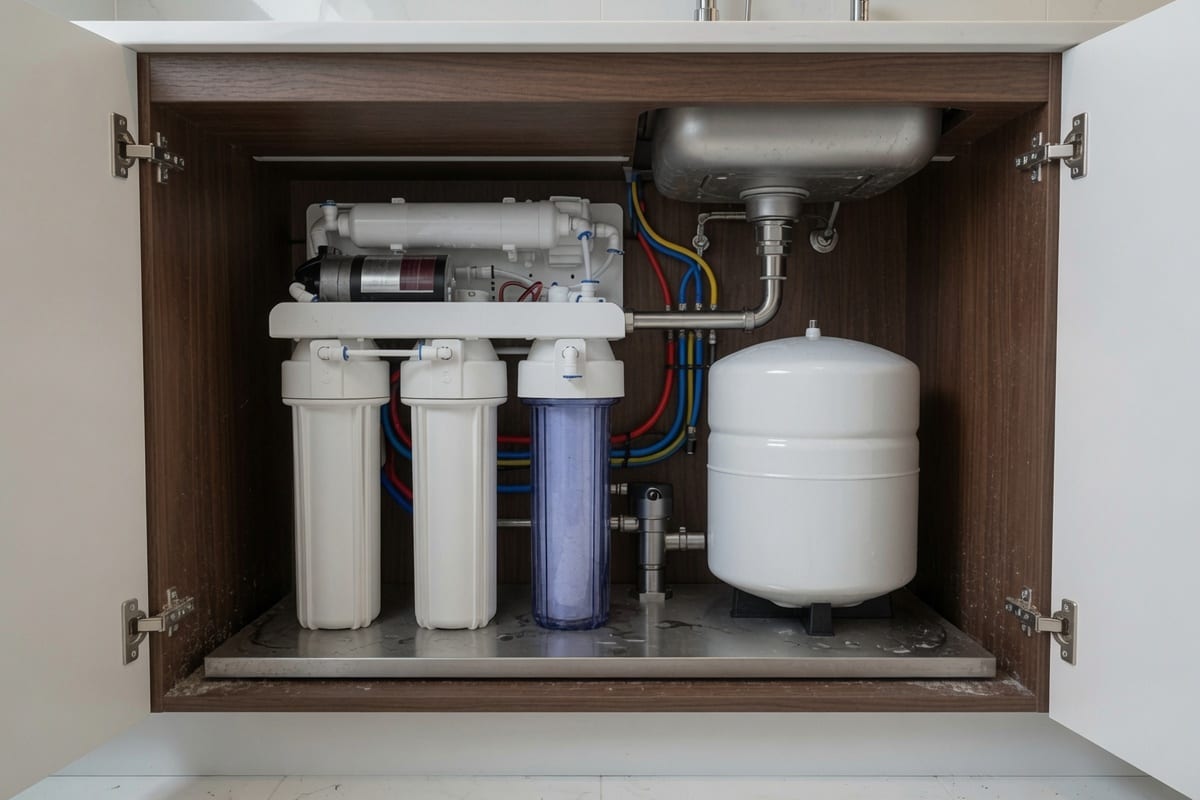
Reverse osmosis filters and membranes
An RO system has two clocks. The prefilters and the postfilter run 6 to 12 months and exist mostly to protect the membrane behind them, especially the carbon stage that keeps chlorine and chloramine off it. The membrane itself lasts 2 to 5 years if those prefilters are changed on time, and a fraction of that if they are not. Costs are in our reverse osmosis cost guide.
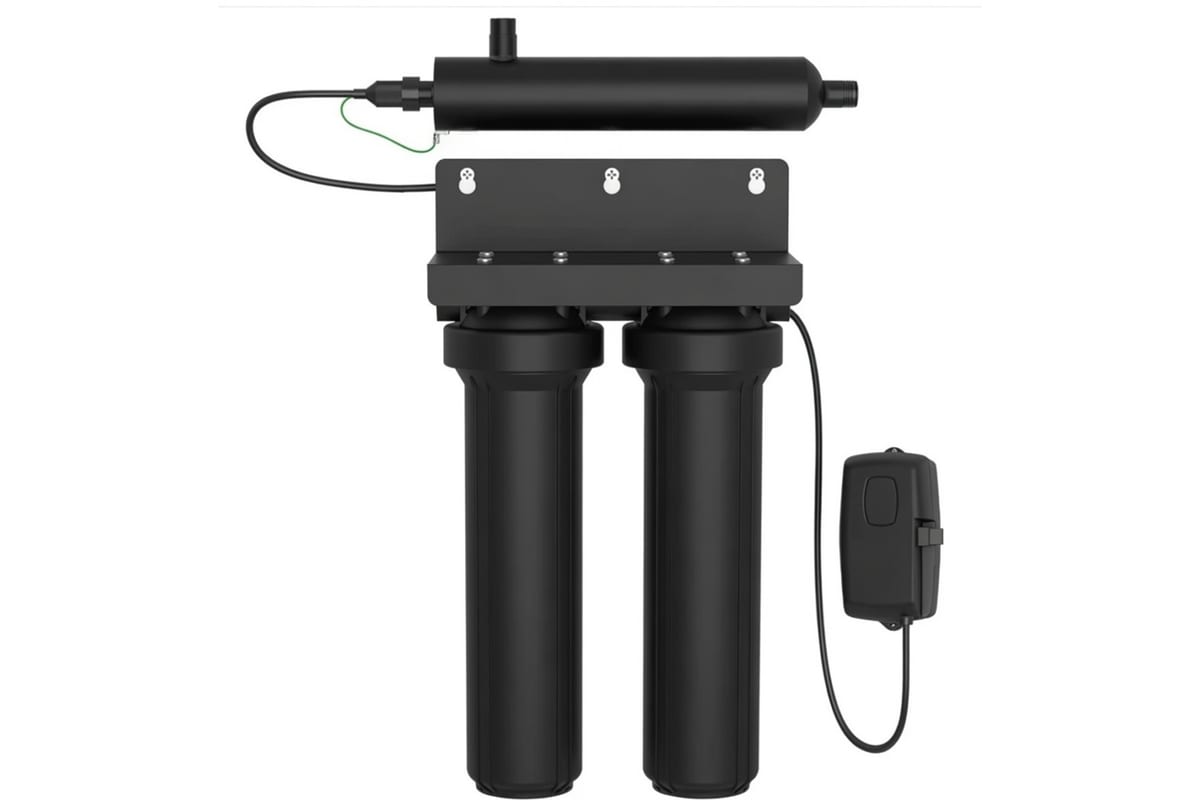
UV lamps and quartz sleeves
A UV lamp dims long before it goes dark, which is the trap. Penn State Extension puts replacement at about once a year and notes that some units carry an intensity sensor to catch a weak lamp. The quartz sleeve around the lamp is separate: it gets a film of scale or iron, the light stops reaching the water, and no amount of lamp life fixes it. The same guidance is blunt about what has to happen upstream: water entering the unit “must be completely clear and free from any suspended sediment or turbidity,” which is why a sediment cartridge in front of a UV unit is not optional. More on sizing and service is on our UV water purification page.
Pro tip: Write the install date on the cartridge housing in permanent marker the day it goes in, and photograph the pressure gauge while the water runs and everything is fresh. Those two numbers turn every future “is it time yet” into a ten second check.
What Changes Your Interval?
Four things move a filter’s service life more than brand ever does: sediment load, iron, disinfectant load and household size.
Heavy rain is the big one on wells across Johnston, Chatham and southern Wake counties. Storm water moves through fractured rock and clay faster than people expect, and the cartridge that looked fine in May is a red brick in early July. If your water turns cloudy or tan after a storm, plan on seasonal cartridge changes rather than annual ones.
Iron does something different: it coats everything downstream rather than simply filling a cartridge, which is why iron gets its own treatment stage ahead of filtration instead of being handed to a prefilter. Disinfectant load drives carbon life, and a chloraminated supply, which covers Raleigh Water and most of the Triangle, works a carbon bed harder than an unchlorinated one. Household size is just arithmetic: every one of these intervals is really a gallons number wearing a calendar costume.
One thing that is not on a schedule: softener resin. It is not changed on an interval, it gets replaced when it stops removing hardness. Salt is the recurring cost there, $50 to $150 a year, listed on our Raleigh water system cost guide and broken down in our water softener maintenance cost guide.
How Do You Know a Filter Is Overdue?
Three signals, in rising order of reliability: pressure, taste, and a measurement.
Pressure drop is the loudest and the least specific. A loaded sediment cartridge restricts flow, so showers weaken and two fixtures at once become a negotiation. A dozen other things also drop pressure, so on its own it says look, not act. If your system has gauges either side of the filter, the widening gap between them is the cleanest evidence there is.
Taste and smell returning is the carbon signal. Carbon gives no pressure warning at all, so the swimming-pool note coming back in the shower, or coffee tasting like the tap again, is the media telling you its surface is full.
Visible loading settles most arguments. Pull the cartridge and look: tan or orange silt means sediment and iron, a grey or slimy surface means it has been in long enough to become habitat. The only check that is not an inference is measuring: a disinfectant test at the tap for carbon, a hardness test in and out for a softener.
What Happens If You Leave It Too Long?
A sediment cartridge left too long does not fail open, it fails restricted, and the equipment behind it pays first: a UV unit loses its clear water, a membrane fouls, a carbon bed takes grit it was never meant to handle. Spent carbon stops treating silently, so you keep a system that has become a piece of plumbing.
The other cost is biological. The CDC’s guidance is direct: you maintain a filter “to keep it working properly and prevent germs from growing in it,” by “regularly changing the filters according to the manufacturer’s recommendations” (last reviewed 10 April 2024). A filter is a place where things collect. Left alone long enough, some of those things are alive.
Frequently Asked Questions
How often should I change a whole house sediment filter?
Every 3 to 6 months is the usual range on city water, and 1 to 3 months is common on a well carrying clay or iron. The interval is set by how fast the cartridge loads, so a home in Apex and a well home outside Clayton can run completely different schedules on identical equipment.
How long do sediment filters last on well water?
Shorter than the box says, and after heavy rain much shorter. Wells that turn cloudy or tan after storms can load a cartridge in weeks, so keep a spare on the shelf rather than ordering one after the pressure drops.
What happens if you never change a whole house water filter?
Two things: it stops doing its job, and it starts restricting flow or collecting bacteria. Spent carbon goes quiet rather than clogging, so the water tastes the way it did before you bought anything, while a loaded sediment cartridge chokes pressure and passes grit to whatever sits behind it.
Does a clogged filter really lower water pressure?
Yes, and it is usually the first thing people notice. A loaded sediment cartridge is the most common cause of a gradual whole-house pressure decline in a filtered home, which is why gauges either side of the filter are worth having. If pressure dropped suddenly rather than gradually, look at the well or the service line first. Our guide to a whole house filter causing low water pressure walks through the other causes.
How often does a whole house carbon filter need new media?
A properly sized backwashing bed is a multi-year item, and the figure belongs to that media and that bed volume, which is why we put it in writing with the system rather than quoting a rule of thumb. Undersizing is what turns years into months. Our carbon filter cost guide covers how bed size is decided.
Do I need to change the UV lamp if the light still looks on?
Yes. A UV lamp dims well before it stops glowing, and Penn State Extension puts replacement at about once a year for that reason. Change it on the calendar, clean or replace the quartz sleeve at the same time, and treat an intensity alarm as a backstop rather than the schedule.
Sources
- Penn State Extension, Coliform Bacteria, updated 8 September 2025: UV lamp replacement at about once a year, and the clear-water requirement ahead of a UV unit.
- CDC, About Choosing Home Water Filters, last reviewed 10 April 2024: maintaining filters on the manufacturer’s schedule.
Get Your Filter Schedule in Writing in Raleigh, Cary and Clayton
Most of the filtration we see failing in Raleigh, Cary, Clayton and Wake Forest is not broken equipment. It is good equipment running years past a service it never had a schedule for, because nobody wrote one down at the install.
We service and size whole house water filtration across the Triangle, on city supply and on wells, including systems we did not install. Call (984) 384-6991 or book a free consultation, and you get an up-front written price plus a service schedule tied to your actual water rather than a sticker on the tank.