Whole House Filter Causing Low Water Pressure?
Raleigh Water Pros • September 26, 2026 • 9 min read
The shower used to feel strong. Now it is a soft drizzle, and running the dishwasher while someone is in the shower turns into a negotiation. The whole house filter in the garage or crawl space is the obvious suspect, and sometimes it is guilty.
A whole house filter can cause low water pressure, but only in a few specific ways: a cartridge that has loaded up, a cartridge rated finer than the house needs, a housing or tank too small for the flow, or a valve that never got fully reopened after the last change. Each one has a signature, and a one-minute test tells you whether the filter is involved at all.
This guide works through that test, the causes in the order to check them, what to do about low water pressure after changing a whole house filter, and what it means when the filter turns out to be innocent. It covers homes on Raleigh city water in Garner and Knightdale and on wells around Clayton alike.
Can a whole house water filter cause low water pressure?
Yes. A whole house water filter lowers pressure when its cartridge is clogged, when its micron rating is finer than the house needs, or when the housing or tank is too small for the flow the house draws at peak. A filter that is sized for the house and maintained on schedule should not cause a drop you notice in the shower.
UGA Extension’s filtration bulletin describes the normal pattern: “Water flow through a filter is greatest when a new or replacement cartridge is installed,” and flow “will gradually decrease as trapped material continues to accumulate.” That slow fade is expected. A sudden or severe drop is a different problem, and so is weak pressure from day one.
| What you notice | Most likely cause | First check |
|---|---|---|
| Pressure fading over weeks or months | Loaded sediment cartridge | Cartridge age and colour |
| Weak right after a cartridge change | Valve not fully open, trapped air, wrong cartridge | Valves, then the cartridge spec |
| Weak since the day it was installed | Housing or tank undersized for peak flow | Port size and rated flow on the data sheet |
| Worse after heavy rain, on a well | Sediment surge loading the cartridge fast | The cartridge after the storm |
| Pressure fine in bypass, weak in service | The filter, one of the above | Gauges before and after |
| Pressure weak in bypass too | Not the filter | Well, service line or another device |
The one-minute test: is it actually the filter?
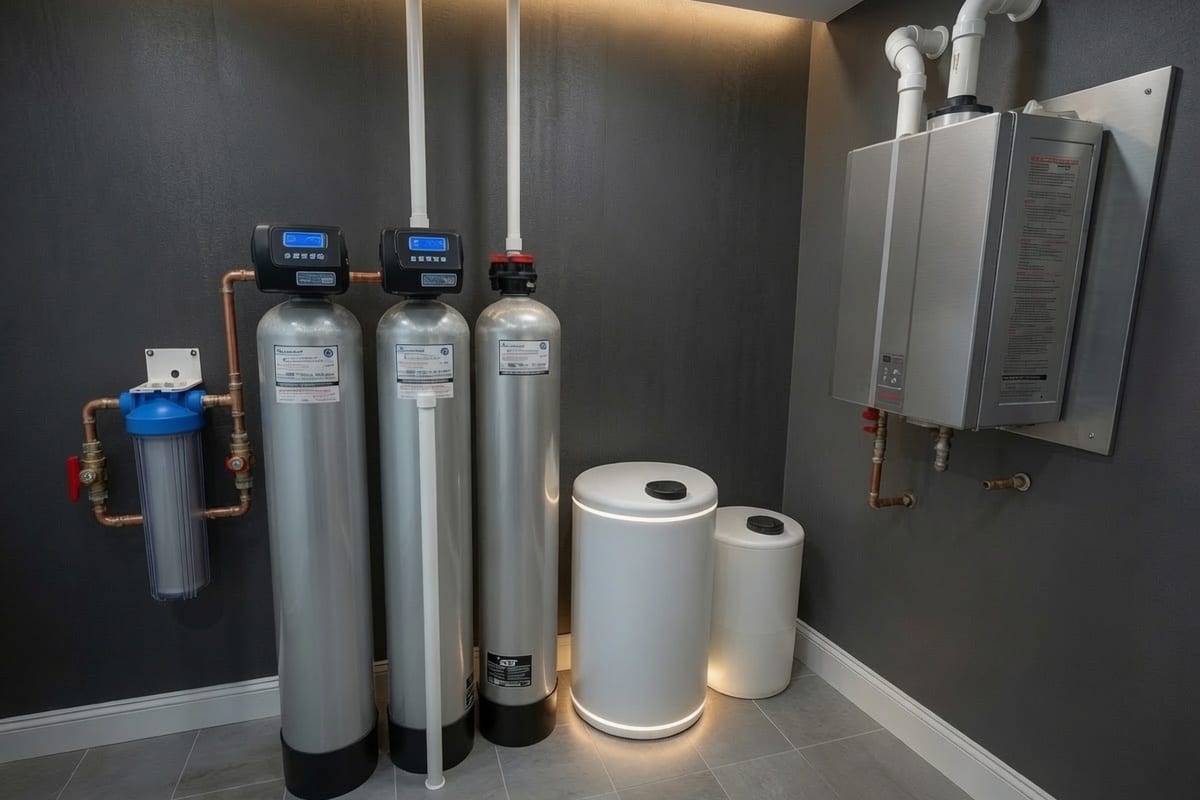
Put the filter in bypass and run a tub tap wide open. If pressure comes straight back, the restriction is in the filter; if it does not, the filter is innocent and the cause is elsewhere. Most whole house housings and tanks have a bypass valve or a three-valve loop for exactly this.
If your system has pressure gauges on each side, read both with water running. The gap between them is the restriction across the filter, and a gap that has widened since installation is the clearest evidence you will get. If there are no gauges, ask for them next time the pipe is open. NDSU Extension frames reduced pressure as the sign to watch: “pay attention to any reduction in water pressure at the water tap that might indicate the filter is saturated with particles.”
Pro tip: Photograph both gauges with a tap running on the day a fresh cartridge goes in. That picture is your baseline. Months later, one more photo with the same tap running tells you in seconds whether the filter has loaded up or the problem is somewhere else in the house.
Not sure what you are looking at? Request a free consultation and we read the pressure and the water first, then quote in writing.
Low water pressure after changing a whole house filter?
Pressure that drops right after a filter change is almost always the change itself, and it is usually fixed in a few minutes. Check these in order.
- A valve left partly closed. The inlet, outlet or bypass valve was turned to change the cartridge and not fully reopened. Open each one fully by hand.
- Trapped air. Air in the housing after a change makes taps sputter and flow weakly at first. Open a tap downstream and let it run until the flow is steady.
- A finer cartridge than before. NDSU Extension explains that “a small particle size (2- to 5-micron) filter has smaller pores and thus requires more pressure to push the water through.” A 5 micron cartridge in place of a 20 or 30 micron one can cut flow noticeably. Match the rating on the old cartridge, or ask why it should change.
- The wrong size cartridge. A cartridge shorter or slimmer than the housing is built for can seat badly and restrict or bypass flow. The housing label gives the size.
- A pinched O-ring or a collapsed cartridge. A pleated cartridge that has folded, or a housing that leaks at the seal, both change flow. Reseat and look again.
How often each cartridge type is due is covered in our guide to how often to change a whole house filter, so this page does not repeat it.
Why does my pressure keep dropping between changes?
If pressure keeps falling faster than the schedule says it should, the cartridge is catching more than it was chosen for.
On a well, sediment is the usual reason. Some wells turn cloudy or gritty after heavy rain, and a sediment surge can load a cartridge far faster than its usual interval. Wake County’s well guidance says that if your water “has a lot more sediment than it used to,” talk to a registered well contractor, because rising sediment can point to a change in the well itself. The filter side of that problem is covered in our sediment filter guide.
On any supply, a carbon cartridge without a sediment stage ahead of it clogs early. NDSU Extension says “a sediment filter installed ahead of any AC filter will prolong the life of the AC unit,” because “sediment can clog the pores of an AC filter easily within a short period of time.”
Backwashing tanks are different again. A carbon or media tank does not use cartridges, and it holds pressure only if it backwashes. UGA Extension advises that you “backwash the filter media if the flow rate is diminished or as recommended by the manufacturer.” A tank whose control valve lost its clock after a power cut can pack down and choke flow.
Was the filter sized too small for the house?
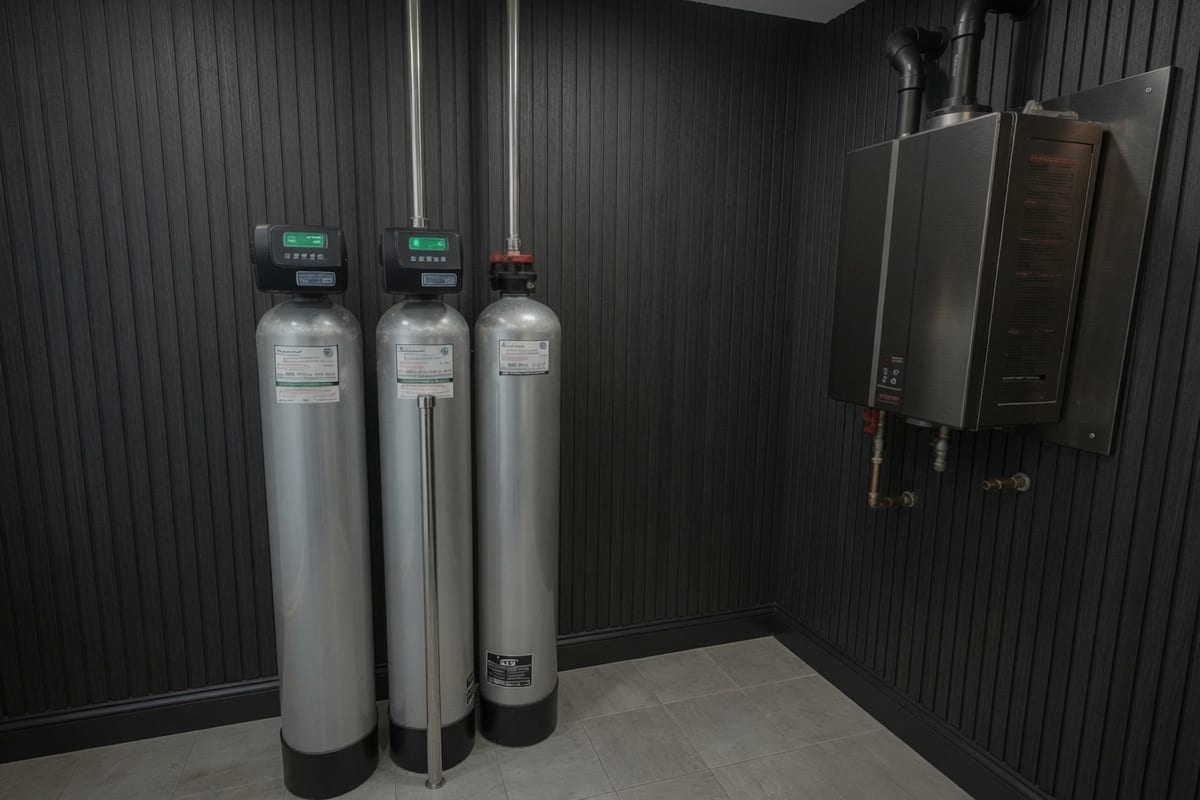
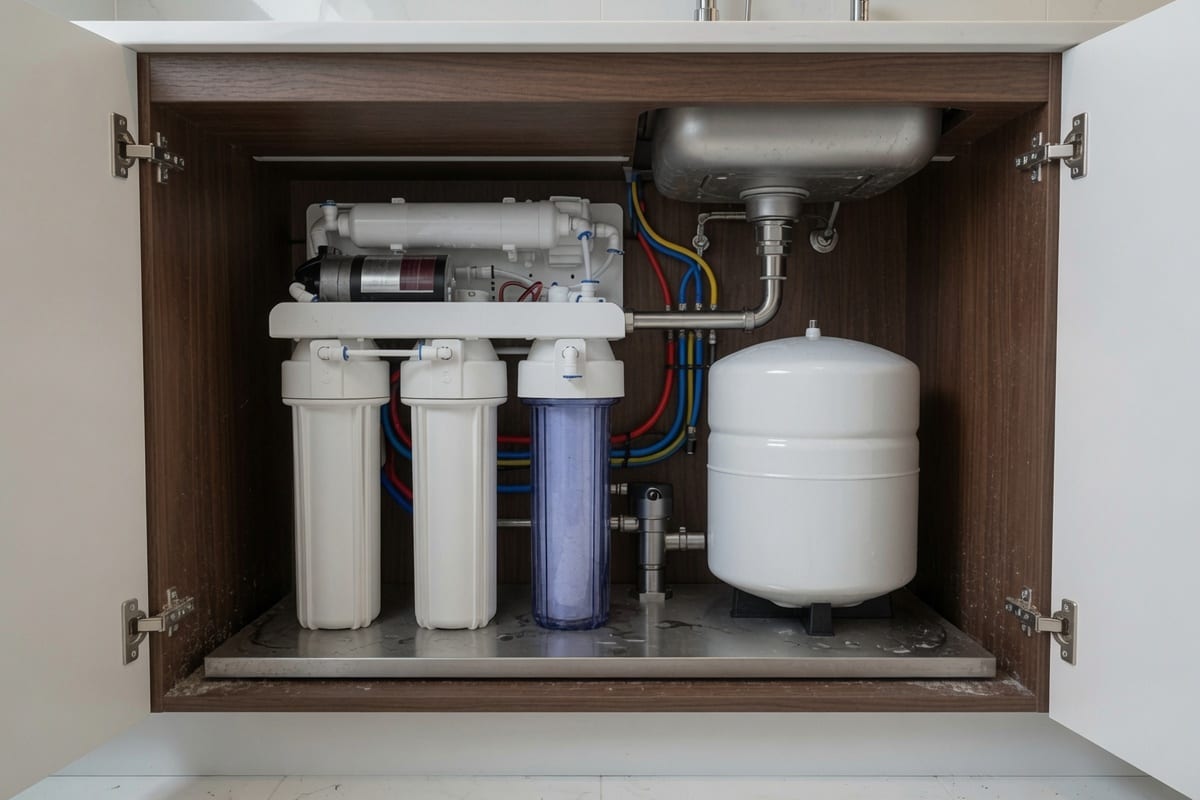
Weak pressure from the first day usually means the filter is too small for the flow the house draws at peak, not that anything is broken. A slim 10-inch housing that suits a single sink is not a whole house filter for a four-bathroom home, even if it is plumbed into the main line.
UGA Extension states the rule for tank systems simply: “The filter tank’s diameter determines a media filter’s flow rate capacity,” and a wider tank carries more flow. For cartridge housings the same logic applies through port size and cartridge size. Check two numbers on the data sheet: the rated service flow in gallons per minute, and the port size compared with your main line. A three-quarter-inch housing on a one-inch main is a common bottleneck.
The fix is a correctly sized housing or tank, not a coarser cartridge that lets more through. On Raleigh city water, where the complaint is usually chloramine taste, a properly sized carbon tank is the usual answer; our carbon filtration page covers why it needs catalytic carbon. An installed whole house carbon filter typically runs $1,500 to $3,500, per our Raleigh cost guide, and the whole house filtration cost guide explains what moves the price. There is no published band for cartridges or housings alone.
What if the filter is not the problem?
If pressure stays weak with the filter in bypass, look elsewhere, in this order.
- A water softener downstream. Softeners have their own restrictions; see water softener low water pressure for that sequence.
- The well. Pressure that surges and fades, or drops across the whole house at once, points at the pressure tank, the pressure switch or the pump. A well contractor handles that.
- The service line or the house plumbing. On city water in Garner or Knightdale, a pressure problem with the filter bypassed is a plumber’s or the utility’s question, not a filtration one.
Frequently Asked Questions
Do whole house water filters reduce water pressure?
Every filter creates some resistance, but a correctly sized and maintained whole house filter should not cause a drop you notice at the shower. A noticeable drop means a loaded cartridge, a cartridge finer than needed, or a housing too small for the house.
Why is my water pressure low after changing my whole house filter?
Most often a valve was not fully reopened, air is trapped in the housing, or the new cartridge is finer or a different size than the old one. Open every valve fully, run a tap until flow steadies, and compare the micron rating on the new cartridge with the old.
How do I know if my whole house filter is clogged?
Put the filter in bypass and run a tap. If pressure returns immediately, the filter is the restriction. Gauges on each side of the housing make it certain: a widening gap between them means the cartridge is loading up.
Is there a whole house water filter with no pressure loss?
No filter has zero resistance, but one sized to your peak flow with the right cartridge rating keeps the drop small enough that you will not notice it. Sizing from the house’s real flow is the part to get right, which our whole house water filtration page explains.
Why does my well water filter clog so fast?
Usually sediment, and often after heavy rain. On a well around Clayton or Wake Forest that turns cloudy after storms, a sediment surge can load a cartridge in weeks. If sediment has increased for good, Wake County advises talking to a registered well contractor.
Should I just switch to a coarser cartridge?
Only if the finer rating was never needed. A coarser cartridge restores flow by catching less, which can pass sediment to whatever sits downstream. If the cartridge must be fine, the better answer is a larger housing or a backwashing tank, and our well water treatment page covers how those are sized.
Sources
Read or checked 26 September 2026.
- UGA Extension Bulletin 1523, Mechanical Filtration Methods and Devices, Saha, Hawkins and Lessl, reviewed 30 April 2026: flow falling as a cartridge loads, replacing on a drop in flow, backwashing media tanks, and tank diameter setting flow capacity.
- NDSU Extension WQ1029, Filtration: Sediment, Activated Carbon, and Mixed Media, Tom Scherer, revised February 2022: finer ratings needing more pressure, pressure as the sign of a saturated filter, and a sediment stage ahead of carbon.
- Wake County, Common Well Problems: rising sediment as a reason to call a registered well contractor.
Fix Whole House Filter Low Water Pressure in Garner, Knightdale and Clayton
When a whole house filter is causing low water pressure, the bypass test tells you in a minute, and the fix is usually a valve, a cartridge or a housing that was too small from the start.
We size and install whole house filtration across Raleigh, Garner, Knightdale, Clayton and Wake Forest, and we measure pressure and flow before we recommend anything. Book a free consultation and get an up-front written price.
Call (984) 384-6991 or book your free consultation.