Water Softener Low Water Pressure in NC: Causes and Fixes
Raleigh Water Pros • September 20, 2026 • 10 min read
Two showers at once used to be fine. Now the second one turns into a trickle, and the drop started either the week the softener went in or sometime in the last six months without anyone noticing exactly when.
Water softener low water pressure is one of those complaints where the timing tells you most of what you need. A drop that appeared immediately after installation is almost always sizing or a valve position. A drop that crept in over a year or two is almost always the media inside the tank, and on Triangle well water that usually means iron or clay.
This post walks the six causes in the order a technician rules them out, starting with the ones that cost nothing, plus the step most people skip: proving the softener is the culprit before touching it. Any dollar figure here is a planning range, not a quote.
Does a Water Softener Reduce Water Pressure?
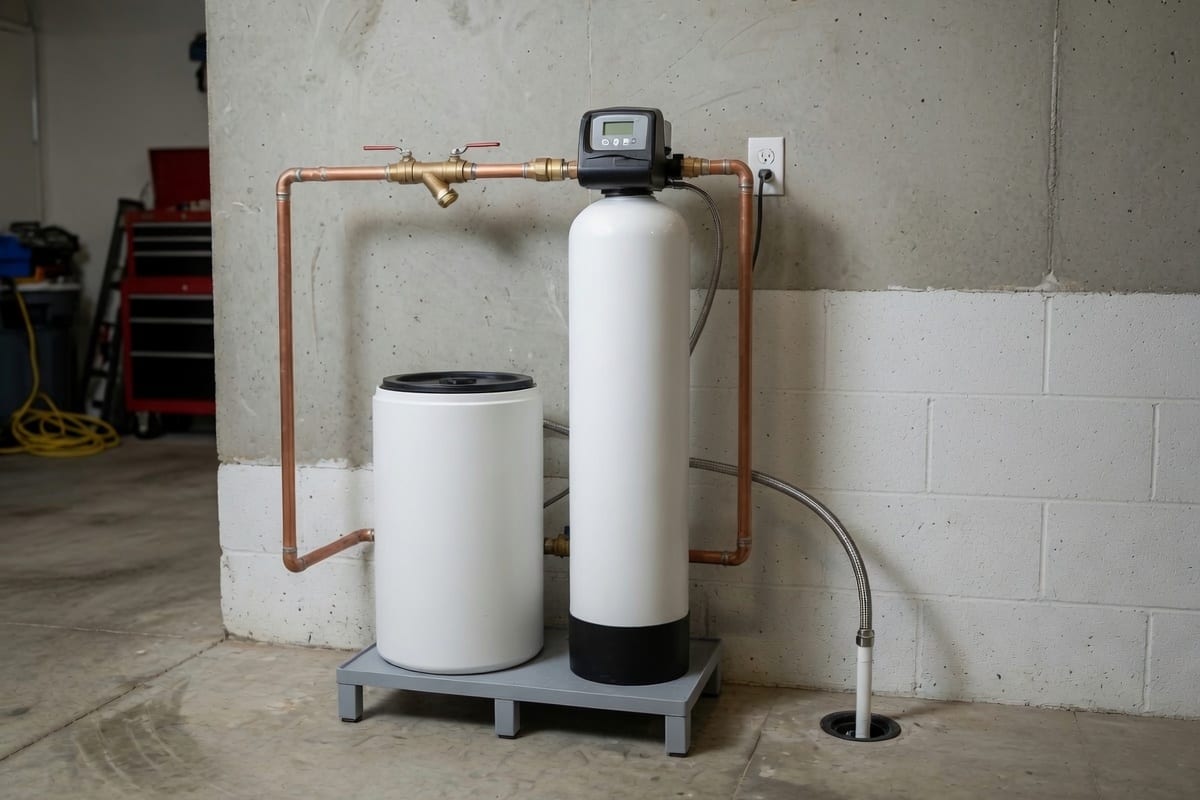
A correctly sized, healthy softener costs a small amount of pressure that you should not be able to feel at the fixtures. Every tank the water passes through takes a little, and a softener is no exception, but a working unit on the right size head does not turn two showers into one.
So a noticeable drop is a fault, not a feature. The EPA’s WaterSense program “recommends incoming service pressure to be between 45 and 60 psi to ensure efficient use of water and proper system function”, which is the band worth measuring against. A screw-on gauge at an outside hose bib tells you where you actually sit, and that one reading separates a softener problem from a whole-house supply problem.
| Cause | When it shows up | Free to check? | What it takes to fix |
|---|---|---|---|
| Bypass valve partly closed | Right after any work near the unit | Yes | Turn the valve back to service |
| Softener undersized for the house | From the first day it ran | Yes, by doing the math | Correctly sized replacement head or unit |
| Sediment plugging the bed | Gradual, worse after heavy rain | Partly | Backwash, then a prefilter upstream |
| Iron-fouled resin | Gradual, over months to years | No | Resin replacement plus iron pre-treatment |
| Clogged prefilter or upstream filter | Gradual, then sudden | Yes | New cartridge |
| Failing control valve or worn distributor | Any time, often with noise | No | Valve rebuild or replacement |
Pro tip: Put the softener in bypass and run the nearest tub tap wide open. If pressure comes back immediately, the fault is inside the softener. If it does not, the softener is innocent and the restriction is somewhere else in the house or on the well side. That test takes a minute and saves people from replacing a perfectly good unit.
Not sure what your reading means? Request a free consultation and we measure pressure and hardness first, then quote in writing.
The Six Causes, in the Order You Should Check Them
1. The bypass valve is partly closed
Check this first, every time, because it is free and it is common. Most softeners use either a single lever or two stems on the back of the control head. Half open is the dangerous position: the unit still softens, so nothing else seems wrong, but the flow path is choked.
Anyone who has worked on that line may have left it there, and so can a knock from a laundry basket. Move it fully to service and retest.
2. The softener is undersized for the household
An undersized unit restricts flow whenever demand is high, which is why the symptom shows up with two showers rather than one tap. Sizing is not only about the grains the bed holds, it is about the service flow the valve can pass.
A house in Fuquay-Varina with three and a half bathrooms needs a different head than a two-bath ranch, whatever the hardness is. If the pressure was never right from day one, sizing is the suspect and servicing will not fix it. Our water softener installation and repair page covers how sizing is worked out.
3. Sediment has plugged the resin bed
The Minnesota Department of Health states the mechanism directly: if your water supply is cloudy, it “may clog the resin in the softener with mud and clay”, and backwashing “will typically solve this problem”. Piedmont red clay is exactly that kind of load, and Triangle wells pull more of it after a heavy rain.
Run a manual regeneration, which backwashes the bed, and see whether the pressure recovers. If it recovers and fades again over the following weeks, the well is delivering sediment continuously and the answer is a prefilter upstream, not repeated backwashing.
4. The resin is iron-fouled
This is the common one on well water and the expensive one. Penn State Extension draws the line clearly: dissolved iron passes through, but “red-oxidized iron (iron that has been exposed to air or chlorine) will clog the resin”. Once the beads are coated, the bed both softens poorly and passes water poorly.
The tell is that softening quality and pressure decline together over months. A backwash helps briefly and then does not. Replacing the resin without treating the iron first buys the same failure again, which is why our iron and sulfur removal page sits ahead of the softener in any well system we design. The iron filter cost guide covers what that pre-treatment stage runs.
5. A prefilter or upstream cartridge is blocked
If a sediment housing, carbon cartridge or whole-house filter sits ahead of the softener, check it before blaming the softener at all. A cartridge at the end of its life goes from fine to severely restrictive quickly, and on well water in Clayton or Pittsboro that can be months rather than the year the box promises. Our guide to a whole house filter causing low water pressure covers that filter side in detail.
Shut off, depressurize, open the housing, and look. A cartridge coated orange is telling you about iron. One coated red-brown and gritty is telling you about clay.
6. The control valve or distributor is failing
Inside the tank a riser tube carries water to and from the bed through a screened basket. Worn seals, a cracked distributor or resin fines in the valve all restrict flow, and this failure often arrives with noise: whistling, a hiss at the head, or grinding at cycle time.
This is where the diagnosis stops being free. A valve rebuild or a replacement head is technician work, and whether it is worth doing depends on the age of the unit against the $1,500 to $3,500 a new softener runs installed, a band set out in the Raleigh water filtration cost guide. Past about twelve years, with the resin near end of life, replacement usually wins.
The Diagnostic Sequence, Free Steps First
Work these in order and stop when the pressure comes back:
- Read the pressure at a hose bib with a screw-on gauge. Write the number down.
- Check the bypass valve and set it fully to service.
- Bypass the softener entirely and retest at a tub tap. Pressure returning proves the fault is in the unit.
- Check any prefilter or cartridge ahead of the softener and change it if it is loaded.
- Run a manual regeneration to backwash the bed, then retest the following day.
- Test one fixture against the whole house. If only the kitchen sink is weak, that is an aerator or a stop valve, not the softener.
- If the pressure is low even in bypass, the restriction is upstream. On a well that is the pump or the well tank, which a well contractor handles; on city water it is the meter, the main or a pressure regulating valve, which is a plumber’s call.
Steps one through six cost nothing but time, and they separate a service visit that fixes something from a replacement that repeats the problem.
Why Does Triangle Well Water Clog Resin Faster?
Because it arrives harder and dirtier than city water, and both loads land on the same bed of resin. Raleigh Water’s 2025 annual report puts city hardness at roughly 1.5 grains per gallon and prints the word “Soft” where the limit would normally sit, with iron non-detect at both treatment plants. A softener on that supply sees very little work.
Private wells on the rural fringe of Wake, Johnston and Chatham counties are a different proposition. Hardness commonly lands in the 10 to 20 grains per gallon range, which is a planning estimate rather than a published figure: North Carolina does not publish hardness data for private wells, so no official county-level range exists to cite. The iron and the clay are not in question, though, and both attack the resin bed.
So a softener specified for city water and then installed on a well loses capacity and flow years before it should. Reading the well first is what our well water treatment page is for, and every other softener symptom is covered in water softener not working.
Frequently Asked Questions
Can a water softener cause low water pressure?
Yes, in six common ways: a bypass valve left partly closed, an undersized unit, a sediment-plugged bed, iron-fouled resin, a blocked upstream cartridge, or a failing control valve. A healthy, correctly sized unit should not produce a drop you can feel, so a noticeable loss always points at one of those six.
How do I know if my softener is what is restricting flow?
Put the unit in bypass and run a tub tap wide open. If the pressure returns, the restriction is inside the softener. If it does not change, the softener is not the problem and you are looking at a fixture, the supply line, or on a well the pump and well tank, which a well contractor handles.
Why did my water pressure drop right after the softener was installed?
An immediate drop points at sizing or at the bypass position, not at the media, because a new bed has not had time to foul. Confirm the bypass is fully in service, then check the service flow rating of the head against the number of bathrooms in the house. Our water softener installation page covers how that sizing is done.
Will backwashing fix low pressure through a softener?
Sometimes, and the result tells you what is wrong. A manual regeneration backwashes the bed and will clear loose clay and sediment; if the pressure recovers and holds, that was the cause. If it recovers and fades again within weeks, the well is delivering sediment continuously and you need a prefilter. If it does nothing at all, suspect iron fouling or the valve.
Is low pressure a sign I need a new water softener?
Not on its own. Under about eight years old, a restricted unit is usually recoverable by backwashing, a new cartridge or a valve rebuild, and our water softener repair cost guide prices those. Past twelve years, when the resin is near end of life anyway, a $1,500 to $3,500 installed replacement is generally the better spend.
Does hard well water in Wake County damage a softener faster?
Hardness alone mostly means more frequent regeneration and more salt. The damage comes from what travels with it: iron that oxidizes and coats the beads, and clay sediment after heavy rain. Wells around Holly Springs and Fuquay-Varina carry both, which is why pre-treatment matters more here than raw grain count.
Fix Low Water Pressure From a Water Softener in the Triangle
Check the bypass, then bypass the unit and retest. Those two free steps settle most of these calls, and they stop a working softener from being replaced over something that was never wrong with it.
We size, install and service softeners across Raleigh, Fuquay-Varina, Holly Springs, Clayton and the rest of the Triangle, and on well water we read iron and sediment before recommending anything, because that is what decides whether the next bed of resin lasts.
Call (984) 384-6991 or book a free consultation for an up-front written price.