Water Softener Not Working? 8 Symptoms and Fixes
Raleigh Water Pros • September 20, 2026 • 10 min read
The salt level in the brine tank has not moved since June. The shower glass is spotting again for the first time since the unit went in. Or the softener is running a cycle at four in the afternoon and will not stop.
A water softener not working is almost never one problem. It is eight different problems that look roughly the same from the hallway, and the two most likely ones are free to fix in about ten minutes at the tank.
This guide works backwards from the symptom: what each failure looks like, what causes it, what you can check yourself, and where it stops being a homeowner job. Dollar figures here are planning ranges, not quotes.
Why Is My Water Softener Not Working?
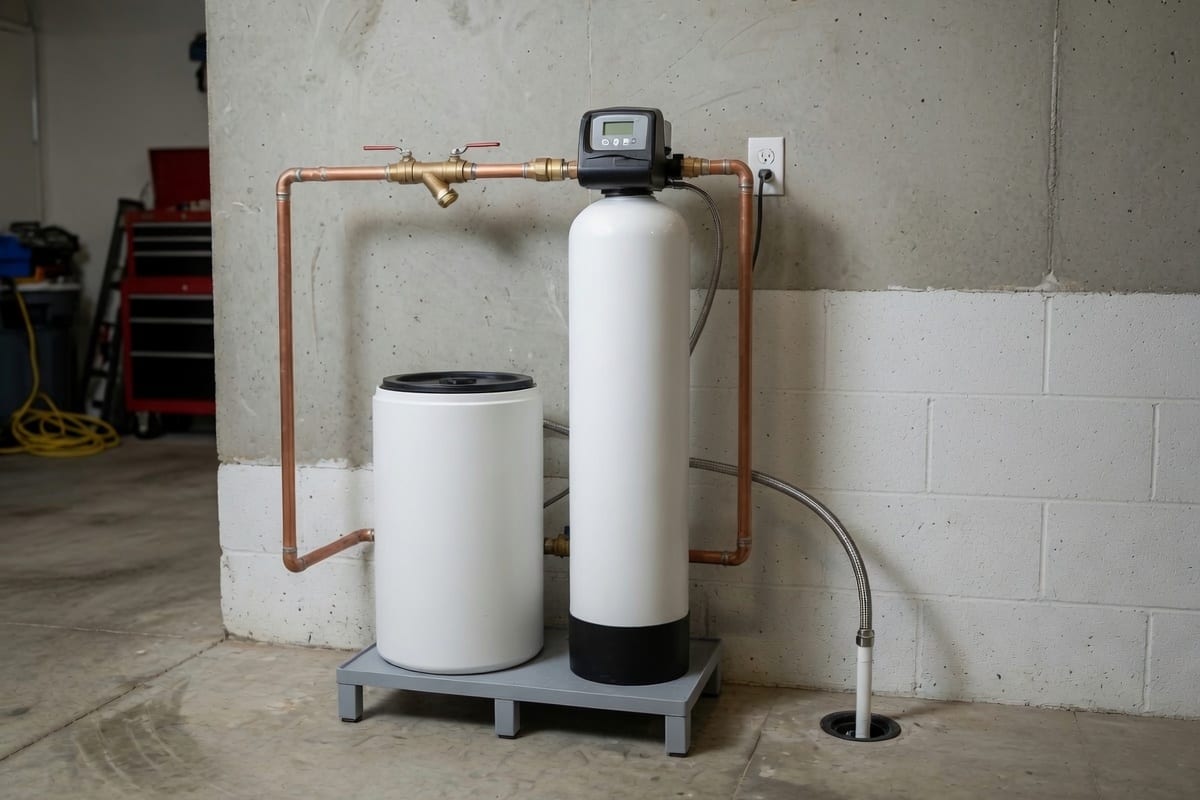
Softener failures fall into three groups: the brine side, the control side, and the resin itself. The brine side (salt, the injector that pulls brine, the brine valve) causes the largest share of complaints and is the cheapest to deal with. The control side (timer, board, motor, valve piston) comes next. The resin bed is last: least common, most expensive, and the thing not to let anyone sell you until the first two are ruled out. Work the list in that order and you either find the fault or narrow it to something worth paying to diagnose.
| Symptom | Most likely cause | Free to check? | If that is not it |
|---|---|---|---|
| Salt level never drops | Not drawing brine: bridge, injector or brine valve | Yes | Injector or brine valve service |
| Tank full of salt, water hard | Salt bridge or salt mush | Yes | Brine tank clean-out |
| No soft water at all | Bypass left open, or never sized right | Yes | Hardness reading, then a sizing review |
| Regenerating constantly | Wrong hardness setting, stuck valve or board | Partly | Valve or board service |
| Never regenerates | Power, a reset clock, or a dead flow meter | Yes | Meter or board service |
| Error code on the display | A fault the valve caught itself | Partly | Valve service |
| Softens a few days, then quits | Resin exhausted or fouled | No | Resin replacement plus pre-treatment |
| Grinding, humming or silence | Drive motor or valve piston | No | Valve rebuild or replacement |
Pro tip: Find the bypass valve on the back of the unit and confirm it sits in service position, not bypass. Anyone who has worked near that line may have flipped it and never flipped it back. It is the most common broken softener that was never broken.
Want someone to work down this list with you? Request a free consultation and we read your hardness and iron first, then put the price in writing.
The Eight Symptoms, One at a Time
1. The salt level never drops
You filled the tank in June and the level looks identical in September. The unit is not drawing brine, so it is rinsing the resin with plain water and softening nothing.
Push a broom handle straight down through the salt. If it punches through a hard shelf into an air pocket, you have found it. If the salt is loose to the bottom and the level still holds, the injector is plugged or the brine valve is stuck shut. Both are technician work, and both sit at the cheap end of the water softener repair cost range.
2. The tank is full of salt but the water is hard again
This is the salt bridge, the most common false alarm in the category. Humidity welds the top layer into a crust spanning the tank, leaving a void underneath. The tank looks full. The brine well is dry.
Break the crust with a broom handle, scoop out any mush at the bottom, and run a manual regeneration. Most units recover on the next cycle. Pellet salt bridges less readily than rock salt, which matters in a North Carolina summer.
3. There is no soft water at all
Start with the bypass, then read the hardness setting on the control head. A unit programmed for 25 grains per gallon in a house that runs 12 behaves strangely; one set to 5 in a house that runs 18 never keeps up.
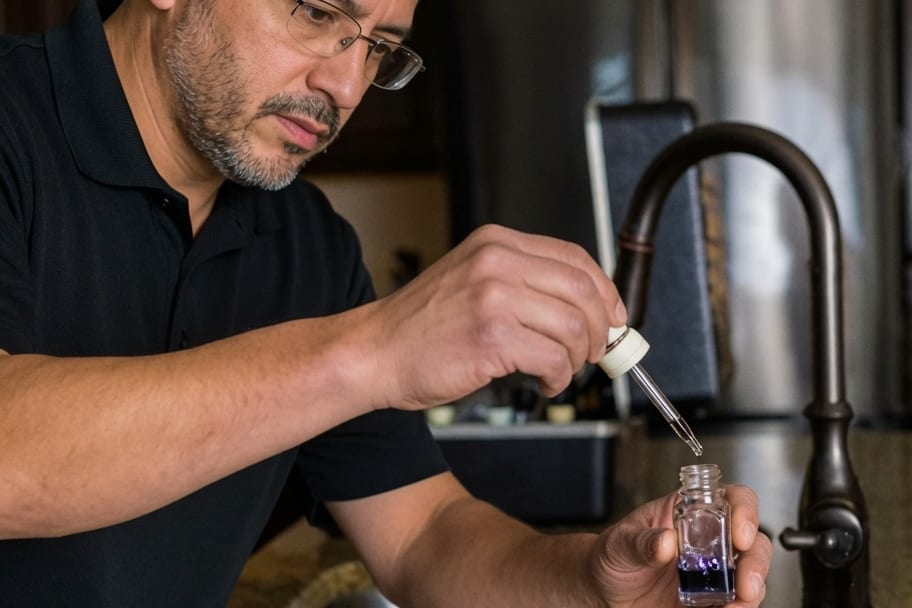
Then ask what the water actually is. Raleigh Water’s 2025 annual report puts city hardness at roughly 1.5 grains per gallon and prints the word “Soft” where the legal limit would normally sit, so a softener on that supply has very little to do. On a well in Garner or Clayton, the same complaint usually means the unit is undersized.
4. It regenerates constantly
A softener that cycles every day, or mid-afternoon, is either being told to or has lost track of the time. Check the hardness setting first: a value entered far too high makes the unit burn salt and water for nothing and ages the valve early.
If the setting is right, look at the clock. Older timer units reset after a power blip and start cycling at the wrong hour, which is a free fix. If setting and clock are both correct, the board or the valve piston is the suspect.
5. It never regenerates
Confirm the transformer is plugged in and the outlet is live: softeners often sit on a switched or GFCI outlet that has tripped. Then start a manual cycle from the control head.
If the manual cycle runs normally, the unit can regenerate but is not being asked to, which points at the flow meter. If it does nothing, the board or the drive motor has failed. A metered unit is worth fixing; a failed clock-only unit usually is not, and our water softener maintenance guide has the figures that decide it.
6. There is an error code on the display
An error code is good news in one sense: the valve caught its own fault instead of doing nothing quietly. Codes differ by manufacturer, so read the label inside the cover.
Most resolve to one of three things: the motor did not reach a commanded position, the position sensor disagrees with the motor, or the control lost its settings. Unplugging the transformer for a minute clears the third. The first two need hands on the piston.
7. It softens for a few days, then gives up
This is resin exhaustion or resin fouling, the expensive end of the list. The bed holds capacity for a shorter and shorter run until the water goes hard partway through the week.
Before replacing anything, get the water read for iron. Penn State Extension is blunt about why: colorless dissolved iron passes through a softener, but “red-oxidized iron (iron that has been exposed to air or chlorine) will clog the resin”. Replace the resin without fixing the iron and you buy the same failure twice. Our iron and sulfur removal page covers pre-treatment ahead of a softener.
8. You hear grinding, humming, or nothing at all
At cycle time a healthy valve makes a short motor noise, then audible water movement. Grinding usually means a stripped drive gear. A hum with no movement means the motor is stalled, often because the piston has seized against worn seals.
Neither is a homeowner repair. Both are recoverable under roughly eight years old and usually not worth it past twelve, when a $1,500 to $3,500 installed replacement looks like the better spend. The Raleigh water filtration cost guide sets out those bands in full.
What Can You Fix Yourself for Free?
Six of the checks above cost nothing. Work them in this order first:
- Check the bypass valve. Service position, not bypass. Thirty seconds.
- Break the salt bridge. Broom handle straight down. If it punches through a shelf, that was your fault all along.
- Read the hardness setting. Compare it to what the water measures, not the installer’s guess.
- Reset the clock. On timer units this alone fixes mid-afternoon cycling.
- Power cycle the control. Unplug the transformer for a minute. It clears a fair share of error codes.
- Run a manual regeneration and listen. Silence at the brine draw stage points straight at the injector or brine valve.
If all six come back clean, the service call you book will be a shorter one.
What Kills a Softener Early in the Triangle?
Two regional conditions do most of the damage here, and both sit upstream of the softener.
Iron on well water. Wells across Wake, Johnston and Chatham counties carry iron that stains fixtures orange. Once it oxidizes it coats the resin beads, and a softener on an iron well with no pre-treatment loses capacity years early. This is the most common reason a replacement fails as fast as the unit it replaced.
Red clay sediment. The Minnesota Department of Health puts it plainly: cloudy water “may clog the resin in the softener with mud and clay”, and backwashing usually clears it. Piedmont clay after heavy rain does exactly that, and a sediment prefilter protects both the bed and the valve seals.
A third runs the other way. On Wake Forest or Cary city water, a softener programmed as though the supply were hard well water regenerates far more often than the water warrants, burning $50 to $150 a year in salt for no benefit. A hardness reading settles that in minutes, which is what our water testing and analysis page is for.
Falling pressure rather than hard water is a different sequence: see low water pressure through a softener.
Frequently Asked Questions
Why is my water softener not using salt?
Almost always a salt bridge, a crust spanning the tank with an air gap beneath it, so the unit cannot draw brine even though the tank looks full. Push a broom handle down through the salt to confirm. If the salt is loose all the way down and the level still holds, the injector or brine valve is blocked.
How do I know if my water softener is actually broken?
Run a manual regeneration and listen through the cycle. A working unit makes motor noise, then audible water movement, including a slow draw from the brine tank. Silence at the draw stage, an error code, or grinding at the valve all mean something has failed.
Can a water softener stop working suddenly?
Yes, and the sudden failures are usually the cheap ones: a bypass valve knocked out of position, a tripped outlet, a reset clock or a salt bridge. Gradual failure, where the water goes hard partway through each week, points at the resin instead.
Why is my softener regenerating every day?
Usually a hardness value set far above what the water measures, which tells the unit to cycle long before it needs to. On a Garner or Wake Forest home on city water that wastes salt and water for nothing. If the setting matches the water and it still cycles daily, the board or the valve piston is next.
Is it worth repairing a water softener or replacing it?
Under about eight years old, repair almost always wins, because the tanks rarely fail and the valve, board and brine assembly are all serviceable. Past twelve years, with the resin near the end of its life, a $1,500 to $3,500 installed replacement is usually the better spend. Our water softener repair and replacement page covers both routes.
Does a softener need servicing if nothing seems wrong?
An annual check of salt quality, brine draw, valve operation and outlet hardness catches small faults while they are still small, which is how a bridge stays a broom-handle job instead of a plugged injector.
Get a Water Softener Diagnosed in the Triangle
Most softener problems are smaller than they look, and a real share of them are free. Work the bypass, the bridge and the hardness setting before you call anybody.
We install, size and service softeners across Raleigh, Garner, Wake Forest, Cary and the rest of the Triangle, and on well water we read the iron first, because that decides whether new resin lasts.
Call (984) 384-6991 or book a free consultation for an up-front written price.