Is Charlotte Tap Water Safe to Drink? (2026)
Raleigh Water Pros • September 13, 2026 • 8 min read
Charlotte’s tap water leaves the treatment plant more alkaline than almost any other big system in North Carolina, and the state approved that on purpose. The NC Public Water Supply Section set Charlotte Water a custom pH range of 7.0 to 9.2, wider than the 6.5 to 8.5 secondary standard that applies to everyone else, specifically so the utility can run its lime-fed corrosion control across 4,664 miles of pipe. The 2025 report puts the average at pH 8.5.
That one decision tells you most of what you need to know about Charlotte water. It is soft, it is heavily managed, and the interesting questions are not the ones people usually ask.
Is Charlotte tap water safe to drink?
Yes. Charlotte Water reported zero drinking water violations in 2025, and neither PFOA nor PFOS was detected in any sample during the EPA’s most recent nationwide testing round. That is a genuinely good result, and it is better than several neighbouring systems.
Safe and ideal are different things, though. Two numbers in the same report are worth a closer look, and we cover both below: disinfection byproducts running near the federal limit, and a single lead tap result well above the action level.
Where does Charlotte tap water come from?
Charlotte Water serves more than a million people across Charlotte and Mecklenburg County, plus Matthews, Mint Hill, Pineville, Huntersville, Davidson and Cornelius. NC DEQ records the 2023 service population as 1,141,130.
The water is surface water from Mountain Island Lake and Lake Norman, both impoundments on the Catawba River. Three plants treat it: Franklin at 181 million gallons a day, Dukes at 25, and Vest at 24.
Treatment runs powdered activated carbon for taste and odour, then alum, then chlorine for disinfection, fluoride, and lime to lift the pH. Which plant serves you depends on where you live, and it matters more than most people realise. Homes in the north of the system, including Huntersville, are fed from the Lee S. Dukes plant on Lake Norman rather than Mountain Island Lake.
Pro tip: NC DEQ rates Lake Norman “Higher” for susceptibility to potential contamination and Mountain Island Lake “Moderate”. DEQ is explicit that a higher rating does not mean poor water quality; it reflects what sits in the watershed upstream, not what comes out of your tap.
Does Charlotte have hard water?
No. Charlotte’s water is soft, averaging 32 parts per million of total hardness, which is 1.9 grains per gallon. The 2025 range was 27 to 35 ppm. Anything under about 3.5 grains per gallon is classed as soft.
This surprises people, and it is the single most common mistake we see in Charlotte. A water softener removes hardness minerals. Charlotte water barely has any. Installing one here solves a problem you do not have, and it adds salt, a drain line and a monthly running cost for no benefit.
The whole Charlotte metro is the same story:
| City | Utility | Hardness | In grains per gallon |
|---|---|---|---|
| Charlotte | Charlotte Water | 32 ppm | 1.9 |
| Huntersville | Charlotte Water | 32 ppm | 1.9 |
| Gastonia | Two Rivers Utilities | about 14 ppm | 0.8 |
| Concord | Concord Water Resources | not published | not published |
Gastonia’s own utility puts it plainly in its customer FAQ: because of the lack of hardness, most people find water-softening devices are not necessary. That applies across the Catawba systems.
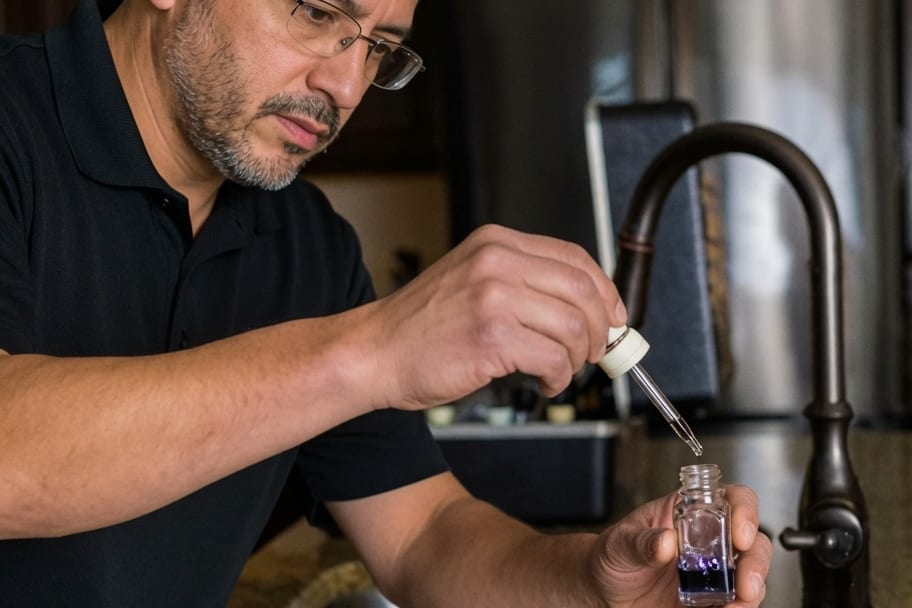
If you have white scale on a kettle in Charlotte, it is worth testing before assuming hardness. Our water testing visit measures it in your kitchen so you are not guessing. Genuine hard water in this region shows up on private wells, not on city supply.
What is actually worth filtering in Charlotte?
Three things, in order.
Disinfection byproducts
This is the real one. When chlorine meets organic material from lake water, it forms trihalomethanes. Charlotte’s highest running annual average in 2025 was 63.7 parts per billion against a federal limit of 80, with a single sample as high as 77.4. That is compliant, and it is close to the line.
Carbon is the fix, at household scale and at plant scale: it is exactly what Wilmington built to strip PFAS out of Cape Fear River water. Trihalomethanes are what a carbon filter is for. Charlotte disinfects with free chlorine, not chloramine, which matters for what you buy: standard activated carbon handles free chlorine and its byproducts perfectly well, and you do not need the more expensive catalytic carbon that chloraminated systems require.
Several national filter sites state that Charlotte uses chloramine. Charlotte Water’s own 2025 report says chlorine, its disinfectant table is headed “Chlorine (ppm)”, and the words chloramine and ammonia appear nowhere in it. Buy for chlorine.
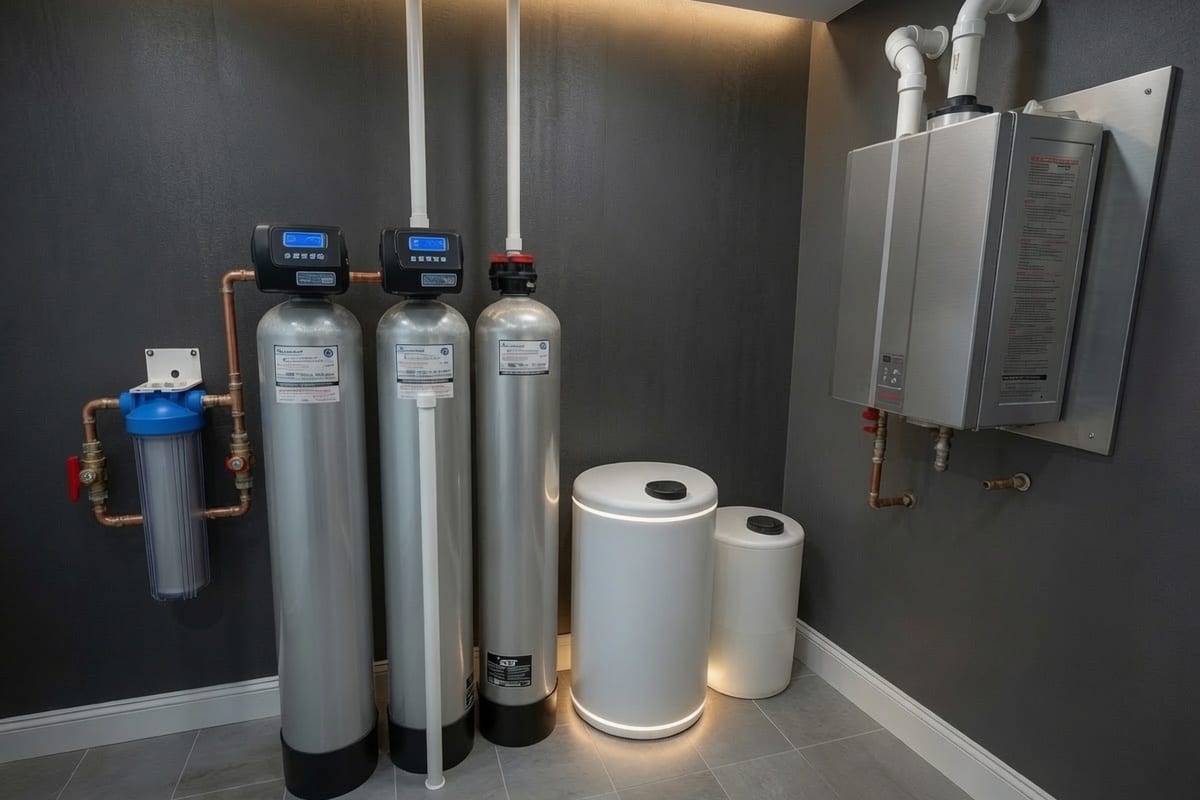
A whole house carbon filtration system takes it out at every tap, including the shower, where trihalomethanes matter most because they are volatile. Expect $1,500 to $3,500 installed for a properly sized system. Full pricing is on our water filtration cost guide.
Want to know what your own tap reads before spending anything? Request a free consultation and we will test it in your kitchen and tell you plainly whether you need a system.
Lead, but only in some houses
Charlotte’s 90th percentile lead result in 2025 was non-detect, which is the number that matters for compliance. But the range ran to 44 parts per billion at one tap, against an action level of 15.
That is how lead works. It is not in the water leaving the plant; it comes from the service line or the household plumbing at one specific address. Charlotte Water publishes a searchable service line inventory, and checking yours is free. If your line is lead or galvanised, a reverse osmosis system at the kitchen sink is the tightest barrier for drinking and cooking water, at $350 to $900 installed.
Taste, if it bothers you
Charlotte’s chlorine residual averages 1.04 ppm, well inside the 4.0 limit but enough to taste. Carbon fixes it. This is preference, not safety.
What about PFAS in Charlotte water?
Charlotte tested clean for the two regulated PFAS compounds. In the EPA’s fifth Unregulated Contaminant Monitoring Rule round, sampled across four quarters from August 2023 to May 2024, PFOA and PFOS were not detected in any of the 20 samples each, against a reporting limit of 4 parts per trillion.
Two short-chain, currently unregulated compounds did appear at trace levels: PFBA averaging 0.75 ppt and PFPeA averaging 0.67 ppt. We checked those against EPA’s raw dataset rather than relying on the summary, and the detections are real but small, all from one sampling date.
For context, Concord’s water exceeded the federal PFOS limit in the same monitoring programme and the city built an $18 million carbon system in response. So did Greensboro, whose PFOS came in several times over the limit. Charlotte did not have that problem.
Frequently Asked Questions
Do I need a water softener in Charlotte?
Almost certainly not. Charlotte’s water averages 1.9 grains per gallon, which is soft, and a softener removes hardness that is not there. If an in-home salesperson tells you otherwise after a demonstration that turns your water cloudy, ask for the number in grains per gallon and compare it with the utility’s published 32 ppm.
Is Charlotte water safe for babies and pregnancy?
Charlotte Water reported zero violations in 2025, including for nitrate, which measured well below the limit. If you want an extra barrier for formula and drinking water, reverse osmosis at the kitchen tap is the usual answer. Anyone with a specific medical concern should ask their doctor rather than a filtration company, including us.
Why does my Charlotte water smell like a swimming pool?
That is free chlorine, running around 1.04 ppm on average. It is doing its job through 4,664 miles of pipe. A carbon filtration system removes it at every tap, and a simple pitcher filter will handle a single glass.
Should I worry about the trihalomethane number?
It is compliant, and it is worth knowing. Charlotte’s highest annual average was 63.7 ppb against an 80 ppb limit in 2025. Systems using free chlorine on surface water typically run higher on this measure than chloraminated systems do. Carbon filtration is the standard household response.
Is Huntersville water the same as Charlotte water?
Legally yes, practically not quite. Huntersville has no utility of its own and is served by Charlotte Water, but it is fed from the Lee S. Dukes plant drawing on Lake Norman rather than Mountain Island Lake. Same report, same treatment standards, different reservoir.
How do I find out what is in my own tap?
Read your utility’s annual report for the system-wide picture, then test your own tap for the things that vary by address, which are lead, copper and hardness. We do that as part of a free consultation and give you the numbers in writing.
Sources and reporting dates
Figures in this guide come from the sources below. Water quality changes between reports, and a reported average does not describe conditions at every address on every day, so check the current report before acting on any number here.
- Charlotte Water annual water quality report, covering calendar year 2025. Source of the hardness, disinfectant, byproduct, lead and copper figures above.
- EPA Safe Drinking Water Information System, for this system’s population served, violation history and compliance dates.
- EPA UCMR5 occurrence data, the national PFAS monitoring round, for any PFAS result described as federal monitoring.
- NC DEQ Source Water Assessment Program, for the susceptibility ratings.
- EPA PFAS drinking water rule, for the limits and compliance dates.
Getting Charlotte water right
Charlotte is a good water system with two specific things worth addressing: chlorine byproducts near the federal limit, and lead risk that depends entirely on your own service line. Neither calls for a softener, and anyone selling you one here should be able to explain the 32 ppm hardness figure first.
Compare this supply with other cities in our North Carolina water quality guide, or see how we approach city water treatment.
We serve Charlotte, Huntersville, Concord, Gastonia and the surrounding Catawba communities. Every visit starts with a free consultation: we test your water, show you the results, and give you an up-front written price for only what the numbers support. Call (984) 384-6991 or request a free consultation and we will tell you honestly if you need nothing at all.